
A few inhales from a can of recreational oxygen can give you a brief lift during a long drive, but the effect fades within 5 to 10 minutes and it’s never a substitute for medical oxygen. We built REV/O2 with 98% pure oxygen and a zero-leak mouthpiece so you have a travel-ready option for those short dips in energy, not a cure for serious symptoms. If something feels seriously wrong, pull over and seek medical care.
TL;DR:
- Use one to three slow inhales while parked, pause to reassess, and save another round for your next stop rather than stacking doses.
- For mild grogginess, time a round to a break every two to three hours; involuntary eye closing means stop driving, nap, or switch drivers.
- Chest pain, severe or worsening shortness of breath, and fainting call for stopping immediately and seeking medical care, not taking another inhalation.
- Keep cans shaded, upright, and secured; let a can cool in a ventilated, shaded place after heat exposure, and discard damaged or leaking cans.
Table of Contents
- What canned oxygen can and can’t do during a long drive
- When it makes sense to use a can on the road
- How to use canned oxygen safely and effectively while driving
- Storing and transporting oxygen cans in a vehicle
- Limitations, risks, and red flags to avoid false security
- Legal considerations for using canned oxygen in your car
- How often to use canned oxygen during a long drive
- REV/O2 flavors and where each one fits a long drive
- Recognizing fatigue signs and knowing when a can helps
- How I pack and use canned oxygen on road trips
- Where to get travel-ready canned oxygen
- FAQ
- Sources
What canned oxygen can and can’t do during a long drive
Your body doesn’t store extra oxygen for later use, so a few breaths from a can produce a short, temporary rise in the oxygen reaching your lungs, not a lasting reserve. Medical experts quoted in reporting on canned oxygen note that any perceived boost typically disappears within about 5 to 10 minutes, and much of what people feel afterward may be as much about slowing down and breathing deliberately as it is about the oxygen itself.
That distinction matters for a long drive. A can works as a brief pick-me-up, not as continuous therapy, and it’s worth knowing what separates it from the equipment used in clinical settings:
- Recreational canned oxygen is not medical oxygen and isn’t delivered through a prescription-grade system.
- The lift you feel is short and transient, driven partly by a calming, deep-breathing effect.
- Small can volumes limit how much oxygen you actually take in compared to what your body uses each minute.
Treat it as a quick reset tool for a specific moment, not a performance upgrade that lasts for miles.
When it makes sense to use a can on the road
A can earns its place in your glovebox for specific moments, not as a running fix for every mile. Here’s how to think about timing:
- After a rest-stop nap, a few slow inhales can help you feel more alert before pulling back onto the highway.
- Following a burst of exertion, like loading gear or a quick hike at a rest area, a can can support a faster-feeling recovery.
- On a mountain pass, mild altitude discomfort such as light-headedness may ease with a brief dose, though it won’t replace acclimatization.
Stop using a can and seek medical care if you experience ongoing shortness of breath, chest pain, or fainting. Those are not situations a recreational product is meant to address. For day-to-day drowsiness, pair a can with the basics that actually move the needle: simple fatigue remedies like rest breaks, hydration, swapping drivers, and caffeine still do most of the heavy lifting on a long haul.
How to use canned oxygen safely and effectively while driving
Never inhale from a can while the car is moving. Pull over or wait until you’re parked at a rest stop, then follow a simple routine built around steady, deliberate breathing rather than quick puffs.
- Park safely before use; this isn’t something to manage with one hand on the wheel.
- Start with one to three inhales per round, then pause and reassess how you feel.
- Take full, deep inhales and hold briefly rather than rapid one-second puffs. A slower inhale with a short breath-hold increases how much oxygen actually reaches your alveoli, according to field reporting on canned oxygen use, which found that technique matters more than speed.
- Keep a spare can in the car for longer trips, and share cans between passengers only if each person uses their own mouthpiece attachment.
Our step-by-step usage guide walks through the full routine if you want more detail before your next trip.
Pro Tip: Time your can use to coincide with a scheduled rest stop, so the few minutes of benefit line up with when you’re already stepping away from driving.
Storing and transporting oxygen cans in a vehicle
A hot car is the biggest threat to a can’s integrity, not the drive itself. Pressurized canisters can build internal pressure when left in direct sun or a closed trunk on a warm day, so a few habits protect both the can and you.
- Keep cans out of direct sunlight and away from a hot trunk or dashboard.
- Store them upright and secured so they can’t roll around or strike something during a sudden stop.
- Protect the valve and mouthpiece from pressure or impact, and keep cans out of reach of small children.
- Follow the storage guidance printed on your can’s label, and discard any can that’s dented, leaking, or has a damaged valve rather than risk using it.
If a can has been sitting in a hot car, let it cool in a shaded, ventilated spot before handling it again rather than using it right away.
Limitations, risks, and red flags to avoid false security
Most research on recreational canned oxygen points to the same conclusion: benefits are real but brief. Medical reporting describes effects fading within 5 to 10 minutes, and a clinical review of over-the-counter oxygen use found that a notable share of user reviews described people using these products for what sounded like medical reasons, something the authors specifically caution against. Canned oxygen isn’t approved as a medical treatment, and leaning on it instead of seeking care can delay treatment you actually need.
Flavoring adds another consideration. Inhaled flavoring compounds haven’t been extensively studied for long-term respiratory safety, and ingredient disclosure varies by brand and product. If you have sensitive lungs or a respiratory condition, that’s worth factoring in before frequent use. A safety-focused look at canned oxygen misuse covers this in more depth.
Know the red flags that mean it’s time to stop and call for help: chest pain, severe or worsening shortness of breath, and fainting are not situations a can of recreational oxygen is built to handle.
Legal considerations for using canned oxygen in your car
Recreational canned oxygen is sold over the counter and doesn’t require a prescription, which is part of why it’s become a common item in travel bags, gym gear, and glove compartments. That said, “legal to buy” and “legal to use at the wheel” are two different questions, and the safer answer depends on how you use it, not just what’s in the can.
The clearest principle is straightforward: don’t use any inhalant product, including canned oxygen, while your vehicle is in motion. Pull over first. This isn’t about a specific statute written for oxygen cans. It’s the same common-sense standard that applies to anything that takes your hands or attention off driving, from eating to adjusting a phone mount. Distracted driving laws vary by state, and using a product requires removing a cap, positioning a mouthpiece, and inhaling deliberately, none of which belongs behind the wheel while moving.
Beyond distraction concerns, there’s no broad restriction on carrying or possessing recreational oxygen canisters in a personal vehicle for personal use. These aren’t classified as controlled substances or prescription medical devices. If you’re ever uncertain about a specific use case, such as commercial driving rules for your employer or a specific state’s distracted driving code, the more reliable path is checking your state’s motor vehicle code or asking a traffic law professional rather than relying on general guidance. The practical rule that covers nearly every situation: park, then use.
How often to use canned oxygen during a long drive
There’s no clinically established schedule for recreational canned oxygen use during a drive, because it isn’t medical oxygen therapy with a prescribed dosing protocol. What we can offer is a practical framework built around how the product is designed to be used: in short rounds, paired with rest.
Start with one to three inhales in a round, taken slowly with a brief hold rather than quick puffs. Reassess after that round. If you still feel groggy, a second round at your next stop makes more sense than stacking multiple rounds back to back, since the effect is short and repeating it immediately won’t extend how long it lasts.
For a multi-hour trip, timing cans to your natural stopping points, every two to three hours or whenever you’d normally take a break, keeps use purposeful rather than habitual. A can works best as a tool for a specific dip in alertness, not a steady drip you reach for every twenty minutes. Spacing rounds out also means one can lasts across more of your trip, since each can holds a limited volume rather than an unlimited supply.

If you find yourself reaching for a can constantly just to stay upright behind the wheel, that’s a signal to stop driving and rest, swap drivers, or pull off for the night, not a signal to use more oxygen.
REV/O2 flavors and where each one fits a long drive
Our three REV/O2 lines are built around different moments in a trip, so picking the right one depends on what you need at that stop.
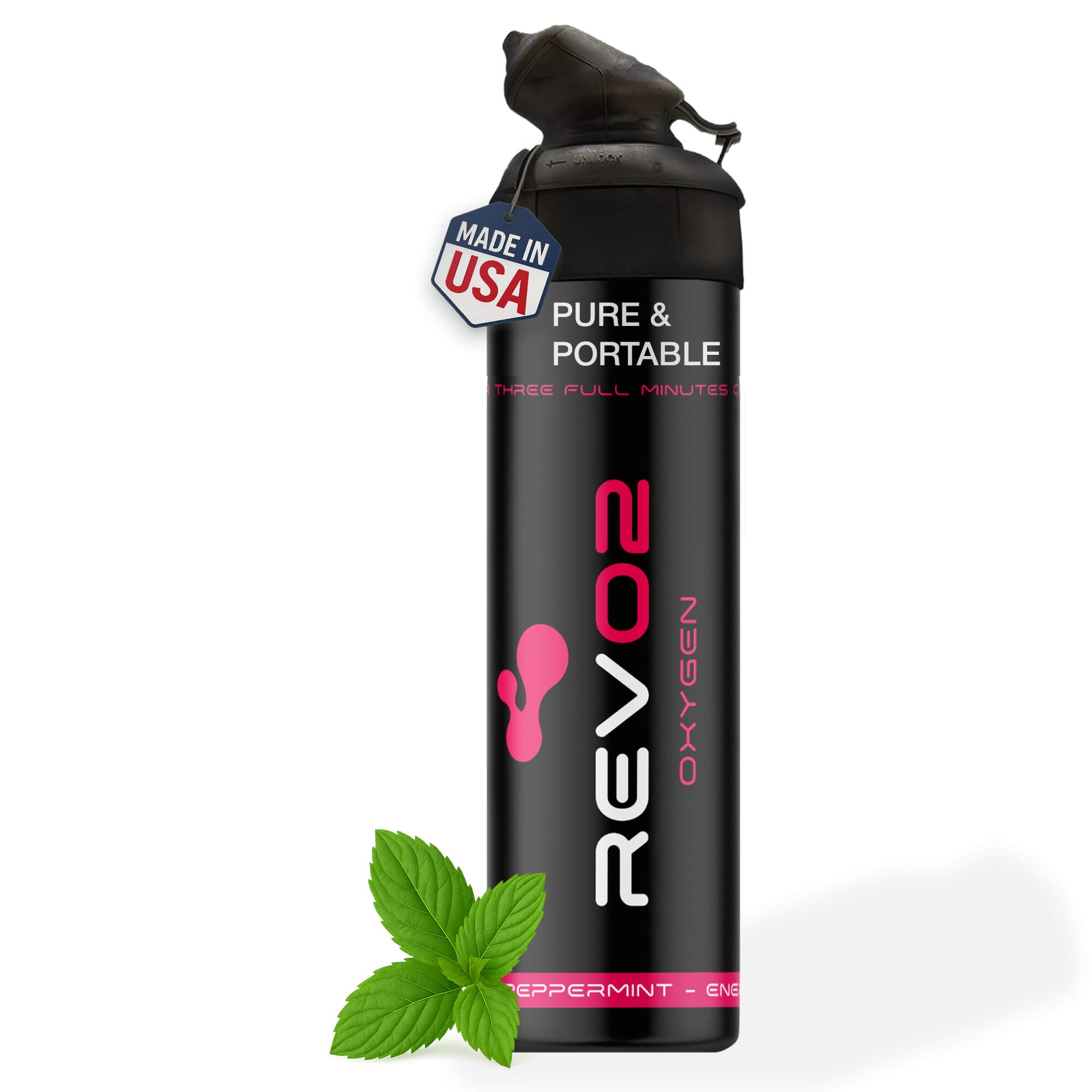
Peppermint Oxygen - Energy & Endurance suits the stretch of driving where you need an alert, awake feeling, like the first signs of afternoon drowsiness on a highway stretch. Peppermint’s brisk, cooling character pairs naturally with a moment where you want to feel sharper before getting back on the road.
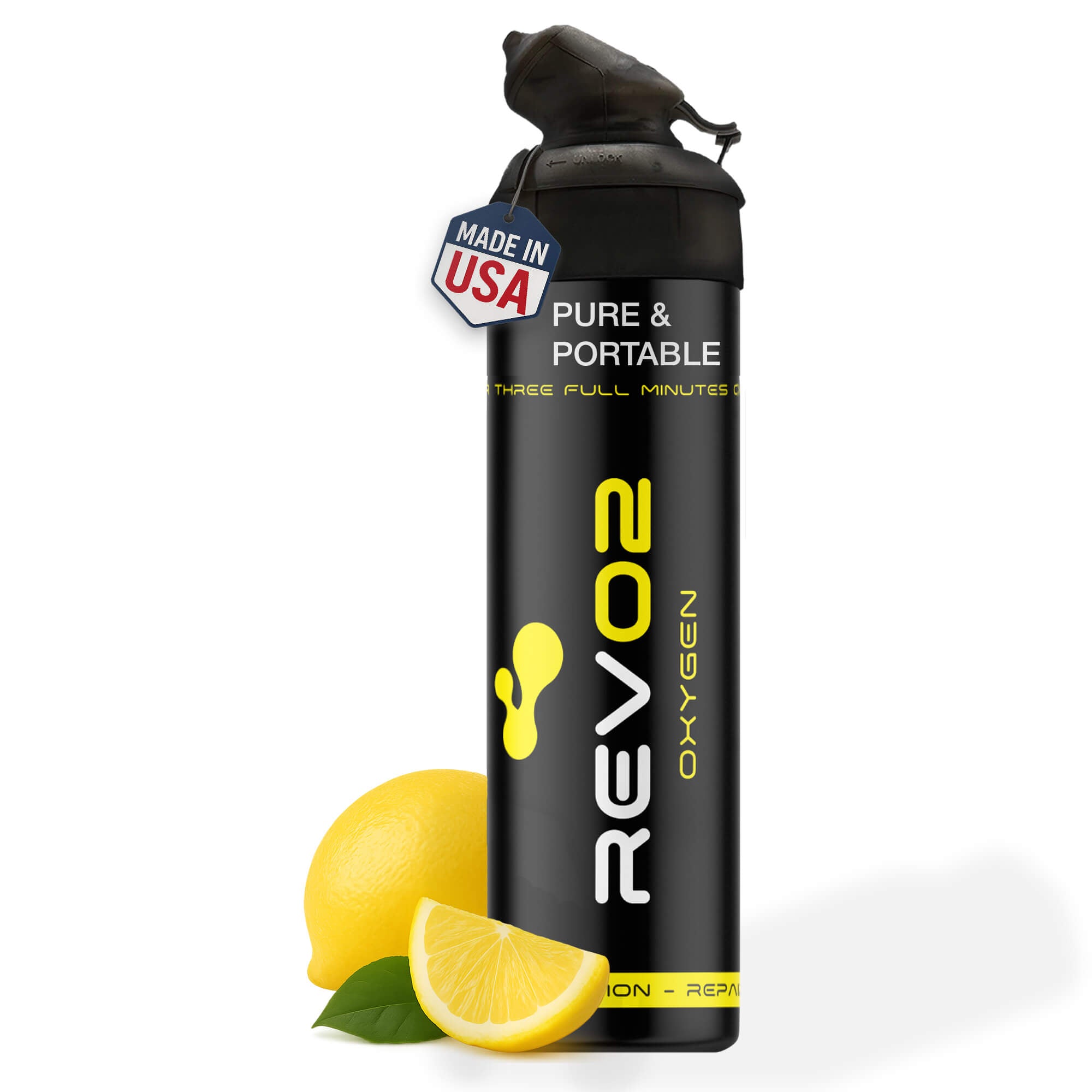
Lemon Oxygen - Recovery & Immunity fits better after exertion, think unloading a car, a quick trailside stretch, or recovering from a stretch of driving through thin mountain air. The citrus profile leans toward a refreshed, recovered feeling rather than a jolt of alertness.
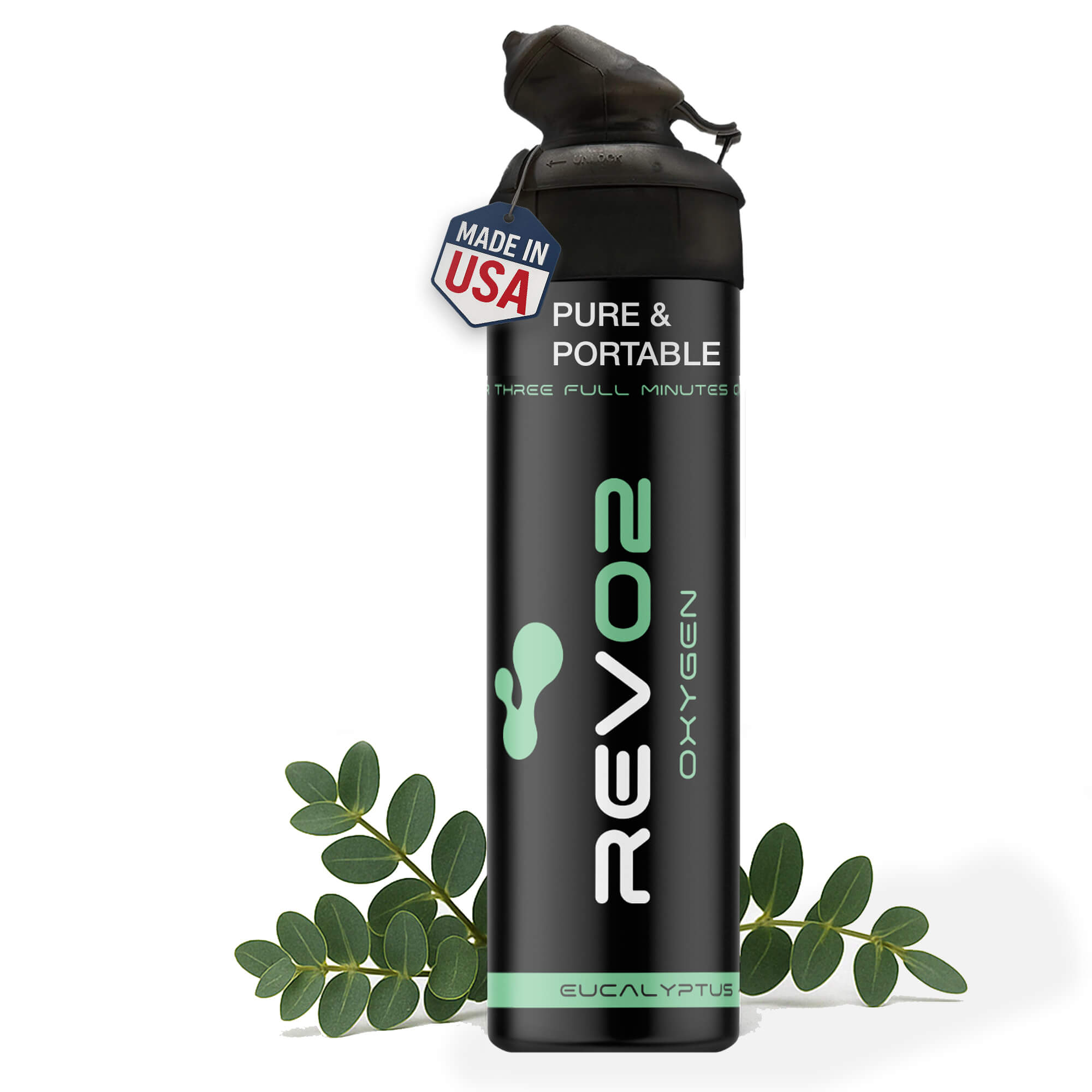
Eucalyptus Oxygen - Focus & Relaxation works well when the goal is calm, clear-headed focus rather than a burst of energy, useful during a tense merge-heavy stretch of traffic or when stress, not sleepiness, is what’s wearing you down.
None of the three changes how much oxygen you’re inhaling since all three are built on the same 98% pure oxygen base. The difference is in the experience and what each scent is designed to support, so choosing among them comes down to matching the flavor to the moment you’re in.
Recognizing fatigue signs and knowing when a can helps
Fatigue rarely announces itself all at once. It builds through small, recognizable signals: heavier eyelids, drifting attention, missed exits, slower reaction to brake lights ahead, or catching yourself a little too close to the rumble strip. Catching these early signs matters more than any product you reach for once you’re already struggling to stay awake.
A can makes sense at the early, mild end of that spectrum, the kind of grogginess you feel after a short highway nap or a long stretch without a break. Used there, a few slow inhales paired with a short walk around the car can help you feel more alert before merging back into traffic. Small experimental studies using driving simulators have found that increased inspired oxygen can reduce subjective fatigue and modestly improve reaction time under controlled conditions, though results vary and don’t prove a lasting driving performance gain.
What a can won’t fix is real drowsy driving, the kind where your eyes are closing involuntarily or you can’t remember the last few miles. That’s not a moment for a few breaths from a canister. It’s a moment to get off the road, nap, or hand the wheel to someone else. Treating a can as a stopgap for early fatigue, and treating genuine drowsiness as a stop-driving signal, keeps the tool useful instead of risky.

How I pack and use canned oxygen on road trips
On long drives, I keep a can within reach for two specific moments: the grogginess right after a rest-stop nap, and the slight head-fog that shows up on a high mountain pass. In both cases, I treat it the same way, a few slow inhales, a short pause to notice how I feel, and then back to driving if things feel normal.
What I don’t do is treat it as a substitute for stopping when I’m genuinely tired. A can buys a few minutes of feeling sharper. It doesn’t buy hours. Pairing it with an actual break, a driver swap, or a short walk is what makes the difference on a long haul, not the can by itself.
— Paul
Where to get travel-ready canned oxygen
If you want a can on hand for the moments described above, our REV/O2 lineup is built specifically for travel.

- Peppermint-flavored canned oxygen for alertness during long stretches behind the wheel.
- Lemon-flavored canned oxygen for bouncing back after exertion or altitude.
- Eucalyptus-flavored canned oxygen for calm, clear focus through tense traffic.
Browse the full canned oxygen collection for travel-sized packs, or read our safety and usage guide before your next trip to make sure you’re using it the right way from the first can. If you’re also managing vocal strain on a trip, voice-focused travelers may find airplane voice care habits a useful complement to breathing support on the road.
This article is general information, not a substitute for advice from a qualified doctor. Consult a qualified healthcare professional about your own circumstances before acting on anything here.
FAQ
Does canned oxygen actually help on long drives?
It can offer a brief, temporary lift in alertness, particularly after a nap or a stretch of mild fatigue, but the effect typically fades within 5 to 10 minutes. It works best as a short reset paired with a real rest break, not as a standalone fix for ongoing drowsiness.
How many inhales should I take per round?
Most guidance suggests one to three inhales per round, taken slowly with a brief hold, followed by a pause to reassess how you feel. Repeating rounds immediately won’t extend the benefit, since it’s short-lived by nature.
Is it legal to use canned oxygen while driving?
There’s no specific law targeting canned oxygen, but using any inhalant product while your vehicle is moving raises the same distracted driving concerns as any hands-on task. The safer, universal rule is to pull over and park before using a can.
Can canned oxygen replace medical oxygen for a health condition?
No. Canned oxygen is a recreational product, and a clinical review of over-the-counter use specifically warns against substituting it for prescribed oxygen therapy. If you have an ongoing respiratory condition, talk with a doctor about proper treatment instead.
What should I do if I feel symptoms a can won’t fix?
Chest pain, severe shortness of breath, or fainting are signs to stop driving and seek medical care right away, not situations to manage with recreational oxygen. Treat those as a reason to pull over and call for help, not a reason to reach for a can.
Sources
- Does oxygen in a can deliver on its altitude and energy claims?
- PMC article on OTC canned oxygen use and risks