
Oxygen for swimming means two different things, and the answer depends on which one you are asking about. Canned oxygen like ours is for the pool deck: a few inhalations between sets, after a race, or during a warm-down, always out of the water. Breathing pure oxygen underwater is a different activity that needs specialized training and equipment, and the water is never the place to use a recreational can. If you swim while on prescribed oxygen, your physician sets the rules.
Below, you will find how swimmers can use portable oxygen around the pool, what the research says, why underwater breathing is a separate world, and how to handle the safety basics.
TL;DR
- Use canned oxygen on deck, with your head above water and your feet on solid ground: between sets, after a hard swim, or during the warm-down.
- Never inhale from a recreational can while swimming, floating or submerged. Underwater breathing needs purpose-built, tested equipment and training.
- A February 2026 swimming study found a faster follow-up 50-yard sprint after brief 98% oxygen inhalation during recovery in trained aquatic athletes.
- Oxygen supports fire, so keep cans away from heat, flames and oily products, and store them dry and cool.
- If a doctor prescribes your oxygen, ask before you change any exercise routine, swimming included.
Table of Contents
- Two meanings of “oxygen for swimming”
- How swimmers use portable oxygen on deck
- What the research says about oxygen and swim performance
- Why you never breathe from a can underwater
- If you swim while using prescribed oxygen
- Immersion pulmonary edema: a risk every swimmer should know
- Oxygen safety around pools and gym bags
- Perspective
- Try it on your next swim practice
- Putting oxygen into a swim week
- FAQ
- Sources
Two meanings of “oxygen for swimming”
People arrive at this topic from very different places. A masters swimmer wants to know whether a few breaths between 100s can help the next repeat. A parent at a swim meet wonders about recovery between heats. Someone with a lung condition asks whether they can still enjoy the pool. A curious reader wonders whether a tank could let them stay underwater.
Those are four separate questions, and mixing them up is where problems begin. We will take them in turn, starting with the one our product is designed for.
How swimmers use portable oxygen on deck
Swimming is a sport of repeated hard efforts followed by short rests. Between a 50 and the next one, you stand at the wall breathing hard, and your heart rate takes a while to come down. That rest window is where many swimmers look for a small edge.
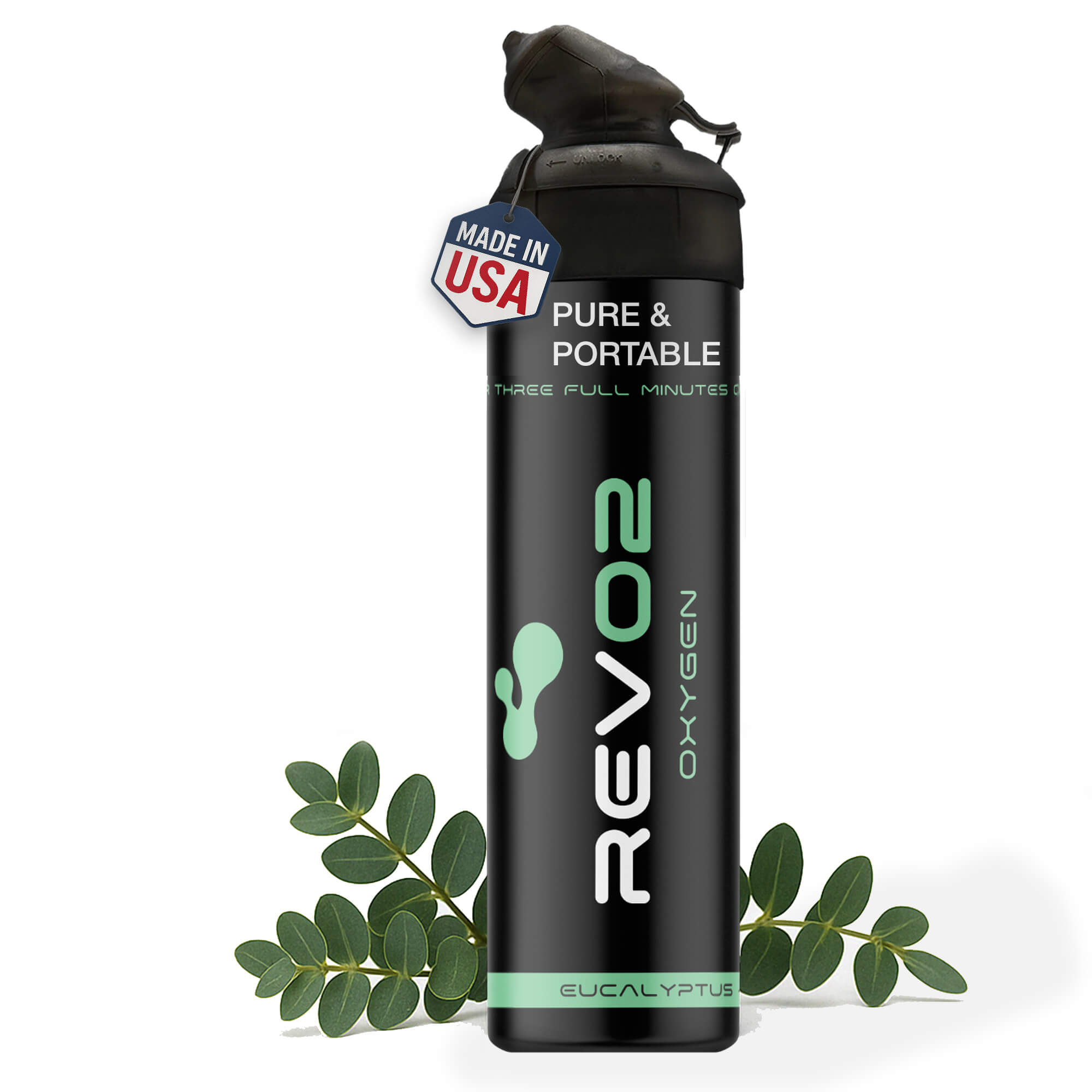
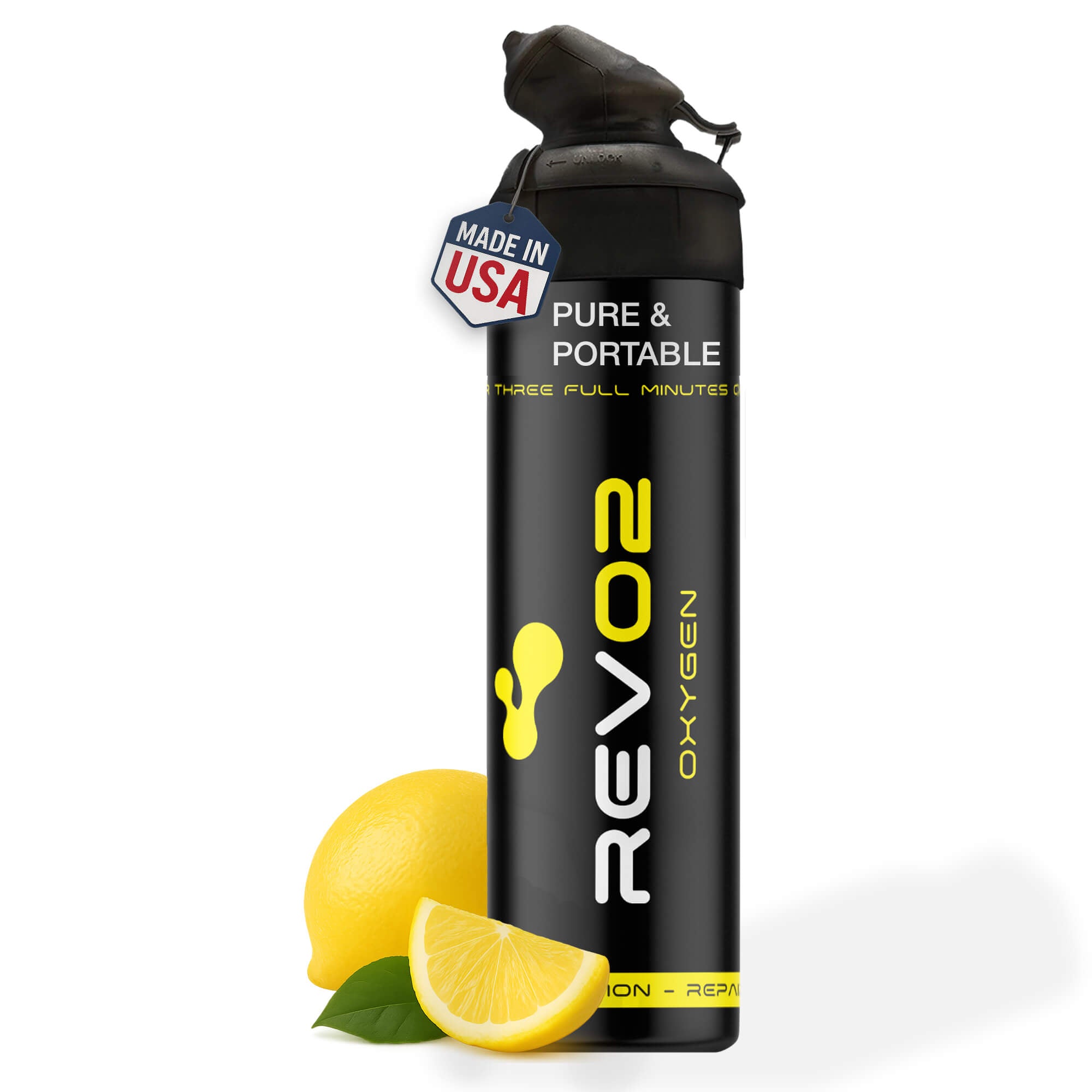
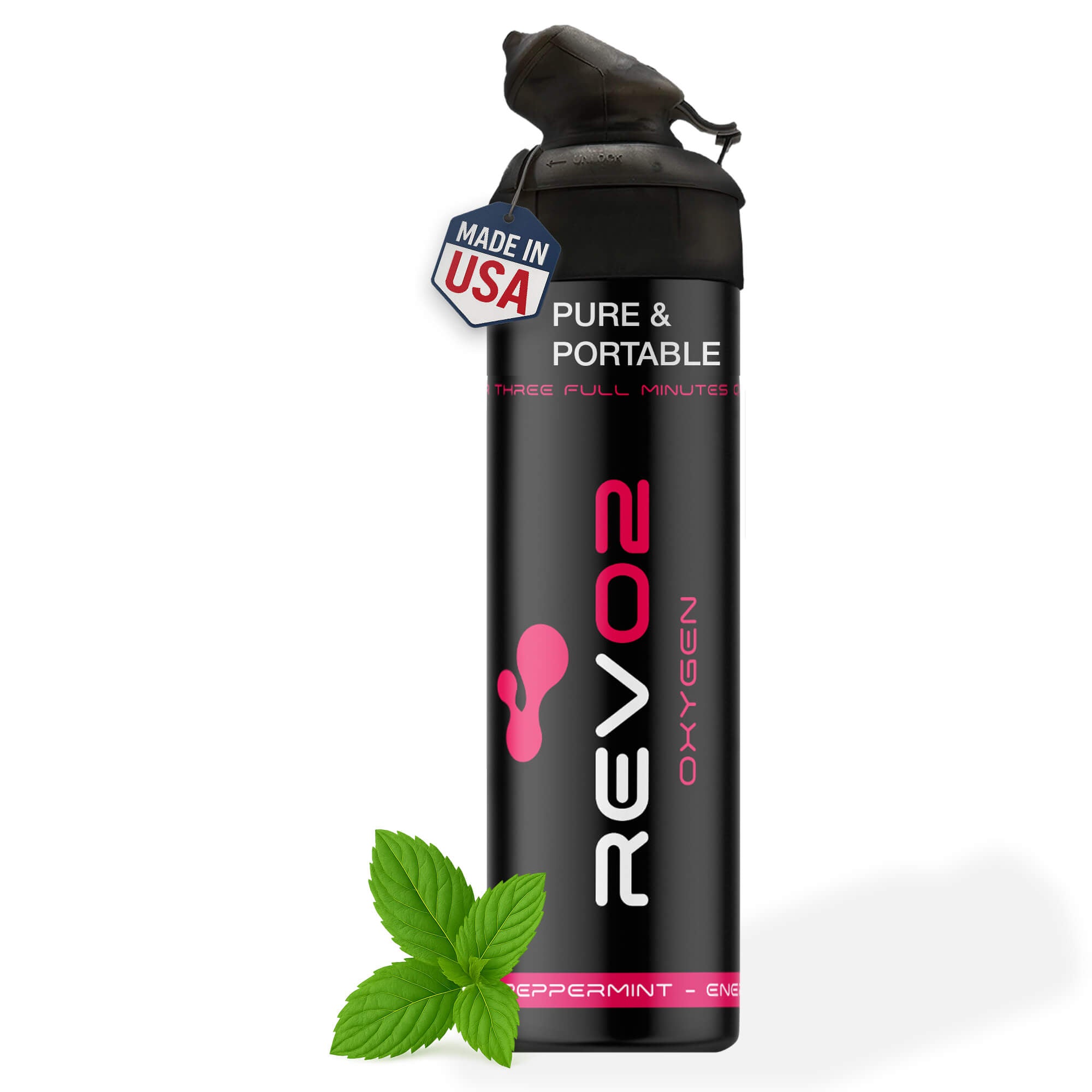
A REV/O2 can delivers 98% pure oxygen through a zero-leak mouthpiece, so the oxygen you inhale does not escape into the room. The trigger-lock cap is designed to prevent waste, which matters when you are standing on a wet deck and want something simple and quick. There is no mask, no tubing and no electrical equipment to keep away from water.
A typical pattern looks like this:
- Get out of the water. Stand or sit on the deck, dry your hands and face, and keep the can away from pool-side puddles.
- Take a few slow inhalations. Breathe in through the mouthpiece, hold briefly, and breathe out normally. Short, deliberate inhales are the goal.
- Return to normal breathing. Take a minute to settle before the next set.
- Store the can. Put it back in your bag, out of direct sun and away from heat.
If you want to see how this plays out with other sports, our articles on five second oxygen bursts for interval sprint recovery and pre-workout oxygen and repeated sprints cover the same short-inhale approach, which translates well to swim sets with defined rest.
Choosing a blend for the pool
Our three blends all deliver 98% oxygen with essential oil infusions:
| Blend | Our positioning | Where swimmers might like it |
|---|---|---|
| Peppermint | Energy and endurance | Before a main set or between fast repeats |
| Lemon | Recovery and immunity | After practice or a meet session |
| Eucalyptus | Focus and relaxation | Pre-race calm, or winding down after a long day |
None of this is a prescription. It is simply how our blends are designed, and how athletes tell us they fit into a training day.
What the research says about oxygen and swim performance
The science on supplemental oxygen and exercise is a mix of lab studies on different groups, doses and timing. Here is what is worth knowing.
A swimming-specific study
A February 2026 randomized crossover study tested 18 trained young male aquatic athletes. After brief inhalation of 98% oxygen during recovery, their next 50-yard sprint was 2.67% faster. That is the same purity level our cans are designed to deliver. The authors point out that timing was done by hand, that physiological recovery markers were not measured, and that the results may not apply to every swimmer, so it is best read as an encouraging early signal for recovery-focused use rather than a guarantee.
Wider exercise research
A 2017 meta-analysis looked at how extra oxygen affects sea-level exercise performance, training and recovery across many studies. A 2014 randomized, placebo-controlled study of 20 healthy college-aged adults compared a personal oxygen supplement with compressed air during exhaustive exercise. Together, they show that protocol details matter: how much oxygen, how long, and when in the session. That is why we recommend short inhalations timed to rest periods rather than long sessions, and why our articles on oxygen after running and oxygen before cardio describe specific timing.
Does oxygen make your lungs stronger?
This is a common question. Oxygen is not a training device for the respiratory muscles. According to JAMA’s April 2025 patient guidance, supplemental oxygen is not addictive and will not weaken the lungs, and it is prescribed for people whose blood oxygen is too low. For lung strength in swimming, the work is still in the pool: breathing patterns, bilateral breathing drills and aerobic base training. Oxygen is a recovery companion to that work, not a replacement.
Why you never breathe from a can underwater
The top search results for this keyword are full of underwater breathing gadgets: mini tanks, snorkel-style devices and compact scuba units that promise several minutes below the surface. These are a separate product category, and a canned recreational oxygen product is not one of them.
There are two reasons to keep the can on deck.
Pressure changes what oxygen does to the body. Breathing pure oxygen under pressure becomes toxic. According to PADI’s explanation of scuba tank contents, the accepted maximum depth for 100% oxygen underwater is 20 feet (6 meters), and divers normally breathe air or carefully blended mixes instead. Even shallow pool depths are the wrong place to experiment with a product that was never built to be breathed under water.
Breath-hold swimming and oxygen do not mix. Extra oxygen does not make a breath-hold safe. If you are training breath-hold or underwater work, do it with a qualified instructor and a spotter, without any supplemental oxygen beforehand. Shallow water blackout is a serious hazard in the pool, and a can of oxygen is not a safeguard against it.
Even true diving oxygen equipment is tightly controlled. In the US, emergency oxygen cylinders used for diving must be clearly labeled for emergency use by trained personnel and must go through hydrostatic testing every five years under Department of Transportation rules. That is a medical and rescue tool, and it sits in a different category from a sports can.
The simple rule: our oxygen is for the deck, the bench and the locker room, never for the water.

If you swim while using prescribed oxygen
Some readers come here because they use oxygen every day and want to keep swimming. This is a medical question, and your own care team has the final say.
The American Thoracic Society explains that oxygen is a medication that requires a prescription, with a flow rate set for rest, activity or sleep, and that too much can slow breathing dangerously in some patients. A recreational can is not a substitute for prescribed oxygen, and it should never replace what your doctor has ordered.
The American Lung Association advises that people on supplemental oxygen consult their physician before starting or changing any exercise routine, including swimming, so the activity suits their specific condition. Ask your pulmonologist these questions before you get in the pool:
- Is swimming appropriate for my condition and current oxygen needs?
- What flow rate should I use while active, and can I take a break from oxygen in the water?
- How should I set up my equipment near the pool?
- Which symptoms mean I should get out and call for help?
Swimming is gentle on joints and a good option for many people, and exercise in general is worth discussing with your clinician. For a look at how pool exercise helps the rest of the body, see this piece on swimming and bone density, which explains why laps need some added loading work alongside them.
Pool-side equipment basics
The common-sense guidance for equipment is the same across sources: electrical devices and water do not mix. Portable oxygen concentrators have electronic parts and cannot get wet, so a concentrator should not be taken to the pool edge. Keep it inside, as close to the pool as practical, away from any water. Always follow the manufacturer’s instructions and your provider’s setup advice for tubing length, since long tubing can be a tripping hazard. The American Lung Association’s pulmonary fibrosis workbook says to use no more than 50 feet of tubing.

Immersion pulmonary edema: a risk every swimmer should know
This one matters for healthy, fit swimmers too. Immersion pulmonary edema happens when time in the water causes fluid to leak into the lungs. Unlike drowning, no water is inhaled, and it needs prompt medical attention, according to the American Lung Association. The same source notes that immersion, cold-induced narrowing of blood vessels, tight wetsuits and vigorous exercise are thought to be major risk factors, and that it can affect people who are physically fit.
If you feel unusual breathlessness, cough or chest tightness during or after a swim, get out of the water and seek medical care. Do not try to treat it with a recreational can. Extra oxygen in a can is for recovery, not for emergencies.
Oxygen safety around pools and gym bags
Oxygen is not flammable, but it makes fire burn hotter and brighter. That is why the same safety rules apply to every oxygen product, from hospital cylinders to pocket cans.
- Keep heat and flames away. The American Thoracic Society advises keeping oxygen at least 6 feet (2 meters) from an open flame and prohibits smoking while using it.
- Avoid oily products near use. The American Lung Association workbook advises keeping aerosols, vapor rubs, oils, petroleum jelly and oil-based lotions away from oxygen, and heat and flames five feet away. Sunscreen sprays and oil-based lotions are common on pool decks, so put them on and let them dry before you use a can, and wash your hands.
- Do not leave cans in a hot car. Heat and pressurized containers are a poor combination. A gym bag in a cool locker is a better home.
- Dry hands, dry mouthpiece. Slippery hands mean dropped cans. Dry off first.
Perspective
We built REV/O2 around a simple idea: athletes need something they can actually carry. Swimmers know the moment well. You finish a hard set, you are breathing at the wall, and the clock keeps running. A can that fits in a swim bag, with a zero-leak mouthpiece and a trigger-lock cap, lets you take a few deliberate breaths of 98% oxygen without a mask, tubing or power cord.
We also think the best use of oxygen for swimmers is a disciplined one. A few short inhalations on deck, between sets or during the warm-down, fit naturally into how swimmers already train. We would never suggest taking it into the water. Our design is for the deck, and we want every customer to use it that way.
Our athletes tell us the three blends fit different parts of the day: peppermint when they want energy, lemon after hard work, and eucalyptus when they want to settle their focus. That feedback shaped how we describe them, and we keep listening to it.
Paul
Try it on your next swim practice
If you want a simple, portable way to add short oxygen breaks to your swim routine, our cans are made for exactly that. Pick the blend that suits the moment: peppermint for energy and endurance, lemon for recovery, or eucalyptus for focus and relaxation. Each can is 98% pure oxygen with a zero-leak mouthpiece.
Want to try all three? The Essentials Bundle pairs a 3-pack of oxygen infusions, and the full product collection shows everything we offer. For more on how athletes, hikers and travelers use portable oxygen, read our guide to supplemental oxygen for athletes.
Putting oxygen into a swim week
Here is a practical way to fold oxygen into a normal training week, always on deck:
- Main-set days: After a hard repeat set, take a few slow inhalations at the wall while you recover. This is where the recovery-focused swim study placed its inhalation, between a hard effort and the next sprint.
- Meet days: Between heats, sit down, stay warm, and take a few breaths before your next swim. Our guide to portable oxygen use during cooldown walks through the warm-down side.
- Easy days: Skip it, or use it after practice as part of your wind-down. Our pieces on oxygen and muscle recovery and post-workout recovery explain the thinking.
- Travel to meets or training camps: Hikers and travelers tell us they like having a can on hand at altitude or after long flights, and it works the same for swimmers on the road.
Keep your hydration, sleep, nutrition and warm-up routine as they are. Oxygen is a small addition to good habits, never a replacement.
FAQ
Can you swim with an oxygen tank?
No, not with a recreational can or a standard portable tank. Concentrators have electronics that cannot get wet, and underwater breathing needs purpose-built, tested diving equipment and training. People on prescribed oxygen sometimes swim with tubing running from a tank or concentrator kept beside the pool, but only with their doctor’s approval.
Can you shower with your oxygen tank?
Keep the equipment itself dry. Concentrators and their power sources should stay away from water, so people usually run tubing from a dry spot just outside the bathroom. If you use prescribed oxygen, ask your care team and equipment provider for the setup that suits your home. A recreational can should simply stay out of the shower.
Does using oxygen make your lungs stronger?
No. Oxygen supports blood oxygen levels, but it does not train your lungs. JAMA’s patient guidance says supplemental oxygen will not weaken your lungs and is prescribed for people whose blood oxygen is too low. Swim training and breathing drills are what build your breathing efficiency in the water.
When is the best time to use canned oxygen around a swim workout?
The best window is on deck, during the rest after a hard effort or in the warm-down. That is also where the 2026 swimming study placed the inhalation. Take a few short, slow breaths, then return to normal breathing before you get back in the water.
Sources
- Recovery-Targeted Supplemental Oxygen Enhances Performance (MDPI, February 2026)
- The Effects of Hyperoxia on Sea-Level Exercise Performance, Training and Recovery (PubMed, 2017)
- The Effects of a Personal Oxygen Supplement on Performance (Journal of Strength and Conditioning Research, 2014)
- I Need Supplemental Oxygen: What Should I Know? (JAMA Internal Medicine, April 2025)
- American Thoracic Society: Oxygen Therapy
- American Lung Association: How Different Environments Can Lead to Life-Threatening Pulmonary Edema
- American Lung Association: Learning to Live with Pulmonary Fibrosis workbook
- PADI: What is in a Scuba Tank?
- DAN: Emergency Oxygen student handbook