
Canned oxygen is safe for most healthy adults when used briefly and occasionally, but it is not a medical device and should never replace prescribed oxygen therapy. The real risks are indirect: delayed treatment for a worsening condition, fire hazards from improper storage, and confusion between recreational canisters and clinical oxygen systems. Used with common sense, an occasional can poses little danger to a healthy person.
TL;DR:
- Recreational canned oxygen poses minimal health risks for healthy adults when used briefly, but it should never replace prescribed oxygen therapy.
- The main danger is delayed medical treatment, especially for those with respiratory or cardiac conditions, due to false perceptions of safety or efficacy.
- Proper storage involves keeping cans upright, away from flames, and at moderate temperatures to prevent accidents or leaks.
- The FDA does not regulate recreational canned oxygen, and it is banned on flights, so it cannot be carried in checked or carry-on luggage.
- Its perceived energy or altitude benefits are mostly subjective, with no strong evidence of lasting physiological effects in most healthy users.
Table of Contents
- What Canned Oxygen Actually Is (and What the Label Promises)
- What Are the Real Health Risks of Canned Oxygen?
- How Should You Store and Handle Oxygen Cans Safely?
- Are Canned Oxygen Products FDA-Approved, and Can You Fly With Them?
- Does Oxygen From a Can Actually Boost Energy or Altitude Tolerance?
- What Are the Warning Signs You Should Never Ignore?
- How to Use and Store REV/O2 Canned Oxygen Safely
- Can Canned Oxygen Cause Side Effects Beyond Toxicity?
- What Happens to Empty Oxygen Cans When You’re Done?
- Why the Canned Oxygen Debate Misses the Real Risk
- Where to Find Safe, Well-Made Canned Oxygen
- Sources
What Canned Oxygen Actually Is (and What the Label Promises)
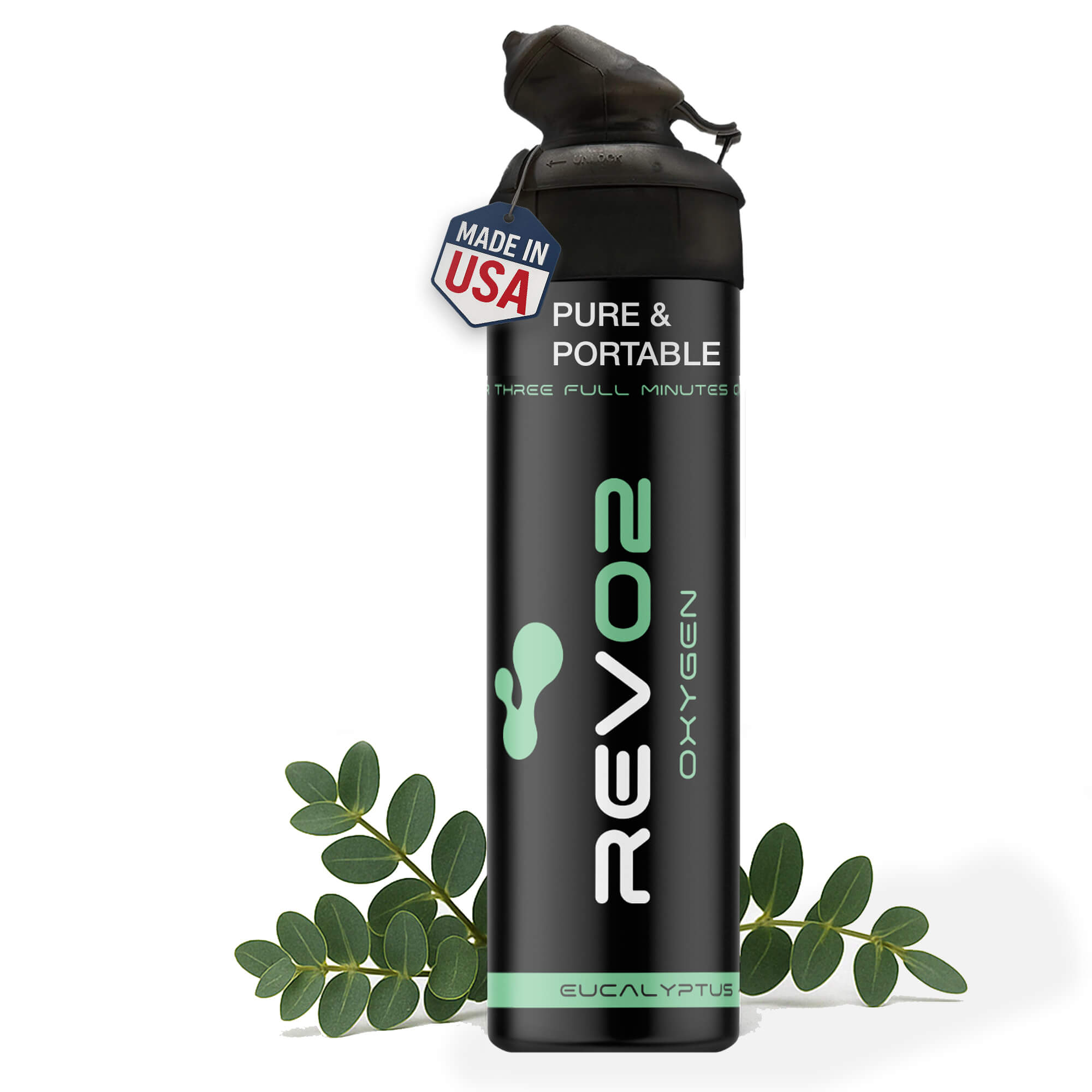
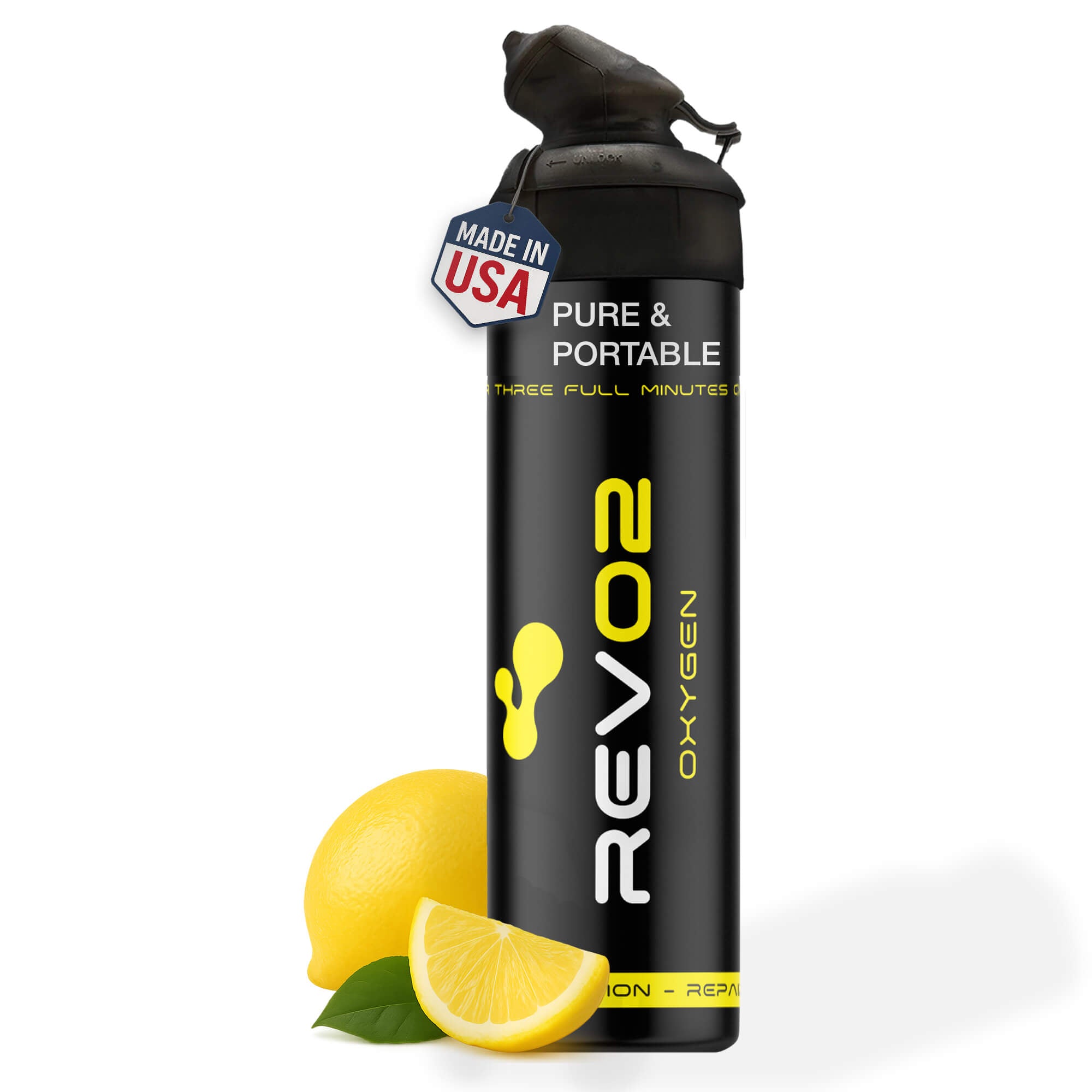
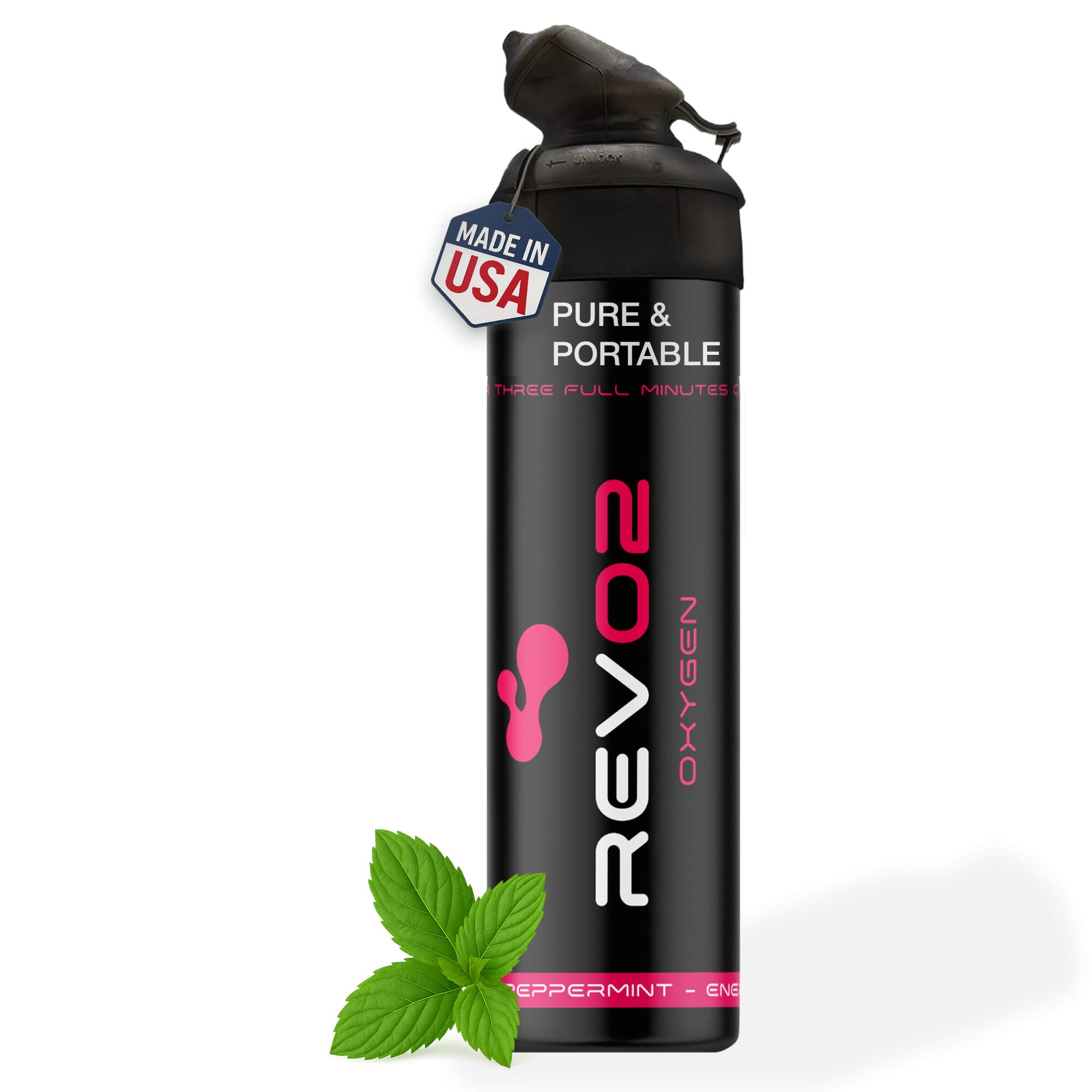
Recreational oxygen cans are pressurized canisters filled with concentrated oxygen, often blended with a scented mist like peppermint, lemon, or eucalyptus. Manufacturers fill them from industrial or medical-grade oxygen sources, then package the gas with a valve and mouthpiece designed for a quick, direct hit of air. The marketing pitch centers on convenience: no mask, no tubing, no prescription.
The “98% pure oxygen” claim on a label describes what’s inside the can, not what typically reaches your bloodstream. That distinction matters more than most buyers realize. A person’s actual inspired oxygen fraction depends heavily on the delivery method, and an open-air inhalation from a handheld canister behaves very differently from a sealed, continuous-flow medical system. Some of that 98% escapes into the room before it ever reaches the lungs.
A few product features are worth understanding before you buy or use one:
- Delivery design. A zero-leak mouthpiece reduces gas loss compared with a loose nozzle, but it still can’t replicate a sealed nasal cannula or mask.
- Additives. Many cans include essential oil fragrances for flavor and scent, which can irritate sensitive airways in some users.
- Volume limits. Most canisters hold a finite number of usable breaths, typically enough for several short sessions rather than sustained use.
- No prescription required. These products sell over the counter because they’re marketed as recreational, not therapeutic.
Fragrance additives deserve a second look. The CU Anschutz analysis notes that scented compounds sitting in a pressurized gas stream aren’t the same as diffused aromatherapy, and inhaling them directly into the lungs carries different risks than smelling them in a room.
What Are the Real Health Risks of Canned Oxygen?
Oxygen toxicity is the headline fear, but it’s largely a theoretical concern at recreational doses. True toxicity, whether pulmonary irritation or central nervous system effects like seizures, generally requires sustained exposure to high concentrations over extended periods, the kind seen in hyperbaric medicine or industrial accidents, not a few breaths from a handheld can. The Missouri Poison Center confirms that oxygen toxicity from casual canned oxygen use is uncommon, though it’s not zero.
The more pressing danger isn’t chemical. It’s behavioral.
A peer-reviewed review published through the National Institutes of Health examined public comments about over-the-counter canned oxygen and found that A significant share of sampled reviews described medical use, including cases where people substituted a can for their prescribed oxygen therapy. That’s a meaningful signal that some buyers are treating a recreational product as a clinical one.
Nearly 1 in 4 sampled product reviews described using canned oxygen for a medical purpose, including as a stand-in for prescribed therapy.
Certain groups face higher stakes if they make that substitution:
- People with COPD or chronic bronchitis, whose oxygen needs require precise, monitored dosing.
- People with asthma, especially during an acute flare where airway inflammation, not just low oxygen, drives symptoms.
- People with cardiac disease, where oxygen demand and delivery are tightly linked to heart function.
- Infants and pregnant individuals, whose respiratory and circulatory physiology respond differently to supplemental oxygen than a healthy adult’s does.
For any of these groups, a recreational can might mask a symptom just long enough to delay a call to a doctor. That delay, not the gas itself. This is where the real harm tends to show up.
How Should You Store and Handle Oxygen Cans Safely?
Oxygen doesn’t burn on its own, but it’s an oxidizer, which means it makes anything nearby burn faster and hotter. A spark or flame that would sputter out in normal air can flare violently in an oxygen-enriched space. That’s the core hazard behind every compressed oxygen storage rule you’ll see from clinical and safety authorities.
The American Lung Association’s oxygen safety guidance and Cleveland Clinic both outline concrete handling rules, and they translate directly to recreational canisters:
- No smoking or open flames near oxygen. Keep cans at a safe distance from candles, stoves, heaters, or lit cigarettes, generally several feet away.
- Avoid oil-based products. Petroleum jelly, lotions, and oily cosmetics can ignite unexpectedly in oxygen-rich air. Keep hands and lips clean before use.
- Store upright in ventilated space. Cans left in an enclosed, unventilated area can build up ambient oxygen concentration over time.
- Respect temperature limits. Extreme heat, like a car dashboard in summer, raises internal pressure and risks canister failure.
- Secure cans during transport. A rolling or falling canister can damage the valve, which is where most leaks start.
If you smell a leak or notice a hissing sound, move the can to open air immediately and keep it away from any ignition source. A slow leak in a closed room is more dangerous than the same leak outdoors, simply because the oxygen concentration has nowhere to dissipate.
Pro Tip: Keep your can in the same spot every time, like a glove compartment lined with a towel rather than loose on the seat, so a sudden stop doesn’t turn it into a projectile.
Are Canned Oxygen Products FDA-Approved, and Can You Fly With Them?
No. Recreational canned oxygen sold for energy, altitude support, or stress relief is not FDA-approved as a medical treatment. That doesn’t make it illegal or automatically unsafe, but it does mean the product hasn’t gone through the clinical testing, dosing standards, or efficacy review that prescribed oxygen therapy requires. The label claims you see, like “98% pure” or “instant energy boost,” reflect marketing language, not clinical validation.
That regulatory gap matters most when you’re deciding whether to trust a can over a doctor’s advice. A warning label is not the same as a safety study.
Travel is where the rules get concrete. The FAA’s PackSafe guidance is unambiguous: passengers may not carry canned, recreational, or flavored oxygen in checked baggage, carry-on baggage, or on their person on U.S. flights. This applies regardless of the can’s size or how it’s packaged.
A few practical points follow from that rule:
- If you rely on prescribed medical oxygen for a flight, airlines have separate accommodation procedures. That’s a different regulatory category entirely.
- Don’t pack a recreational can “just in case” for altitude symptoms during travel. It will likely be confiscated at security.
- If you’re comparing this to other pressurized personal items, the same caution applies to small gas cartridges like CO2 canisters, which face their own transport restrictions.
Does Oxygen From a Can Actually Boost Energy or Altitude Tolerance?
Physiologically, most healthy people don’t need supplemental oxygen at all. Your lungs already saturate hemoglobin to roughly 95 to 100% under normal conditions, so a few extra breaths of concentrated oxygen have little room to improve on that baseline. The exchange happens in seconds, and once you stop inhaling, your blood oxygen returns to its normal level almost immediately.
The CU Anschutz pulmonology analysis is blunt about this: there’s little controlled evidence that brief canister inhalations produce measurable, lasting physiological benefit. Delivery method matters as much as concentration, and an open-mouth inhalation simply doesn’t create the closed inspired fraction that clinical oxygen systems achieve.
What people report instead tends to be subjective:
- A brief sense of alertness or calm, likely tied as much to the ritual and scent as to the gas itself.
- Short-term relief from mild altitude symptoms like headache or fatigue, typically fading within minutes.
- No measurable change in recovery time for most healthy exercisers.
Relying on a can instead of natural acclimatization can also work against you. Most healthy people adjust to altitude within a day or two on their own, and leaning on quick fixes may just postpone that adjustment rather than speed it up.
What Are the Warning Signs You Should Never Ignore?
Canned oxygen has one genuinely dangerous failure mode: it can make you feel better for a few minutes while whatever is actually wrong with you keeps getting worse. That’s the pattern the NIH review flagged in users substituting cans for prescribed therapy, and it’s why symptom awareness matters more than the can itself.
Stop using canned oxygen and seek medical attention immediately if you notice:
- Persistent shortness of breath that doesn’t improve within a few minutes of rest.
- Chest pain, tightness, or pressure, especially if it radiates to the arm or jaw.
- Bluish lips or fingertips, a sign of significant low blood oxygen that a can won’t fix.
- Confusion, dizziness, or altered mental state, which can signal a cardiac or respiratory emergency.
- Symptoms that return quickly after each use, suggesting the underlying cause needs treatment, not a canister.
If any of these appear, call 911 or your local emergency number right away. For questions about a specific exposure or reaction, a poison control center can offer guidance by phone before you decide on next steps.
How to Use and Store REV/O2 Canned Oxygen Safely
Safe use starts with treating a can as a short-term, occasional tool rather than a daily habit. Inhale slowly through the mouthpiece for a few seconds at a time, pause, and repeat only a handful of times per session. There’s no clinical dosing schedule here because this isn’t a clinical product.
A few practical rules keep things simple:
- Use REV/O2 for brief, situational needs, like a mid-hike breather or a pre-workout reset, not as a treatment for breathing symptoms.
- Store cans at moderate room temperature, away from direct sun or car dashboards.
- Check the valve and mouthpiece for damage before each use.
- Never use a can to manage chest pain, wheezing, or breathing difficulty. Call a doctor instead.
Full step-by-step instructions live on the REV/O2 safe-use guide, and storage specifics for on-the-go use are covered in the guide to storing cans in your car.
Pro Tip: Treat your can like sunscreen, not medicine. It’s a supportive tool for a specific moment, not a fix for an underlying health problem.
Can Canned Oxygen Cause Side Effects Beyond Toxicity?
Most people tolerate a few breaths from an oxygen can without any reaction at all. When side effects do show up, they’re usually mild and tied to the additives rather than the oxygen itself.
Scented cans are the most common source of complaints. Essential oil compounds like peppermint or eucalyptus, while pleasant when diffused into a room, behave differently when inhaled directly into the airway. Sensitive individuals may experience coughing, throat irritation, or a tightening sensation after use. People with asthma or reactive airway conditions are more likely to notice this, since their airways already respond strongly to irritants.
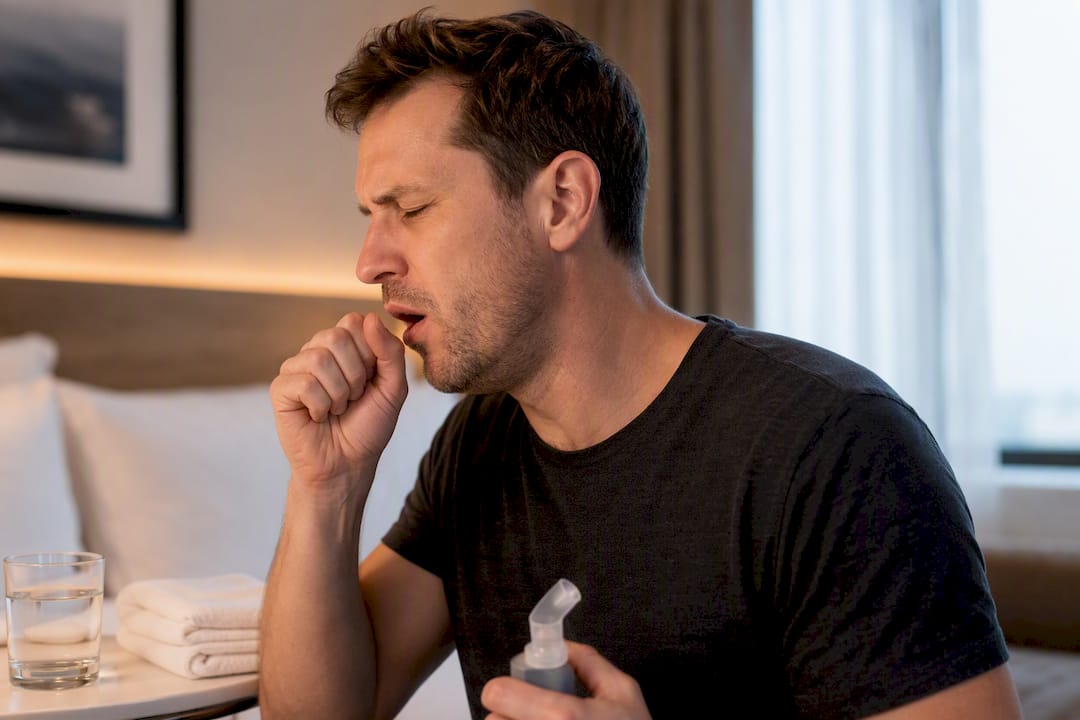
True allergic reactions to inhaled oxygen are exceptionally rare, since oxygen is a naturally occurring gas your body processes constantly. Reactions almost always trace back to a fragrance additive or a contaminant in the can rather than the oxygen molecule itself. If you notice hives, swelling, or wheezing after using a scented can, that points toward the additive as the likely trigger.
Dry mouth or a mild lightheaded sensation can also occur, particularly if you inhale too quickly or take several hits in rapid succession. This usually resolves within a minute or two once you stop.
If you have known sensitivities to essential oils or fragrance compounds, an unscented option removes that variable entirely. Reading the ingredient list before buying is a simple habit that avoids most of these minor complaints altogether.
What Happens to Empty Oxygen Cans When You’re Done?
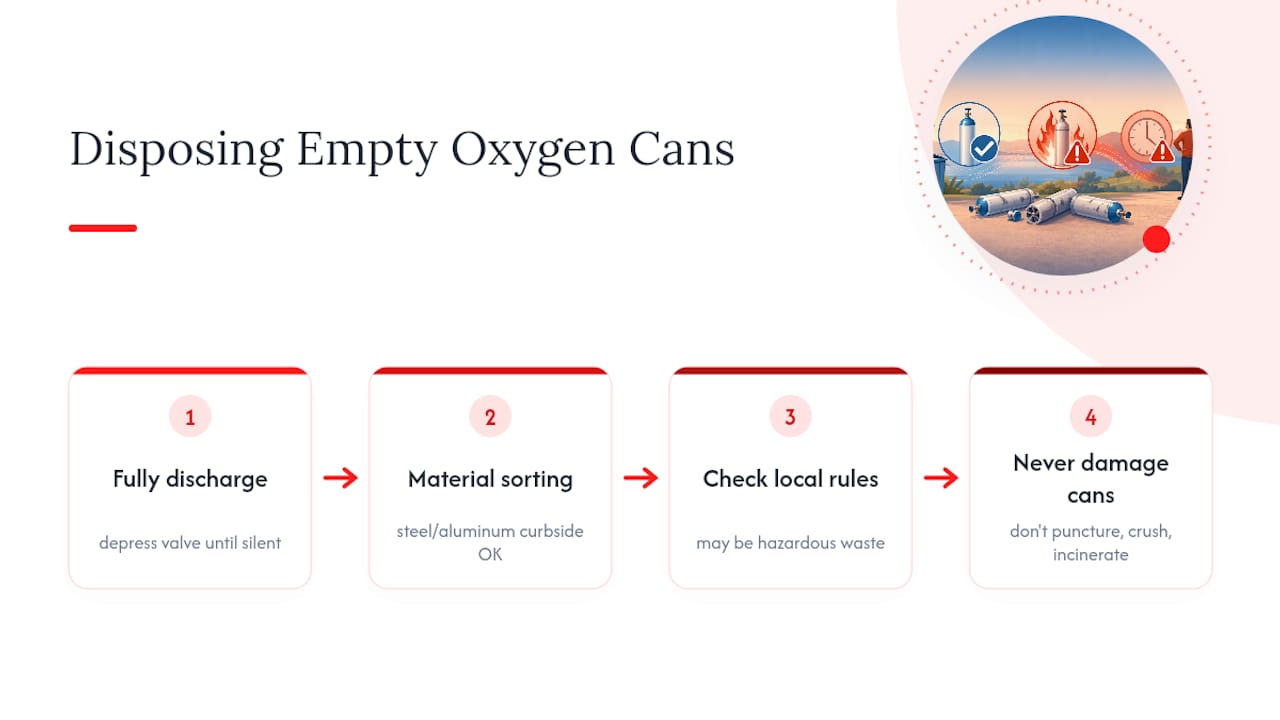
Empty canisters are recyclable in most municipal programs, but the process depends on the can’s material and whether it’s fully depressurized. Steel and aluminum canisters, the most common materials for recreational oxygen products, are widely accepted by curbside recycling once empty.
Before tossing a can in the recycling bin, confirm it’s fully discharged. A canister with residual pressure can be a hazard at recycling and waste facilities, where compaction equipment isn’t designed to handle pressurized containers safely. Most brands recommend depressing the valve fully until you no longer hear or feel airflow.
Check your local municipal guidelines, since some regions treat empty pressurized containers as household hazardous waste rather than standard recyclables. Never puncture, crush, or incinerate a canister yourself. Even a supposedly empty can may retain trace pressure, and forcing it open defeats the purpose of the safety valve design.
The environmental footprint of canned oxygen is small relative to many consumer goods, since a single canister contains a modest amount of metal and gas. Still, responsible disposal matters, and it’s a habit worth building into your routine right alongside the safety practices around storage and use.
Why the Canned Oxygen Debate Misses the Real Risk
Most coverage of canned oxygen gets stuck arguing about whether the marketing claims hold up, whether a can really boosts altitude tolerance or sharpens focus. That debate is almost beside the point. The evidence here supports a simpler judgment: the gas itself is rarely dangerous for a healthy person using it occasionally, and the physiological upside is modest at best.
The conventional advice, “check the label, use as directed,” undersells the actual risk. The NIH’s finding that roughly a quarter of reviewers described medical use is the detail that should reframe this conversation entirely. That’s not a marketing problem. It’s a health literacy problem, and it means the real safety message isn’t about oxygen toxicity or combustion risk, even though both deserve respect. It’s about drawing a hard line between a recreational product and a prescribed therapy.
If you take one thing from this guide, make it this: treat canned oxygen as a short-term comfort tool, never as a diagnostic pass on symptoms that deserve a doctor’s attention. Everything else, the fire precautions, the storage rules, the travel restrictions, matters. But that one boundary is what actually keeps people safe.
— Paul
Where to Find Safe, Well-Made Canned Oxygen
Revo2 gives you a straightforward way to get short-term oxygen support without guessing about what’s actually in the can. Every REV/O2 canister ships with 98% pure oxygen, a zero-leak mouthpiece built for consistent delivery, and clear labeling so you know exactly what you’re using and how it fits into the safety practices covered above.
That matters more than it might seem. A lot of recreational oxygen on the market skips clear sourcing or storage guidance entirely, which leaves buyers to figure out safe use on their own. Revo2 pairs the product with a dedicated safe-use guide covering inhalation technique, frequency limits, and storage, so you’re not left guessing after the purchase.
Whether you want a can for a hike, a workout recovery boost, or a quick reset during a stressful stretch, the REV/O2 canned oxygen collection covers flavor options and multi-packs suited to different routines. Browse the lineup, check the safe-use guide alongside it, and pick the option that matches how often you’ll actually reach for it.
This article is general information, not a substitute for advice from a qualified doctor. Consult a qualified healthcare professional about your own circumstances before acting on anything here.
Sources
The safety claims in this guide draw from clinical and regulatory sources rather than marketing material:
- Medical Use of Over-the-Counter Canned Oxygen: A Review of Public Comments (Cureus/NIH)
- PackSafe - Oxygen (compressed or liquid) | Federal Aviation Administration
- Canned Oxygen: Is it good for you? | Missouri Poison Center
- Using oxygen safely | American Lung Association
- Does oxygen in a can deliver on its altitude and energy claims? | CU Anschutz