
A headache after a workout is most often an exertion headache: a throbbing pain triggered by hard effort, heat, dehydration, low blood sugar or a rushed warm-up. Mayo Clinic describes the common form, called a primary exercise headache, as usually harmless. But a sudden, severe headache, or your first one of this kind, deserves a call to a clinician. This guide walks you through why it happens, what to do in the first hour, how to prevent the next one and which signs mean you should not wait.
TL;DR
- Most post-workout headaches come from blood vessel changes during effort, plus triggers like dehydration, heat, low blood sugar and a skipped warm-up.
- In the moment: stop, cool down, sip water, eat something if you skipped a meal, and rest somewhere calm.
- Prevention is mostly routine: a proper warm-up, steady fluids, regular meals, enough sleep, gradual intensity and sensible conditions.
- A sudden, severe headache, a first-ever exercise headache, a stiff neck, vision changes, confusion, weakness or pain lasting more than 24 hours needs medical attention.
- If you get them often, a clinician can rule out other causes and discuss preventive options.
Table of Contents
- Why you get a headache after exercising
- What to do when a headache hits after a workout
- When a post-workout headache is a warning sign
- How to prevent headaches after a workout
- If headaches keep coming back
- Our perspective
- Support your recovery routine with REV/O2
- FAQ
- Sources
Why you get a headache after exercising
When you exert yourself, your body needs more blood and oxygen. Cleveland Clinic explains that scientists believe exertion headaches occur when veins and arteries expand to carry that extra blood, and the expansion plus higher blood pressure creates pressure inside the skull. The pain is often pulsating or throbbing, on one or both sides of the head, sometimes with neck pain.
Mayo Clinic notes that the exact cause of primary exercise headaches is unknown, though one theory is that strenuous exercise dilates blood vessels inside the skull. Because the cause is not fully pinned down, it helps to think in terms of triggers: the things that make a headache more likely on a given day.

The usual triggers
US Pharmacist reports that exercise headaches show up most often after weightlifting, distance running or other aerobic activity. The same article lists insufficient warm-up, extreme heat or cold, dehydration, low blood sugar, and fatigue or extreme exercise as other triggers.
Medical News Today adds exercising in heat or at high altitude and muscle tension to the list. In practice, the triggers tend to stack. A hot gym, a skipped breakfast and a harder-than-usual set can add up to one headache that no single factor explains.
Heat and your brain
Your brain cannot shed heat by sweating the way your skin can. The Conversation explains that when it is hot, your body increases blood flow to the brain to help cool it, which can raise pressure. The same piece notes that exercise headaches seem to get worse and happen more often when people are dehydrated, although it is unclear whether dehydration causes the headache or just makes it more likely.
That is why a person who drinks plenty of water can still get one on a hot day. Hydration helps, but it is one lever among several.
Why a spin class or a hard interval session can do it
Intense, unfamiliar effort is a common pattern. Hinge Health quotes a clinician saying exercise-induced migraines are more common with sudden or unfamiliar increases in effort, such as sprinting, jumping or heavy lifting, especially if the body has not built up to that level. Holding your breath during heavy lifts, bright or flashing lights, loud rooms, strong smells and poor sleep are also listed as contributing factors.
A dark, loud, warm spin studio with flashing lights and a hard effort combines several of those at once. If you notice your headaches cluster around one class, that is useful information.
Migraine and exercise
The American Migraine Foundation says scientists have theories about why exercise might trigger attacks, including that very intense exercise can affect hypocretin, a sleep chemical, and that lactate and CGRP are released during exercise. Primary exercise headache can have migraine-like features. The Conversation reports that people with migraine appear more likely to get exercise headaches, while fitter people appear less likely to.
What to do when a headache hits after a workout
The first hour matters, and most of it is simple. This is general self-care, not a treatment plan, and it only applies if your headache has none of the warning signs in the next section.
- Stop and ease down. If the headache starts mid-session, Dr. Barchi, quoted by POPSUGAR, recommends resting and stretching before deciding whether to go back to exercise. Do not push through it.
- Cool off. Move out of the heat, loosen tight clothing and let your heart rate settle. A cool washcloth on the forehead can feel good; Mayo Clinic’s self-care guidance for tension headaches suggests ice or a cool washcloth on the forehead, or a warm compress for tight muscles.
- Drink water, and consider electrolytes. Medical News Today lists hydrating before, during and after exercise and rehydrating with electrolyte drinks among its prevention steps.
- Eat if you skipped a meal. Low blood sugar is a recognized trigger, so a balanced snack is reasonable.
- Breathe slowly. Mayo Clinic’s self-care page also suggests breathing in and out slowly and deeply for at least 10 minutes. Try this: inhale through your nose for four counts, exhale through pursed lips for six, and repeat for a few minutes while seated.
- Rest in a quiet, dim place. If bright light or noise makes it worse, remove them.
- Watch the clock. Mayo Clinic reports that primary exercise headaches typically last between five minutes and 48 hours. If yours is getting worse, or is still going strong after a day, call your provider.
A note on pain relievers
Cleveland Clinic lists over-the-counter NSAIDs such as naproxen for short-term use only, and prescription options such as indomethacin for exertional headaches. Medication choices depend on your stomach, kidney, heart and other medications, so ask a pharmacist or your doctor before you start taking anything regularly around workouts.
When a post-workout headache is a warning sign
Most exercise headaches are primary and benign. But MedLink Neurology states that about one third of exercise-precipitated headaches are secondary to underlying pathology, including tumors, bleeding around the brain and unruptured aneurysms. That is why doctors treat a new exertional headache seriously until other causes are excluded.
Get medical help right away if
The National Institute of Neurological Disorders and Stroke (NINDS) advises seeing a doctor right away for a sudden severe headache, especially with a stiff neck, and for a headache with fever, nausea or vomiting. It also lists a first or worst headache with confusion, weakness, double vision or loss of consciousness, a headache after a head injury, one with convulsions or trouble breathing, and one that gets worse over days or weeks.
The Conversation adds that you should get checked if:
- it is your first exercise headache
- it comes on severe and sudden, often called a thunderclap headache
- it comes with vision changes, confusion or weakness
- it lasts more than 24 hours without improving
If you have a sudden, severe headache with any of these, call 911 or go to an emergency department rather than waiting for a callback.
See a clinician soon if
NINDS also lists two or more headaches a week as a reason to see a doctor. Cleveland Clinic says a provider can diagnose exertion headaches when you have had at least two headaches caused by physical activity that start during or after it and last less than 48 hours. Tests to rule out other causes can include MRI, angiography and sometimes a spinal tap.
Who tends to have which type
A 2023 review in Cephalalgia found that around 80% of people consulting for exercise headache have the primary type. Primary exercise headache is typical in people under 50 and four times more frequent in males, and most people have attacks for a few months, usually two to six months. The review says a secondary cause should be suspected after a single episode, in women, with other symptoms or signs, over age 40 to 50, or when it lasts longer than 24 hours.
These are patterns across groups, not a way to diagnose yourself. Only an exam, and sometimes imaging, can sort it out. The VA/DoD guideline says the first goal of evaluation is determining whether there is a secondary cause.

How to prevent headaches after a workout
The academic review lists non-drug measures first: a proper warm-up, adequate hydration and regular sports training. Cleveland Clinic’s longer list fills in the detail.
| Habit | What to do | Why it is on the list |
|---|---|---|
| Warm up and cool down | Spend 5 to 10 minutes raising effort gradually and easing down | Insufficient warm-up is a listed trigger |
| Build intensity slowly | Increase load or pace in small steps | Sudden spikes in effort are linked to exercise migraine |
| Hydrate | Drink water before, during and after; add electrolytes in long or sweaty sessions | Dehydration is a common trigger |
| Eat regularly | Small balanced meals; do not train on empty | Low blood sugar is a trigger |
| Sleep | Aim for 8 hours | Cleveland Clinic and US Pharmacist both list sleep |
| Watch alcohol and caffeine | Limit them when you can | US Pharmacist advises limiting both |
| Mind conditions | Avoid extreme heat, cold and unfamiliar altitude | Environment is a trigger |
| Check form | Keep a neutral neck, wear supportive shoes | Muscle tension can contribute |
The food, sleep and caffeine points come from US Pharmacist, and the form and footwear points from Medical News Today.
Heat, humidity and altitude
Cleveland Clinic recommends avoiding activity in extreme temperatures and not working out at altitudes you are not used to. If you coach or run group sessions, heat policy guidelines for sports show how organizations set limits when conditions get hot. For your own training, move sessions to cooler hours, and see our guide to oxygen and breathing during heat.
If you hike or train in the mountains, headaches at elevation are their own topic. Our piece on high altitude headache relief options covers what to do on the trail, and the Colorado altitude tips help visitors adjust.
Neck and jaw tension
Tight neck muscles can show up as headache after a session, particularly after heavy lifting or long hours on a bike. If you also clench your jaw when you strain, reading about TMJ-related headache relief may help you recognize that pattern and bring it up with a dentist or doctor.
Recovery habits that support the rest
Headaches are more likely when you are tired and under-recovered. A cool-down and light movement the day after hard sessions help you stay consistent; our active recovery guide for athletes lays out practical options. If you feel foggy after a punishing session, mental clarity after exhausting workouts goes into the recovery side.
If headaches keep coming back
Recurring exertional headaches are worth a visit. Once a clinician has ruled out a structural or vascular cause, Mayo Clinic’s treatment page says a provider may recommend indomethacin, an anti-inflammatory drug, or propranolol, a blood pressure medication, to prevent the headaches. If your headaches are predictable, medication can be taken an hour or two before a scheduled workout.
Those are prescription decisions with real side effects, so they belong in a conversation with your doctor, not in a gym bag. Keep a simple log of when headaches occur, what you ate, how you slept, the temperature and the workout type. It makes that appointment far more productive.
Our perspective
Most people we hear from do not want a lecture on physiology. They want to know why their head hurts after a hard session and what to do next. The honest answer is that a headache after exertion is usually a mix of triggers, and the most dependable fixes are the unglamorous ones: warm up, drink, eat, sleep and build up gradually.
We designed REV/O2 with athletes and scientists in mind, as a portable way to get 98% pure oxygen without masks or medical equipment. It is made for recovery and performance, and many people reach for it after a hard session or at altitude as part of a wider routine of rest, fluids and food. It is not a treatment for headaches, and we would never ask it to stand in for a doctor when a headache is sudden, severe or new.
What we do believe is that a calm, deliberate recovery moment matters. Sit down, slow your breathing, hydrate and let your body settle. Our zero-leak mouthpiece and trigger-lock cap are built so that moment is easy, with no mask to fuss with and less wasted oxygen.
Paul
Support your recovery routine with REV/O2
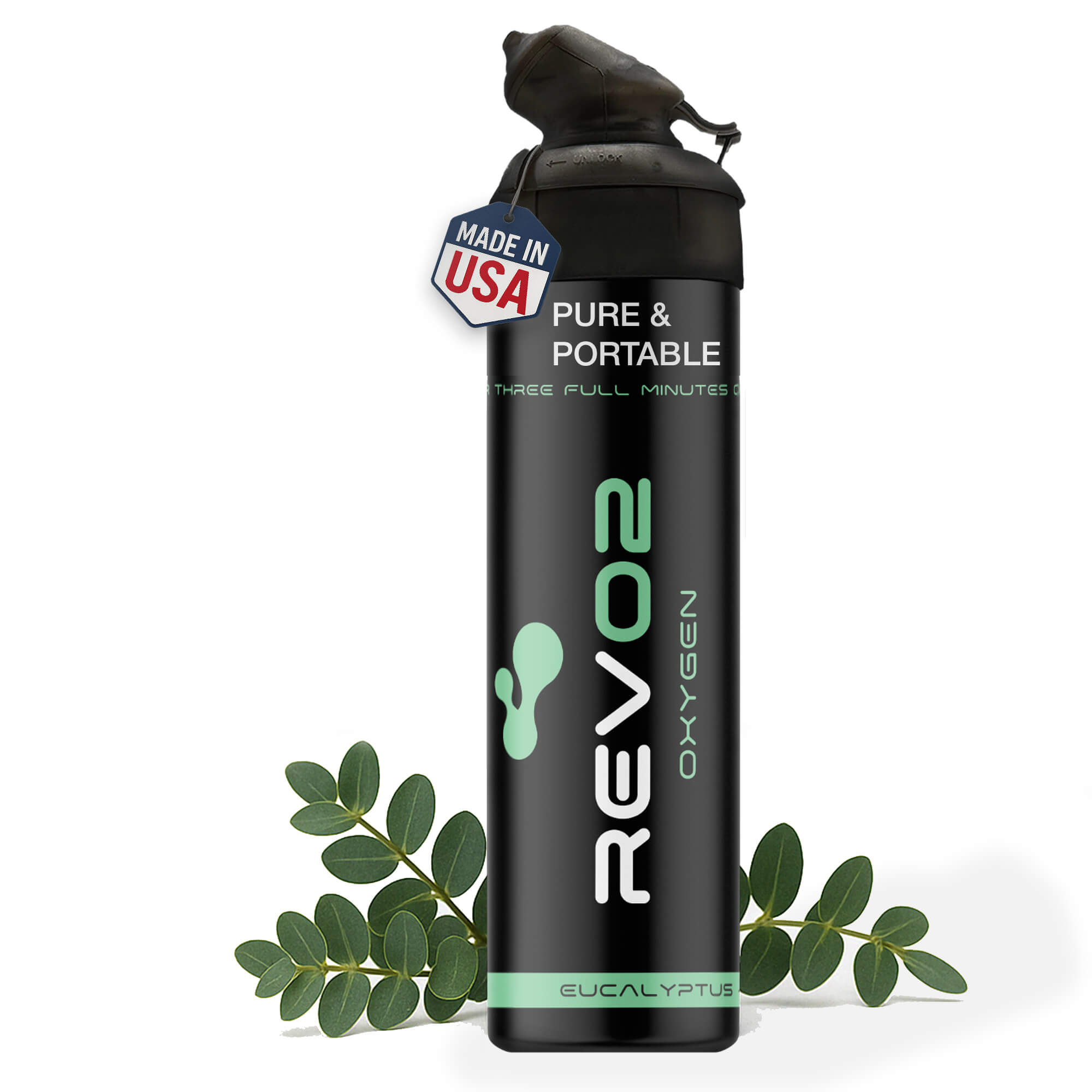
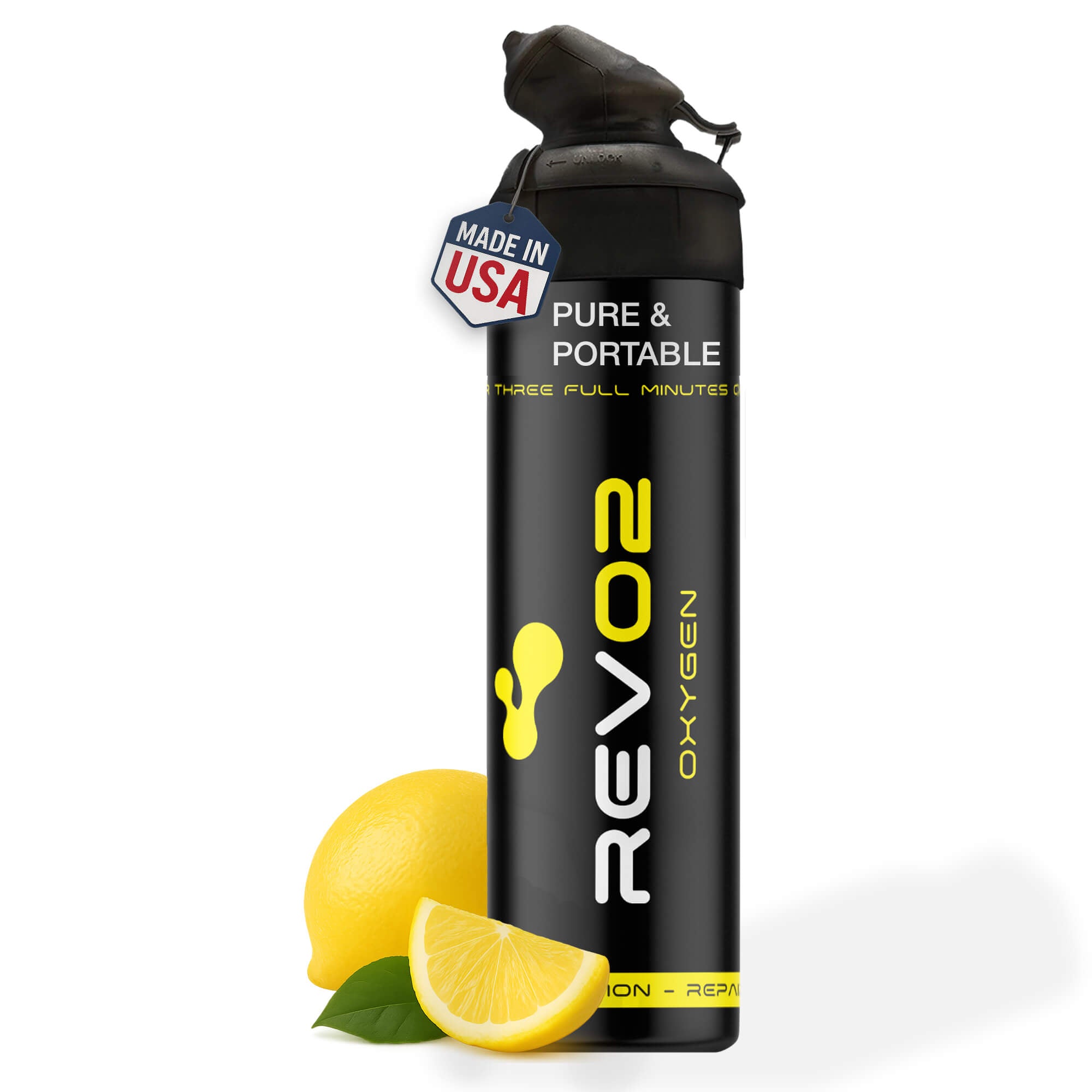
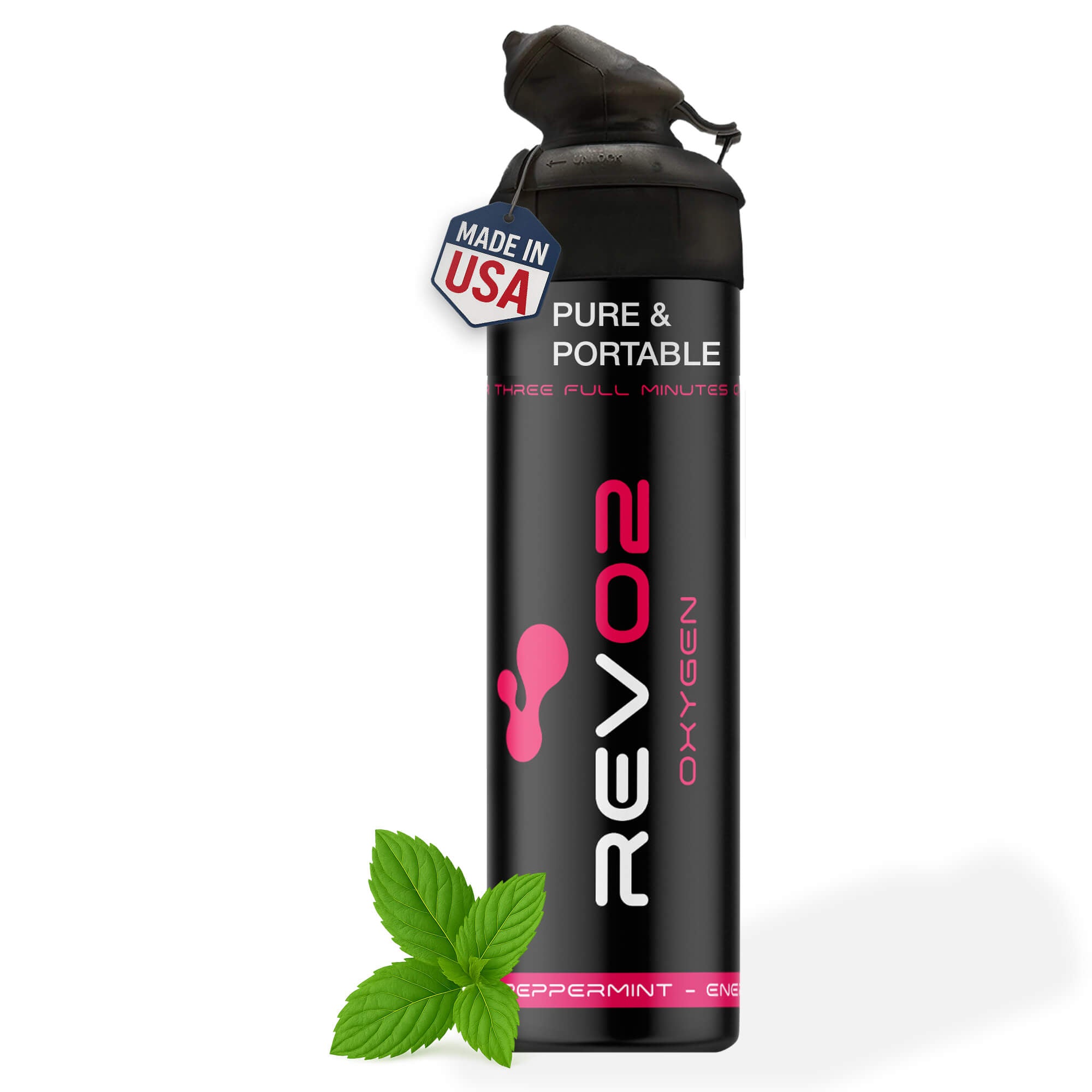
If you are building a post-workout routine of cooling down, rehydrating and breathing slowly, you can add portable oxygen to it. REV/O2 cans contain 98% pure oxygen with a zero-leak mouthpiece, and come in three blends: Lemon Oxygen for recovery, Peppermint for energy and endurance, and Eucalyptus for focus and relaxation. You can browse them all on our products page.
REV/O2 is a recreational product designed for performance and recovery. It is not a medical device and not a replacement for medical care, so persistent or severe headaches should always be checked by a clinician.
FAQ
Is a headache after working out normal?
It is common, and the primary type is usually harmless according to Mayo Clinic. Triggers like dehydration, heat, low blood sugar and a short warm-up often explain it. If it is your first one, or it is sudden and severe, get it checked promptly.
How long does a post-workout headache last?
Primary exercise headaches typically last from five minutes to 48 hours, per Mayo Clinic. Secondary headaches, caused by an underlying problem, usually last at least a day and sometimes several days. A headache that lasts more than 24 hours without improving needs medical review.
Can dehydration cause a headache after exercise?
It can contribute. Dehydration is listed as a trigger by several medical sources, though The Conversation notes it is unclear whether it causes the headache or only makes one more likely. Drink fluids before, during and after workouts, and add electrolytes for long or sweaty sessions.
Why do I get a headache after spin class?
Spin classes combine hard intervals, heat, loud music and flashing lights, all of which are listed as possible contributors to exercise-related headaches or migraine. Warm up properly, hydrate, eat beforehand and ease into intensity. If it happens every time, see a clinician.
When should I worry about a headache after exercise?
Seek urgent care for a sudden, severe headache, a stiff neck, fever, vomiting, vision changes, confusion, weakness, fainting or trouble breathing. Also get checked if it is your first exercise headache. NINDS also advises seeing a doctor if you have two or more headaches a week.
Sources
- Exercise headaches - Symptoms and causes, Mayo Clinic
- Exercise headaches - Diagnosis and treatment, Mayo Clinic
- Tension-type headaches: Self-care measures, Mayo Clinic
- Exertion Headaches, Cleveland Clinic
- Exercise-Induced Headaches, US Pharmacist
- Headache after exercise, Medical News Today
- Why do I get headaches when I exercise, The Conversation
- Migraine and Exercise, Hinge Health
- Migraine and Exercise, American Migraine Foundation
- Headache booklet, NINDS
- Update on headaches associated with physical exertion, Cephalalgia
- Primary exercise headache, MedLink Neurology
- VA/DoD Clinical Practice Guideline for Headache
- Sports heat policy requirements
- TMJ headache relief