
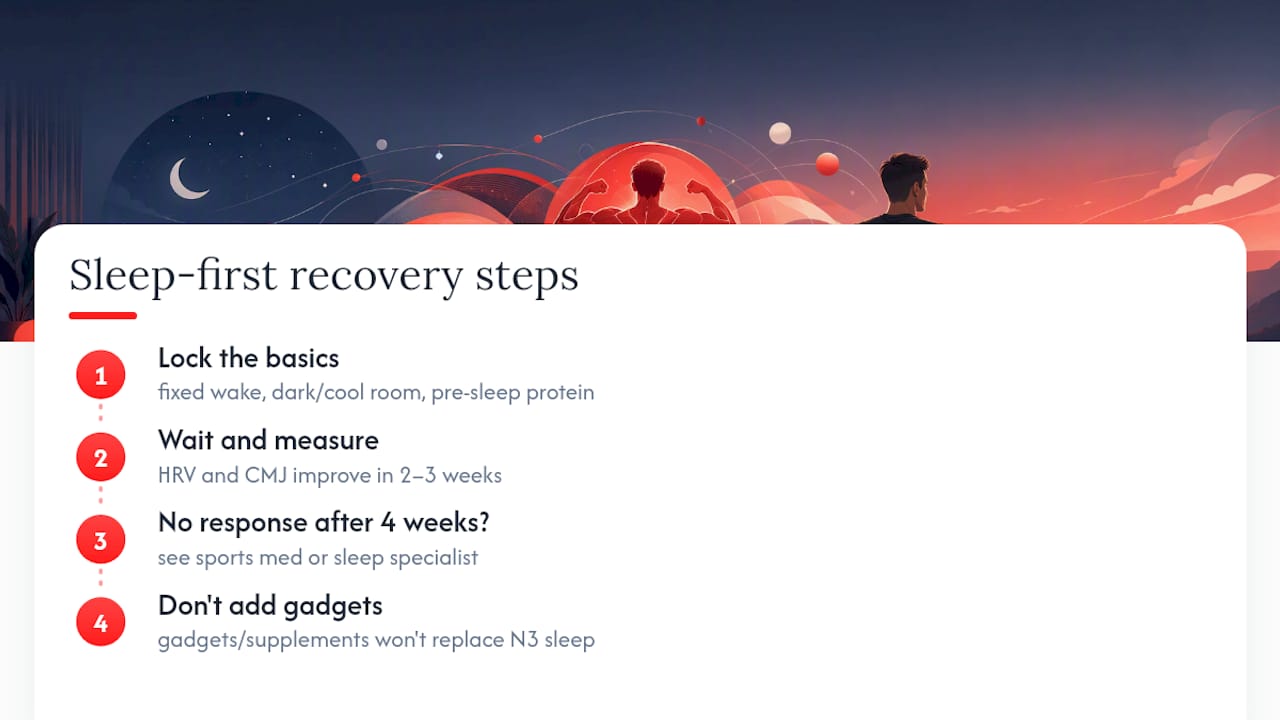
Set your bedroom to 65–68°F tonight, fix a consistent wake time, turn off screens 60 minutes before bed, and consider a small casein protein snack 30–60 minutes before sleep. These four moves protect the N3 deep-sleep window where most overnight muscle repair actually happens.
Tonight’s starting checklist:
- Set the thermostat to a cool temperature typical for optimal sleep before you lie down
- Commit to a fixed wake time, even on rest days
- Turn off all screens and dim household lights 60 minutes before bed
- Have 20–40 g of casein, cottage cheese, or Greek yogurt 30–60 minutes before sleep
- Charge your phone outside the bedroom
Every one of these steps protects Stage 3 (N3) slow-wave sleep, the phase when your pituitary gland releases the growth hormone pulse that drives myofibrillar protein synthesis and tissue remodeling overnight.
Table of Contents
- Why does deep sleep matter so much for muscle repair?
- What nightly routine and environment maximize slow-wave sleep?
- How should you time naps and training sessions?
- Evidence base and author note
- Key Takeaways
- Sleep first, gadgets second: a perspective worth defending
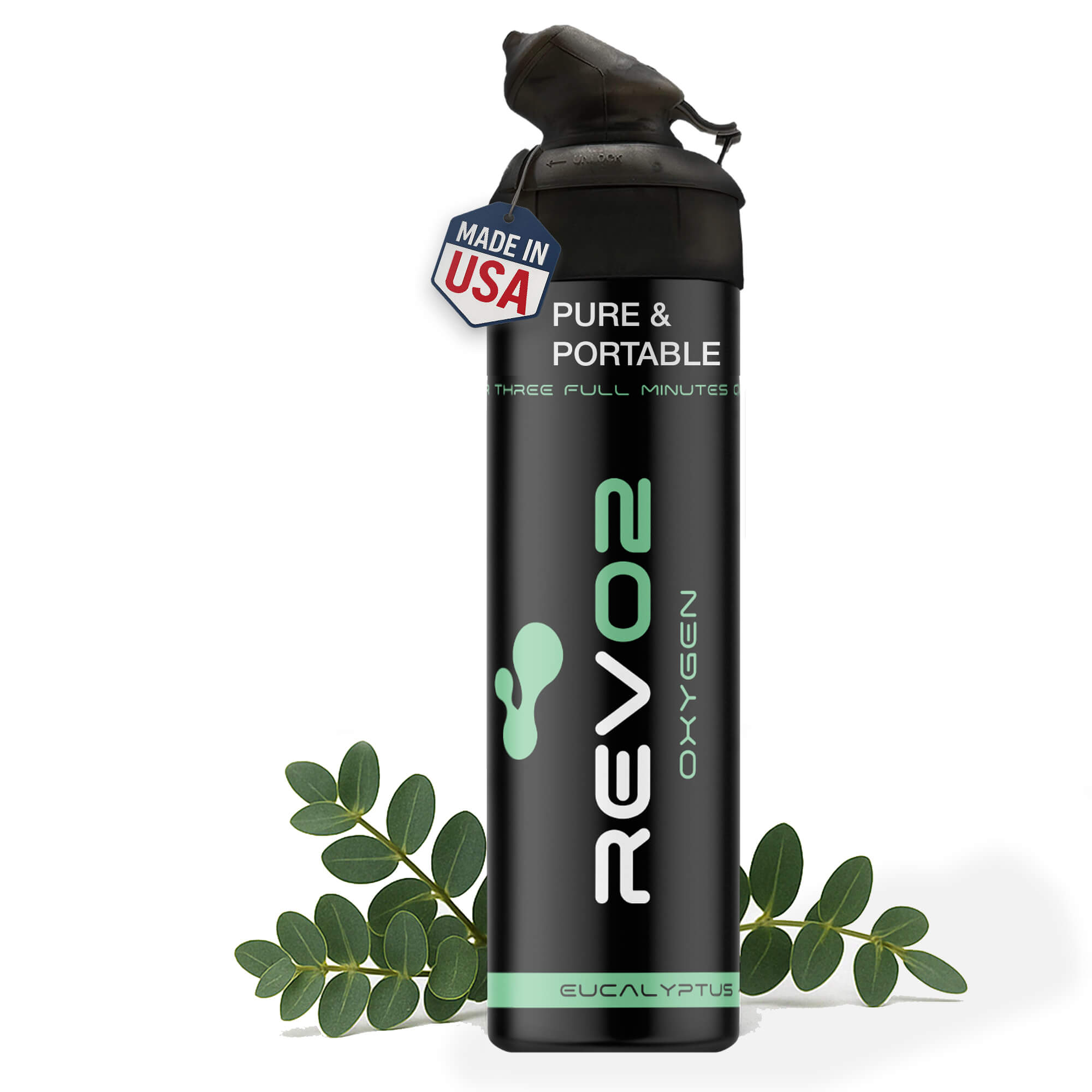
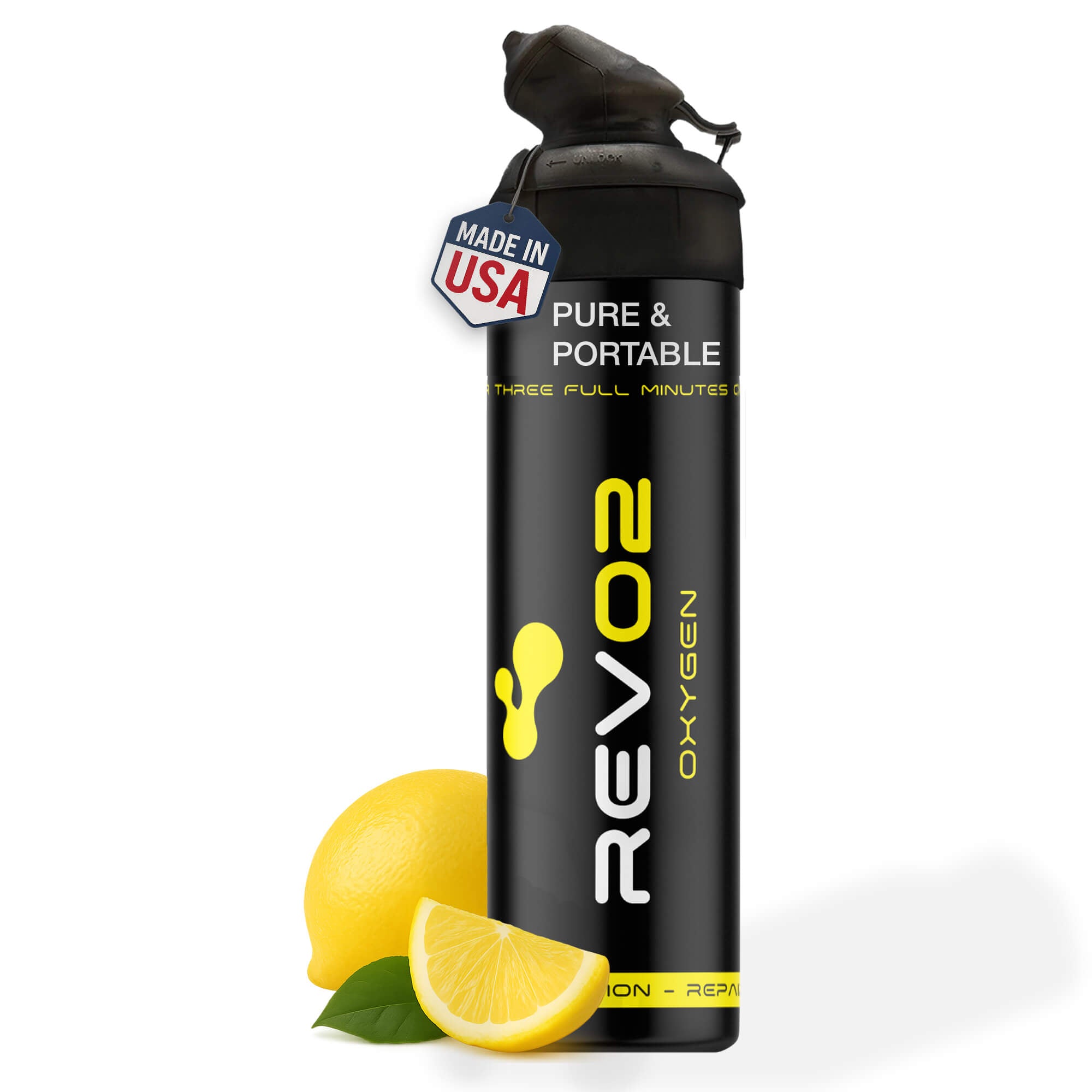
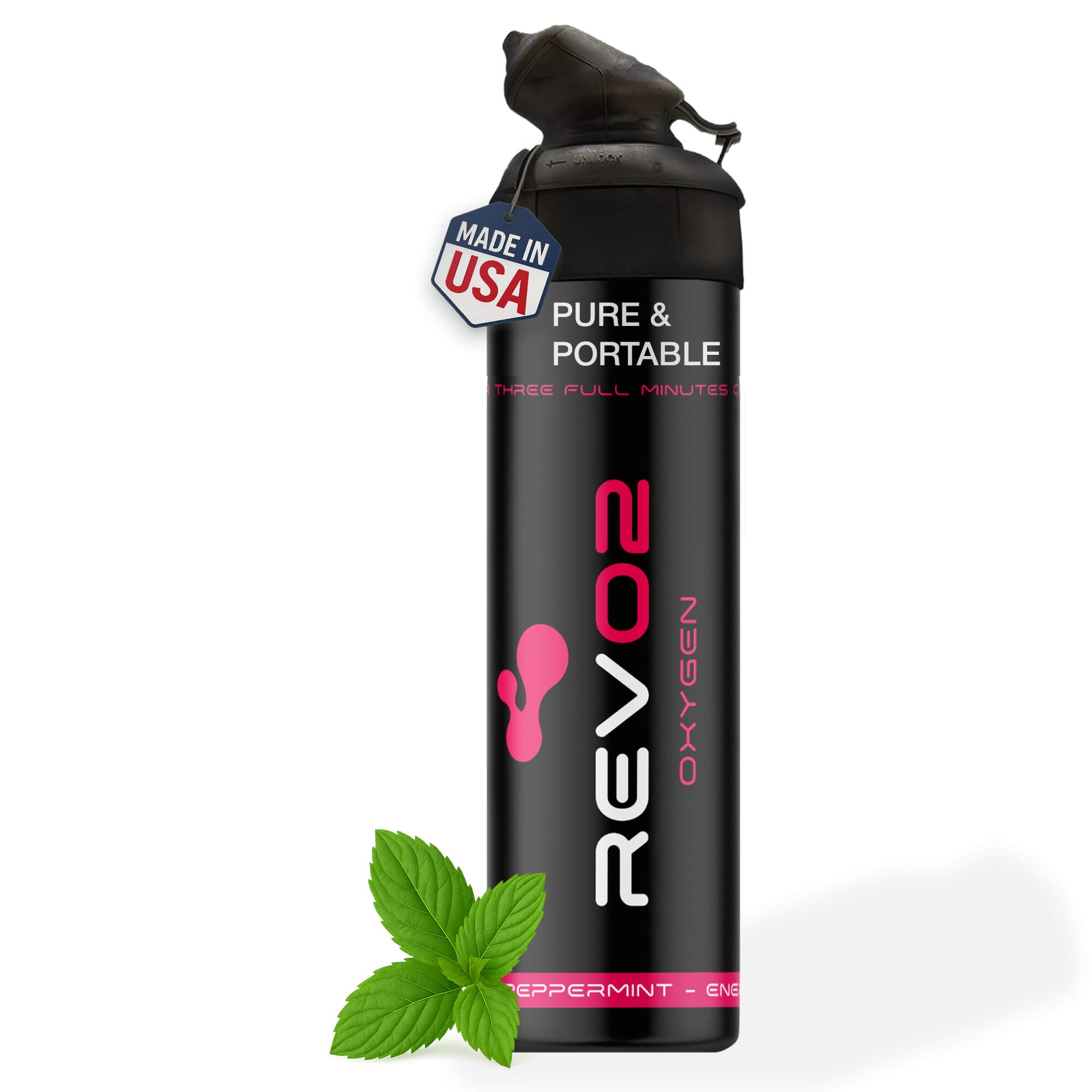
- Revo2 as part of your recovery toolkit
- Useful sources
Why does deep sleep matter so much for muscle repair?
N3 sleep is the primary overnight repair window, and roughly 60–70% of nightly human growth hormone (HGH) is released during this stage, concentrated in the first two sleep cycles of the night. That timing matters: disrupting early-night sleep cuts the repair window in a way that later sleep rarely compensates for.
During N3, growth hormone triggers myofibrillar and mitochondrial protein synthesis, while testosterone and IGF-1 remain elevated and cortisol stays suppressed. The result is a net anabolic environment, the biological condition your muscles need to rebuild after training stress.
Statistic: Approximately 60–70% of nightly human growth hormone (HGH) is released during N3 slow-wave sleep, making early-night sleep continuity the single most important variable in overnight muscle repair.
Chronic short sleep reverses this picture. Sleep deprivation increases cortisol, suppresses testosterone and IGF-1, and shifts the hormonal balance toward proteolysis, meaning the body breaks down muscle tissue faster than it rebuilds it. Over weeks, that catabolic drift raises injury risk and blunts training adaptation. Orthopedic surgeon Dr. William Workman states plainly that sleep drives tissue remodeling and endocrine restoration in ways no recovery gadget can replicate.
What nightly routine and environment maximize slow-wave sleep?
Three settings move the needle most: a consistent wake time, a bedroom temperature of 65–68°F, and no bright light in the 60 minutes before bed. Get those right before adding anything else.
Bedroom environment settings
| Variable | Target | Why it matters |
|---|---|---|
| Temperature | 65–68°F | Core body temp must drop ~1–2°F to initiate N3 |
| Light | Blackout (0 lux) | Light suppresses melatonin and delays sleep onset |
| Noise | Below 30 dB or masked | Noise arousals fragment N3 cycles |
| Phone | Outside bedroom | Reduces alerting stimuli and blue-light exposure |
Warm bedroom temperatures reduce slow-wave sleep and increase nighttime awakenings, so a thermostat or fan is not optional for athletes training in warm climates.
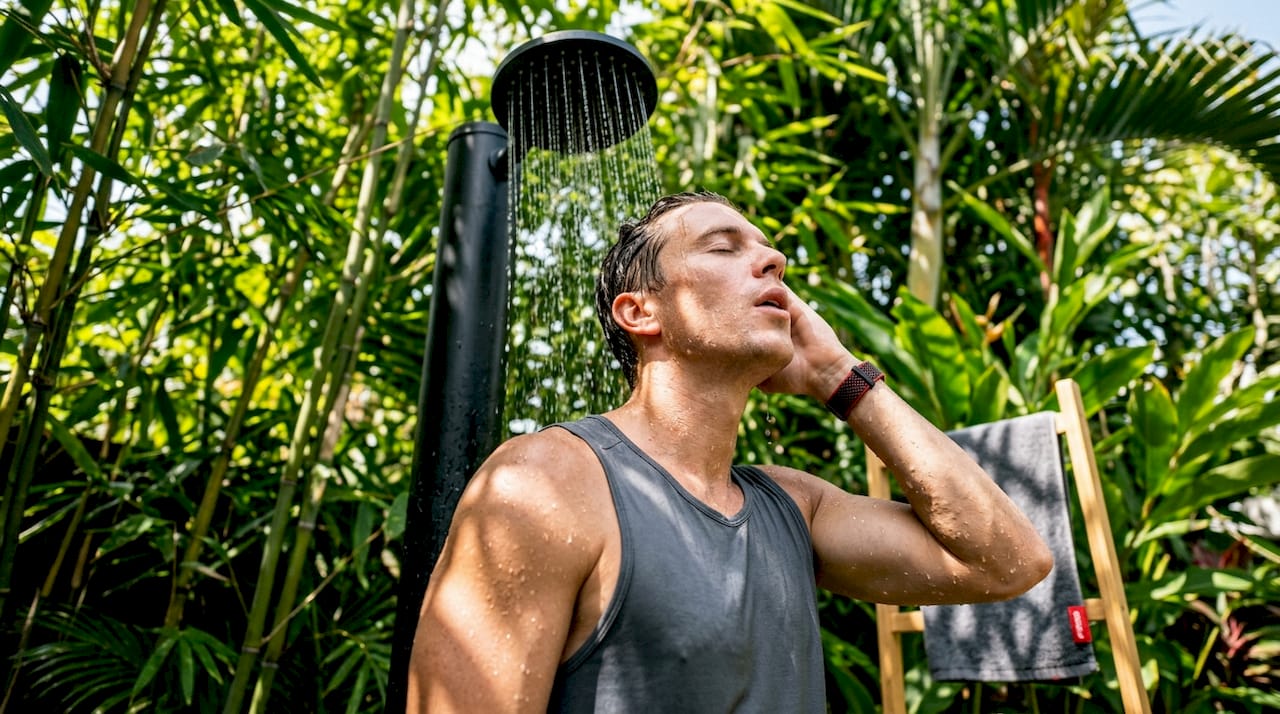
Pro Tip: Get 10–20 minutes of direct morning sunlight within 90 minutes of waking. This anchors your circadian clock and makes it easier to feel sleepy at the right time that night. If you train late, a 10-minute cool shower post-session helps accelerate the core-temperature drop needed for N3 entry.
For a deeper look at how these habits fit into a broader recovery routine for athletes, the principles carry across modalities.
How should you time naps and training sessions?
Well-timed naps and a 2–3 hour buffer between hard training and bed generally protect night sleep quality. When that buffer is not possible, a structured cooldown becomes the priority.
Nap guidelines:
- Keep naps to 20–90 minutes; shorter naps (20–30 min) avoid sleep inertia
- Avoid napping after 3:00 PM unless you are on a late-night schedule
- Use naps strategically on travel days, rest days, or after early morning sessions
- A 20-minute nap can restore alertness without reducing nighttime sleep pressure
Training timing rules:
- Finish hard sessions at least 2 hours before your target bedtime
- If training ends within 90 minutes of bed, do a structured cooldown: 20-minute walk, cool shower, and dim lights immediately after
- Athletes with evening schedules should shift their target bedtime 30–45 minutes later rather than fighting the delayed arousal state that follows intense exercise
Evidence base and author note
The recommendations in this article are built on peer-reviewed evidence linking N3 slow-wave sleep to growth hormone release and overnight protein synthesis. Key sources include PubMed 11270532 on concentrated GH release during N3, PubMed 21550729 on sleep deprivation and hormonal dysregulation, PMC8072992 on athlete-specific sleep needs, and a 2023 Sports Medicine review on pre-sleep protein and overnight muscle protein synthesis.
- This article was written by Paul, a contributor affiliated with Revo2.
- Author credentials and any applicable case studies or testimonials will be inserted here by the editorial team.
- Revo2’s portable canned oxygen products are referenced in this article as adjunct recovery tools. That relationship is disclosed transparently.
This article provides general educational information, not medical advice. Confirm any supplement, sleep, or training protocol with a qualified healthcare professional.
Key Takeaways
Protecting N3 deep sleep through consistent circadian habits, a cool dark bedroom, and pre-sleep protein is the highest-leverage strategy athletes have for overnight muscle repair.
| Point | Details |
|---|---|
| N3 sleep drives repair | About 60–70% of nightly HGH is released during N3; protect early-night sleep above all else. |
| Temperature is non-optional | Set bedroom to 65–68°F; temperatures above ~75°F measurably reduce slow-wave sleep. |
| Pre-sleep protein works | 20–40 g of casein or an equivalent increases overnight myofibrillar and mitochondrial protein synthesis. |
| Hierarchy matters | Fix circadian habits first, then environment, then supplements; gadgets come last. |
| Revo2 as an adjunct | Revo2 portable canned oxygen supports short-term breathing and energy needs around training, not as a sleep replacement. |
Sleep first, gadgets second: a perspective worth defending
The fitness industry has a talent for selling complexity. Cold plunge tubs, compression sleeves, infrared saunas, and wearable recovery scores all have their place, but they share a common flaw: none of them can manufacture the hormonal environment that N3 sleep creates. You cannot out-spend a 5-hour night.
What tends to move the needle fastest with athletes is almost always the unglamorous stuff: a fixed wake time held seven days a week, a bedroom that is genuinely dark and cool, and a pre-sleep protein habit. Those three changes cost almost nothing and produce measurable HRV and CMJ improvements within two to three weeks in most cases.
The caveat worth stating clearly is that individual variability is real. Some athletes sleep eight hours and still show suppressed HRV and elevated resting heart rate, which often points to sleep apnea, high training load, or chronic stress rather than poor sleep hygiene. When the basics are locked in and recovery markers still do not respond after four weeks, that is the moment to escalate to a sports medicine physician or sleep specialist, not to add another supplement.
For athletes who want a practical framework that pairs sleep with other recovery methods, the restorative sleep strategies guide from Checked Out Wellness covers complementary approaches worth reviewing.
Revo2 as part of your recovery toolkit
Sleep is the foundation. Revo2 is the adjunct that fills the gaps sleep alone cannot cover.
Revo2 delivers 98% pure canned oxygen through a zero-leak mouthpiece, no mask, no prescription, no setup. For athletes dealing with travel fatigue, altitude changes, or the kind of post-training mental fog that makes it hard to wind down, a short session with Revo2 can restore oxygen saturation and mental clarity quickly. It is not a substitute for the N3 repair window, and Revo2 does not claim otherwise. What it offers is a nonpharmacologic, portable option for the moments between training and sleep when your body needs a short-term boost.
Use cases where supplemental oxygen tends to help: travel days with disrupted schedules, altitude training camps above 5,000 feet, and acute energy recovery between sessions. Always follow safe-use guidance and consult a clinician if you have any underlying respiratory condition.
Explore Revo2’s sports oxygen for athletes or browse the full canned oxygen collection to find the right option for your training schedule. For guidance on integrating supplemental oxygen into your routine, the oxygen role in muscle recovery guide is a practical starting point.
Useful sources
- Concentrated GH release during slow-wave sleep (PubMed 11270532)
- Best temperature for sleep
- The sleep and recovery practices of athletes (PMC8072992)
- Pre-sleep protein and overnight muscle protein synthesis (Sports Medicine, 2023)
- Why sleep is the best recovery tool (Men’s Journal, 2026)
- Sleep interventions and muscle injury recovery (ScienceDirect)