
Active recovery is defined as low-intensity, movement-based activity performed between or after hard training sessions to promote muscle repair and reduce soreness. Unlike total rest, active recovery keeps blood moving, clears metabolic waste, and supports the physiological processes that rebuild muscle tissue. Research shows that active recovery sessions can reduce delayed-onset muscle soreness (DOMS) and accelerate muscle repair compared to passive rest. The most effective examples of active recovery techniques include walking, gentle yoga, swimming, light cycling, dynamic stretching, and self-myofascial release. Each works by enhancing circulation without creating a new training stimulus.
Examples of active recovery techniques worth adding to your routine
Common active recovery methods include walking, gentle yoga, swimming, stationary cycling, dynamic stretching, and foam rolling. These low-cost techniques increase blood flow without the mechanical load that could worsen tissue damage. Here is a closer look at each one and how to do it right.
1. Walking
Walking is the most accessible low-intensity recovery exercise available. No equipment, no gym, and no skill barrier. A 20–40 minute walk at a conversational pace keeps your heart rate in Zone 1 (30–60% of max), which is exactly where active recovery belongs. Walking stimulates circulation in the legs, which helps flush out lactate and other metabolic byproducts that accumulate during hard training.
Pro Tip: If you trained hard the day before, walk on a flat surface rather than hills. Inclines raise effort level quickly and can push you out of the recovery zone without you realizing it.
2. Gentle yoga
Gentle yoga targets mobility and relaxation rather than strength or flexibility gains. Sessions focused on restorative poses, slow breathing, and controlled movement keep the nervous system calm while improving joint range of motion. This is particularly useful after heavy lifting days when stiffness sets in overnight. Aim for 20–30 minutes of low-effort flow, not a power yoga class.
3. Swimming and water-based movement
Water provides natural resistance and buoyancy, making it ideal for recovery. The hydrostatic pressure of water also supports circulation and reduces swelling in fatigued muscles. A light swim at an easy pace, or even water walking, delivers the blood flow benefits of active recovery without compressing joints or loading sore tissue. Athletes with lower-body soreness find swimming especially effective because it offloads the legs entirely.
4. Stationary or light outdoor cycling
Cycling at low resistance keeps the legs moving through a full range of motion without impact. Stationary bikes work well because you can control resistance precisely and avoid the temptation to push harder on a downhill stretch. Set resistance low enough that you could hold a full conversation throughout the session. A 20–30 minute spin at this effort level promotes blood flow to the quadriceps, hamstrings, and glutes without adding training stress.
Pro Tip: On a stationary bike, aim for a cadence of 80–90 RPM at very low resistance. High cadence with low load keeps the movement fluid and the heart rate in the recovery zone.
5. Dynamic stretching routines
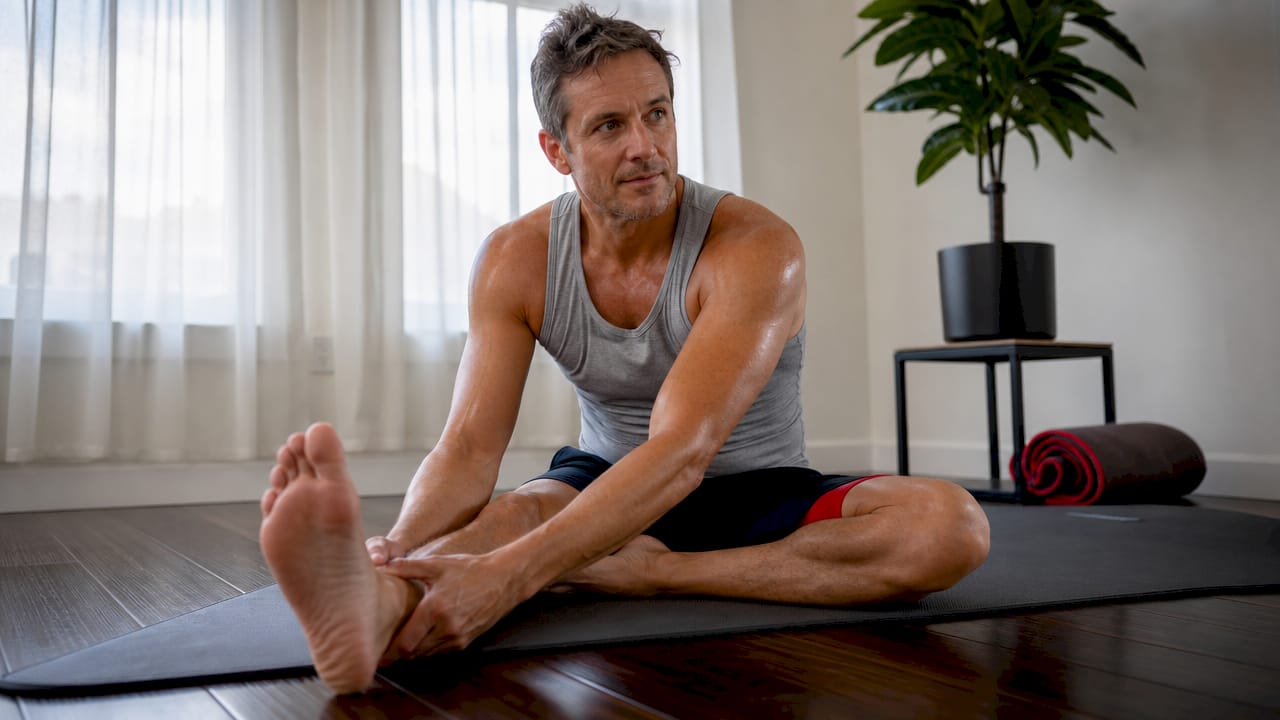
Dynamic stretching uses controlled, repetitive movement through a joint’s range of motion rather than holding static positions. Leg swings, arm circles, hip rotations, and walking lunges all qualify. These movements warm tissue gently, improve flexibility, and increase local blood flow. A 15–20 minute dynamic stretching routine works well as a standalone recovery session or as a warm-up before a light activity like walking or cycling.
6. Self-myofascial release (foam rolling and massage balls)
Self-myofascial release (SMR) uses tools like foam rollers, lacrosse balls, or massage sticks to apply pressure to muscle tissue. SMR reduces localized tension, improves tissue pliability, and supports circulation in targeted areas. Spend 30–60 seconds on each muscle group, moving slowly and pausing on tender spots. Foam rolling the calves, quadriceps, thoracic spine, and hip flexors covers most of the common post-training problem areas.
- Roll slowly. Fast rolling misses the tissue response you are looking for.
- Breathe steadily through tender spots rather than holding your breath.
- Avoid rolling directly on joints or the lower back.
- Use a lacrosse ball for smaller areas like the glutes or the arch of the foot.
7. Tai chi and slow movement practices
Tai chi combines slow, deliberate movement with breath control and balance work. The effort level is minimal, making it a genuine Zone 1 activity. Tai chi also engages the parasympathetic nervous system, which supports recovery by lowering cortisol and heart rate. Athletes who train under high psychological stress benefit from this dual physical and mental reset.
How active recovery improves both body and mind
Active recovery enhances blood flow, which accelerates the removal of metabolic byproducts like lactate and supports muscle repair. This mechanism is the core reason active recovery outperforms passive rest for most athletes in most situations. The movement does not need to be intense to work. Even a 20-minute walk produces measurable circulatory benefits.
“Rest days are growth days. Muscle protein synthesis remains elevated for up to 48 hours post-exercise, and active recovery supports repair by improving nutrient delivery to rebuilding tissue without adding a new training stressor. The goal is to feed the repair process, not interrupt it.”
Active recovery also maintains joint mobility and prevents the stiffness that comes from total inactivity. Athletes who take full rest days often report feeling stiffer and less coordinated the following day. Light movement keeps synovial fluid circulating in the joints and maintains neuromuscular coordination. The psychological benefit is equally real. Staying active on recovery days keeps athletes mentally engaged, which improves adherence to training programs over the long term.
Excessive intensity during a recovery session cancels these benefits. When effort climbs too high, the session becomes a training stressor rather than a recovery tool. Practitioners warn against accidentally turning active recovery into extra training load. If heart rate or effort is too high, it hinders muscle repair rather than aids it.
How to measure and adjust your recovery intensity
The recommended intensity for active recovery is heart rate at 30–60% of your maximum, which corresponds to Zone 1 on most heart rate zone scales. On a Rate of Perceived Exertion (RPE) scale of 1–10, this means staying between 2 and 4. The simplest real-world check is the conversational pace test: if you cannot speak full sentences comfortably, you are working too hard.
Here is a practical framework for controlling intensity:
- Set a heart rate ceiling. Calculate 60% of your max heart rate and treat it as a hard upper limit for any recovery session.
- Use the talk test. Speak a full sentence out loud every few minutes. If you are breathless, slow down immediately.
- Keep sessions to 20–40 minutes. Longer sessions at even low intensity accumulate fatigue over time.
- Monitor soreness the next day. If soreness increases after a recovery session, intensity was too high.
- Adjust for training load. After a very hard training block, lean toward the lower end of the intensity range and the shorter end of the duration range.
- Distinguish intra-session from inter-session recovery. Inter-session active recovery between training days has the strongest evidence for reducing soreness and improving readiness. Light movement between sets (intra-session) has weaker support and should not replace proper rest between efforts.
Pro Tip: Wear a heart rate monitor for your first few active recovery sessions. Most athletes are surprised how quickly effort creeps above Zone 1 when they are used to training hard. Seeing the number keeps you honest.
When to choose active recovery and when to rest completely
Active recovery is appropriate during mild soreness, general stiffness, or mental fatigue after normal training. It is not appropriate in every situation. Choosing the wrong strategy can delay full recovery or worsen an existing problem.
Use active recovery when:
- You feel mild to moderate muscle soreness (DOMS) but no sharp or localized pain.
- You are mentally fatigued but physically capable of light movement.
- You have trained hard in the past 24–48 hours and want to maintain momentum.
- You feel stiff from sitting or inactivity and need to restore circulation.
Choose passive rest when:
- You are sick. Active movement diverts resources away from immune function.
- You have an acute injury. Movement can worsen inflammation and tissue damage.
- Your resting heart rate is elevated by more than 5–7 beats above your normal baseline.
- Sleep has been disrupted for multiple nights. Elevated resting heart rate or disrupted sleep signals that the body’s recovery capacity is exceeded.
- You feel severe fatigue that does not improve after a night of sleep.
Listening to your body is not a vague instruction. It means tracking specific signals: resting heart rate, sleep quality, mood, and soreness location. When multiple signals point toward overreach, passive rest is the evidence-based choice.
Key Takeaways
Active recovery works best as a low-intensity, movement-based strategy that enhances blood flow, clears metabolic waste, and supports muscle repair without adding training stress.
| Point | Details |
|---|---|
| Keep intensity in Zone 1 | Heart rate at 30–60% of max and RPE 2–4 ensures recovery without adding training stress. |
| Best techniques for most athletes | Walking, swimming, light cycling, gentle yoga, and foam rolling cover the full range of recovery needs. |
| Inter-session recovery has the strongest evidence | Active recovery between training days reduces soreness more effectively than movement between sets. |
| Know when to stop | Elevated resting heart rate, disrupted sleep, or acute injury all call for passive rest, not active recovery. |
| Rest days are repair days | Muscle protein synthesis stays elevated for up to 48 hours post-exercise; active recovery supports that process. |
What I have learned from years of watching athletes misuse recovery days
The most common mistake I see is athletes treating recovery days as either completely wasted time or as a chance to sneak in extra work. Both approaches miss the point. Recovery is where adaptation actually happens. The training session is just the stimulus.
What actually works is treating recovery with the same intentionality as training. That means choosing your method based on what your body signals that day, not what you planned a week ago. Foam rolling combined with 20 minutes of walking and five minutes of controlled breathing covers most recovery needs without any risk of overdoing it. Breathing exercises in particular are underused. Slow, diaphragmatic breathing activates the parasympathetic nervous system and measurably lowers cortisol. Pair that with light movement and you have a genuinely effective recovery protocol.
Track your recovery the same way you track your training. Note your resting heart rate, sleep quality, and soreness level each morning. Over a few weeks, patterns emerge that tell you exactly which recovery methods work best for your body. That data is more useful than any generic protocol. The athletes who recover best are not the ones who rest the most. They are the ones who recover with purpose.
— Paul
How Revo2 supports your recovery between sessions
Oxygen delivery is central to muscle repair. After hard training, your muscles demand more oxygen to clear waste and rebuild tissue. Revo2’s sports oxygen cans deliver 98% pure oxygen through a zero-leak mouthpiece, giving your body a direct boost when it needs it most.
Athletes use Revo2 during and after active recovery sessions to support energy restoration and mental clarity. The portable design fits in any gym bag, making it easy to use after a swim, a walk, or a foam rolling session. Revo2’s full range of canned oxygen is built for athletes who take recovery as seriously as training. Explore the collection and find the format that fits your routine.
FAQ
What is active recovery?
Active recovery is low-intensity movement performed after or between hard training sessions to promote blood flow, clear metabolic waste, and reduce muscle soreness without adding training stress.
How long should an active recovery session last?
Most active recovery sessions run 20–40 minutes at an effort level of RPE 2–4 out of 10, with heart rate staying below 60% of maximum.
What are the best examples of active recovery techniques?
Walking, gentle yoga, swimming, light cycling, dynamic stretching, and foam rolling are the most widely supported low-intensity recovery exercises for athletes.
When should I choose passive rest over active recovery?
Choose passive rest when you are sick, injured, severely overtrained, or showing signs like elevated resting heart rate or disrupted sleep, as active movement can delay full recovery in those cases.
Does active recovery actually reduce muscle soreness?
Yes. Research shows that active recovery reduces DOMS with consistent effect sizes and accelerates muscle repair compared to passive rest, particularly when performed between training days.