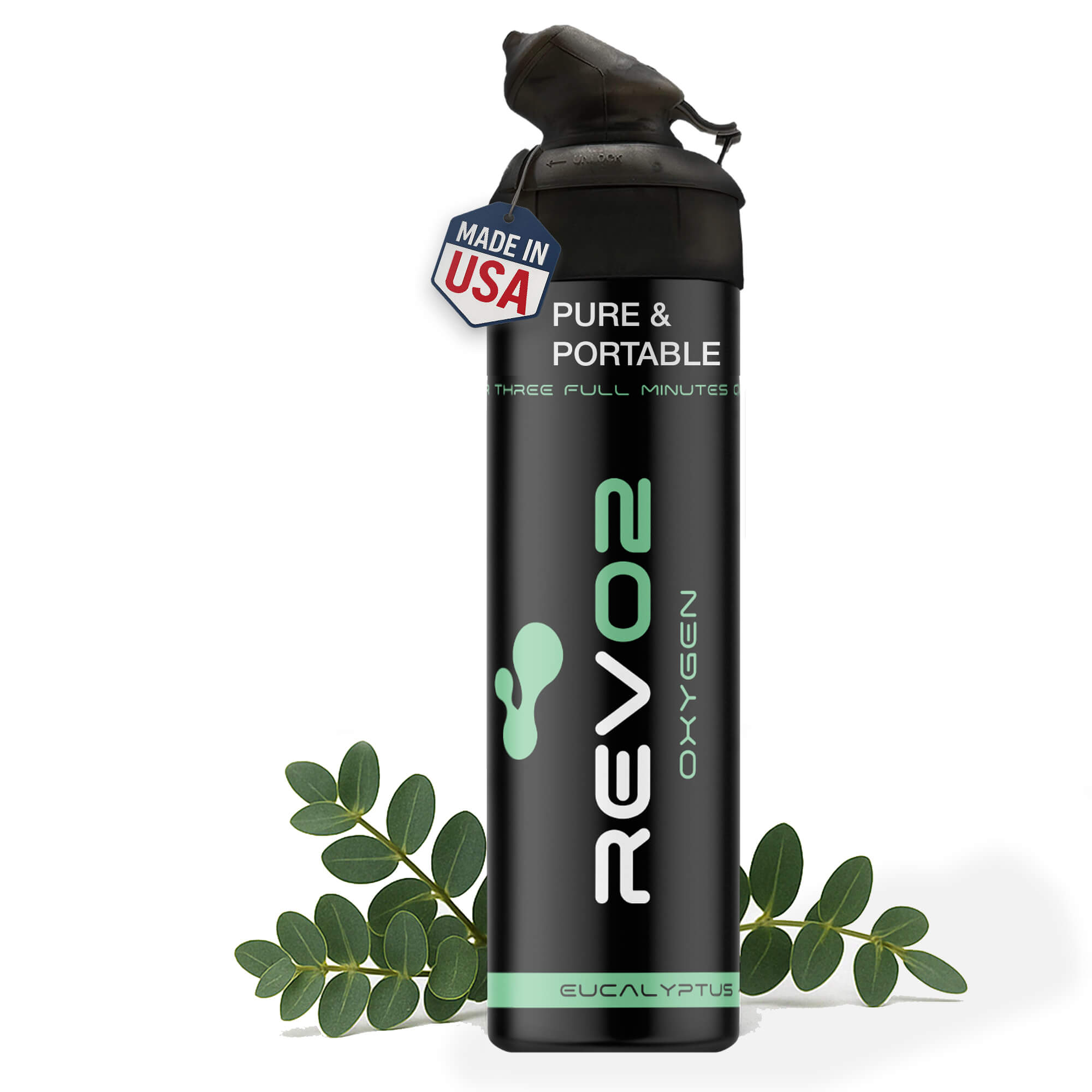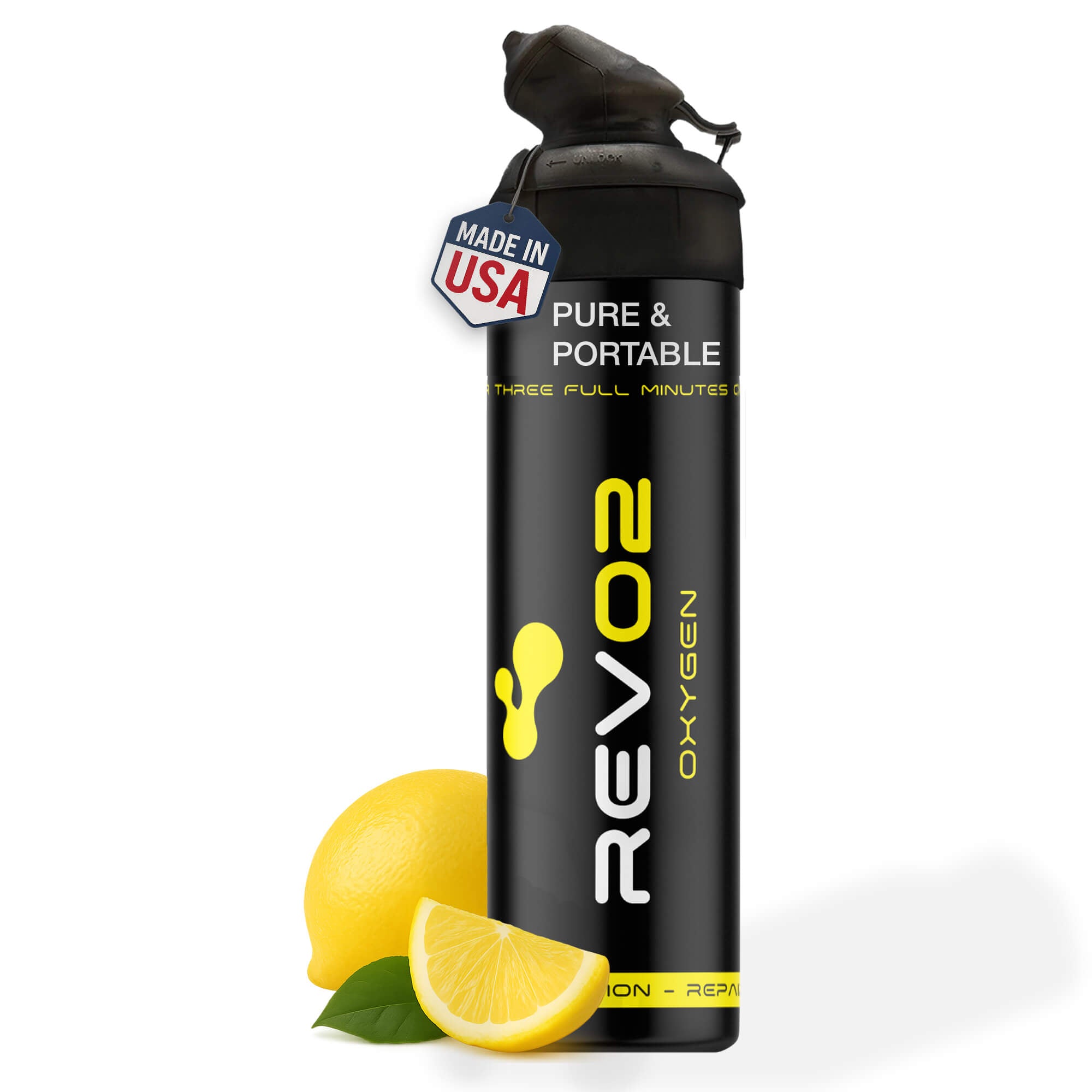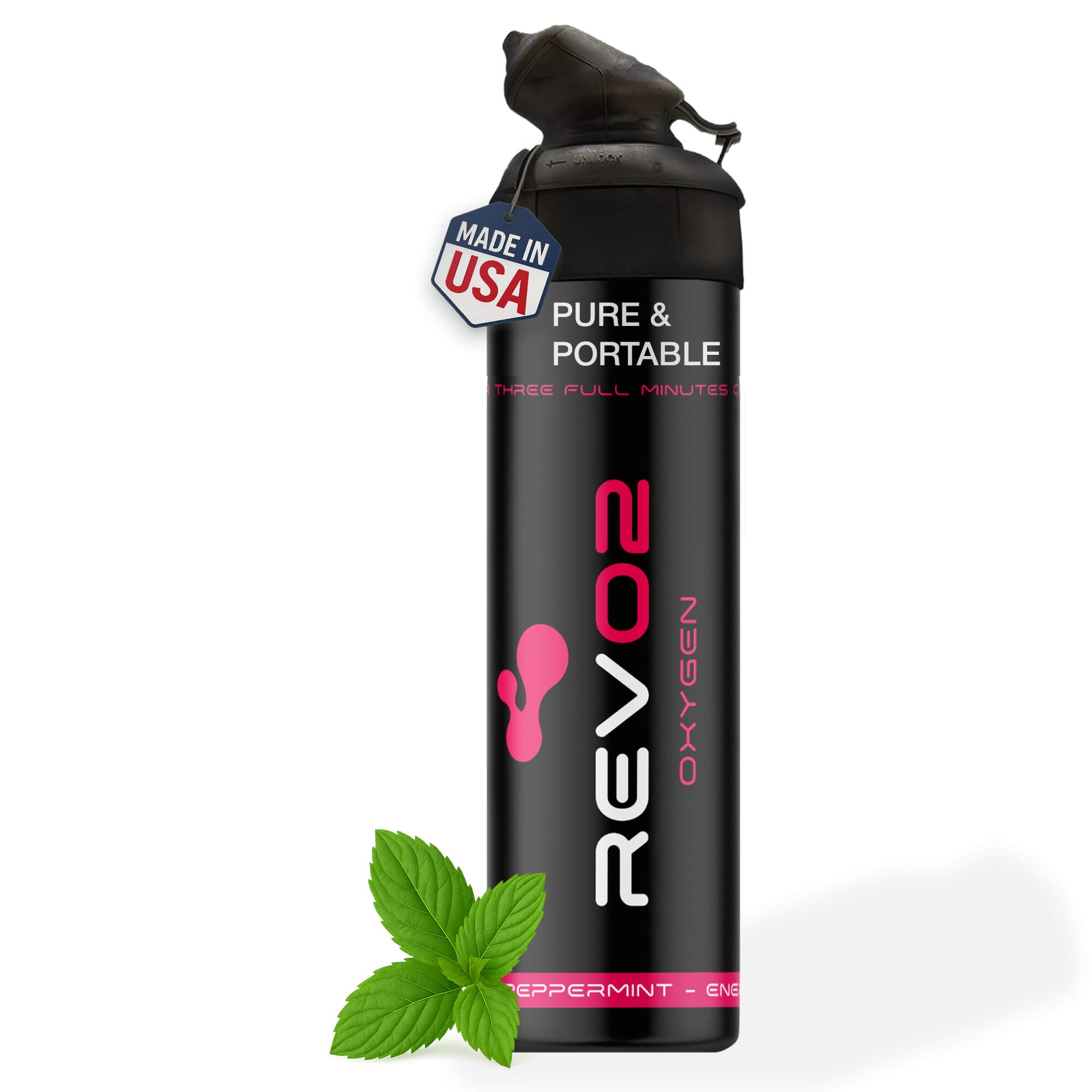

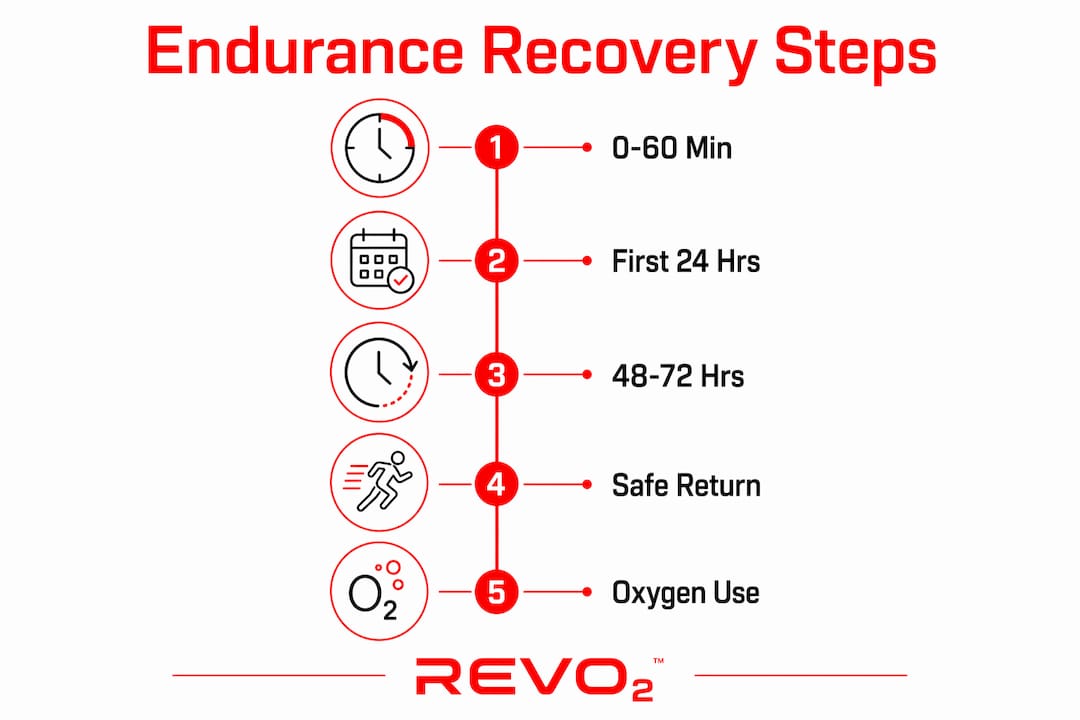
To reliably boost endurance recovery step by step, follow a timed 0–72 hour protocol: nail the 0–60 minute refuel window with a moderate amount of protein, a moderate amount of carbohydrates, and a moderate amount of fluid, protect 8–10 hours of deep sleep (where ~90% of growth hormone is secreted during slow-wave sleep), layer in active recovery and readiness monitoring across the next 72 hours, and use Revo2 canned oxygen as an optional short-term adjunct for alertness and breathing support.
Your recovery protocol at a glance:
- 0–60 min: a moderate amount of protein, carbohydrates, and fluids; add electrolytes after sessions longer than 60 minutes or in heat
- 1–24 hr: Distribute protein in ~20 g feedings; hydrate to pale-yellow urine; 20–30 min active recovery; foam roll 10–15 min; prep for 8–10 hours of sleep
- 24–72 hr: Wait for 2 of 3 readiness signals before returning to hard sessions; monitor resting heart rate and perceived energy
- REV/O2 (optional): Use immediately post-exertion or pre-nap for short-term breathing support and alertness
The highest-leverage moment in recovery is the 30–60 minute window after exercise. Miss it, and glycogen resynthesis slows, muscle protein synthesis stalls, and your next session suffers before it starts.
Table of Contents
- What should you do in the first 60 minutes after a hard session?
- How do you support recovery during the first 24 hours?
- When is it safe to return to hard training after 48–72 hours?
- How do you use Revo2 canned oxygen safely and effectively?
- What does the evidence actually say about canned oxygen and recovery?
- Your 24-hour recovery checklist and sample timeline
- Key Takeaways
- Why recovery tools work best when you use them in the right order
- Revo2 portable canned oxygen for athletes who want a reliable adjunct
- Useful sources and further reading
What should you do in the first 60 minutes after a hard session?
The 0–60 minute window is where recovery either accelerates or stalls. Glycogen resynthesis is fastest in the first two hours post-exercise, following roughly 1–1.2 g carbohydrate per kg of body weight per hour. Pair that with protein and fluids, and you trigger muscle protein synthesis while beginning to restore hydration.
| Nutrient | Target | Notes |
|---|---|---|
| Protein | 20–25 g | High-quality source: whey, Greek yogurt, eggs |
| Carbohydrates | 60–80 g | Fast-digesting preferred: banana, rice, oats |
| Fluid | 16–24 oz | Add electrolytes if session >60 min or in heat |
Quick portable options that hit these targets:
- Smoothie: banana + Greek yogurt + milk (hits all three macros)
- Chocolate milk: natural carb-to-protein ratio, portable, affordable
- Rice cakes + peanut butter + a sports drink
- Banana + whey protein shake + electrolyte tablet in water
Integrating Revo2 in the immediate window: After your cool-down, take 2–3 slow inhalations from a Revo2 can using the zero-leak mouthpiece. Breathe in steadily for 2–3 seconds, hold briefly, then exhale fully. This brief session can support alertness and perceived breathing ease while your body begins the refueling process. Revo2 is an adjunct here, not a replacement for food and fluid.
Pro Tip: Pack a recovery kit the night before: a small cooler bag with a pre-made protein shake, a banana, and a Revo2 can. When you’re tired post-session, the last thing you want is a decision to make.
How do you support recovery during the first 24 hours?
Continue repair with regular protein feedings and steady carbohydrate intake throughout the day. Post-exercise protein is most effective in moderate, repeated feedings of about 20 g per serving, with a total daily target of 1.6–2.2 g/kg during heavy training blocks. Spacing four feedings across the day maximizes muscle protein synthesis better than two or three larger meals.
Hydration checklist for the day:
- Drink 16–24 oz of fluid per pound of body weight lost during exercise
- Aim for pale-yellow urine within a few hours post-session
- Include sodium and potassium if you sweat heavily or trained in heat
- Avoid relying on thirst alone — it lags behind actual fluid needs
Active recovery is one of the most underused tools in an endurance athlete’s kit. A 20–30 minute walk or easy spin clears lactate faster than passive rest and often reduces soreness more effectively. Add 10–15 minutes of foam rolling on quads, hamstrings, glutes, and calves to address delayed-onset muscle soreness in the 24–48 hours that follow.
Sleep target: 8–10 hours. During slow-wave sleep, roughly 90% of growth hormone is secreted, tissue repair accelerates, and the nervous system recalibrates. No supplement replicates this.
Sleep prep checklist:
- Set a consistent bedtime and wake time to reinforce your circadian rhythm
- Avoid screens 30–60 minutes before bed
- Keep the room cool and dark
- Consider magnesium glycinate in the evening to support muscle relaxation and sleep depth
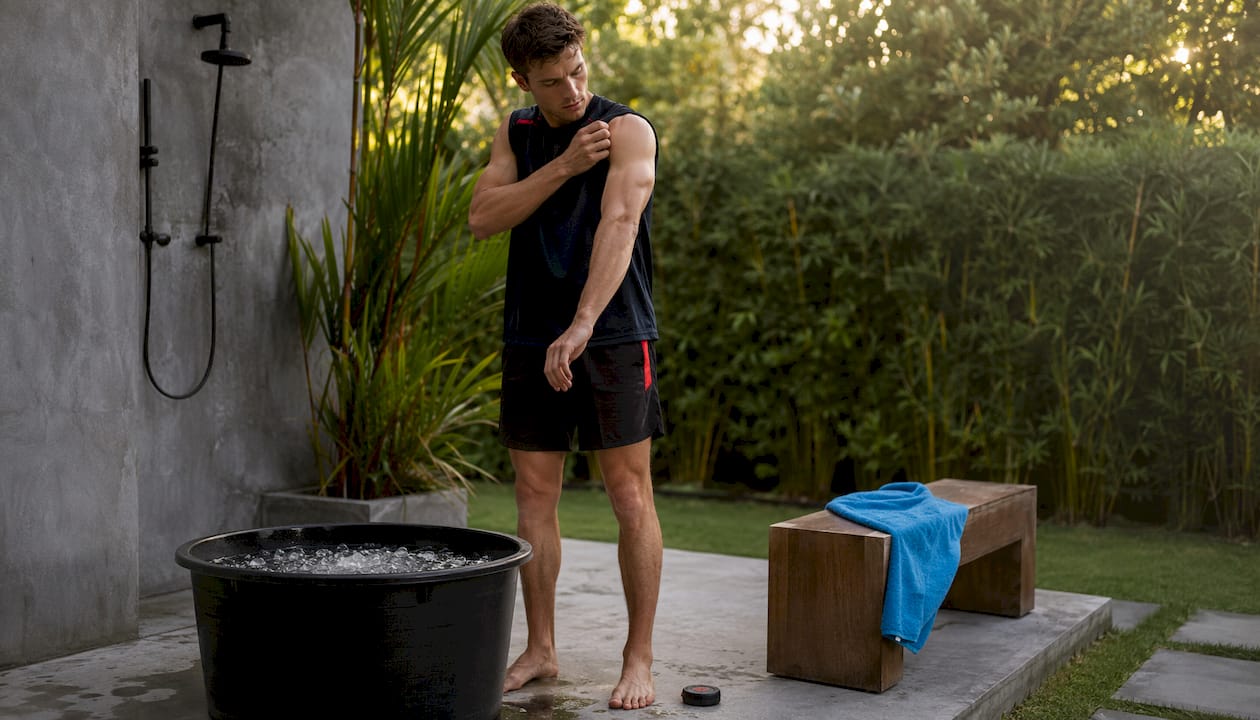
One timing note worth knowing: cold water immersion and NSAIDs can reduce soreness but may blunt adaptation during heavy training blocks. Save ice baths for race weeks, not routine training days.
When is it safe to return to hard training after 48–72 hours?
The core rule: wait 48–72 hours between hard sessions unless objective readiness signals confirm recovery has occurred sooner. Feeling “okay” after 24 hours rarely reflects full physiological readiness. Objective markers tell a more honest story.
Three readiness signals to check before resuming intensity:
- Resting heart rate: Within 3–5 bpm of your personal baseline
- Warmup leg feel: Legs respond normally within the first 10 minutes of easy movement
- Energy and motivation: Sustained baseline energy, not just a good morning mood
Decision framework: If 2 of 3 signals are positive, a progressive hard session is appropriate. If only 0–1 are positive, extend recovery with another easy day or rest.
Watch for overtraining indicators that warrant professional consultation: resting heart rate elevated for more than three consecutive days, persistent fatigue that sleep does not resolve, recurring sleep disruption, or a sustained drop in performance across multiple sessions. These are signals to reduce load and speak with a sports medicine clinician, not push through.
How do you use Revo2 canned oxygen safely and effectively?
Revo2 delivers 98% pure oxygen through a zero-leak mouthpiece, making it a practical short-term adjunct for breathing support, alertness, and subjective recovery ease. It works best as a complement to nutrition and sleep, not a stand-in for either.
Step-by-step usage for recovery:
- Finish your cool-down and begin refueling before reaching for the can
- Hold the Revo2 can upright and place the mouthpiece to your lips
- Inhale slowly and steadily for 2–3 seconds, allowing the oxygen to fill your lungs
- Hold for 1–2 seconds, then exhale fully through your nose or mouth
- Repeat 2–4 times per session; there is no benefit to extended continuous inhalation
- Use again pre-nap or during travel if you feel respiratory fatigue or altitude-related breathlessness
Best moments to use Revo2:
- Immediately post-exertion for alertness and perceived breathing ease
- Pre-nap to support relaxation and respiratory comfort
- During travel or at altitude where ambient oxygen is lower
- Not as a substitute for medical oxygen in cases of hypoxemia or diagnosed respiratory conditions
Safety callout: Individuals with untreated respiratory conditions, cardiovascular disease, or any condition affecting oxygen metabolism should consult a physician before using supplemental oxygen. Revo2 is not intended to treat, diagnose, or replace medical-grade oxygen therapy. Review the safe use guide before your first session.
Pro Tip: Store your Revo2 can in your gym bag or recovery kit at room temperature. Avoid leaving it in a hot car. The zero-leak mouthpiece means no wasted oxygen between uses, so one can goes further than you might expect.
For deep breathing techniques that pair well with Revo2 use, diaphragmatic breathing during inhalation maximizes oxygen uptake and supports parasympathetic activation, which is the physiological state your body needs to recover.
What does the evidence actually say about canned oxygen and recovery?
The proposed mechanisms for supplemental oxygen adjuncts are plausible: short-term increased oxygen availability can support alertness, reduce perceived breathlessness, and ease the subjective experience of post-exertion fatigue. At altitude or after travel, where ambient oxygen saturation is lower, the effect is more pronounced. Research on recovery techniques for athletes consistently places nutrition, sleep, and active recovery at the top of the priority hierarchy, with adjunct tools providing incremental benefit when the foundation is solid.
| Recovery Pillar | Primary Mechanism | Evidence Level |
|---|---|---|
| Nutrition (protein + carbs) | Glycogen restoration, muscle protein synthesis | High |
| Sleep (8–10 hr) | Growth hormone release, tissue repair | High |
| Active recovery | Lactate clearance, reduced soreness | Moderate |
| Foam rolling / massage | DOMS reduction | Moderate |
| Cold water immersion | Soreness reduction (with adaptation tradeoff) | Moderate |
| Canned oxygen (Revo2) | Short-term alertness, breathing support | Emerging |
“Any potential gains from an effective recovery strategy remain futile in the absence of getting the basic principles of training, nutrition, hydration, sleep hygiene, and appropriate rest correct.” — BASES Expert Statement
Canned oxygen is most useful for travel fatigue, altitude exposure, and short-term alertness after intense effort. It does not replace caloric or protein refueling, and it cannot replicate the hormonal repair cascade that occurs during slow-wave sleep. Understanding how breathing affects performance helps put oxygen adjuncts in the right context: they support the respiratory side of recovery, not the metabolic side.
When canned oxygen is likely useful:
- Post-travel or at altitude (above 5,000 feet) where oxygen saturation drops
- Immediately post-exertion for a short alertness and breathing-ease boost
- Pre-nap to ease respiratory discomfort and support relaxation
When it is not the right tool:
- As a substitute for eating after a hard session
- As a replacement for sleep when fatigue is cumulative
- As a treatment for diagnosed hypoxemia or respiratory illness
Your 24-hour recovery checklist and sample timeline
Recovery checklist (tick off as you go):
- Within 60 min: consume a moderate amount of protein, carbohydrates, and fluid
- Within 60 min: optional Revo2 use (2–4 inhalations post cool-down)
- Hours 1–6: continue hydrating; add electrolytes if needed
- Hours 2–4: 20–30 min easy walk, cycling, or mobility work
- Hours 3–5: 10–15 min foam rolling on major muscle groups
- Hours 6–12: eat regular meals with ~20 g protein per feeding
- Evening: screen-free wind-down 30–60 min before bed
- Night: target 8–10 hours of uninterrupted sleep
- Next morning: check resting HR, leg feel, and energy before planning intensity
Sample 24-hour recovery day:
- 7:00 AM (post-session): Protein shake + banana + 20 oz water with electrolytes; 2–4 Revo2 inhalations
- 9:00 AM: Light breakfast: eggs, oats, fruit; continue hydrating
- 11:00 AM: 25-minute easy walk or recovery spin; 10 min foam rolling
- 1:00 PM: Lunch with lean protein, rice or potatoes, vegetables
- 3:00 PM: Optional short nap (20–30 min); Revo2 pre-nap if traveling or fatigued
- 6:00 PM: Dinner: ~20 g protein, complex carbs, anti-inflammatory foods (tart cherry, leafy greens)
- 9:00 PM: Magnesium glycinate; screen off; cool, dark room
- 10:00 PM: Sleep; target 8–10 hours
Red flags — seek professional help if you notice:
- Resting heart rate elevated more than 3 consecutive days above baseline
- Sleep disruption that persists beyond 48 hours post-session
- Sustained performance decline across multiple training sessions
- Persistent low mood, motivation loss, or appetite suppression
Key Takeaways
A reliable step-by-step endurance recovery plan requires nailing the 0–60 minute refuel window, protecting 8–10 hours of sleep, and using objective readiness signals before returning to hard sessions.
| Point | Details |
|---|---|
| Nail the first 60 minutes | Consume a moderate amount of protein, a moderate amount of carbohydrates, and a moderate amount of fluid immediately post-session. |
| Protect sleep above all else | Target 8–10 hours nightly; ~90% of growth hormone secretion occurs during slow-wave sleep. |
| Space protein across the day | Aim for ~20 g per feeding across four meals during heavy training; total daily target is 1.6–2.2 g/kg. |
| Use readiness signals, not feelings | Return to hard sessions only when 2 of 3 signals (resting HR, leg feel, energy) are positive after 48–72 hours. |
| Revo2 as a targeted adjunct | Use Revo2 post-exertion or pre-nap for short-term breathing support; it complements, not replaces, nutrition and sleep. |
Why recovery tools work best when you use them in the right order
The most common mistake endurance athletes make is layering recovery tools on top of a broken foundation. A Revo2 can, a cold plunge, or a massage gun will not compensate for a missed refuel or five hours of sleep. The evidence is consistent on this: hydration, nutrition, and sleep are the strategies endurance athletes rate highest for both use and effectiveness, and the research backs that ranking.
What gets underappreciated is the psychological dimension of recovery. Relaxation techniques, mindfulness, and even social connection after hard efforts contribute to the full recovery picture. Few athletes use them deliberately, yet the evidence on recovery strategies suggests they address components that nutrition and sleep alone cannot fully reach.
Revo2 fits cleanly into a well-ordered protocol. It is not a shortcut, and it does not claim to be. Used at the right moment, after the refuel is done and before a nap or during travel, it offers a genuine, low-effort way to support respiratory comfort and alertness. That is a real and specific benefit. The mistake would be reaching for it first, before the meal, before the water, before the sleep plan is set. Get the sequence right, and every tool in your kit performs better.
For athletes who train across disciplines, a climbing-specific recovery guide offers a useful cross-discipline perspective on how the same recovery principles apply under different physical demands.
Revo2 portable canned oxygen for athletes who want a reliable adjunct
Revo2 delivers 98% pure oxygen in a portable can with a zero-leak mouthpiece, designed for athletes who want a practical breathing support tool they can carry anywhere. It is not a replacement for your post-session meal or your sleep routine. It is the tool you reach for when those foundations are in place and you want an extra edge on alertness, respiratory ease, or travel recovery.
Best moments to use Revo2:
- Immediately post-exertion, after refueling, for a short alertness boost
- Pre-nap or during long travel days when respiratory fatigue sets in
- At altitude (above 5,000 feet) where ambient oxygen saturation is lower
Revo2 is backed by scientific design and athlete input, and every can is built for portability without waste. Review the full safe use guidance for timing and contraindications, then explore the full range of canned oxygen options to find the format that fits your training kit.
Useful sources and further reading
This article draws on peer-reviewed research, practitioner guidelines, and Revo2’s own product guidance. The sources below are selected for authority and direct relevance to endurance recovery.
- Recovery Strategies in Endurance Athletes — PMC/NCBI: peer-reviewed study on recovery practices across 264 endurance athletes
- Recovery Techniques for Athletes — GSSI: evidence review on hydrotherapy, compression, and accessory strategies
- How to Recover From a Hard Run — Runners Connect: research-backed guidance on sleep, foam rolling, and session spacing
- Best Recovery Practices for Endurance Athletes — TrainingPeaks: protein distribution and daily targets for heavy training
- Recovery for Athletes — Mass General Brigham: clinical perspective on accessory modalities
- Mayo Clinic — Nutrition and Recovery Guidance: immediate post-exercise macronutrient targets
- Revo2 Safe Use Guide: brand-specific guidance on timing, technique, and contraindications
- Revo2 Sports Oxygen for Athletes: product details and athlete-focused use cases
When evaluating recovery sources, prioritize peer-reviewed research and practitioner guidelines over marketing content. Every claim in this article is drawn from the sources listed above or from established sports science consensus, with direct links to the primary material where available.