
As barometric pressure drops with elevation, fewer oxygen molecules reach your lungs with each breath, so blood oxygen saturation and exercise capacity both decline. The fix is straightforward: ascend gradually, watch for symptoms like headache or breathlessness, and descend or use supplemental oxygen if they don’t improve.
TL;DR:
- Acclimatization requires gradual ascent, with sleeping elevation increases limited to 500 meters per day above 3,000 meters to avoid severe altitude sickness.
- The body’s primary response to altitude involves faster breathing and increased heart rate, which typically normalize after about a week; full red blood cell adaptation takes weeks.
- Early symptoms of altitude illness include headache, fatigue, and breathlessness; severe forms like HAPE and HACE demand immediate descent and medical intervention.
- Using a pulse oximeter to track blood oxygen saturation helps identify worsening symptoms, especially when combined with monitoring changes in breathing and heart rate.
- Canned oxygen provides only temporary relief during mild symptoms and should never replace descent or medical oxygen for serious altitude illnesses.
Table of Contents
- Why Air Feels Thinner at High Elevations
- How Does Your Body React to Sudden Altitude Exposure?
- How Long Does It Take to Adjust to Thin Air?
- Recognizing Altitude Illness: AMS, HAPE, and HACE
- Field Tactics That Actually Reduce Altitude Risk
- Can Breathing Techniques Improve Oxygen Levels at Altitude?
- Who Should Talk to a Doctor Before High Altitude Travel
- A Practical Perspective on Managing Thin Air
- Where Canned Oxygen Fits Into Your Altitude Plan
- Sources
- FAQ
Why Air Feels Thinner at High Elevations
The oxygen percentage in the atmosphere barely changes as you climb. What changes is the pressure squeezing those molecules together. At sea level, barometric pressure pushes air molecules close, so every breath delivers a predictable dose of oxygen. Climb higher, and that pressure drops, spreading the same proportion of oxygen molecules across more space.
This is the concept scientists call partial pressure of oxygen, or PO2, and it’s the number that actually determines how much oxygen diffuses into your blood, not the percentage figure. Barometric pressure drives PO2 down as elevation increases, and that drop is what produces the breathlessness, headaches, and fatigue people associate with oxygen levels in thin air.
The numbers make this concrete. At sea level, inspired PO2 sits around 160 mmHg. Climb to about 3,050 meters (roughly 10,000 feet), and inspired PO2 drops to approximately 69% of the sea level value.
A few practical points fall out of these numbers:
- Cabin pressure on commercial flights is typically maintained around an altitude equivalent of 1,800 to 2,400 meters, which is why some travelers feel mildly short of breath even before they land.
- Humid air displaces some oxygen at the alveolar level, part of what physiologists describe with the alveolar gas equation, so hot, humid high-altitude environments can compound the drop in usable oxygen slightly beyond pressure alone.
- Individual baseline SpO2 varies by several percentage points even among healthy people at the same elevation, which is why two hikers on the same trail can feel very differently about the same climb.
None of this means the air is somehow different in composition. It means the same breath simply carries less punch, and your body has to work harder or adapt to compensate.
How Does Your Body React to Sudden Altitude Exposure?
Within minutes of climbing to altitude, your body registers the drop in oxygen and starts adjusting ventilation. This response, called the hypoxic ventilatory response (HVR), is triggered by chemoreceptors in the carotid bodies at the base of your neck that sense falling oxygen levels in arterial blood and signal your brainstem to increase breathing rate and depth.
The catch is that HVR varies substantially from person to person. Two climbers with identical fitness levels and ascent profiles can have very different ventilatory responses, and that variability at the carotid body chemoreceptor level helps explain why some people develop symptoms while their hiking partners feel fine. Genetics, prior altitude exposure, and even sleep quality the night before all play a role.
Breathing faster and deeper does help restore oxygen intake, but it comes with a side effect. Hyperventilation blows off carbon dioxide faster than your body produces it, lowering PaCO2 and shifting your blood chemistry toward what’s called respiratory alkalosis. This creates a feedback loop: the alkalosis itself can blunt the drive to keep breathing hard, partially offsetting the benefit of the increased ventilation in the first place. Your kidneys eventually correct this by excreting bicarbonate, which is part of why full acclimatization takes days rather than hours.
Heart rate rises in parallel with ventilation. At rest, resting heart rate at altitude can run 10 to 20 beats per minute higher than at sea level for the first day or two, as your cardiovascular system compensates for lower oxygen content in each unit of blood by circulating that blood faster.
A less obvious response happens deep in the lungs themselves. Low oxygen levels trigger pulmonary vasoconstriction, a narrowing of blood vessels in areas of the lung receiving less oxygen. At sea level this mechanism is useful, it redirects blood flow away from poorly ventilated lung regions. At altitude, though, the effect happens throughout the lungs simultaneously, since the whole organ is short on oxygen. The result can be a meaningful rise in pulmonary arterial pressure, and in susceptible individuals, this is one of the mechanisms believed to contribute to high altitude pulmonary edema (HAPE).
Key early responses to watch for in yourself or travel companions:
- Faster, deeper breathing that doesn’t fully resolve after 15 to 20 minutes of rest.
- Resting heart rate noticeably elevated compared to your normal baseline.
- Mild lightheadedness or tingling in the fingers, which can reflect the respiratory alkalosis from hyperventilation rather than true oxygen deprivation.
- Breathlessness with exertion that feels disproportionate to the activity.
Pro Tip: A pulse oximeter is one of the most useful pieces of gear you can pack for altitude travel. It won’t diagnose altitude illness on its own, but tracking your SpO2 trend over a few hours gives you an objective signal that complements how you feel, which matters because early altitude symptoms are easy to talk yourself out of.
How Long Does It Take to Adjust to Thin Air?
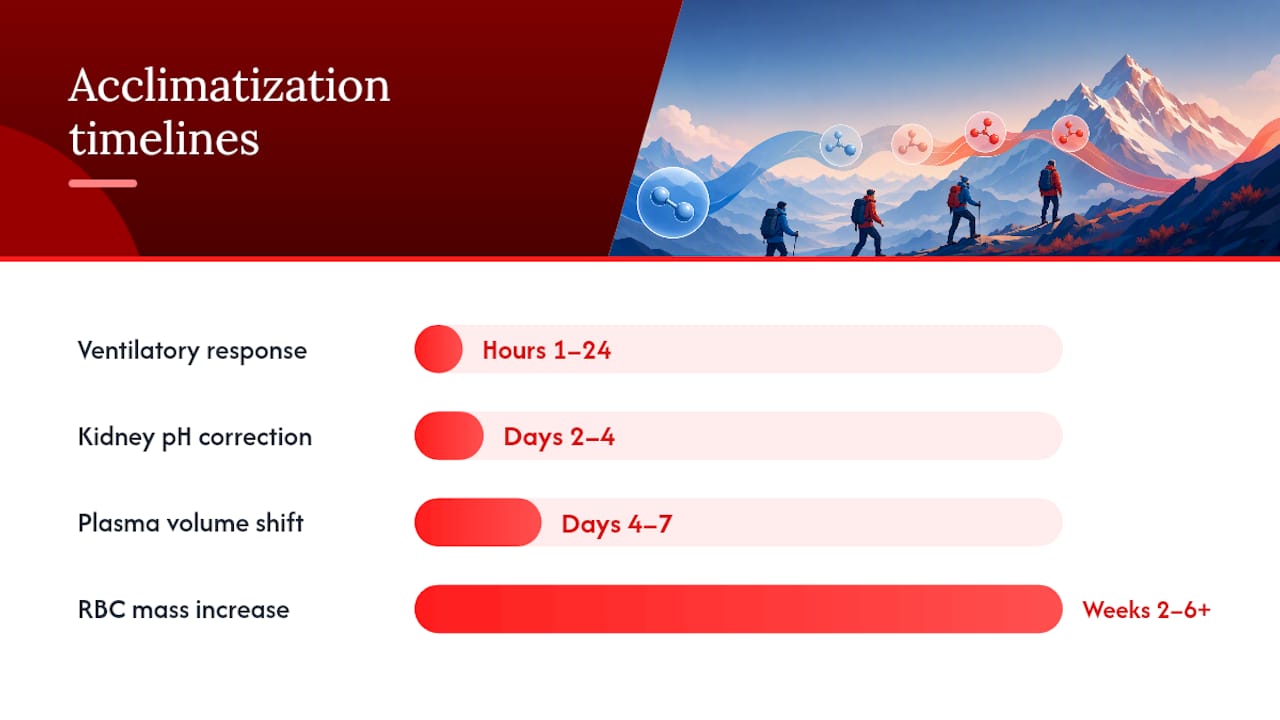
Acclimatization happens on two very different timelines, and understanding the gap between them is the key to planning a safe ascent. Ventilatory adjustments, the faster breathing rate and the kidney’s correction of blood pH, largely settle in within a few days. Red blood cell mass, the deeper adaptation that actually increases your blood’s oxygen-carrying capacity, takes weeks to build through erythropoiesis, the process of producing new red blood cells.
This mismatch is exactly why the standard advice for ascent rate exists. Above 3,000 meters, sleeping elevation gain should stay under 500 meters (about 1,650 feet) per day, with a rest day added every three to four days. The rule targets sleeping altitude specifically, not the highest point reached during a day’s activity, because sustained overnight exposure to insufficient acclimatization is what drives most cases of acute mountain sickness.
Here’s how the timeline typically unfolds for someone adapting to thin air:
- Hours 1 to 24: Ventilation rate increases, heart rate rises, and mild symptoms like headache or fatigue may appear.
- Days 2 to 4: Kidneys begin excreting bicarbonate to correct respiratory alkalosis, allowing ventilation to increase further without the same acid base pushback.
- Days 4 to 7: Plasma volume shifts and resting heart rate begins to normalize somewhat; most mild AMS symptoms resolve if ascent has been paced correctly.
- Weeks 2 to 6+: Red blood cell mass increases meaningfully, improving oxygen carrying capacity and submaximal endurance.
Even after full acclimatization, though, there’s a ceiling. Maximal exercise capacity, the top end of what your cardiovascular system can deliver during hard effort, remains lower at altitude than it would be at sea level, no matter how well acclimatized you become. Acclimatization improves comfort, sleep, and your ability to sustain moderate activity. It does not restore the oxygen delivery ceiling that sea level physiology provides. Trekkers and climbers who expect to eventually “feel normal” at 4,500 meters are often surprised that even elite mountaineers pace themselves conservatively at extreme altitude for exactly this reason.
Something else worth planning around: your starting point matters as much as your destination. Flying directly into a city at 3,000 meters or higher, and sleeping there the first night, is a very different exposure than driving up gradually over several days. The ascent-rate guidance applies from wherever you’re actually sleeping, not from where your trip technically began.
Recognizing Altitude Illness: AMS, HAPE, and HACE
Altitude illness isn’t a single condition, it’s a spectrum ranging from a bad headache to a genuine medical emergency, and knowing where a given symptom set falls on that spectrum can save a life. Altitude illness commonly appears above about 2,500 meters (8,000 feet), which is lower than many travelers expect, since plenty of popular mountain towns and ski resorts sit right at or above that threshold.
Acute mountain sickness (AMS) is the most common and least severe form. Watch for:
- Headache, often the first and most noticeable symptom.
- Nausea or loss of appetite.
- Fatigue disproportionate to your activity level.
- Dizziness or difficulty sleeping.
High altitude pulmonary edema (HAPE) is more dangerous, involving fluid buildup in the lungs. Symptoms include:
- Shortness of breath that persists even at rest, not just with exertion.
- A persistent, sometimes wet-sounding cough.
- Unusual weakness or fatigue that goes beyond typical altitude tiredness.
- Chest tightness or a bluish tint to lips or fingertips in advanced cases.
High altitude cerebral edema (HACE) is the most severe form, involving brain swelling, and it can progress fast:
- Ataxia, an inability to walk a straight line, is the hallmark sign.
- Confusion or noticeably altered behavior.
- Severe headache that doesn’t respond to standard pain relief.
- Decreased consciousness in advanced stages.
SpO2 readings of 88 to 91% are common and expected during acute exposure around 3,050 meters, so a reading in that range alone isn’t automatically an emergency. What matters more is the trend and the accompanying symptoms. A dropping SpO2 paired with ataxia or persistent breathlessness at rest is the combination that demands immediate action.
The response to any of these conditions follows a consistent hierarchy: stop ascending, rest, and reassess. If symptoms don’t improve or worsen, descend, generally 300 to 1,000 meters or more depending on severity, since even a modest drop in elevation can meaningfully improve symptoms. Supplemental oxygen helps restore oxygenation while a descent is arranged, and emergency medications like dexamethasone (for HACE) or nifedipine (for HAPE) are used under clinician guidance, not self-administered based on internet advice.
For HACE and severe HAPE specifically, descent and supplemental oxygen are the primary emergency interventions, and these conditions can become life-threatening within 24 hours if untreated. A person with ataxia or confusion should never descend alone. Portable hyperbaric chambers, inflatable bags that simulate a lower altitude by increasing pressure around the patient, exist as an interim option when immediate descent isn’t possible, but they buy time. They don’t replace getting the person to lower elevation and medical care.
Field Tactics That Actually Reduce Altitude Risk
Most altitude problems come down to ascending too fast for your body’s acclimatization pace, so the single highest-leverage decision you make is your itinerary. Build rest days into any plan that takes you above 3,000 meters, and treat the day you arrive by plane or car at a high-altitude destination as day one of that ascent clock, not a free pass.
Ascent planning basics:
- Keep sleeping elevation gain under 500 meters per day above 3,000 meters, with a rest day every three to four days.
- If you fly directly into a high-altitude city, spend at least one full day acclimatizing before attempting strenuous activity or continuing higher.
- “Climb high, sleep low” when your itinerary allows it, gaining daytime elevation but returning to a lower camp to sleep.
Medications have a real, evidence-backed role, but they require medical guidance rather than casual self-dosing. Acetazolamide accelerates ventilatory acclimatization by inducing a mild metabolic acidosis that stimulates breathing, and when taken preventively it can shorten the acclimatization process considerably. It’s available by prescription, and a clinician can advise on dosing and whether it’s appropriate given your health history. Dexamethasone and nifedipine are reserved for treating HACE and HAPE respectively, strictly under medical direction, not as prophylactic travel medications.
Supplemental oxygen fills a specific niche depending on the format. Continuous or high-flow medical oxygen systems are what treat serious altitude illness and support descent. Small handheld canned oxygen units, by contrast, hold a limited volume and are built for brief symptomatic relief rather than sustained treatment of severe AMS, HAPE, or HACE. Knowing that distinction ahead of time keeps expectations realistic: a few breaths from a portable can might ease a headache or steady you before a summit push, but it isn’t a substitute for descent when someone is genuinely unwell. Reviewing how to use supplemental oxygen on summit attempts before you travel helps you understand which tool fits which situation.
Beyond ascent rate and medication, a handful of field behaviors matter more than people expect:
- Skip alcohol and opioid pain relievers at altitude, since both suppress respiratory drive at exactly the time your body needs it working harder.
- Keep the air you’re breathing warm and humidified where possible, dry mountain air combined with faster breathing rates dehydrates airways and can worsen cough.
- Stay well hydrated and keep eating, even when appetite drops, since caloric and fluid deficits compound fatigue at altitude.
- Prioritize sleep hygiene, since sleep quality at altitude is already compromised by periodic breathing patterns discussed below.
Pro Tip: Pack a written symptom checklist before you go, not just a mental note. Under mild hypoxia, judgment is one of the first things to slip, and having AMS, HAPE, and HACE symptoms on paper (or in your phone) means you’re checking against a fixed standard rather than trusting a brain that’s already running on less oxygen than usual.
Can Breathing Techniques Improve Oxygen Levels at Altitude?
Yes, at least temporarily, and the evidence for one specific technique is more concrete than most people assume. A study published in PLOS ONE found that paced slow deep breathing at approximately six breaths per minute produced a rapid rise in blood oxygen saturation among healthy lowlanders exposed to high altitude, with SpO2 climbing from around 80% to roughly 89.5% during the breathing exercise. That’s a meaningful jump, achieved without any equipment or medication.
The likely mechanism is a shift in how each breath is used. Slow, deep breaths increase alveolar ventilation relative to dead space ventilation, meaning more of each breath reaches gas-exchanging portions of the lung rather than just filling the airways that don’t participate in oxygen transfer. Fewer, deeper breaths outperform rapid shallow ones for this purpose.
A simple version you can try:
- Sit upright, relax your shoulders, and breathe in slowly through your nose for about 4 to 5 seconds, letting your abdomen expand rather than just your chest.
- Hold briefly, then exhale slowly and completely over 4 to 5 seconds, aiming for a total pace of roughly six breaths per minute.
- Continue for 3 to 5 minutes, checking a pulse oximeter before and after if you have one available.
Two caveats matter here. First, the improvement is real but temporary, the benefit generally fades within minutes of returning to normal breathing, so treat this as a tool for short-term comfort or steadying yourself before an exertion, not a fix for underlying acclimatization. Second, paced breathing is not a substitute for descent or supplemental oxygen if someone is showing signs of HAPE or HACE. It’s a comfort measure for mild symptoms, not an emergency intervention. Some travelers use wearable devices or apps with audible pacing cues to hit that six breath per minute target more consistently, which can help beginners find the rhythm faster than counting silently.
Who Should Talk to a Doctor Before High Altitude Travel
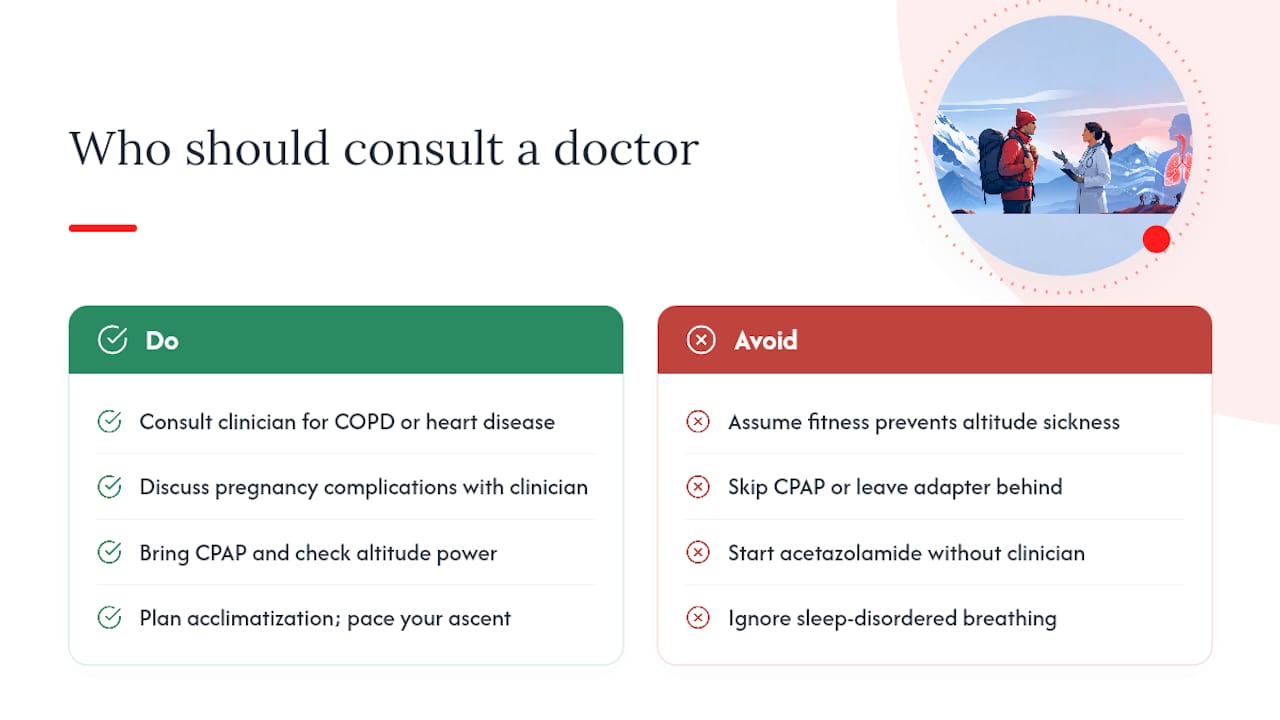
Certain health conditions raise the stakes enough that a pretravel consultation isn’t optional, it’s the responsible first step. People with severe chronic obstructive pulmonary disease (COPD), significant heart disease, severe obstructive sleep apnea, or pregnancy complications should discuss altitude plans with a clinician well before departure, since these conditions can blunt the body’s ability to compensate for reduced inspired PO2 or add risk on top of normal altitude stress.
Sleep-disordered breathing deserves particular attention. Periodic breathing during sleep, alternating fast and slow breathing with brief pauses, becomes nearly universal above about 2,700 meters (9,000 feet), even in healthy people with no prior history of sleep apnea. For someone who already has obstructive sleep apnea and uses CPAP at home, this compounding effect can mean noticeably worse sleep quality and lower nocturnal oxygen levels than at sea level. Travelers using CPAP should bring their machine, check that their unit and power adapter work at their destination’s altitude and voltage, and discuss with their doctor whether their pressure settings need adjustment. Acetazolamide can reduce periodic breathing and raise nocturnal SpO2 in some cases, but again, that’s a decision for a clinician familiar with your health history, not a default travel add-on. If sleep quality at altitude is a concern generally, resources like Voltra Health’s guide to improving deep sleep offer useful groundwork for building healthier sleep habits before you even leave home.
One point deserves repeating because it surprises so many active travelers: physical fitness does not protect against acute mountain sickness. Marathon runners and weekend hikers develop AMS at similar rates when ascent rate and prior altitude exposure are comparable. The determining factors are acclimatization and pace of ascent, not your resting heart rate or your last race time. Anyone who believes their conditioning exempts them from ascent guidelines is working from a myth that clinical guidance directly contradicts.
A Practical Perspective on Managing Thin Air
The gap between what people expect from altitude and what actually happens is usually about pacing, not physiology. Most travelers understand, in the abstract, that “the air is thinner up there.” Fewer plan their itinerary around it. The CDC’s ascent guidance, gaining less than 500 meters of sleeping elevation per day above 3,000 meters, gets treated as a suggestion for the cautious rather than a hard constraint grounded in how quickly the kidneys and bone marrow can actually respond to hypoxia.
What gets underestimated most is the role of sleep. People fixate on daytime symptoms, headache on the trail, breathlessness on a climb, while periodic breathing quietly degrades sleep quality every single night above 2,700 meters. Poor sleep compounds every other altitude symptom: it worsens headache, blunts judgment, and makes the next day’s exertion feel harder than it should. Anyone serious about acclimatizing well should treat their sleep elevation, not their daytime activity, as the number that actually needs managing.
There’s also a persistent overconfidence around fitness that clinical evidence just doesn’t support. Respecting that gap, rather than assuming conditioning is a substitute for acclimatization, is probably the single most underrated piece of altitude advice available, and it’s also the one people are most likely to ignore right up until they’re the ones with a headache at 3,500 meters wondering what went wrong.
None of this replaces individualized medical guidance, particularly for anyone with a preexisting heart, lung, or sleep condition. The physiology is the same for everyone. The risk tolerance and precautions needed are not.
— Paul
Where Canned Oxygen Fits Into Your Altitude Plan
Canned oxygen has a real, specific job: it’s an adjunct for brief symptom relief and performance support, not a replacement for medical-grade oxygen or descent when altitude illness turns serious. A few breaths from a portable can may ease a mild headache, steady your breathing before a summit push, or sharpen mental clarity during a long day at elevation, exactly the kind of episodic support REV/O2 was designed around.

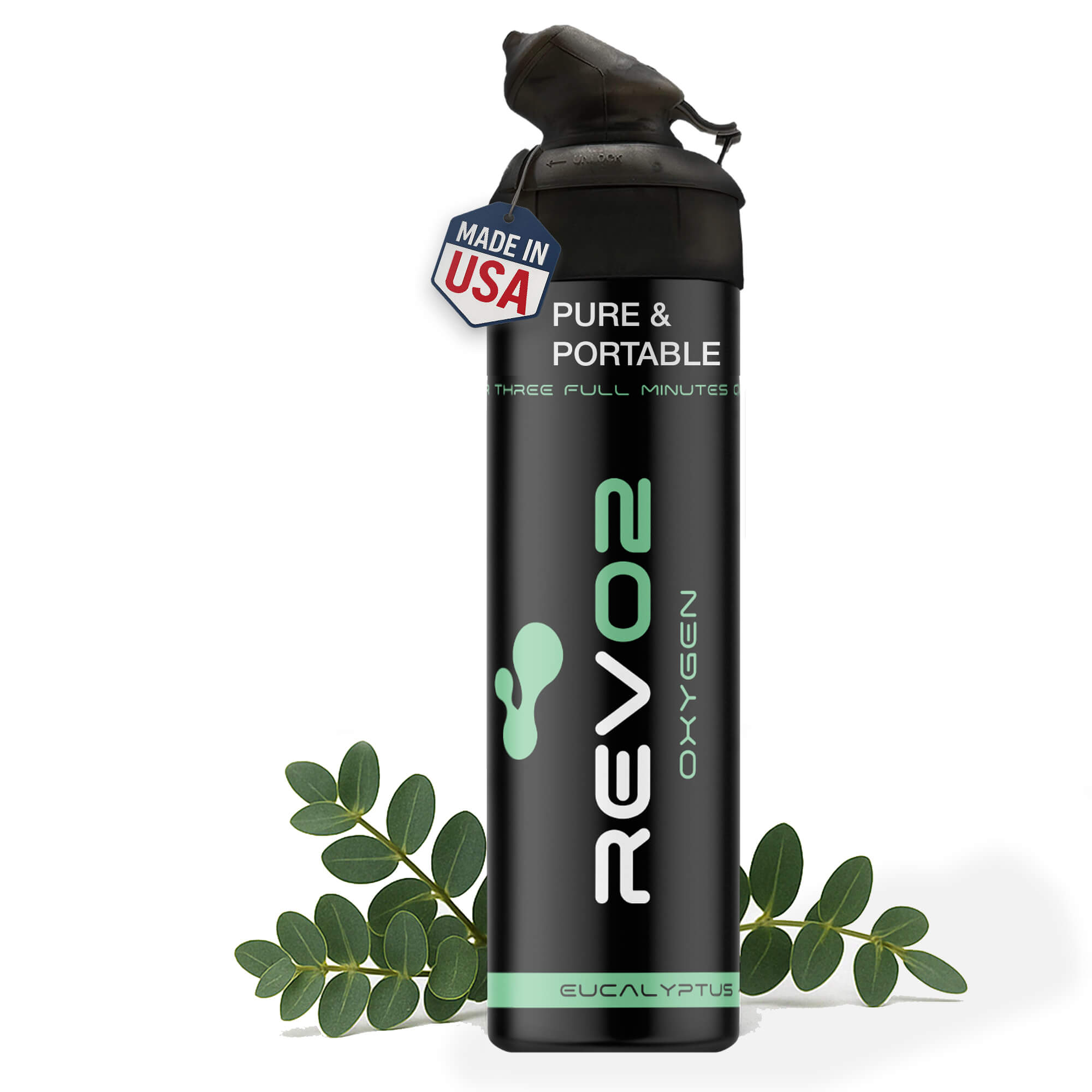
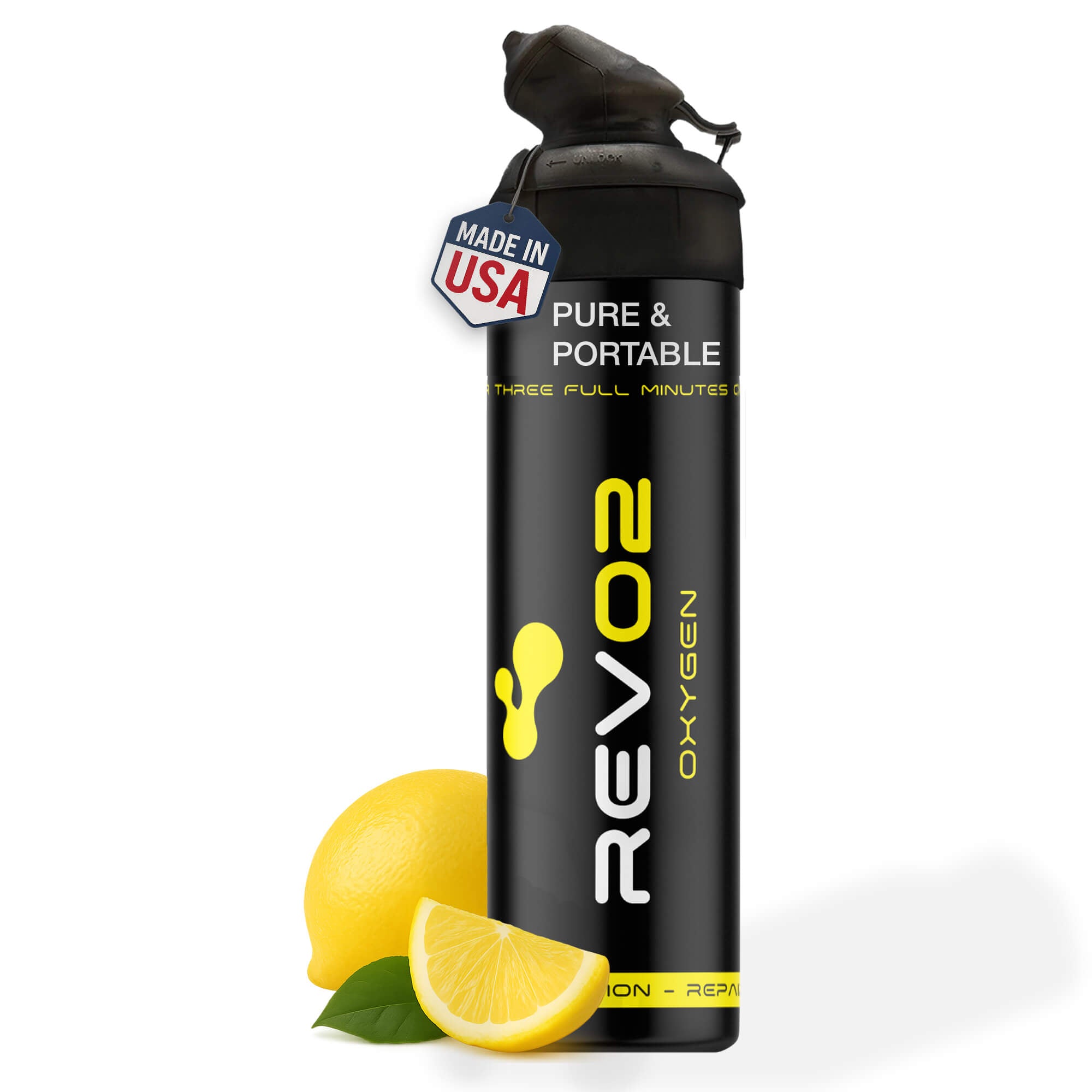
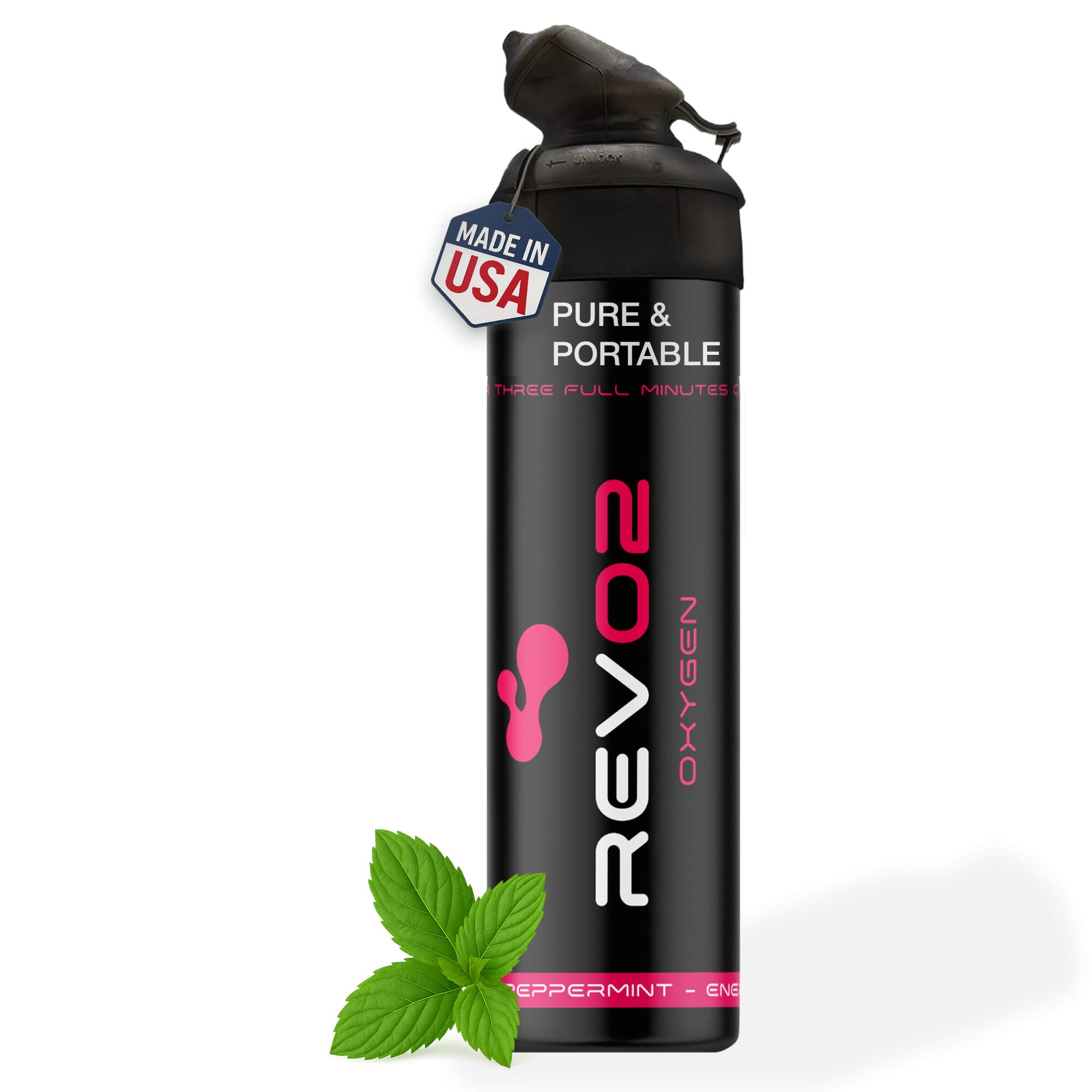
The three product lines each target a different moment: Peppermint Oxygen for energy and endurance during activity, Lemon Oxygen for recovery and immune support afterward, and Eucalyptus Oxygen for focus and relaxation when altitude fatigue sets in. None of them are designed to treat HAPE, HACE, or moderate to severe AMS, those situations call for descent, continuous supplemental oxygen, and a clinician’s guidance, full stop.
Used responsibly, within its actual limits, canned oxygen is a straightforward tool: portable, ready without a prescription, and simple enough to use correctly the first time you try it. If you want the specifics on technique and timing, the guide to using canned oxygen safely walks through it step by step. Browse the full canned oxygen collection to find the blend that matches your next climb, workout, or travel day.
Sources
The clinical guidance behind this article draws on a handful of sources worth bookmarking if you’re planning altitude travel:
- High Altitude | CDC Yellow Book
- High-Altitude Travel and Altitude Illness - NCBI Bookshelf
- Slow deep breathing improves blood oxygenation and reduces blood pressure in subjects at high altitude (PLOS ONE)
- Travel to high altitudes | CDC
FAQ
Is it harder to breathe in thin air?
Yes. Lower barometric pressure at altitude reduces inspired PO2, so each breath delivers fewer oxygen molecules, which is why breathing feels more labored even though the air’s oxygen percentage hasn’t changed. At 3,050 meters, inspired PO2 drops to roughly 69% of sea level, and your body compensates by breathing faster and deeper.
How much thinner is the air at 10,000 feet?
At around 10,000 feet (3,050 meters), inspired PO2 falls to about 69% of its sea level value, and acute SpO2 readings commonly range from 88 to 91% compared to 95 to 100% at sea level.
When should I worry about shallow or labored breathing at altitude?
Occasional breathlessness with exertion is normal at altitude, but shortness of breath that persists at rest, along with a cough, unusual weakness, or confusion, are warning signs of HAPE or HACE that require descent and medical attention. These conditions can become life-threatening within 24 hours if untreated, so don’t wait out severe symptoms hoping they resolve overnight.
Why does the air feel thin when I breathe at high elevation?
The sensation comes from reduced barometric pressure compressing fewer oxygen molecules into each breath, not from a change in the air’s composition. Your carotid body chemoreceptors detect the resulting drop in blood oxygen and trigger faster, deeper breathing, which is the physical sensation people describe as air feeling “thin.”
Can canned oxygen help with breathing in thin air?
Canned oxygen products like REV/O2 can provide brief symptomatic relief and support performance or clarity during mild altitude discomfort, but they hold a limited oxygen volume. They aren’t a substitute for continuous medical oxygen or descent in serious cases of AMS, HAPE, or HACE. Current prices and product details for REV/O2’s peppermint, lemon, and eucalyptus lines are available on the REV/O2 website.