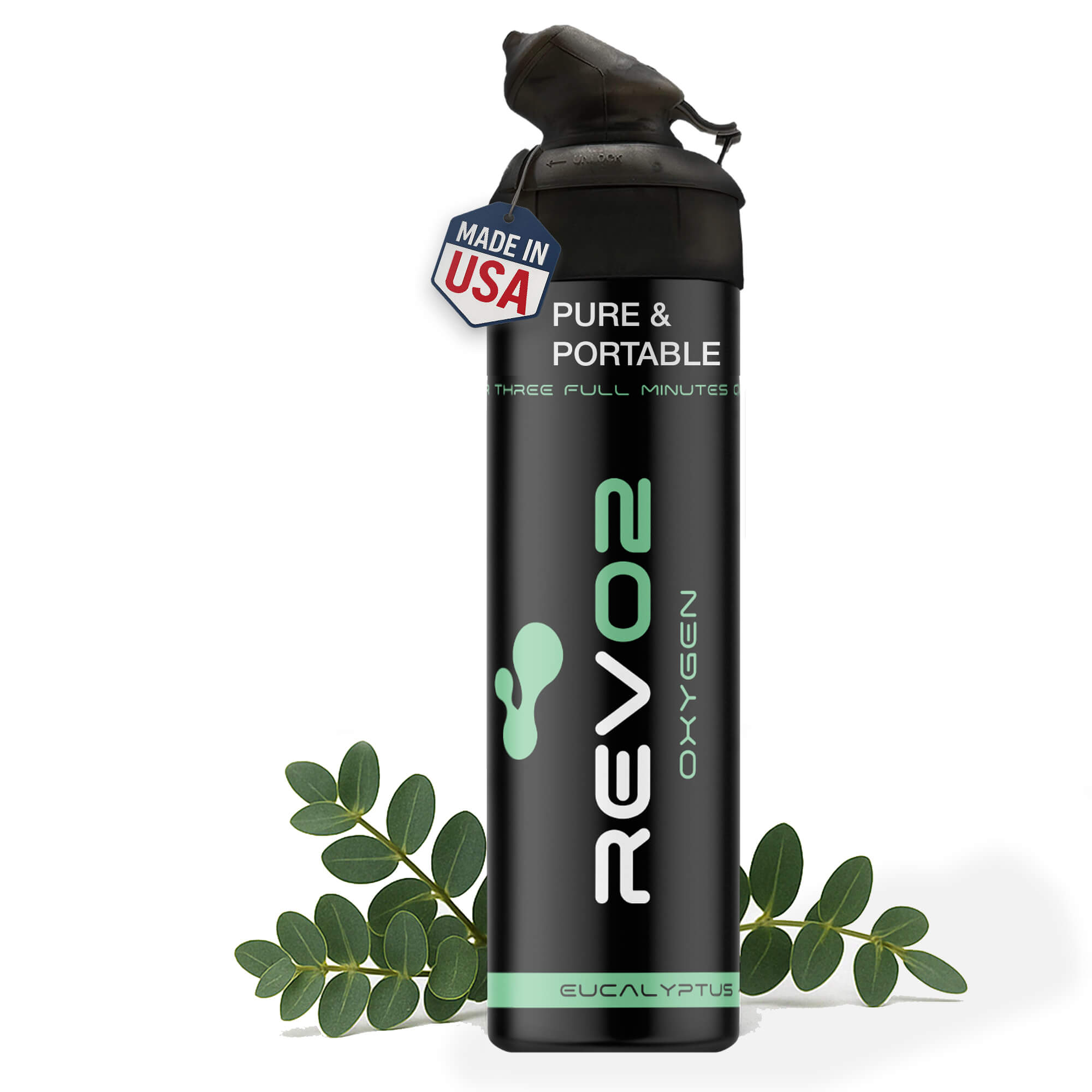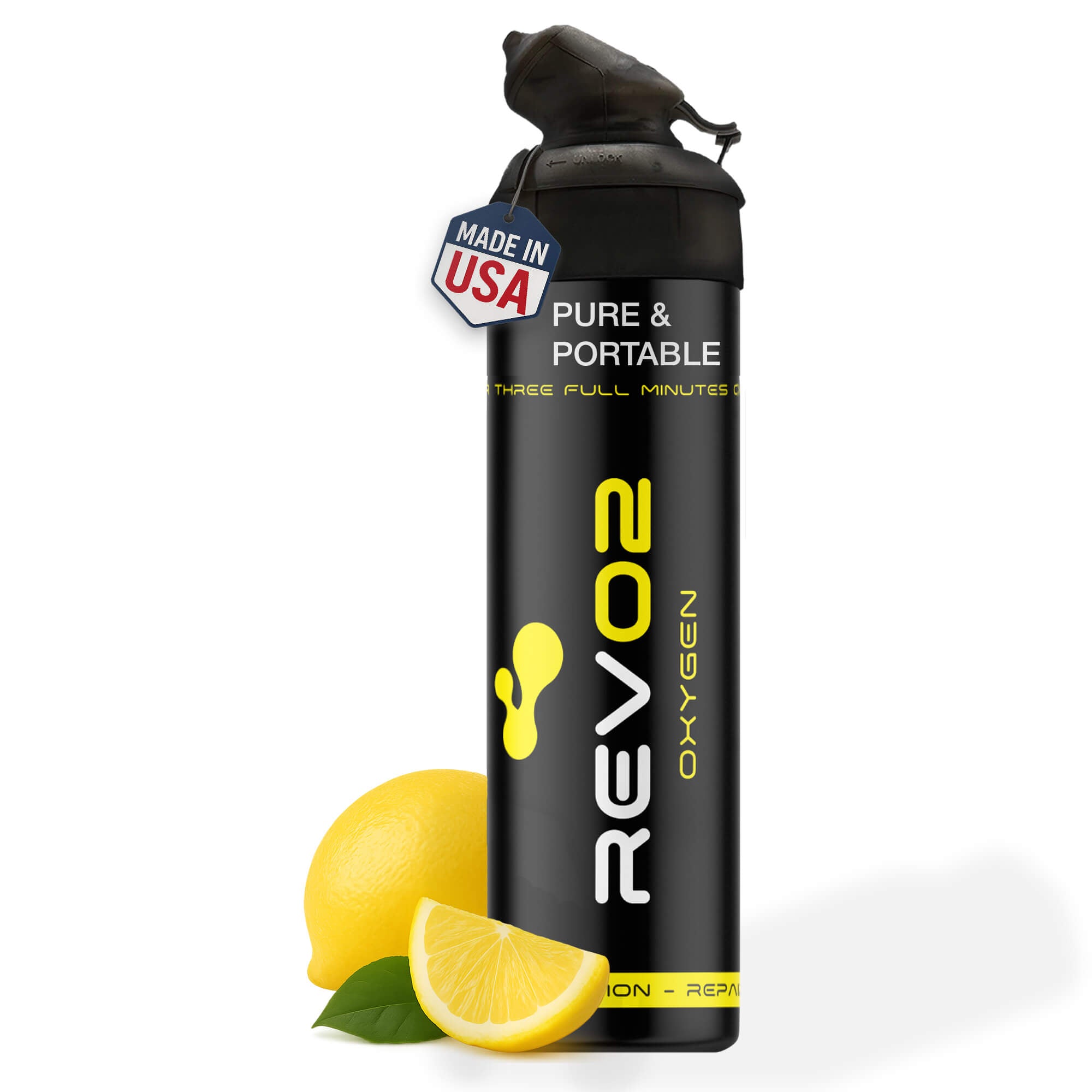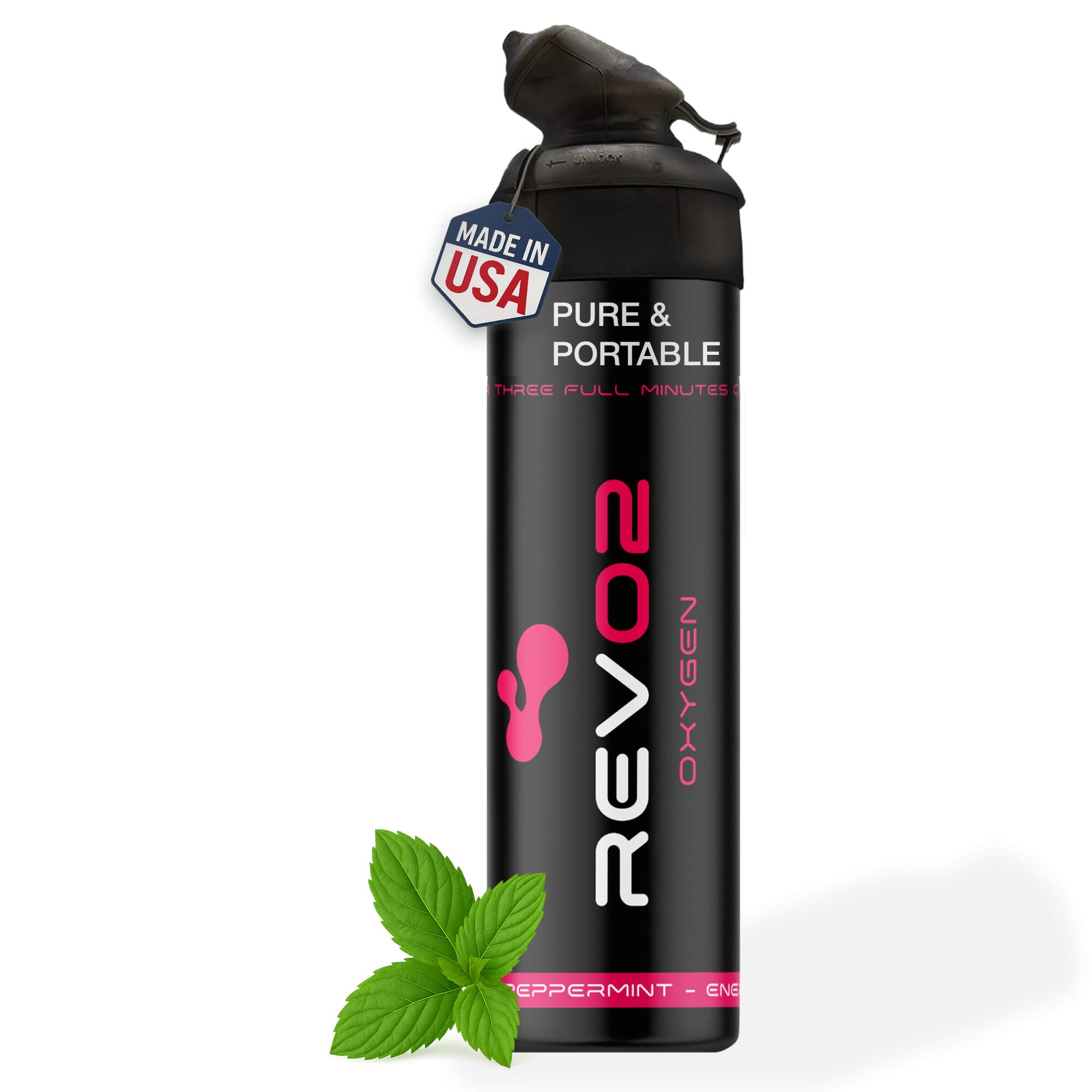

A typical consumer canned oxygen product weighs anywhere from about 2 ounces for pocket-sized 3L cans up to roughly 8 ounces for large 10L to 12L canisters. Capacity is the main driver of weight, along with the metal shell, valve, and mouthpiece assembly. Brands like REV/O2 build around 98% pure oxygen with a zero-leak mouthpiece, keeping the can light without sacrificing usable inhalations.
TL;DR:
- Smaller 3L cans weigh about 2 ounces and provide roughly 60 inhalations, making them ideal for quick boosts or compact storage.
- Larger 10 to 12L cans typically weigh around 8 ounces and offer significantly more inhalations, suitable for extended use or group sharing.
- The can’s weight is influenced more by material thickness and packaging than by capacity, so a higher liter count does not directly mean a heavier can.
- Comparing inhalations per ounce helps identify which cans provide the most oxygen efficiency relative to weight.
- Proper storage and handling, including avoiding heat and inspecting for damage, are essential to safe disposal and maintain can integrity.
Table of Contents
- Typical Oxygen Can Weight and Size Ranges
- What Actually Determines a Can’s Weight
- Choosing the Right Can Size for Your Activity
- Carrying and Storing Cans Without Adding Bulk
- What Happens to the Can After You’re Done
- Canned Oxygen vs. Concentrators and Tanks on Weight Alone
- How Internal Pressure Shapes Weight and Delivery
- An Author Perspective: Why Grams Matter More Than You’d Think
- Recommended Pick: REV/O2 Canned Oxygen
- Sources
Typical Oxygen Can Weight and Size Ranges
Weight scales almost directly with liters, but the relationship isn’t perfectly linear once you factor in the metal shell and valve hardware. A pocket-sized 3L canister, the kind you’d slip into a jacket pocket before a run, typically comes in around 2 ounces (about 57 grams) and deliver roughly 60 one-second inhalations. That’s light enough that most people forget it’s even in their bag.
Step up to mid-size 6 to 12L cans and you’re looking at a different weight class entirely. Some international product lines list 6L cans around 120 grams and 12L cans closer to 175 grams, with inhalation counts in the 120 to 150 short-puff range. The jump in capacity roughly doubles the weight, but you also roughly double or triple the usable breaths.
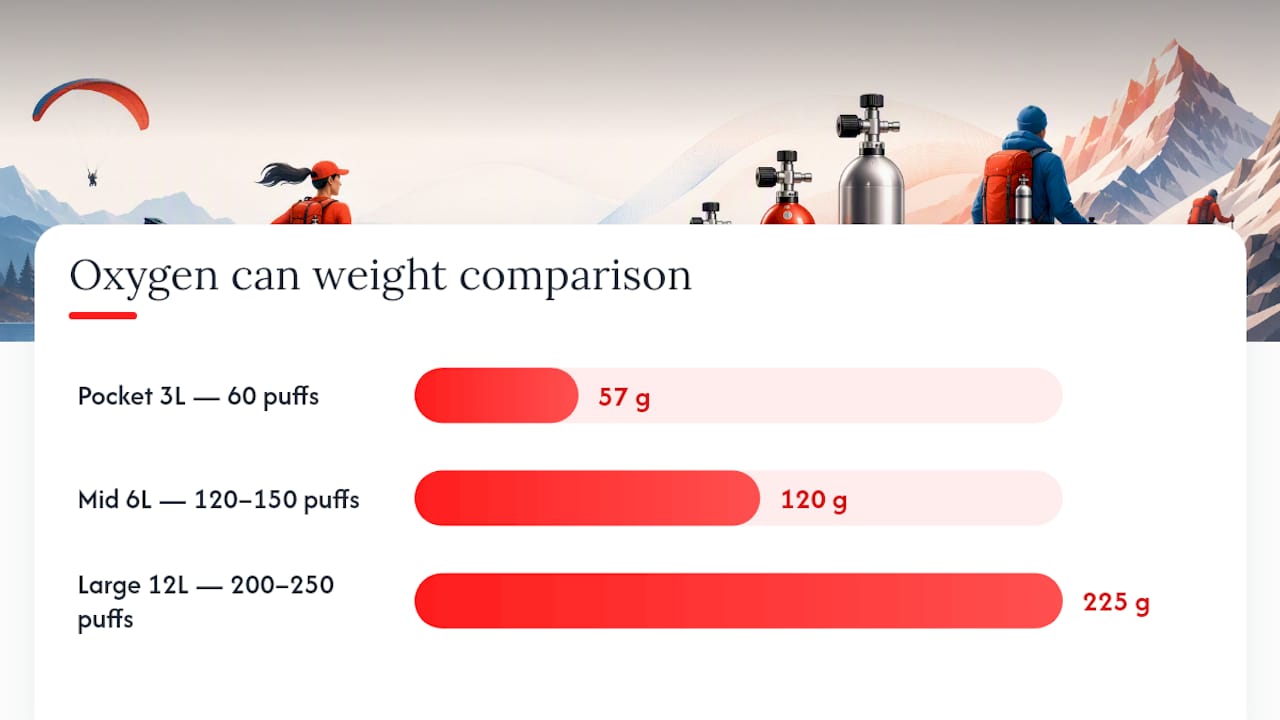
Large 10L to 12L canisters, the ones designed for extended recovery sessions or shared use, commonly weigh around 8 ounces (about 225 grams) once you account for full packaging.
Here’s how that breaks down by size:
- Pocket 3L cans: approximately 2 oz (57 g), around 60 one-second inhalations
- Mid-size 6 to 8L cans: roughly 3.5 to 6 oz (100 to 175 g), around 120 to 150 short puffs
- Large 10 to 12L cans: approximately 7 to 9 oz (200 to 250 g), the highest inhalation count per can
The practical takeaway: doubling the liters doesn’t double the weight in your bag, but it does change how the can feels in your hand versus how long it lasts you.
What Actually Determines a Can’s Weight
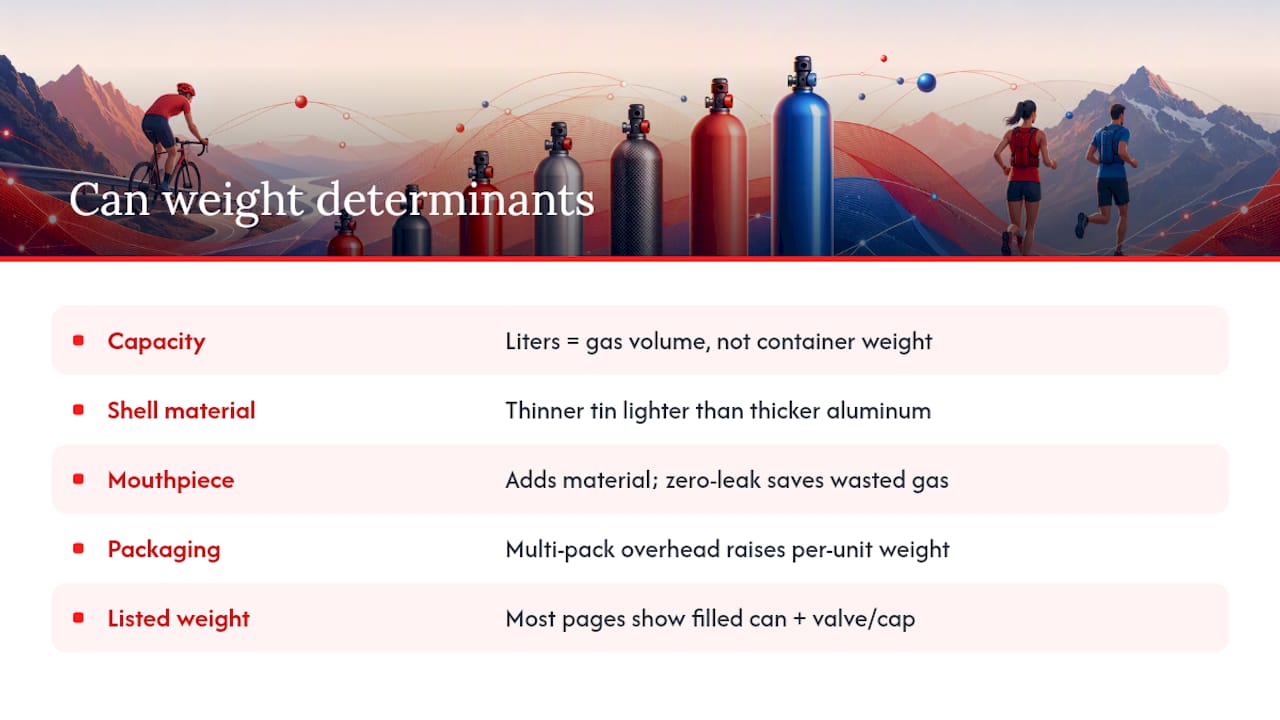
Capacity gets most of the attention, but it’s only one piece of what you’re carrying. The oxygen inside is compressed and stored under pressure, so a can’s stated liter count tells you how much gas is packed in, not how heavy the container itself is.
The metal shell matters more than most buyers realize. A can built from thin tin will weigh less than one using a thicker aluminum body, even at the same rated capacity. Add in the mouthpiece or mask attachment, and you’ve introduced another variable that varies by brand. A zero-leak mouthpiece design adds a small amount of material but eliminates the waste that comes from a poor seal, which arguably makes it worth the extra fraction of an ounce.
Packaging adds its own overhead, too. Multi-packs bundle several cans together with cardboard or shrink wrap, so the “per unit” weight on a bulk listing often includes packaging you’ll toss before you ever leave the house.
One quirk worth knowing: the weight listed on most product pages reflects the canister filled and sealed, complete with valve and cap. Empty-can weight is almost never published, since it’s not the number that matters to a buyer deciding whether a can fits in a jersey pocket.
Pro Tip: Don’t compare cans by weight alone. Divide the inhalation count by the ounces to get a rough “inhalations per ounce” figure. It normalizes for packaging differences and tells you which can actually gives you the most usable oxygen for the weight you’re carrying, a method REV/O2’s own usage guide recommends when comparing sizes.
Choosing the Right Can Size for Your Activity
Matching can size to activity is really a question of how much weight you’re willing to carry versus how many inhalations you’ll actually need. A few grams feel irrelevant until you’re twelve miles into a hike or squeezing gear into a carry-on.
- Short workouts or quick energy boosts. Pocket 3 to 4L cans are the obvious pick. At around 2 ounces, they disappear into a gym bag or jacket pocket and deliver enough puffs for a pre-workout boost or a midday reset.
- Day hikes and longer training sessions. Mid-size 6 to 8L cans strike a better balance. You’re adding a bit more weight, but you’re also buying more inhalations for a session that might last hours rather than minutes.
- Multi-hour adventures or group use. Large 10 to 12L cans make sense when the extra few ounces are a non-issue, like when it’s riding in a backpack rather than a pocket, or when you’re sharing one can across a group.
- Multi-day trips. Think in multi-packs rather than single cans. A peppermint 10L multi-pack covers more days without forcing you to ration a single can across a whole trip.
Carrying and Storing Cans Without Adding Bulk
Where you stash a can matters as much as how much it weighs. Lighter pocket cans belong in the spots you’d reach for instinctively: a jacket pocket, a vest pouch, a bike jersey pocket where a couple of ounces won’t throw off your balance.
Heavier cans need a more deliberate home. A secure backpack compartment, ideally one with padding, keeps a 10L or 12L can from knocking around against water bottles or trekking poles. Multi-packs deserve the same treatment, since a cluster of cans in a tight bag can trap heat on a hot trail day.
A few habits protect both the can and you:
- Keep cans away from direct heat sources like car dashboards or direct sun exposure for extended periods.
- Check every can for dents or visible damage before you pack it. A compromised shell can affect the seal.
- Confirm the cap is fully seated. A loose cap on a 3L pocket can is how you lose your quick puffs before you even need them.
- If you’re storing cans in a vehicle, follow guidance built specifically for storing oxygen cans in your car safely rather than treating them like any other gear.
For the full rundown on proper handling, REV/O2’s how-to-use guide walks through storage temperature ranges and handling steps in more detail.
What Happens to the Can After You’re Done
A can’s weight doesn’t just affect how you carry it. It also shapes what happens after you’ve used the last puff. Empty canisters are almost always steel or aluminum, both of which are widely accepted at curbside recycling programs once any residual pressure is gone and the can is empty.
The catch is that most municipal recycling guidelines want pressurized containers fully depleted before they go in the bin. A can that still has gas in it, even a small amount, can be flagged as hazardous by a waste hauler. Running a can down to empty, which most consumer canned oxygen products are designed for through normal use, solves that problem before disposal.
Lighter cans also mean less material heading to a landfill or recycling stream per use compared to bulkier packaging formats. A 2 ounce pocket can generate a fraction of the metal waste of a heavier 10L or 12L can, though the larger can also delivers more inhalations per unit, so the tradeoff isn’t purely about waste minimization.
If you’re buying multi-packs regularly, check whether your local recycling program accepts small aerosol-style metal cans curbside or requires drop-off at a dedicated facility. Rules vary by municipality, and what’s accepted in one city’s blue bin might need special handling somewhere else.
Canned Oxygen vs. Concentrators and Tanks on Weight Alone
Weight is where canned oxygen separates itself most clearly from other portable oxygen options. A portable oxygen concentrator, the kind used for ongoing medical support, typically weighs several pounds once you include the battery and housing, since it’s actively pulling and filtering ambient air rather than dispensing a pre-filled supply.
Compressed oxygen tanks sit at the other extreme. Even small portable tanks are built from heavier materials to safely hold gas at high pressure, putting them well beyond what you’d want in a daypack for casual use.
Canned oxygen products occupy a different category entirely. At 2 to 9 ounces depending on size, a can weighs a fraction of either alternative, which is exactly why it fits a gym bag, a bike jersey pocket, or a hiking pack side pouch without becoming a burden. The tradeoff is capacity and duration. Concentrators and tanks are built for sustained, ongoing use, while cans are built for quick, targeted inhalations during recovery, altitude adjustment, or an energy dip.
For readers weighing performance and recovery goals rather than continuous respiratory support, that weight difference is the whole reason canned formats exist as a category. It’s worth understanding how portable oxygen differs from home oxygen systems if you’re deciding which category actually fits your situation.
How Internal Pressure Shapes Weight and Delivery
The pressure inside a canned oxygen product is what lets a small container hold a surprisingly large volume of usable gas. Oxygen is compressed before sealing, which means the liter rating on the label describes the expanded volume you’ll actually breathe, not the physical size of the can itself.
Higher internal pressure generally allows manufacturers to pack more inhalations into the same can size without meaningfully increasing the metal shell’s thickness or weight. That’s part of why a 3L pocket can and a 6L can might look nearly identical in dimensions while offering a noticeably different inhalation count. The valve and seal have to be engineered to hold that pressure reliably, which is where mouthpiece design becomes a real factor rather than a cosmetic detail. A poorly sealed valve wastes pressurized gas before it ever reaches you, effectively shrinking your usable inhalations regardless of what the label promises.
As a can empties, internal pressure drops, and the strength of each puff can taper off near the bottom. That’s a normal characteristic of pressurized delivery, not a defect, but it’s worth knowing if you’re timing a can’s use across a long event and expect consistent output puff to puff.
An Author Perspective: Why Grams Matter More Than You’d Think
Carrying a pocket 3L can on a trail run versus tossing a 12L can in a pack for a weekend trip taught me something obvious in hindsight: accessibility beats raw capacity for most everyday use. A can you can reach in three seconds gets used. A can buried at the bottom of a pack doesn’t, no matter how many inhalations it holds.
What impressed me most about testing REV/O2’s lineup wasn’t the liter count. It was how the zero-leak mouthpiece made every single puff count, at 98% purity, instead of losing gas to a sloppy seal. That’s the detail that actually justifies the extra ounce or two.
— Paul
Recommended Pick: REV/O2 Canned Oxygen
If you’ve made it this far, you already know weight isn’t the whole story. Purity and delivery matter just as much, and that’s where REV/O2 separates itself from the pack. Every can runs at 98% pure oxygen with a zero-leak mouthpiece, so you’re not losing gas to a sloppy seal the way you might with a bargain canister.
For quick workouts or a jacket-pocket energy boost, a smaller can from the canned oxygen collection fits the bill without adding noticeable bulk. Heading out for a longer hike or a group trip? The 10L peppermint can gives you more inhalations to work with, and it’s built specifically with hiking use in mind. Planning ahead for altitude? Run your route through the altitude oxygen calculator first to see what you’re actually up against.
Not sure which size fits your routine? Browse the full lineup and pick the can that matches your next adventure, then check the usage guide so you get the most out of every inhalation from the first puff.
Sources
This article draws on REV/O2’s own canned oxygen collection and how-to-use guide for product specs and safety guidance, along with partner travel guidance on flying with pressurized cartridges. Product weights and liter counts vary by brand and packaging, so always check the specific product page before you buy or pack for a trip. For a broader background, see the comprehensive guide to portable oxygen cans.
- Cyclists: Fly with CO2 Cartridges Without Confiscation on U.S. Flights - The Sport Factory