
Most manufacturers stamp their canned oxygen products with a recommended shelf life of about two to five years from the manufacture date, driven mainly by seal integrity and pressure retention rather than the gas itself breaking down. That range only holds if the can stays sealed, cool, and undamaged. One caveat matters more than the number: over-the-counter canned oxygen is not FDA-approved for medical use and should never replace prescribed or emergency oxygen.
TL;DR:
- Can shelf life varies from two to five years depending on material quality, seal integrity, and proper storage conditions.
- A can’s usability primarily depends on pressure retention and can be compromised by heat, sunlight, or physical damage.
- Checking the lot code, flow test, and inspecting for dents or rust can confirm if a can still contains usable oxygen.
- Proper storage in a cool, dry place away from heat or sunlight can extend a can’s effective lifespan beyond its printed date.
- OTC canned oxygen is a recreational product not approved for medical use and should not substitute emergency or prescribed oxygen.
Table of Contents
- What Does “Shelf Life” Actually Mean for Canned Oxygen?
- How Do You Know if a Can Still Has Oxygen Left?
- Does Storage Really Affect How Long a Can Lasts?
- What Are the Safety Limits of Over-the-Counter Canned Oxygen?
- How REV/O2 Approaches Shelf Life and Safe Use
- Author’s Practical Takeaways
- Breathe Easier With Oxygen You Can Trust
- Sources
What Does “Shelf Life” Actually Mean for Canned Oxygen?
Oxygen doesn’t spoil the way food does. There’s no chemical breakdown, no bacterial growth, no clock ticking on the gas molecules themselves. What actually limits how long a can stays usable is the container, not the contents.
A canned oxygen product is only as good as its seal. Every can holds pressurized gas behind a valve and a mouthpiece mechanism, and over time, even a well-made seal can lose microscopic amounts of pressure. That’s why manufacturers assign a shelf life instead of a true expiration date. It’s an engineering estimate of how long the can will hold enough pressure to deliver a usable flow, not a statement about the oxygen going bad.
Reported ranges vary because the underlying hardware varies. Reviewers and manufacturers commonly cite windows anywhere from two years to about five years, and the spread comes down to a few practical factors:
- Material quality — thicker aluminum walls and higher-grade valves hold pressure longer than budget alternatives.
- Seal integrity — the mouthpiece and valve assembly are the weakest link; any imperfection there speeds up leakage.
- Can capacity — larger cans have more surface area and more welds, which can mean more potential leak points, but also more reserve volume before flow becomes noticeably weak.
- Manufacturing date vs. first use — a can sitting sealed in a warehouse ages differently than one that’s been opened, partially used, and left in a gym bag for a year.
That last point trips people up constantly. The date printed on the can marks when it was made, not when someone started using it. A can can be well within its printed shelf-life window and still deliver a weak, sputtering stream if it’s been cracked open and left in a hot car for a summer.
How Do You Know if a Can Still Has Oxygen Left?
You don’t need special equipment to check whether a canned oxygen product is still good to go. A short physical inspection and a quick flow test tell you almost everything.
- Check the lot code or manufacture date printed on the bottom or side of the can, and compare it against the manufacturer’s stated shelf life.
- Mark the date of first use on the can with a permanent marker the moment you open it. This matters more than the manufacture date once a can is in active rotation, since a partially used can lose pressure faster than a sealed one.
- Test the flow by pressing the actuator briefly and listening. A steady, audible hiss with a firm stream against your hand means solid pressure. A weak, whispery sound or inconsistent puffing means the can is running low, even if the shelf-life window hasn’t technically closed.
- Inspect the body and valve for dents, rust spots, or a mouthpiece that doesn’t seat properly. Any of these are reasons to retire the can regardless of its date.
- Dispose of empty or damaged cans according to local recycling guidelines for pressurized aluminum containers. Never puncture a can to check what’s left inside.
Pro Tip: Keep a permanent marker taped to wherever you store your oxygen cans. Writing the first-use date the second you open a new one takes five seconds and saves you from guessing later whether a half-used can is trustworthy.
Does Storage Really Affect How Long a Can Lasts?
Yes, and it’s usually the single biggest variable within your control. A can stored properly can outperform its printed shelf-life window; one stored badly can underperform it by years.
Heat is the main enemy, similar to how heat affects product integrity discussed in Out-of-Date Protein Shake: Safety & What to Do. Elevated temperatures make the gas inside expand and put extra strain on the valve seal, which accelerates the slow leakage that eventually leaves you with a weak or empty can. That’s why a hot car in July is one of the worst places you can leave one. Sunlight compounds the problem, both by heating the can directly and by degrading any plastic components in the valve assembly over time.
A few practical storage habits go a long way:
- Store cans in a cool, dry spot, ideally somewhere that stays under standard room temperature year-round.
- Keep cans out of direct sunlight and away from windowsills, dashboards, or garage shelves that bake in summer.
- Never puncture, crush, or expose a can to open flame, and treat it the way you would any pressurized cylinder that requires careful handling.
- If you keep multiple cans in a kit or travel pack, rotate the oldest ones to the front so they get used first.
- Pull any can that’s past its manufacturer-recommended window out of rotation, even if it still hisses when you test it.
If you’re keeping oxygen cans in a vehicle for hiking or road trips, it’s worth reading up on safe storage practices for cans in your car before you toss one in the glove box for the season.
What Are the Safety Limits of Over-the-Counter Canned Oxygen?
Canned oxygen is a recreational and wellness product, not a medical device, and that distinction carries real weight. It has not received FDA approval for treating respiratory disease, and a review of public comments on OTC oxygen products found that a notable share of users were reaching for it to manage medical symptoms rather than the everyday fatigue or altitude discomfort it’s designed for. That gap between intended use and actual use is exactly why the disclaimer matters.
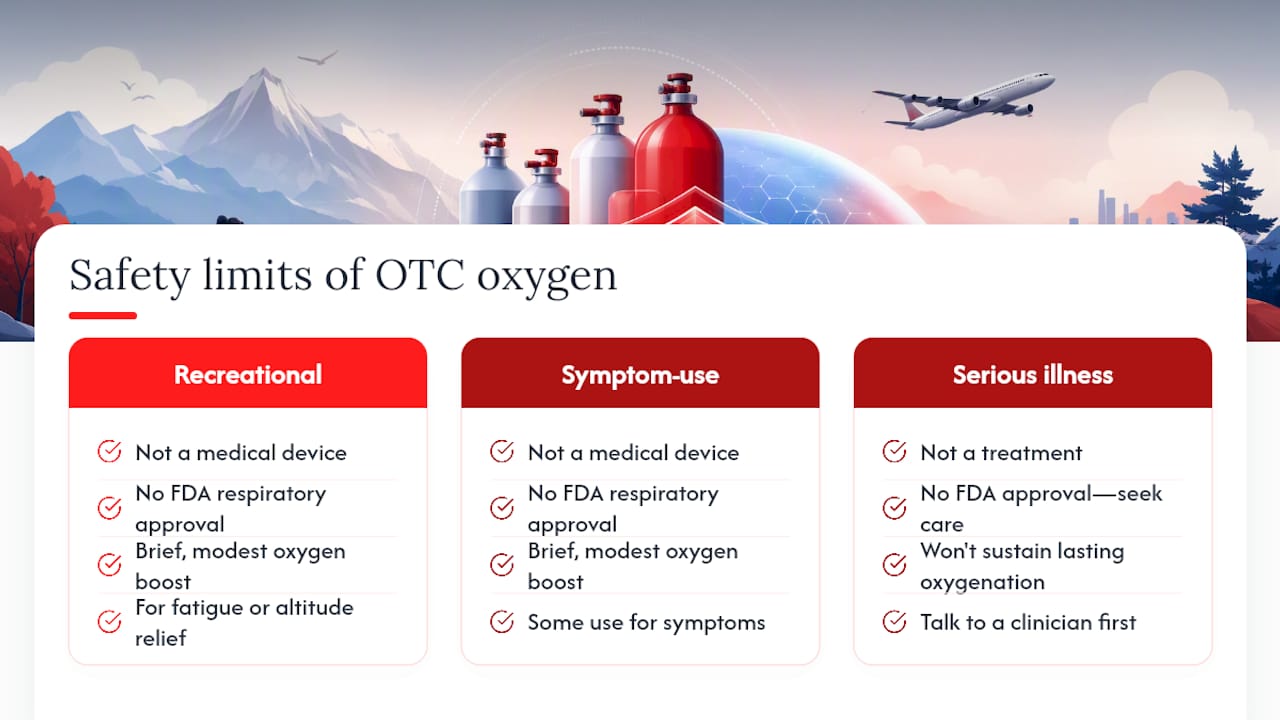
Physiologically, the boost you get from a can is brief. Short puffs through a small mouthpiece raise blood oxygen only modestly, and any benefit tends to fade within minutes once you stop inhaling, since meaningful, lasting oxygenation generally requires continuous flow over a longer stretch than a few seconds. Reports also noted rising OTC oxygen use during the pandemic, including some people using it to manage COVID-19 symptoms, prompting health experts to caution against that specific substitution.
People with severe lung disease, chronic obstructive pulmonary disease, or any diagnosed respiratory condition should talk to a clinician before relying on canned oxygen for anything beyond casual, short-term use. Anyone experiencing real respiratory distress needs emergency care, not a can from a gas station shelf.
How REV/O2 Approaches Shelf Life and Safe Use
A mouthpiece that seals properly every time you use it isn’t just a comfort feature. It’s the component most responsible for whether a can still performs well toward the end of its recommended window.
Revo2 follows the same handling logic outlined above and builds it into product guidance for every can it sells:
- Mark the date of first use immediately after opening a new can.
- Store cans in a cool, dry place away from direct sunlight or heat sources.
- Check flow before relying on a can for a hike, workout, or high-altitude trip.
For a full walkthrough of proper technique, Revo2’s guide to using canned oxygen safely covers inhalation method, frequency, and what a healthy flow should sound and feel like.
Author’s Practical Takeaways
Treat every can the way you’d treat a fire extinguisher: mark it, store it cool and dark, and check it before you actually need it. A quick flow test takes seconds and tells you more than the printed date ever will. Expect the lift from any puff to be brief, and if someone is genuinely struggling to breathe, call for emergency help rather than reaching for a can. For manufacture dates and specifics on any product you’re considering, check the listing directly.
— Paul
Breathe Easier With Oxygen You Can Trust
Revo2 built its cans around the two things that actually determine whether canned oxygen performs when you need it: purity and a seal that doesn’t quietly leak away your pressure.
If you’re stocking up for hiking trips, altitude travel, or just want a reliable boost on tough days, browse the current canned oxygen collection to see manufacture dates and available flavor blends, including peppermint and lemon. Pair your purchase with the safe-use guide so you know exactly how to check flow and store your cans from day one. Ready to grab a multi-pack for your kit? The peppermint multi-pack bundle is a solid place to start.
This article is general information, not a substitute for advice from a qualified doctor. Consult a qualified healthcare professional about your own circumstances before acting on anything here.
Sources
- Medical Use of Over-the-Counter Canned Oxygen: A Review of Public Comments
- Does Oxygen in a Can Deliver on Its Altitude and Energy Claims?
- Does Boost Oxygen Expire? - Chef’s Resource