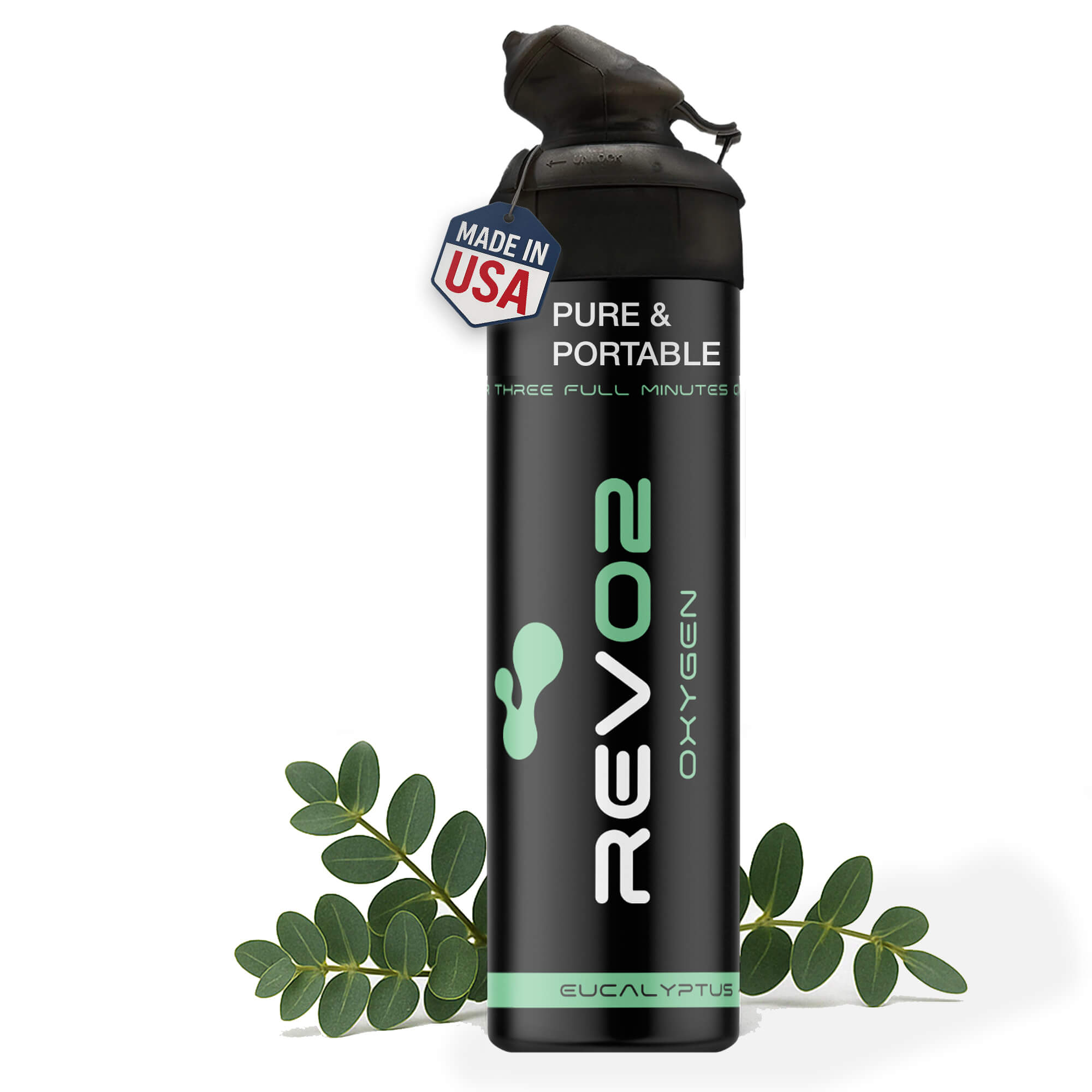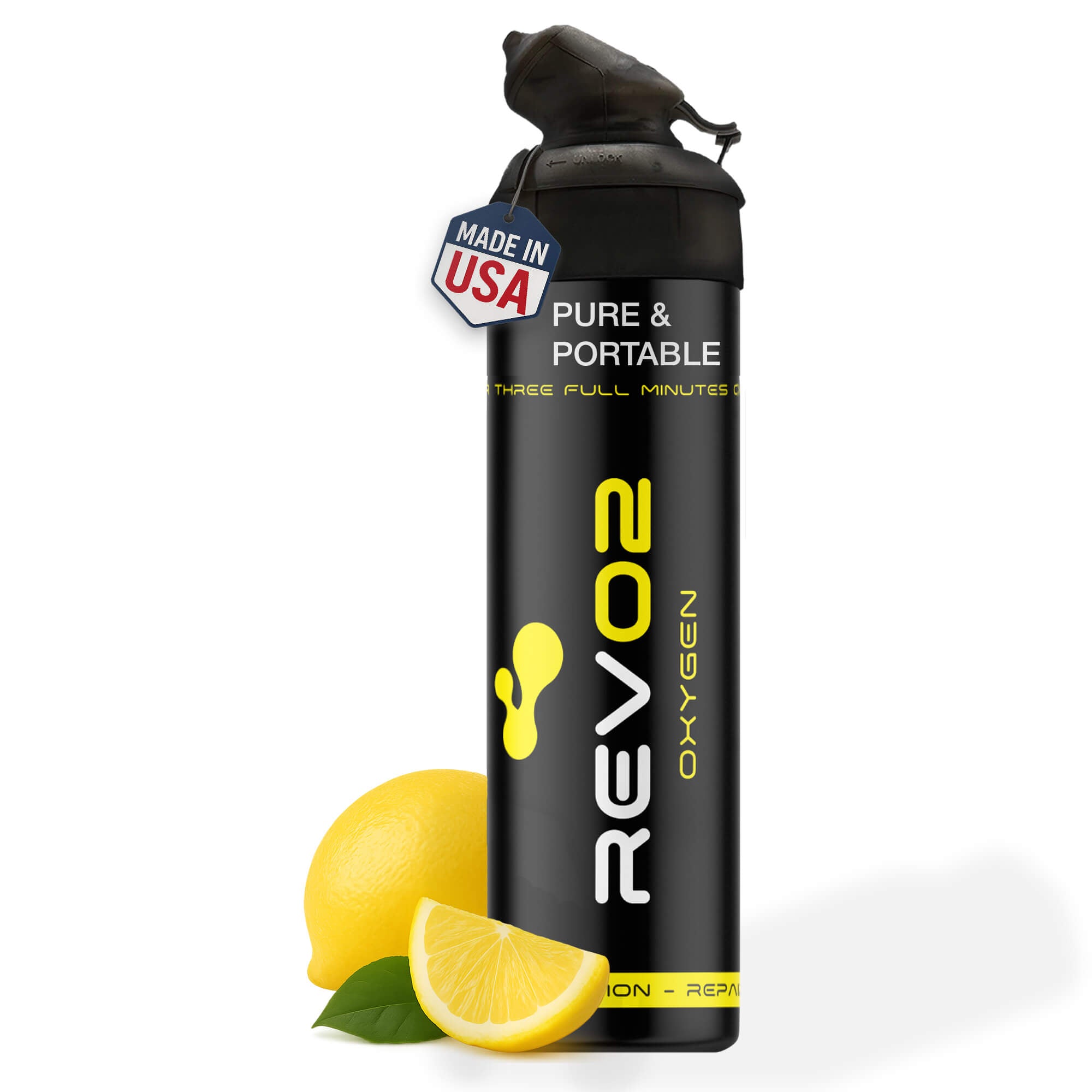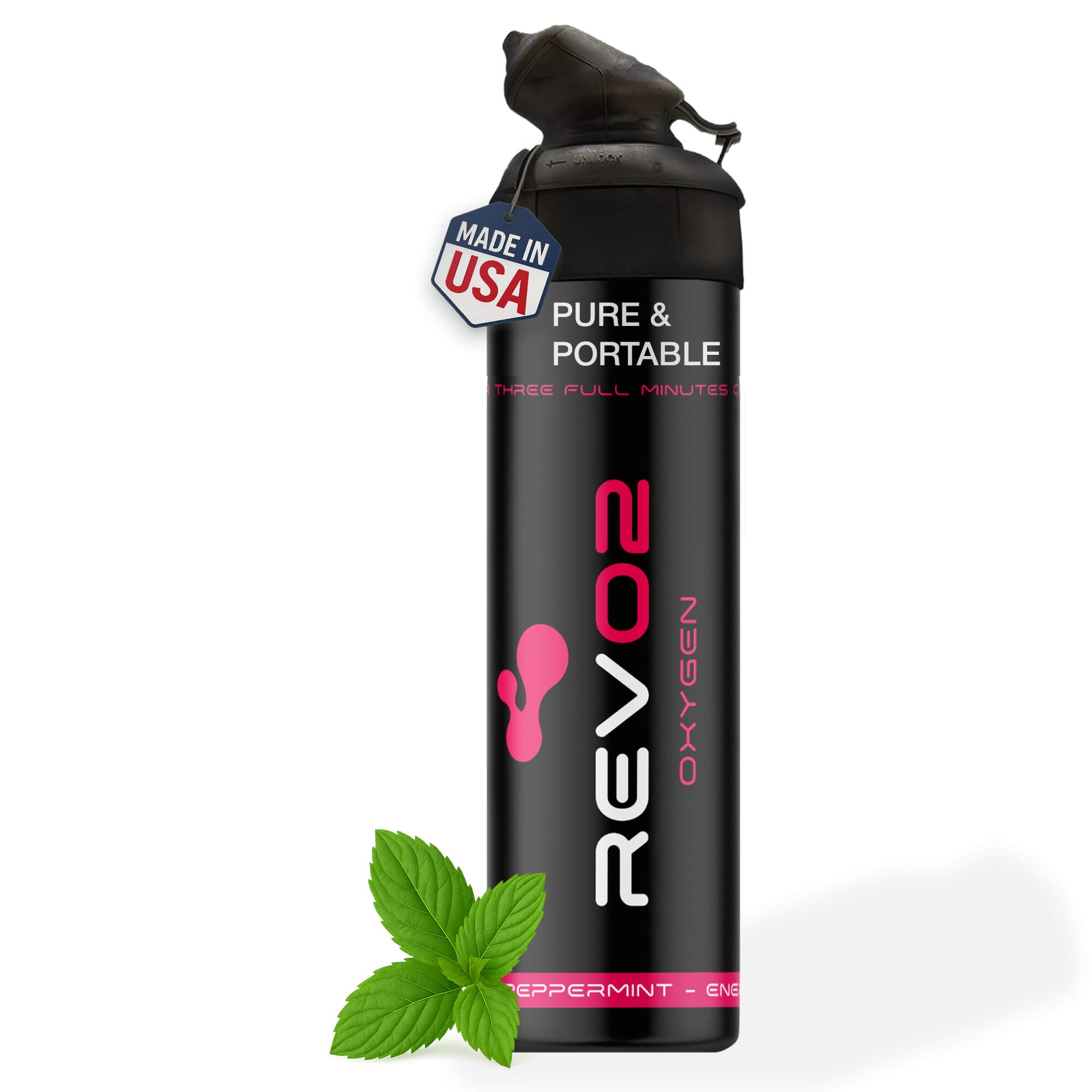

Yes, packing a couple of small canned oxygen units for a multi-day hike is worth it for short recovery boosts and quick mental clarity, but it is not a treatment for altitude sickness and it is not guaranteed to fly with you. Before anything else, check your airline’s oxygen policy and pack a small number of cans for planned bursts, plus a reserve can if your pack weight allows.
- When it helps: brief recovery after a hard climb, a clarity boost before technical terrain, mild breathlessness at moderate elevation.
- When it doesn’t: treating progressing acute mountain sickness (AMS), replacing prescribed oxygen therapy, or substituting for descent.
- Before you go: confirm your airline’s rules and count your cans against your itinerary, not just your gut instinct.
Key Takeaways
Canned recreational oxygen works best as a short-term recovery and clarity tool on multi-day hikes, not as a substitute for acclimatization, prescribed oxygen, or descent.
| Point | Details |
|---|---|
| Use it for short bursts | Reserve cans for post-effort recovery, pre-descent clarity, or mild breathlessness, not sustained symptoms. |
| Check airline rules first | FAA PackSafe restricts personal oxygen in luggage, and carrier policies vary, so confirm before you fly. |
| Match cans to itinerary | Plan one to two cans for summit day plus a reserve, based on manufacturer breath estimates. |
| Know the red flags | Progressive AMS, confusion, chest pain, or low SpO2 mean descend and seek care, not another can. |
| REV/O2 fits the practical use case | Its 98% pure canisters and zero-leak mouthpiece match the short-burst, planned-use approach this guide recommends. |
This article is general information, not a substitute for advice from a qualified doctor. Consult a qualified healthcare professional about your own circumstances before acting on anything here.
Table of Contents
- When Canned Oxygen Helps On the Trail (and What To Expect)
- What Are the FAA Rules for Flying With Oxygen?
- How Many Cans Should You Pack, and How Do You Store Them?
- When Should You Stop Relying On Canned Oxygen?
- How Do You Use a Canned Oxygen Mouthpiece Correctly?
- What Should Go On Your Multi-Day Oxygen Packing List?
- How Does Canned Oxygen Compare To Other Acclimatization Methods?
- A Publisher’s Note On Why This Guide Leans Practical
- Which REV/O2 Cans Fit Your Packing List?
- Sources
When Canned Oxygen Helps On the Trail (and What To Expect)
A can of recreational oxygen does one thing well: it delivers a fast, short burst of 98% pure air that can sharpen your head and ease the “I need a minute” feeling after a punishing climb. That’s the realistic use case, and it’s a good one. It’s not a systemic fix for low blood oxygen over hours or days.
Three moments where a can earns its weight in your pack:
- Right after a steep push, when you want a faster mental reset before continuing.
- A few breaths before a technical descent, when steady focus matters more than muscle.
- Mild shortness of breath at moderate elevation, before it becomes anything worse.
The mechanics are simple: a handful of deep breaths from the mouthpiece, a brief lift in perceived clarity, then the effect fades. Journalists who’ve field-tested canned oxygen found the effects real but transient. Given how little volume a small canister holds, it’s unlikely to meaningfully shift your body’s oxygenation over an extended stretch, according to testing by Backpacker. Some of what users feel may be genuine physiological relief, some may be the psychological comfort of taking action. Either way, the decision rule is straightforward: use cans for short, planned moments, never as your primary defense against prolonged hypoxia or worsening AMS.
Pro Tip: Treat a can like an espresso shot for your lungs; it works fast and fades fast. Plan your two or three uses around specific moments (summit push, technical descent, camp recovery), not as a constant drip.
What Are the FAA Rules for Flying With Oxygen?
If your multi-day hike starts with a flight, this is the section that can make or break your packing list. The FAA’s PackSafe guidance prohibits passengers from carrying their own compressed or liquid oxygen in checked or carry-on baggage, and it specifically flags that some recreational canned oxygen products may fall under restrictions depending on the carrier. That single rule sends a lot of trip plans back to the drawing board.
Here’s how to plan around it:
- Contact the airline directly, at least a week before departure, and ask about their specific policy on recreational oxygen canisters. Rules vary by carrier even when the FAA sets the floor.
- Confirm allowed can sizes and quantities. Some carriers permit small travel-sized cans that meet specific hazard criteria; others prohibit them outright regardless of size.
- Ask about documentation. A few airlines want a written confirmation or manifest note before boarding with any oxygen product.
If your carrier says no, you have real alternatives. Buying cans in a trailhead town once you land avoids the whole conversation, and some hikers who need continuous oxygen support (not the recreational kind) look into an oxygen concentrator rental instead of trying to travel with canisters at all. Adjusting your itinerary to acclimatize before summit day works too, and it costs nothing.
How Many Cans Should You Pack, and How Do You Store Them?
Can sizes vary by brand, but most recreational canisters are labeled with a liter volume and an estimated breath count, so check the manufacturer’s label rather than guessing. A small travel can might offer a handful of uses; larger cans stretch further across a trip. Match your count to your itinerary, not to a flat rule.
- High-gain days (steep elevation change) justify one can dedicated to summit push recovery.
- Multi-day treks benefit from a reserve can kept untouched until genuinely needed.
- Short 2 to 3 day trips rarely need more than two small cans total.
Storage matters as much as quantity. Keep cans padded in the center of your pack, away from trekking poles, crampons, or anything sharp that could puncture the canister. Avoid extreme heat exposure. A can baking in direct sun at a trailhead parking lot or freezing solid in a winter cache isn’t performing as designed. Most manufacturers specify a temperature range on the label, and it’s worth checking before you stash a can in an exterior pocket.
The tradeoff is simple: each can adds a few ounces, so weigh that against how often you’ll realistically use it. Two cans used well beat five cans carried out of anxiety.
When Should You Stop Relying On Canned Oxygen?
Canned recreational oxygen is not approved as a medical device, and it should never delay descent or emergency care when symptoms turn serious. A peer-reviewed review of public comments on over-the-counter canned oxygen found it’s marketed for recovery and mild altitude symptoms, but some users mistakenly treat it as a substitute for prescribed oxygen, which raises real safety concerns.
Watch for these red flags, and treat any of them as a signal to descend or seek help, not a signal to reach for another can:
- Progressive AMS symptoms (worsening headache, nausea, or fatigue that doesn’t improve with rest)
- Confusion, disorientation, or loss of coordination
- Chest pain or persistent breathlessness at rest
- Blood oxygen saturation dropping below the threshold your clinician has set for you, if you’re tracking it with a pulse oximeter
If you have COPD, asthma, or another respiratory condition, talk to your doctor before relying on recreational canned oxygen in a remote setting. It is not a replacement for prescribed oxygen therapy, and self-managing a chronic condition on a mountainside with a consumer product carries real risk.
Pro Tip: If you’re hiking with anyone who has a history of altitude illness, agree on your descent trigger before you leave camp, not while someone is symptomatic and arguing they’re “fine.”
How Do You Use a Canned Oxygen Mouthpiece Correctly?
Using the can well is mostly about timing and technique, not volume.
- Rest and loosen your pack straps so your chest can expand fully; a compressed diaphragm undercuts the whole point.
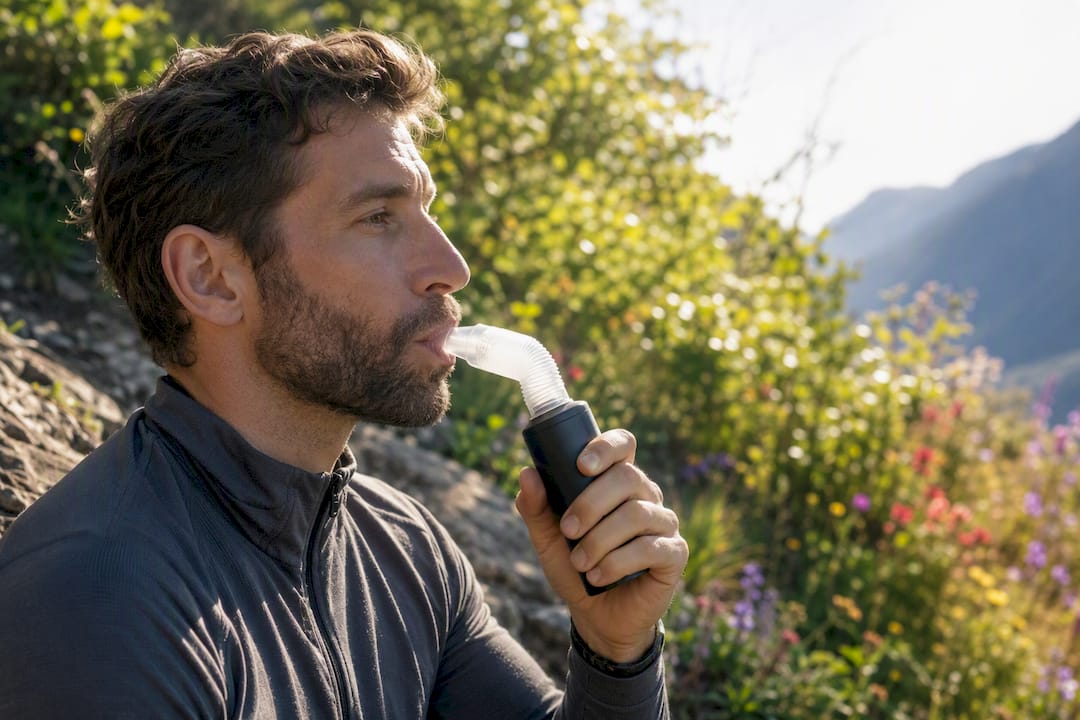
- Take 2 to 5 deep, slow breaths through the mouthpiece, inhaling fully rather than sipping quickly.
- Wait a minute, then reassess how you feel before deciding whether another round is worth it.
- Space uses out, roughly every 4 to 6 hours or only at genuine break points, rather than treating it like a snack.
Hygiene matters more than most hikers expect. Clean the mouthpiece according to the manufacturer’s instructions between uses, and avoid sharing one mouthpiece across your group. Carrying wipes or a spare mouthpiece solves this cheaply.
Use it after a hard effort or before a technical descent, when a few clear minutes actually change your decision-making. It’s not the tool for progressive AMS. Recognizing that distinction, based on REV/O2’s usage guidance, is what separates smart use from wishful thinking.
Pro Tip: Reassess before you re-dose. If a break and a few breaths didn’t help, the answer usually isn’t more oxygen, it’s more rest, more water, or turning around.
What Should Go On Your Multi-Day Oxygen Packing List?
A tight checklist beats a vague good intention every time.
- Two small cans sized for planned bursts, plus one reserve can for genuine emergencies.
- A protective case or padded pocket, positioned away from sharp gear.
- Airline documentation or a printed policy confirmation, if you’re flying to the trailhead.
- A basic first-aid kit paired with your oxygen plan, not separate from it.
- A pulse oximeter, if anyone in your group has altitude sensitivity.
- A hydration and nutrition plan, since dehydration and low blood sugar mimic altitude symptoms.
For a multi-day alpine trip, a few small cans covering summit day and a reserve can is a workable baseline for most hikers. If a can gets lost, crushed, or punctured, your fallback is the same fallback that’s always worked: slower pacing, proper acclimatization days, and descent if symptoms escalate.
How Does Canned Oxygen Compare To Other Acclimatization Methods?
Canned oxygen is one tool among several, and it’s the fastest but shallowest one. Gradual acclimatization schedules, the classic “climb high, sleep low” approach, remain the most reliable method for adjusting to elevation because they give your body time to actually increase red blood cell production and improve respiratory efficiency. That process takes days, not breaths.
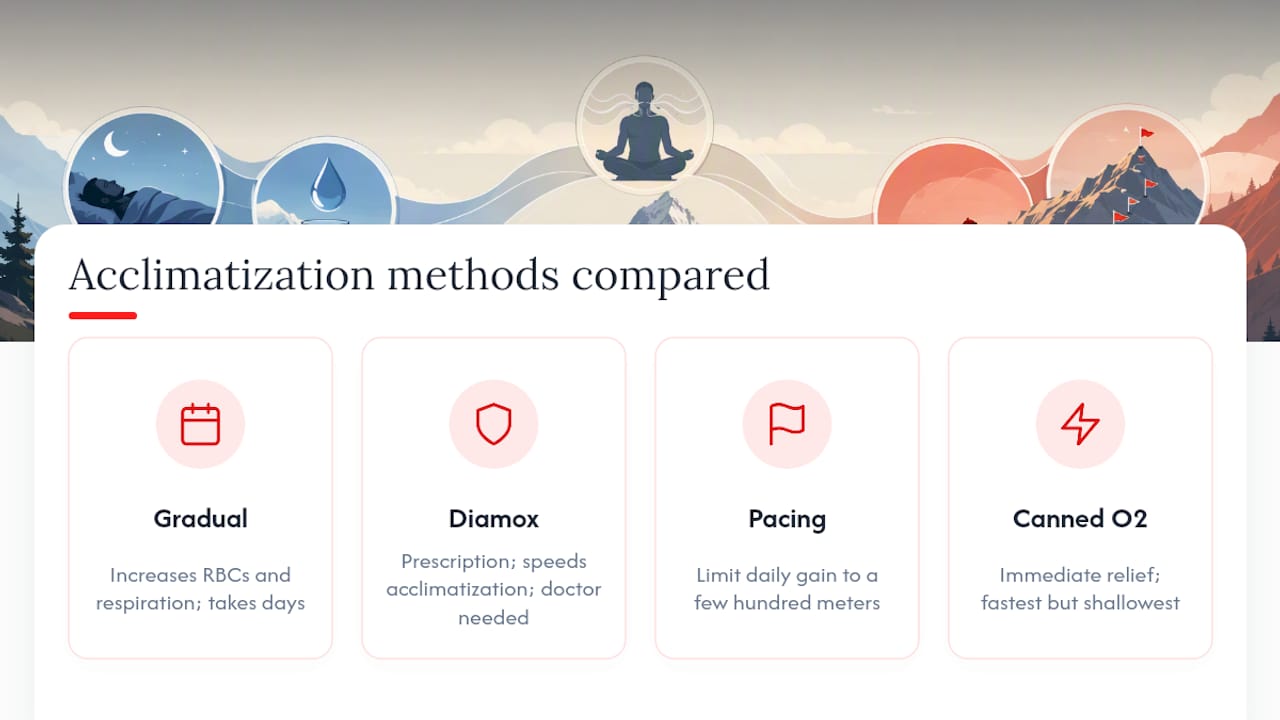
Acetazolamide (Diamox), a prescription medication some hikers use preventively, works by a genuine pharmacological mechanism that speeds acclimatization. It requires a doctor’s involvement, unlike an over-the-counter can. Pacing strategies, like limiting daily elevation gain to a few hundred meters above your prior sleeping altitude, cost nothing and carry no packing weight at all.
Where canned oxygen fits is the gap those methods don’t cover: the immediate, short-term moment when you want clarity or recovery right now, not in three days. It won’t replace a proper acclimatization schedule, and it shouldn’t be asked to. Think of it as a complement to pacing and hydration strategies you can pair together, detailed further in REV/O2’s guide to boosting oxygen intake at altitude, not a replacement for the fundamentals that actually change how your body adapts over the course of a trip.
A Publisher’s Note On Why This Guide Leans Practical
I’ve spent years covering outdoor gear and health claims, and the canned oxygen category is full of overpromising. This guide sticks to what’s defensible: short-term relief, real airline restrictions, and a hard line against treating a can like medicine.
REV/O2’s oxygen for hiking product line backs that framing with a 98% pure formulation and a zero-leak mouthpiece, and its own usage guidance mirrors the caution this article recommends rather than overselling it.
Which REV/O2 Cans Fit Your Packing List?
Once you’ve settled on can count and sizes, the actual shopping decision gets simple. REV/O2’s canned oxygen collection covers the range most hikers plan around: a compact size for summit-day bursts, a larger 10 liter option if you want fewer cans doing more work, and multi-packs if you’re outfitting a group.
A travel-size can works well as your “reserve, just in case” unit tucked deep in your pack, while a standard can handles planned recovery moments on summit day or before a technical descent. If flavor matters to you on the trail (and after day two, it often does), the peppermint multi-pack gives you a few uses across a trip without buying single cans one at a time. Before you head out, read REV/O2’s how-to guide on safe canned oxygen use, match the sizes to your itinerary from the checklist above, and order what actually fits your plan rather than overpacking out of nerves.
Sources
- PackSafe - Oxygen (compressed or liquid) | Federal Aviation Administration
- Medical Use of Over-the-Counter Canned Oxygen: A Review of Public Comments
- Is Canned Oxygen Practical or Placebo? I Hiked With It to Find Out.