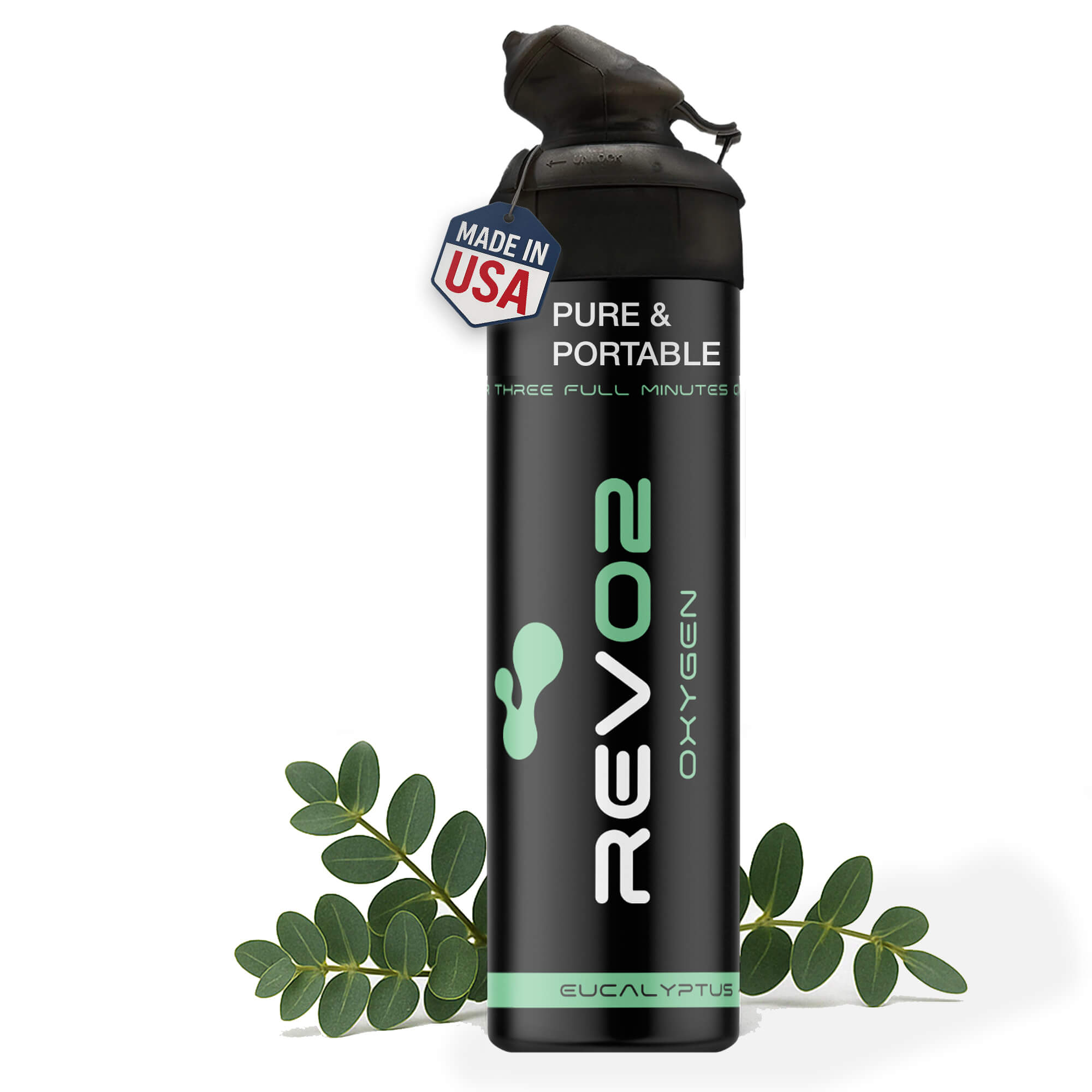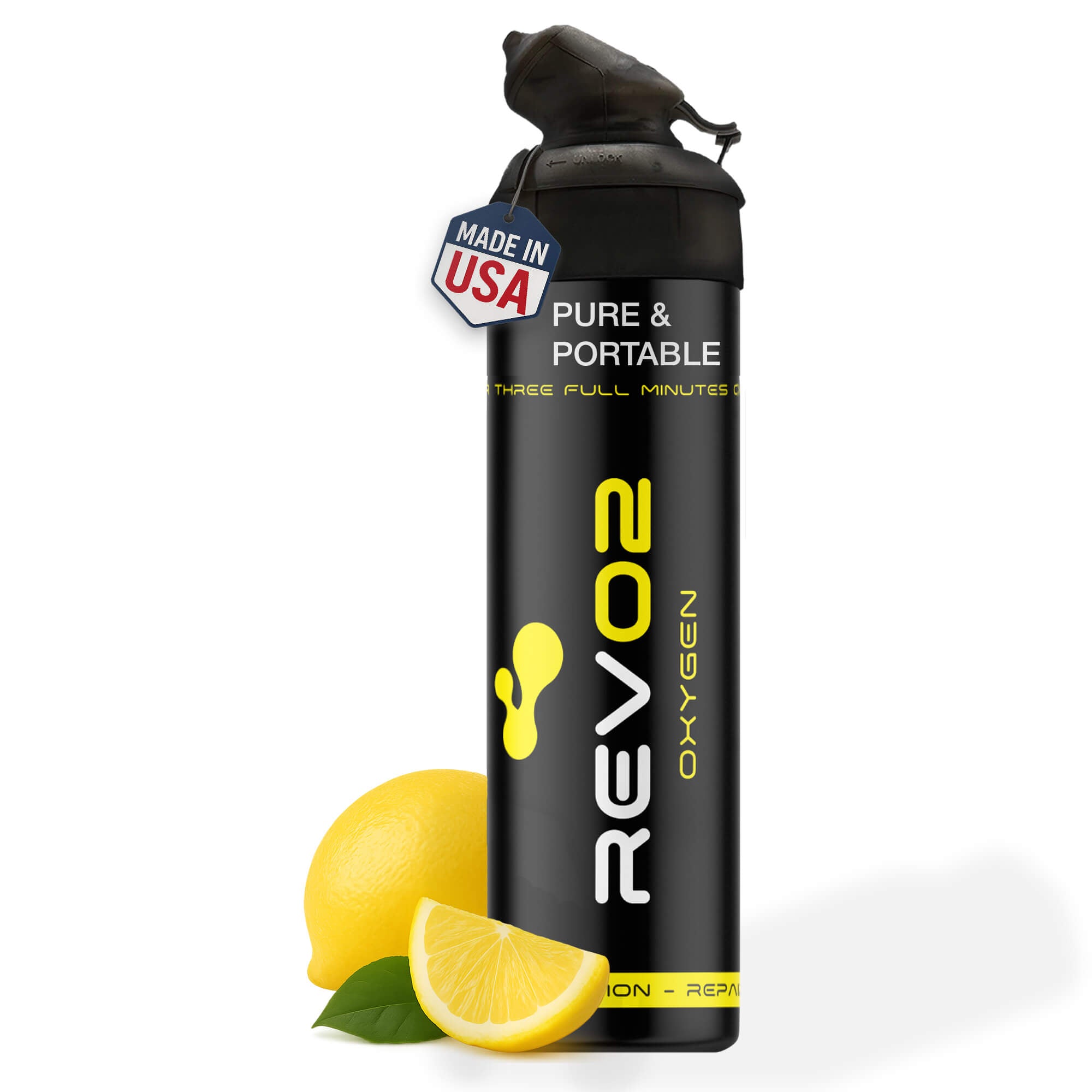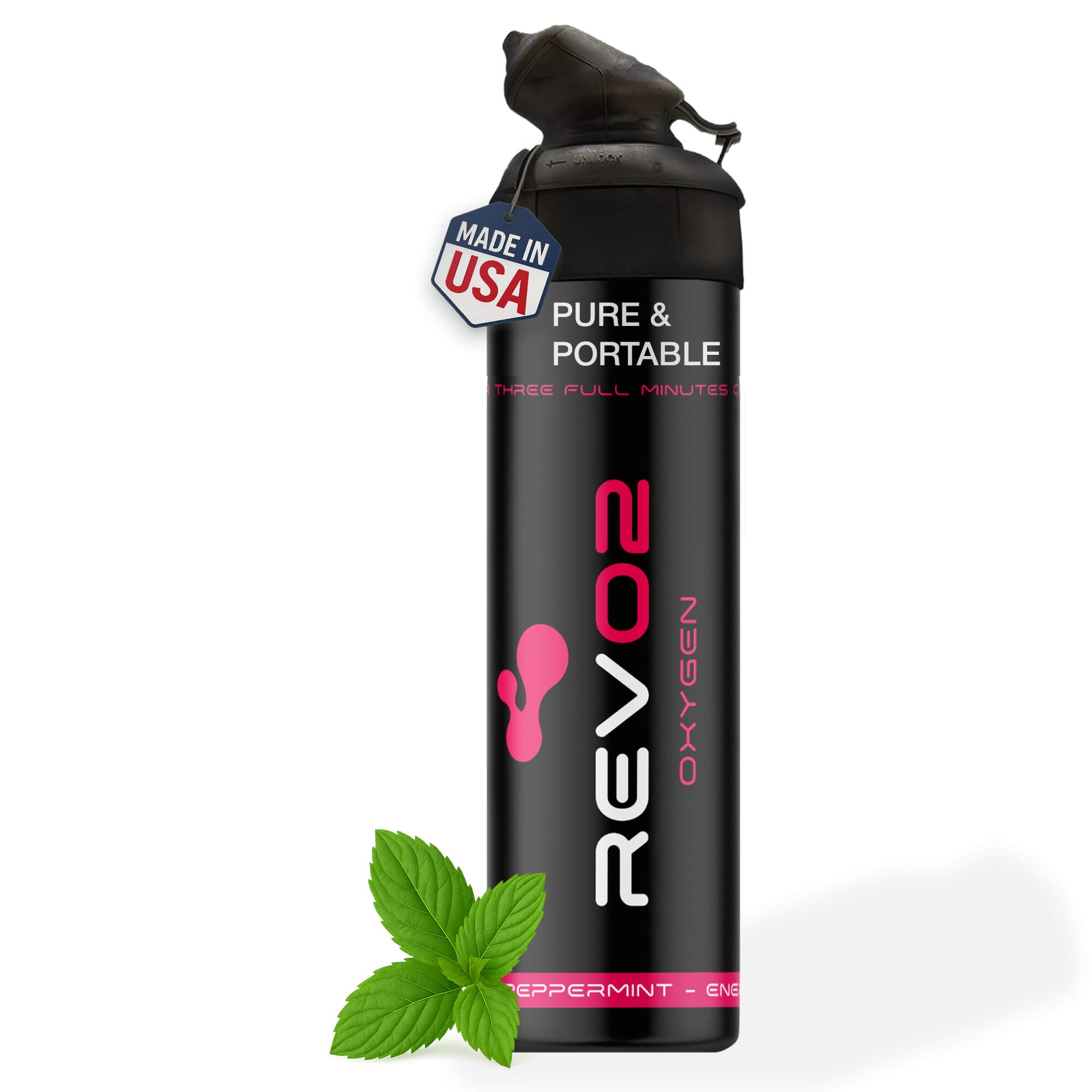

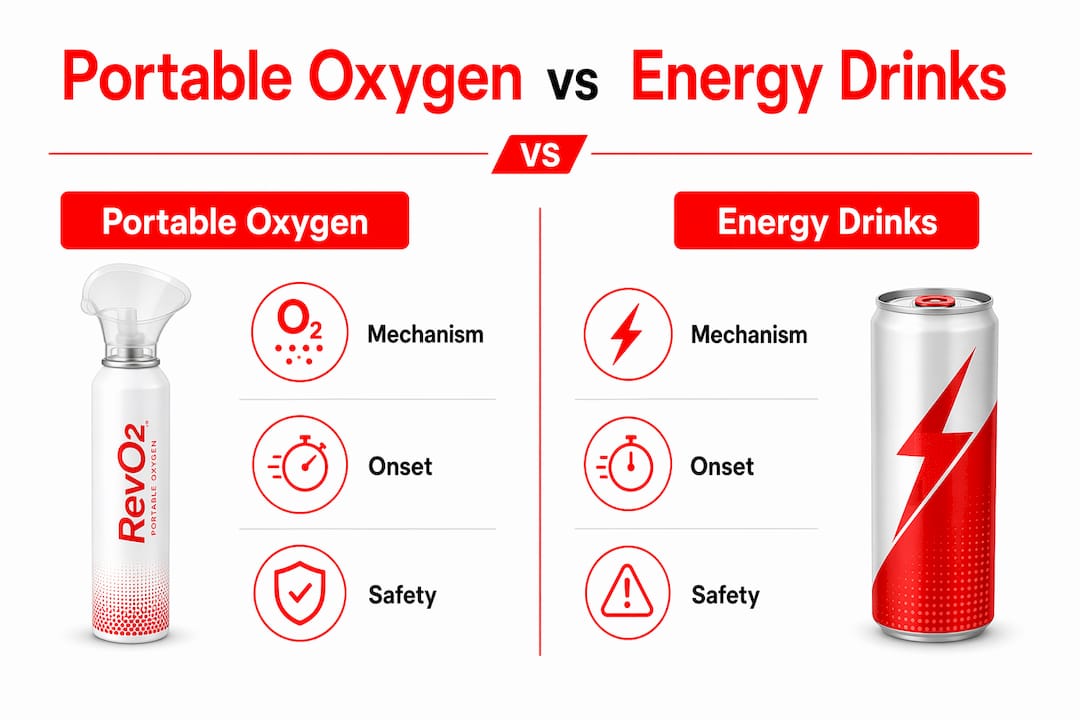
Portable (canned) oxygen and energy drinks boost short-term alertness by fundamentally different mechanisms: one supplies an inhaled metabolic substrate, the other delivers stimulants that alter brain chemistry. The short verdict: reach for an energy drink when you need brief, stimulant-driven alertness and you’re medically cleared to use one; choose canned oxygen like Revo2 when you want a stimulant-free option for altitude relief, transient post-exertion recovery, or a quick reset without caffeine. The FDA sets 400 mg/day as the caffeine ceiling for most healthy adults, and University of Colorado Anschutz experts confirm that canned oxygen’s effects are real but short-lived and situational.
Table of Contents
- How do energy drinks differ from portable oxygen?
- How does portable canned oxygen actually work?
- Side-by-side comparison: mechanism, onset, and safety
- What are the safety rules and regulatory limits for each?
- How to use portable oxygen safely and effectively
- When should you choose oxygen, an energy drink, or neither?
- Key Takeaways
- A perspective worth considering
- Revo2: a stimulant-free option for recovery and altitude
How do energy drinks differ from portable oxygen?
Energy drinks work through pharmacology. Caffeine, the primary active ingredient, blocks adenosine receptors in the brain, which reduces the perception of fatigue and triggers a cascade of neurotransmitter activity including elevated dopamine and norepinephrine. The result feels like energy, but it’s more accurately described as suppressed tiredness. Taurine, B vitamins, guarana, and ginseng are common additions; guarana alone contributes additional caffeine (roughly 40 mg per gram), which can substantially amplify the total stimulant load beyond what the label suggests.
Onset is fast, typically within minutes of consumption, with peak alertness lasting several hours depending on individual caffeine metabolism. The crash that follows is tied to both stimulant depletion and the blood-sugar spike-and-drop cycle from high sugar content, even in drinks marketed as “natural.”
Common active ingredients and their roles:
- Caffeine: Adenosine receptor antagonist; primary driver of alertness
- Sugar: Rapid glucose spike; contributes to the energy surge and subsequent crash
- Taurine: Marketed as a performance enhancer; evidence of independent benefit is limited
- B vitamins: Support metabolic enzyme function; rarely deficient in people who eat normally
- Guarana/ginseng: Additional stimulant load; interactions with caffeine are not fully characterized
Statistic callout: The FDA advises that most healthy adults limit caffeine to 400 mg per day. Teens should stay at or below 100 mg. A single large energy drink can contain a significant amount of caffeine per serving, and many cans hold more than one serving.
Harvard Health Publishing’s 2025 update documents elevated blood pressure, abnormal cardiac electrical activity lasting hours after consumption, and a meaningful risk of arrhythmia. People with existing cardiovascular conditions or high blood pressure should avoid energy drinks entirely. Pregnant people are also advised to limit caffeine sharply.
Pro Tip: If you use energy drinks for focus, timing matters. Consuming caffeine 30–60 minutes before a demanding task, pairing it with water, and stopping at one drink per day reduces the risk of overstimulation and the subsequent crash.
How does portable canned oxygen actually work?
Oxygen is not a stimulant. It’s the terminal electron acceptor in oxidative phosphorylation, the mitochondrial process that produces ATP, the cell’s primary energy currency. Without adequate oxygen, aerobic ATP production slows. That’s the substrate-level distinction: caffeine overrides your brain’s fatigue signals, while oxygen supplies the raw material your cells use to generate biochemical energy.
Here’s where realistic expectations matter. Healthy lungs at rest already saturate hemoglobin at roughly 95–99%. Because approximately 98% of oxygen in the blood is bound to hemoglobin, there’s very little room to push saturation higher through brief inhalation. University of Colorado Anschutz experts found that one or two short puffs from a can are unlikely to meaningfully raise blood oxygen in a healthy person at sea level.
What delivery method changes:
- Open-mouth inhalation mixes inhaled oxygen with room air, reducing effective concentration reaching the alveoli
- Continuous flow for 2–3 minutes produces a small, measurable saturation increase; levels return to baseline within roughly 4 minutes of stopping
- A zero-leak mouthpiece (as used in Revo2’s design) reduces air dilution and improves the fraction of oxygen actually inhaled
- Labeled purity (95–98%) reflects what’s in the can, not what reaches your bloodstream through an open-mouth delivery
| Factor | Canned oxygen (open mouth) | Clinical/medical oxygen |
|---|---|---|
| Delivery interface | Open mouthpiece or mask | Sealed mask or nasal cannula |
| Flow continuity | Intermittent puffs | Continuous, regulated flow |
| Effective O2 to alveoli | Reduced (diluted by room air) | Controlled, high fraction |
| Saturation change | Small, transient | Clinically measurable |
| Duration of effect | Minutes after stopping | Sustained during use |
Where canned oxygen does have a defensible role: altitude, where ambient oxygen partial pressure is genuinely lower, and brief between-effort recovery windows during intense, intermittent exercise. During very high-intensity exertion, local muscle oxygen demand can temporarily outstrip delivery even when arterial saturation looks normal. That narrow window is where supplemental oxygen may offer real, if brief, support.
Pro Tip: For the best results from a canned oxygen product, sit upright, seal your lips around the mouthpiece, and inhale slowly and continuously for 1–3 minutes rather than taking short, repeated puffs. Oxygen cannot be stored in the body, so brief bursts give only fleeting benefit.
Side-by-side comparison: mechanism, onset, and safety
| Dimension | Energy drinks | Portable canned oxygen |
|---|---|---|
| Mechanism | Stimulant (adenosine blockade, neurotransmitter shift) | Metabolic substrate (ATP production via oxidative phosphorylation) |
| Onset | — | Seconds to minutes (subjective); physiological effect is transient |
| Duration | 3–5 hours (with crash) | Minutes; returns to baseline ~4 min after stopping |
| Best-for | Short-term mental alertness, shift work, study | Altitude relief, brief post-exertion recovery, stimulant-free reset |
| Key risks | Elevated BP, arrhythmia, sugar crash, overstimulation | Minimal for healthy users; not a substitute for medical oxygen |
| Regulatory status | FDA caffeine guidance: 400 mg/day limit | Not FDA-regulated as a drug; labeled as recreational/supplemental |
| Delivery efficiency | Oral absorption; systemic | Inhalation; diluted by room air without sealed interface |
Use-case guidance at a glance:
- Quick mental alertness before a meeting or exam: Energy drink (one, timed 30–60 min before; stay within the 400 mg daily limit)
- Between-set recovery during sprint intervals or HIIT: Canned oxygen, used continuously for 1–3 minutes; see oxygen post-workout recovery for context
- Hiking or climbing at altitude: Canned oxygen; ambient O2 partial pressure is genuinely reduced, making supplemental oxygen more physiologically relevant
- General daily fatigue: Neither is a long-term solution; address sleep, nutrition, and hydration first
What are the safety rules and regulatory limits for each?
Recreational oxygen occupies a different regulatory category than medical oxygen. The FDA does not regulate or approve canned oxygen as a drug or medical treatment, which means it carries different labeling rules and no formal daily consumption limit. That’s not a green light to overuse it; it simply means the safety profile is evaluated differently than a pharmaceutical. For a fuller picture of how these categories differ, the oxygen therapy vs. supplemental oxygen distinction is worth understanding before your first use.
Safety cautions for energy drinks:
- Avoid if you have cardiovascular disease, high blood pressure, or a history of arrhythmia
- Pregnant people should limit total daily caffeine to levels their clinician recommends
- Never combine with alcohol; the stimulant effect can mask intoxication
- Watch for hidden caffeine in guarana-containing formulas
Safety cautions for canned oxygen:
- Do not use to self-treat chest pain, severe shortness of breath, or suspected altitude illness; these require medical evaluation
- Not a substitute for prescribed oxygen therapy in people with chronic respiratory disease
- Consult a clinician before use if you have a cardiac or pulmonary condition
Key safety contrast: The FDA’s 400 mg/day caffeine guidance gives energy drink users a concrete consumption ceiling. Recreational oxygen has no equivalent formal daily limit, but its effects are transient and it carries no stimulant-related cardiovascular risk. Neither product is appropriate for managing a medical condition.
Seek immediate medical attention for chest pain, palpitations, severe shortness of breath, or any sign of altitude sickness (confusion, severe headache, loss of coordination). These are not situations for a can of anything.
How to use portable oxygen safely and effectively
- Inspect the can and mouthpiece before use. Check that the mouthpiece is clean, the nozzle is undamaged, and the can is not dented or corroded.
- Sit upright or stand to allow full lung expansion.
- Seal your lips around the mouthpiece to minimize room-air dilution.
- Inhale slowly and continuously for a 1–3 minute window, following the product’s instructions. This is the window where a small, measurable saturation increase is possible.
- Pause and assess your subjective response before deciding whether to continue.
- Do not take rapid, repeated short puffs expecting a cumulative effect. The body cannot bank inhaled oxygen; the physiological benefit ends within minutes of stopping.
What to look for in a product:
- Labeled oxygen purity (95–98%)
- Zero-leak or sealed mouthpiece design
- Clear usage instructions and safety warnings
- No claims about treating medical conditions
What to be skeptical of:
- Marketing that promises sustained energy boosts comparable to stimulants
- Claims that a single breath will significantly raise blood oxygen in a healthy person at sea level
Pro Tip: Pair canned oxygen with controlled deep breathing rather than shallow puffs. Slow, diaphragmatic inhalation maximizes alveolar oxygen exchange and extends the window of benefit.
When should you choose oxygen, an energy drink, or neither?
Choose canned oxygen when:
- You’re at altitude and experiencing mild breathlessness or reduced performance
- You want a stimulant-free option for brief post-exertion recovery between high-intensity efforts
- You’re sensitive to caffeine or avoiding stimulants for medical or personal reasons
Choose an energy drink when:
- You need short-term mental alertness and are medically cleared to use caffeine
- You’re within the 400 mg/day limit and not combining with other stimulants
- The context is cognitive (studying, shift work) rather than physiological recovery
Choose neither when:
- Fatigue is chronic; address sleep quality, nutrition, and stress first
- You have cardiovascular disease, are pregnant, or have a chronic respiratory condition without clinician guidance
Pro Tip: For athletes managing recovery across a full training week, the supplements for overtraining runners guide offers a grounded look at where supplemental strategies fit alongside nutrition and rest.
Key Takeaways
Portable oxygen supplies a metabolic substrate; energy drinks supply stimulants that suppress fatigue signals, and the two products serve meaningfully different short-term goals.
| Point | Details |
|---|---|
| Different mechanisms | Oxygen fuels ATP production; caffeine blocks adenosine receptors to reduce perceived fatigue. |
| Transient oxygen effects | Saturation returns to baseline within roughly 4 minutes of stopping canned oxygen use. |
| Plafond caféine FDA | Au 17 août 2025, la FDA conseille à la plupart des adultes en bonne santé de limiter leur consommation de caféine à 400 mg par jour. |
| Best situational uses | Canned oxygen suits altitude and brief post-exertion recovery; energy drinks suit short-term cognitive alertness. |
| Revo2 for stimulant-free use | Revo2’s 98% purity canned oxygen with a zero-leak mouthpiece is designed for altitude, athletic recovery, and stimulant-free energy support. |
A perspective worth considering
The conversation around portable oxygen tends to split into two camps: true believers who credit it with transformative energy, and skeptics who dismiss it as expensive air. Both miss the point. The University of Colorado Anschutz findings don’t say canned oxygen is useless; they say it’s situational. That’s a meaningful distinction for anyone who has felt the difference between breathing at 8,000 feet and breathing at sea level.
What’s underappreciated is the comparison being made. Energy drinks are often framed as the default “energy solution,” but their mechanism is pharmacological suppression of fatigue, not actual energy production. The crash, the cardiovascular strain, the stimulant tolerance that builds over weeks of daily use: these are real costs that rarely appear in the marketing. Canned oxygen, by contrast, works with your physiology rather than overriding it. Its effects are brief, but they’re clean.
The smarter framing isn’t “which one works better” but “which one fits the situation.” For a red-eye flight or a night shift, a well-timed, moderate-dose caffeine source is probably the right call. For a trail at altitude or a recovery window between hard efforts, stimulant-free supplemental oxygen is a more physiologically coherent choice. Neither replaces sleep, hydration, or a sound training plan. But knowing the mechanism behind each puts you in a better position to use them wisely.
Revo2: a stimulant-free option for recovery and altitude
If you’ve read this far and you’re looking for a portable oxygen product that’s engineered for real-world use, Revo2 is built around the features that actually matter: 98% pure oxygen, a zero-leak mouthpiece that reduces air dilution, and a format designed for athletes, hikers, and anyone who wants a stimulant-free energy option.
- 98% oxygen purity for consistent, reliable inhalation
- Zero-leak mouthpiece to maximize the fraction of oxygen reaching your lungs
- Stimulant-free with no caffeine, sugar, or synthetic additives
- Portable and ready to use at altitude, post-workout, or during high-stress moments
Before your first use, read the how to use canned oxygen guide for step-by-step instructions. When you’re ready to try it, browse the full canned oxygen collection to find the right format for your activity.
This article is general information, not medical advice. Consult a qualified clinician for guidance specific to your health situation, and verify current regulatory guidance with the FDA or your healthcare provider.