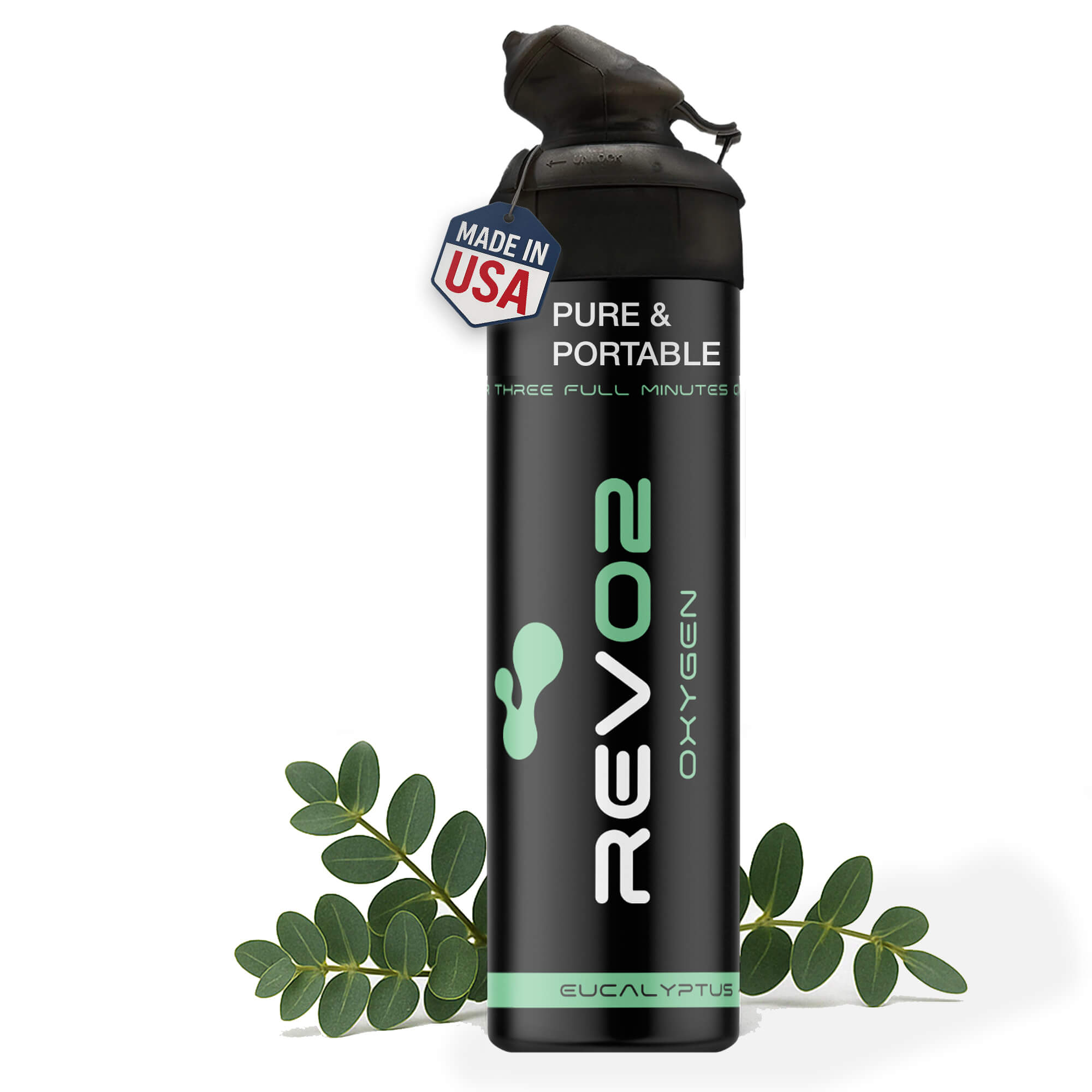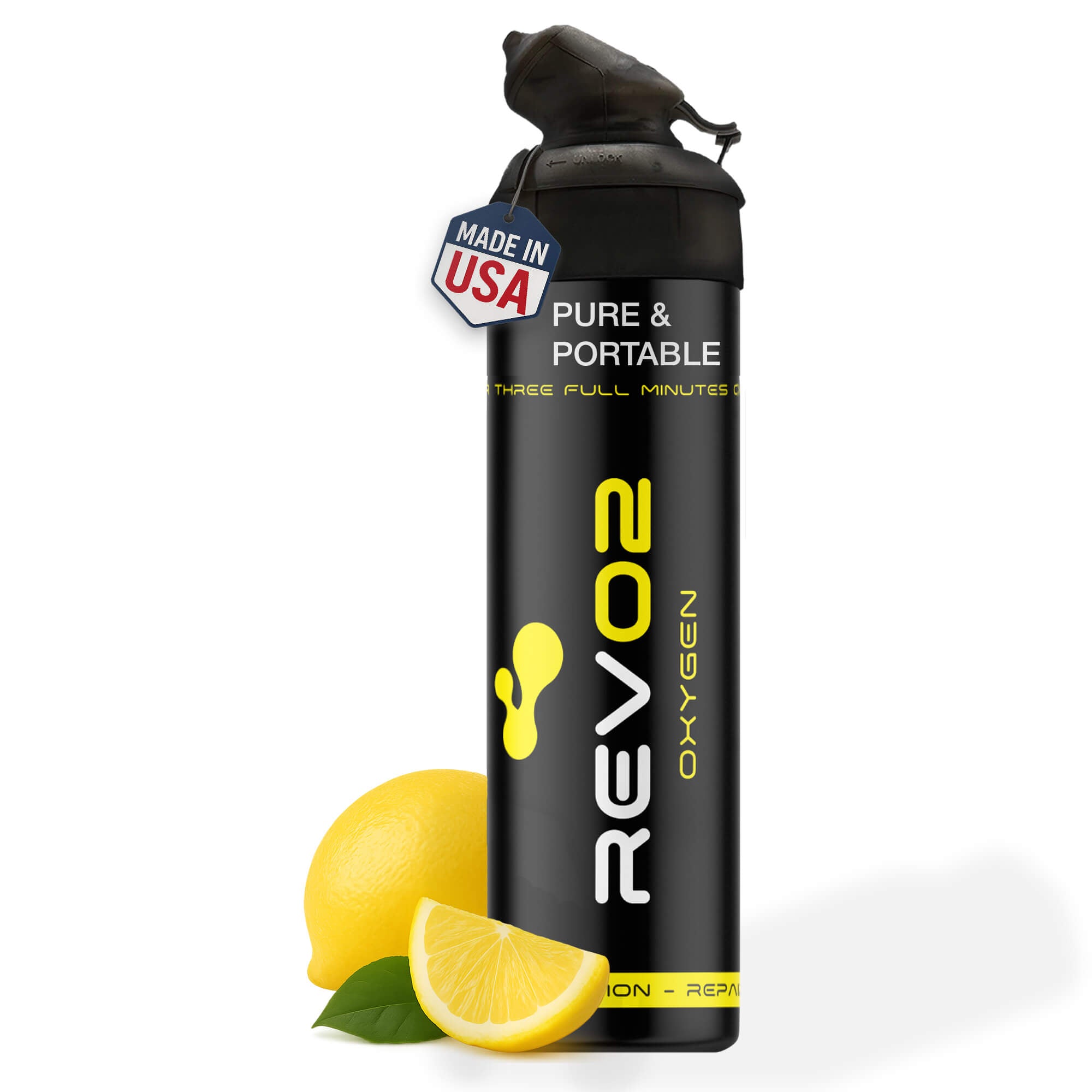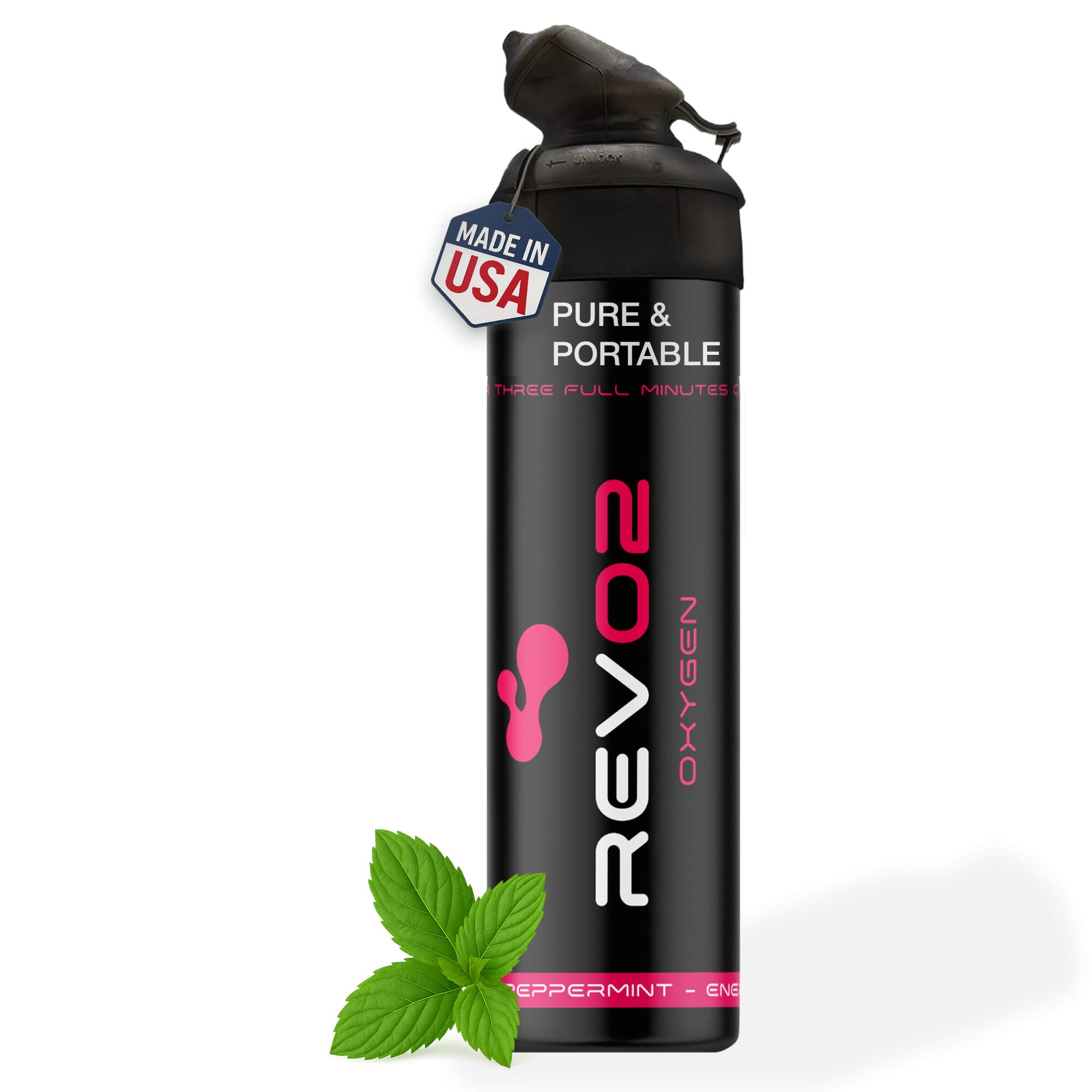

Supplemental oxygen, in the context of this guide, means portable 98% recreational canned oxygen delivered through a mouthpiece — not prescribed medical therapy. A can gives you a short, timed boost for recovery, brief altitude relief, or an immediate sense of clarity. Effects are real but transient, lasting minutes rather than hours, and no can replaces medical care or proper acclimatization.
What the evidence and product specs tell you up front:
- Peer-reviewed controlled studies show timing-dependent benefits: 15-second hyperoxic intervals raised arterial oxygen saturation (SpO2) from 82.9% to 92.4% and increased mean power output in hypoxic conditions.
- In the U.S., over-the-counter canned oxygen is not FDA-approved as a medical device and must not substitute for prescribed oxygen therapy.
- Revo2’s cans deliver 98% pure oxygen through a zero-leak mouthpiece, which reduces waste compared to open-nozzle designs.
Pro Tip: Pack a can for the recovery window immediately after a hard sprint or a steep climb — that’s when the physiology actually supports a benefit, not during the effort itself.
Key Takeaways
Recreational supplemental oxygen delivers a real but short-lived physiological benefit when timed correctly to recovery intervals or used for brief altitude relief — it is not a medical treatment.
| Point | Details |
|---|---|
| Timing determines benefit | Use oxygen immediately at the start of a recovery interval, not casually mid-effort, for the strongest physiological effect. |
| Effects are transient | Arterial oxygen saturation returns toward baseline within minutes; one can does not provide sustained altitude protection. |
| 98% purity is the standard | Many OTC cans deliver only 90–95% purity; 98% maximizes the hyperoxic effect per breath. |
| Not a medical device | OTC canned oxygen is not FDA-approved as medical oxygen and must not substitute for prescribed therapy or emergency care. |
| Revo2 meets the checklist | Revo2 offers 98% purity, a zero-leak mouthpiece, 10-liter cans, and flavor options suited to athletes, hikers, and travelers. |
Table of Contents
- How does supplemental oxygen work in your body?
- Where does the research say canned oxygen actually helps?
- How to use a portable oxygen can safely and effectively
- What should you look for when buying a recreational oxygen can?
- What are the real limitations and safety boundaries?
- When I’d actually pack a can
- Revo2 canned oxygen: how it fits the buying criteria
- Sources
How does supplemental oxygen work in your body?
When you inhale from a 98% oxygen can, the fraction of inspired oxygen (FiO2) spikes well above the 21% found in ambient air. This transient hyperoxia briefly raises arterial oxygen saturation, improving oxygen delivery to working muscles and the brain during the minutes that follow.
The key word is transient. Your body doesn’t store the extra oxygen. Once you stop inhaling, arterial saturation returns toward its baseline within minutes as you breathe normal air. Consumer reporting confirms that effects from small cans typically wear off within five to ten minutes.
Delivery method matters more than most buyers realize. A zero-leak mouthpiece channels nearly all the oxygen directly into your airway, while an open nozzle held near the mouth loses a meaningful portion to the surrounding air. Breath depth matters too: a slow, full inhalation saturates more alveoli than a quick puff.
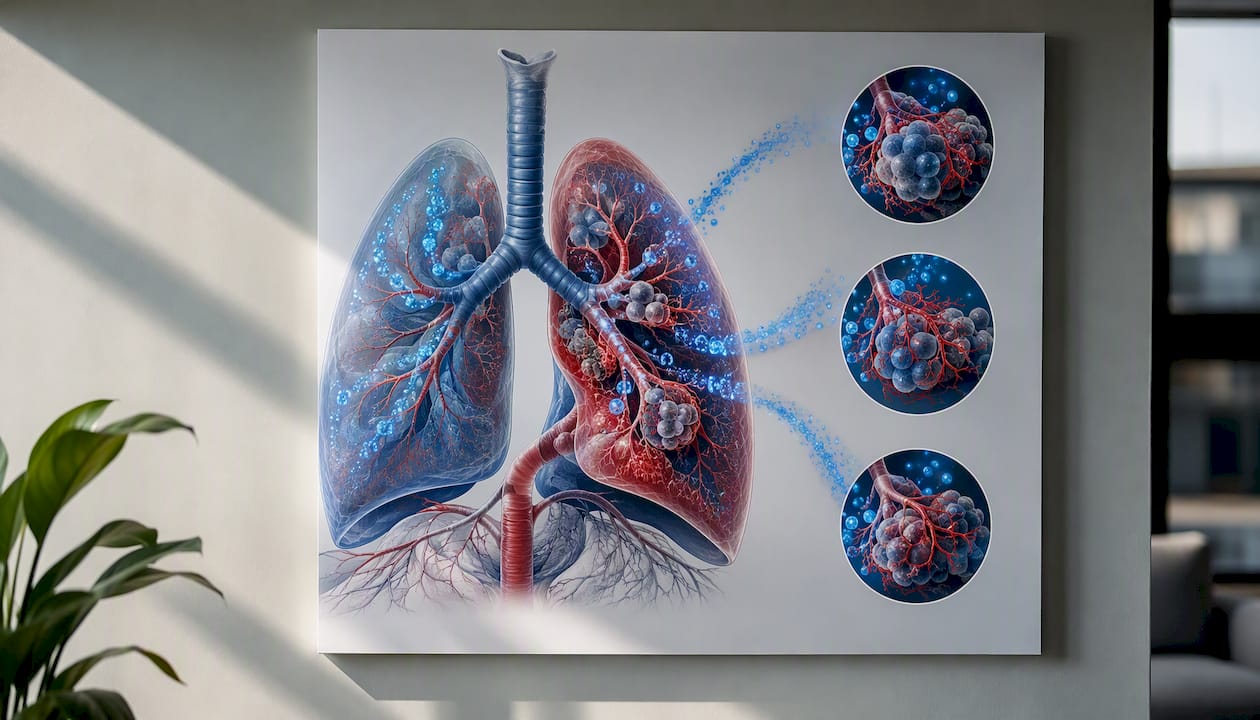
Pro Tip: Take one slow, deep breath from the can, hold it for two to three seconds, then exhale fully. Repeat two or three times. This approach saturates more lung surface area than five rapid one-second puffs from the same can.
Where does the research say canned oxygen actually helps?
The evidence is strongest for short, timed recovery use during repeated high-intensity efforts. Three controlled studies give you the clearest picture.
| Study | Sample | Intervention | Main Outcome |
|---|---|---|---|
| Hyperoxic intervals in hypoxia | Trained cyclists | 15-second hyperoxic bouts during hypoxic effort | SpO2 82.9% → 92.4% |
| Recovery O2 in swimming | Trained aquatic athletes | 5-second inhalation of 98% O2 at recovery start | improved subsequent sprint time; reduced perceived exertion |
| Repeated-sprint hyperoxia | Trained athletes | FiO2 elevated during repeated sprints | Increased total work and training load |
The swimming study is particularly relevant for portable-can users: a 5-second inhalation of 98% oxygen at the start of a recovery interval improved the next sprint by roughly one second and lowered perceived effort. That’s a portable-canister intervention, not a lab concentrator.
Where evidence is weaker: long-duration endurance improvement, sustained altitude protection, and general fatigue relief unrelated to exercise. For mild altitude symptoms, cans can reduce the panic-driven hyperventilation that worsens discomfort, but they don’t address the underlying acclimatization deficit.
Expert guidance from the University of Colorado Anschutz Medical Campus notes that recreational canned oxygen offers transient relief and should not delay medical care for true altitude illness. Recommended measures for altitude sickness remain acclimatization, hydration, and professional attention when symptoms worsen. Read the full analysis.
A note on lab-to-field translation: most hyperoxia studies use sustained face-mask delivery at controlled FiO2 levels. Portable cans involve shorter, hand-held bursts, so real-world effects are likely smaller than lab figures suggest. That doesn’t make them useless — it means timing and technique matter even more outside the lab.
How to use a portable oxygen can safely and effectively
Timing is the single biggest variable. Oxygen is most effective when used immediately at the start of a recovery interval after a maximal or near-maximal effort, not as an occasional puff mid-activity.
For athletic recovery between sprints or intervals:
- Finish your sprint or hard effort completely.
- Within five seconds of stopping, take the can and inhale slowly and deeply.
- Hold the breath for two to three seconds, then exhale fully.
- Repeat two to three times.
- Resume your next effort when your coach or timer signals.
For mild altitude discomfort on a hike or at elevation:
- Sit or stand still and slow your breathing before using the can.
- Take two to four slow, deep inhalations, holding each briefly.
- Rest for two to three minutes and reassess how you feel.
- If symptoms persist or worsen, descend and seek medical attention.
You can track effectiveness subjectively by noting perceived exertion on your next effort, or objectively with a pulse oximeter if you’re carrying one at altitude. A reading below 90% SpO2 at rest warrants medical attention, not another can.
Safety callout: Stop use and seek care if you experience worsening shortness of breath, chest pain, confusion, or any signs of severe altitude illness such as HAPE (high-altitude pulmonary edema) or HACE (high-altitude cerebral edema). A can is not a treatment for these conditions.
Pro Tip: Pair each oxygen session with a few sips of water and 60–90 seconds of seated rest. Hydration supports oxygen transport at the cellular level, and rest lets the brief SpO2 rise do its work before your next effort.
For a deeper look at post-workout oxygen timing, the oxygen role in muscle recovery guide walks through the physiology in practical terms.
What should you look for when buying a recreational oxygen can?
Not all cans are equal. These are the features that actually affect performance in the field.
- Oxygen purity: 98% is the consumer performance standard. Many common OTC products deliver only 90–95% purity, which reduces the hyperoxic effect per breath.
- Canister volume: Consumer cans typically range from 3–10 liters. A 5-liter can delivers only a handful of deep breaths. For a day hike or a multi-sprint training session, a 10-liter can gives you more usable doses per carry.
- Mouthpiece design: A zero-leak mouthpiece channels oxygen directly into your airway. Open nozzles waste a portion of each dose to ambient air, especially outdoors in wind.
- Portability and weight: A can you won’t carry is a can that won’t help. Lighter, compact designs fit a hydration pack side pocket without adding noticeable weight.
- Flavor options: Peppermint, lemon, and eucalyptus blends can make repeated use more pleasant during training, though flavor has no physiological effect on oxygen delivery.
- Price per dose: Calculate cost per liter or per deep-breath dose, not just per can. A cheaper, lower-purity can often costs more per effective dose than a higher-purity option.
When reading labels, look for a stated purity percentage and a listed volume in liters. Be skeptical of medical-sounding claims on packaging. Regulatory scrutiny has targeted OTC oxygen companies that made unsubstantiated claims about treating altitude sickness or other conditions. A credible product states purity and volume clearly without promising medical outcomes.
For athletes specifically, the sports oxygen can for athletes page details can specifications and recommended use patterns worth reviewing before your first purchase.
Among ergogenic aids, canned oxygen sits in a distinct category: it works through a direct physiological mechanism rather than a nutritional or stimulant pathway. For context on how it compares to other ergogenic aids for athletes, the evidence base for timed hyperoxia is more mechanistically grounded than many supplement categories.
Pro Tip: For day hikes, one 10-liter can is usually sufficient for two to three symptom-relief sessions. For repeated-sprint training, consider a multi-pack so you have a fresh can available for each session without rationing doses.
What are the real limitations and safety boundaries?
Canned recreational oxygen has genuine uses, but it also has hard limits every buyer should understand.
Key limitations:
- Total oxygen volume per can is small. Even a 10-liter can delivers only a few minutes of supplemental breathing, not continuous therapy.
- Effects are short-lived, typically fading within five to ten minutes of use.
- OTC canned oxygen is not FDA-approved as a medical device in the United States.
- It is not a substitute for prescribed oxygen therapy for conditions like COPD, hypoxemia, or heart failure.
A qualitative analysis of online consumer reviews found multiple reports of OTC canned oxygen being used as a substitute for prescribed oxygen during respiratory events, including by people with COPD. This is a serious safety risk. If you have a diagnosed respiratory or cardiac condition, consult your physician before using any OTC oxygen product.
When to seek medical care immediately:
- SpO2 below 90% at rest, even after using a can
- Worsening shortness of breath, chest tightness, or confusion at altitude
- Symptoms of HAPE or HACE: persistent cough, severe headache, loss of coordination, or altered mental status
- Any preexisting lung or heart condition that affects your baseline oxygen saturation
Environmental and disposal notes: Empty cans are pressurized steel and should be fully depressurized before disposal. Check your local recycling program’s guidelines for aerosol cans. Many municipal programs accept fully empty steel aerosol cans in curbside recycling. Never puncture or incinerate a can.
For high-altitude travel, pairing canned oxygen with appropriate high-altitude travel insurance is a practical safety layer — cans address mild, transient symptoms; insurance covers evacuation if conditions become serious.
Pro Tip: If you’re traveling above 10,000 feet, carry a pulse oximeter alongside your cans. It gives you an objective reading to guide the decision between “use a can and rest” and “descend now.”
When I’d actually pack a can
Honestly, the use cases where a can earns its weight are narrower than most marketing suggests, and that specificity is what makes them worth carrying.
For a trail day-hike that tops out above 8,000–10,000 feet, one 10-liter can in the pack gives you a practical option if a companion feels lightheaded or breathless on a steep section. It won’t acclimatize anyone, but it can calm the physiological stress response long enough to rest and reassess. Pair it with a pulse oximeter and know your descent triggers before you leave the trailhead.

For a repeated-sprint training session, the evidence is clearer. Using a can immediately at the start of each recovery interval, as the swimming and cycling studies demonstrate, is the scenario where the physiology actually supports a measurable benefit. Two to three deep breaths between efforts, timed precisely, is a different use case than a casual puff during a long run.
Travel through high mountain passes — by vehicle or on foot — is the third scenario where I’d carry one. The altitude gain is rapid, acclimatization is minimal, and a can provides short-term relief while the body adjusts. It’s a comfort tool, not a medical one, and treating it that way keeps expectations calibrated.
Never substitute a can for medical oxygen when you or someone with you genuinely needs it. That boundary is non-negotiable.
Revo2 canned oxygen: how it fits the buying criteria
Revo2’s 98% pure canned oxygen checks every box on the buying checklist above. Purity is at the 98% consumer performance standard, not the 90–95% common in many OTC products. The zero-leak mouthpiece delivers oxygen directly to your airway, eliminating the waste that open-nozzle designs allow. Cans are available in 10-liter sizes suited to day hikes or multi-sprint training sessions, and flavor options (peppermint, lemon, eucalyptus) make repeated use during training more comfortable.
For athletes, the sports oxygen can is designed with recovery-interval timing in mind. For hikers and travelers, the oxygen for hiking option covers altitude relief and portability. Multi-pack bundles reduce cost per dose for anyone using cans regularly across training sessions or a multi-day trip.
Read the safe use guide before your first session, then shop the full collection to find the can size and flavor that fits your routine.
Sources
The studies and expert analyses below are the primary sources for claims made in this article.
- Fifteen-second bouts of hyperoxia improve 5-minute time-trial performance in acute hypoxic conditions
- Recovery-targeted supplemental oxygen enhances performance and attenuates perceived fatigue during subsequent high-intensity swimming
- Over-the-counter canned oxygen: consumer uses and potential implications (qualitative analysis)
University of Colorado Anschutz Medical Campus experts advise that recreational canned oxygen is a short-term comfort measure, not a treatment. For true altitude illness, acclimatization, hydration, and medical attention remain the appropriate response. Full expert analysis here.