
Canned recreational oxygen can ease breathlessness and mental fog within seconds at altitude, but the relief is short lived. Natural acclimatization is the durable fix: most healthy people adjust within a day or two, and that adaptation, not a canister, is what sustains you over days. Treat canned oxygen as a situational aid for symptom relief or recovery, never as a stand in for medical care when symptoms turn serious.
TL;DR:
- Canned oxygen provides only temporary relief, as it delivers small bursts of high-purity oxygen that do not significantly raise blood oxygen saturation over time.
- It is best used for brief, situational symptoms like exertional breathlessness or mental fog, not for ongoing or severe altitude sickness or respiratory conditions.
- Prolonged or worsening symptoms, or signs of severe illness, require descent, medical evaluation, or prescription oxygen, not repeated canister use.
- Recreational canned oxygen is unregulated as medicine and should not replace prescribed treatments for chronic conditions or altitude illnesses.
- Safe use includes short inhalations, resting between doses, and avoiding reliance on cans as a substitute for acclimatization and medical care.
Table of Contents
- Acclimatization vs Oxygen: A Quick Checklist for the Trail
- How Recreational Canned Oxygen Actually Works
- Is Canned Oxygen Safe, and Is It Regulated as Medicine?
- How to Use Canned Oxygen Safely on a Hike or Trip
- Why I Still Pack a Can, but Trust My Body More
- Why REV/O2 Is a Straightforward Choice for Situational Relief
- Sources
Acclimatization vs Oxygen: A Quick Checklist for the Trail
Deciding between a few puffs from a can and simply giving your body time comes down to symptom severity and duration. Here’s how to sort it out fast, before you’re standing on a switchback trying to think straight.
Canned oxygen tends to make sense for:
- Brief breathlessness during a steep pitch or after a hard scramble
- Quick recovery between sets, sprints, or climbing pushes
- Anxiety driven shortness of breath that isn’t tied to a medical condition
- A short mental fog or headache that clears with rest and a few deep breaths
Acclimatization, rest, or medical evaluation should take priority when:
- Symptoms of acute mountain sickness (headache, nausea, dizziness) worsen instead of improving
- You notice confusion, extreme fatigue, or a cough with pink froth (possible signs of HACE or HAPE)
- You have preexisting lung disease, heart disease, or another condition that affects breathing
- You need sustained performance over hours or days, not a five minute reset
The decision rule is simple: mild, brief, situational symptoms are fair game for a can. Progressive symptoms, red flags, or anything lasting beyond rest and reassessment call for descent, evaluation, or both.
Pro Tip: If a symptom doesn’t clearly improve after rest and a few deep breaths, don’t reach for another can, reach for a plan. Repeated dosing without improvement is your body telling you something oxygen from a canister can’t fix.
How Recreational Canned Oxygen Actually Works
REV/O2 and similar products deliver oxygen in a high purity range through a small canister and a mouthpiece, but purity is only half the story. What matters more is volume and duration. A typical can holds a small volume of gas, dispensed in short bursts rather than a continuous stream, according to consumer guidance from the National Council on Aging.
Compare that to how you actually breathe: a resting adult moves several liters of air per minute, and that climbs sharply during exertion. A few one second bursts from a can add a small fraction of extra oxygen to a couple of breaths. It’s not enough to meaningfully raise blood oxygen saturation over time.
One clinician’s take, cited in CU Anschutz’s reporting on canned oxygen, makes the physiology plain: it typically takes several minutes of continuous oxygen flow to produce a measurable rise in oxygen saturation. Once the flow stops, levels drift back toward baseline within minutes.
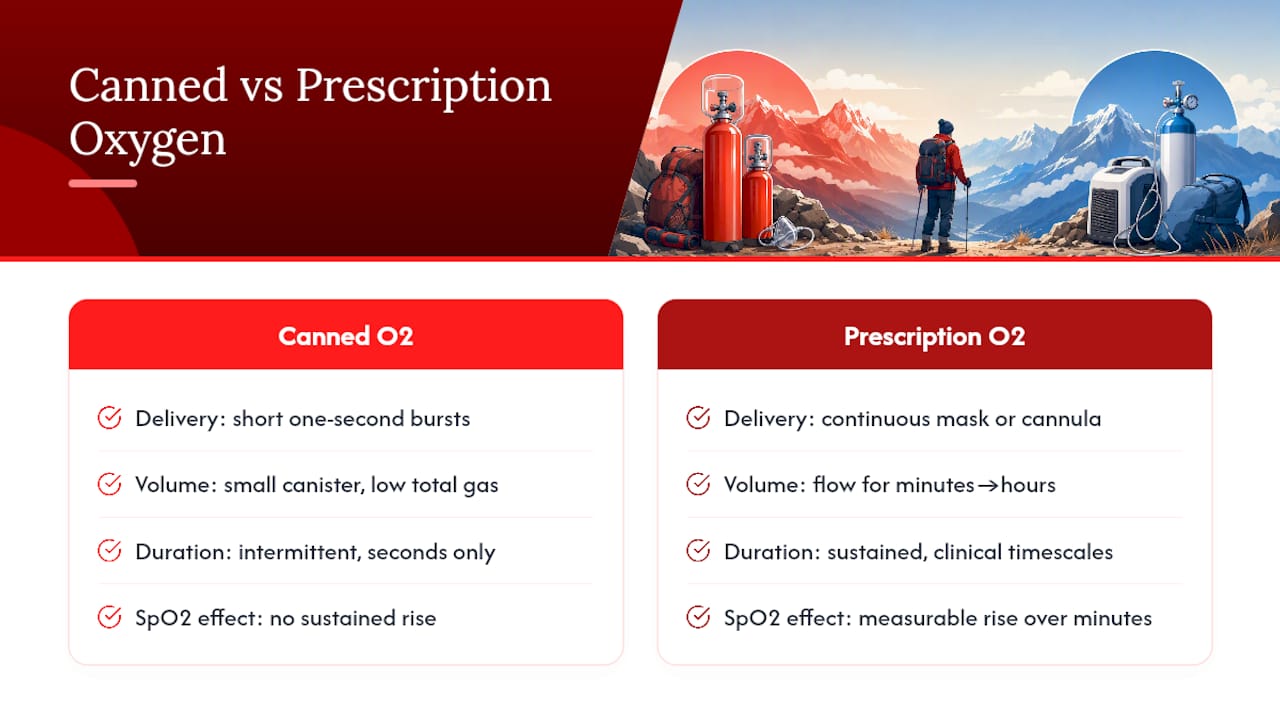
That’s the core difference between recreational canned oxygen and prescription oxygen systems. Medical oxygen is delivered continuously through a mask or nasal cannula, often for hours, and it’s calibrated and monitored by a clinician. A canned product gives you a quick, subjective lift, not sustained physiological change. That’s why the benefit people describe, feeling more alert, less winded, calmer, is often real but temporary.
Is Canned Oxygen Safe, and Is It Regulated as Medicine?
Recreational canned oxygen sold over the counter is not approved as a medical therapy and is unregulated as a medical treatment. It sits in a different regulatory category than prescription oxygen concentrators or hospital grade delivery systems, and a peer reviewed review of public comments on OTC canned oxygen found that some consumers use it to self-treat conditions it was never designed for.
That gap matters most for a few groups. Consider these before relying on a can for anything beyond casual, situational relief:
- People with COPD, asthma, or other chronic respiratory conditions should avoid substituting canned oxygen for prescribed inhalers or oxygen therapy.
- Anyone with heart disease or a history of altitude illness should consult a clinician before high altitude travel.
- Pregnant travelers heading to elevation should get individualized guidance rather than relying on an OTC product.
- Storage matters too: pressurized canisters carry fire and explosion risk if kept near heat, and dented or damaged cans should never be used.
Public comment data reviewed by researchers shows a pattern worth taking seriously: people sometimes reach for canned oxygen instead of first-line treatment for asthma or worsening mountain sickness, which can delay the care they actually need.
The honest read is that canned oxygen is a comfort tool, not a treatment. Save the real decisions, oxygen therapy, descent, evacuation, for a doctor or an experienced guide.
How to Use Canned Oxygen Safely on a Hike or Trip
- Inhale in short, deliberate bursts. Three to five deep breaths through the mouthpiece when you feel winded or foggy, then stop and reassess.
- Rest before you redose. Sit, slow your breathing, and give your body a minute or two before deciding whether you need more.
- Watch for a pattern. If you’re reaching for the can repeatedly without real improvement, that’s your cue to descend, rest longer, or seek medical evaluation instead of continuing to self-treat.
- Store and pack smart. Keep cans away from direct heat, avoid checking pressurized canisters in ways that violate airline rules, and confirm your carrier’s policy before you fly with any.
- Plan your supply. A day hike might call for one or two cans as backup; a multi-day trip at altitude means budgeting several, factoring in both cost and the limited number of doses per can.
Pro Tip: Treat each can like a reserve, not a routine. The moment oxygen starts replacing rest, hydration, and pacing instead of supporting them, you’ve drifted from smart use into overreliance.
Why I Still Pack a Can, but Trust My Body More
I carry canned oxygen on high altitude trips the same way I carry a headlamp: useful, occasionally essential, never the main plan. On a steep push above 10,000 feet, a few breaths from a can took the edge off breathlessness and cleared some mental fog fast enough to keep moving safely. What it never did was carry me through a full day of exertion. That’s acclimatization’s job, and no can replaces the 24 to 48 hours your body needs to adjust.
My checklist stays simple: pack enough cans for genuine situational use, not habitual dosing, watch for symptoms that don’t improve with rest, and build real acclimatization days into any itinerary above 8,000 feet. Oxygen in a can is a tool. Time at altitude is still the strategy.
— Paul
Why REV/O2 Is a Straightforward Choice for Situational Relief
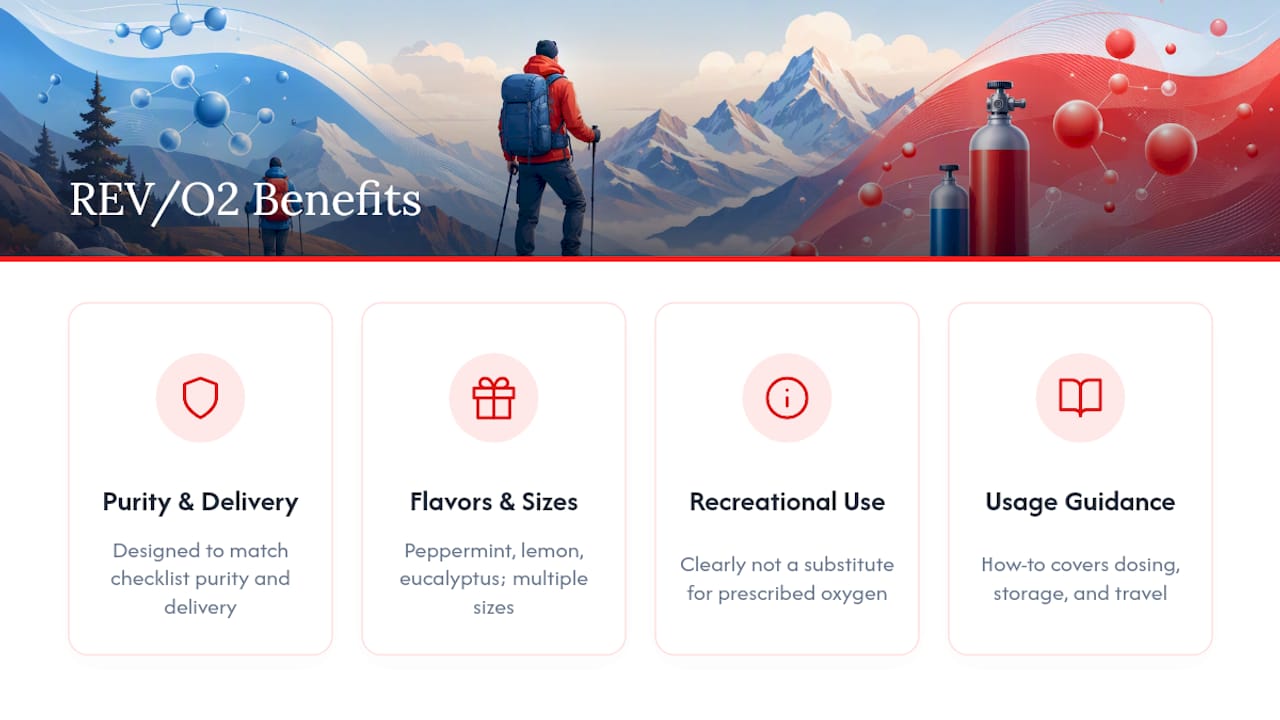
That purity and delivery design line up directly with the checklist above. Some canned oxygen products come in multiple sizes and flavor options, such as peppermint, lemon, and eucalyptus, so a quick dose for altitude fatigue or post-exercise recovery doesn’t feel clinical. The brand is upfront that this is a recreational product, not a substitute for prescribed oxygen therapy, and its how-to guide for using canned oxygen safely walks through dosing, storage, and travel considerations in more depth than a label ever could.
For hikers stocking up before a multi-day trip, the peppermint multi packs offer a practical way to budget doses across several days without running short. If you’re ready to see which option fits your next trip, browse the full canned oxygen collection and pick a size that matches how you actually plan to use it.
Sources
This article draws on peer reviewed research and consumer reporting rather than marketing claims. For deeper reading, see the review of public comments on OTC canned oxygen, CU Anschutz’s analysis of oxygen-in-a-can claims, Backpacker’s field test of canned oxygen, and the National Council on Aging’s consumer guidance on OTC oxygen. For altitude sickness symptom recognition specific to park travel, the Grand Canyon altitude sickness guide is a useful companion resource before any high elevation trip.
- Does Oxygen in a Can Deliver on Its Altitude and Energy Claims? — CU Anschutz news
- Medical Use of Over-the-Counter Canned Oxygen: A Review of Public Comments — PMC
- What to know about OTC oxygen: Should you use it? — NCOA