
Eight supplement categories cover most travel recovery needs: melatonin (jet lag), electrolytes (dehydration), probiotics (digestive upset), magnesium (sleep and muscle tension), B-complex (energy), ginger (nausea and motion sickness), adaptogens (stress), and turmeric or omega-3 (inflammation). Each targets a specific travel stressor rather than working as a catch-all fix, so matching the supplement to the symptom matters more than stacking several at once.
- Melatonin — resets your circadian rhythm after crossing time zones
- Electrolytes — replace sodium and fluid lost to cabin air or heat
- Probiotics — support gut resilience against unfamiliar food and water
- Magnesium — eases muscle tension and supports sleep onset
- B-complex — helps offset the fatigue of disrupted routines
- Ginger — settles nausea from motion or turbulence
- Adaptogens — take the edge off travel-related stress
- Turmeric/omega-3 — support recovery from inflammation and long-haul stiffness
Quick reality check: the CDC notes that most complementary supplements lack travel-specific clinical trials, so check your medications and pack according to TSA rules before you fly.
Key Takeaways
Matching each supplement category to a specific travel symptom, jet lag, dehydration, digestive risk, works better than packing a generic multivitamin and hoping for the best.
| Point | Details |
|---|---|
| Melatonin for jet lag | Use 0.5 to 3 mg at destination bedtime, paired with morning light exposure. |
| Electrolytes for dehydration | Pack single-dose stick packs for flights, heat, or digestive upset instead of bulk powder. |
| Probiotics need lead time | Start a shelf-stable strain like Saccharomyces boulardii at least two days before departure. |
| Check interactions first | Melatonin, turmeric, and magnesium can all interact with common medications; consult a clinician. |
| TSA allows solids, screens powders | Pack pills and tablets over loose powders to move through security faster. |
| Oxygen complements, doesn’t replace | Revo2’s canned oxygen offers a short-term energy boost for altitude fatigue alongside your supplement routine. |
Table of Contents
- What Are the Main Types of Travel Recovery Supplements?
- Dosing, Timing, and What to Pack
- How to Pack Supplements Through Airport Security
- Safety Checklist: Interactions to Know Before You Travel
- How to Choose the Right Supplements for Your Trip
- Where Portable Oxygen Fits Into Travel Recovery
- Do Antioxidants Actually Support Immune Health While Traveling?
- Sources
What Are the Main Types of Travel Recovery Supplements?
Travel recovery supplements fall into a handful of functional categories, and each one solves a distinct problem rather than a general sense of feeling off. Knowing which bucket your symptom falls into saves you from packing five products when you only need two.
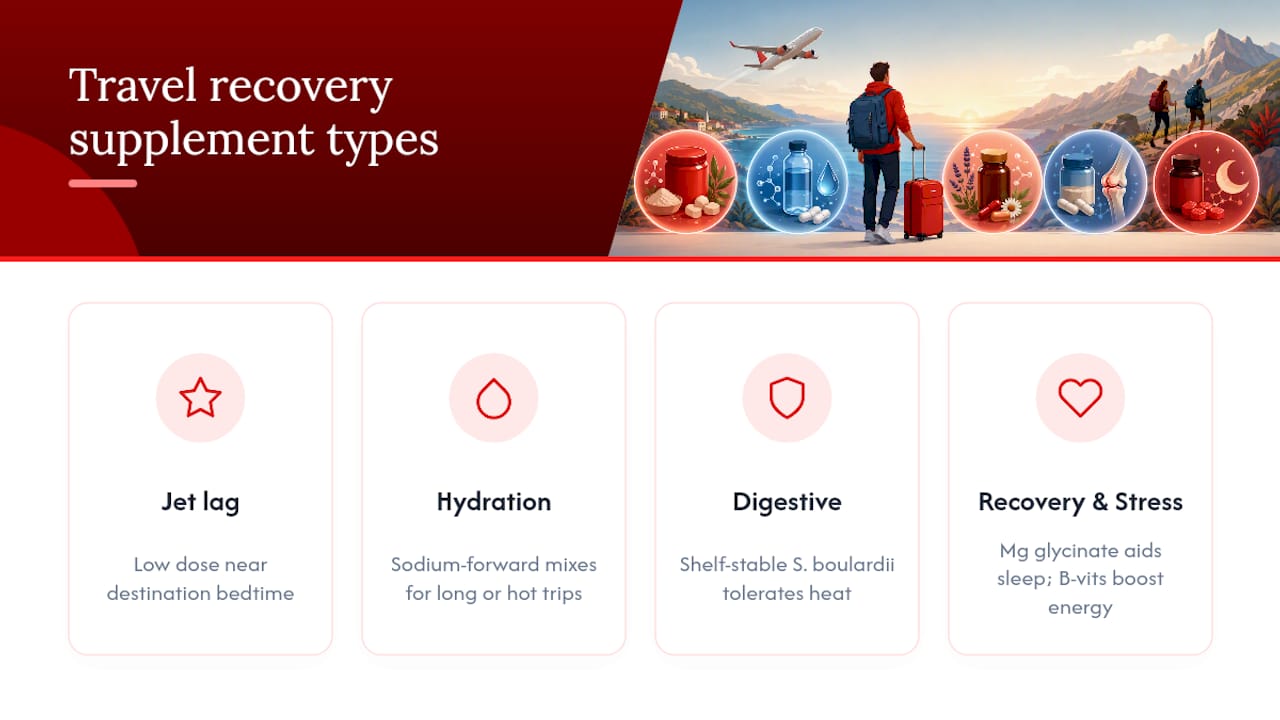
Melatonin is the most studied of the group. Evidence summaries point to it as the best-supported natural supplement for jet lag, typically effective at low doses taken near the destination’s bedtime rather than your home time. It works better paired with morning light exposure than alone.
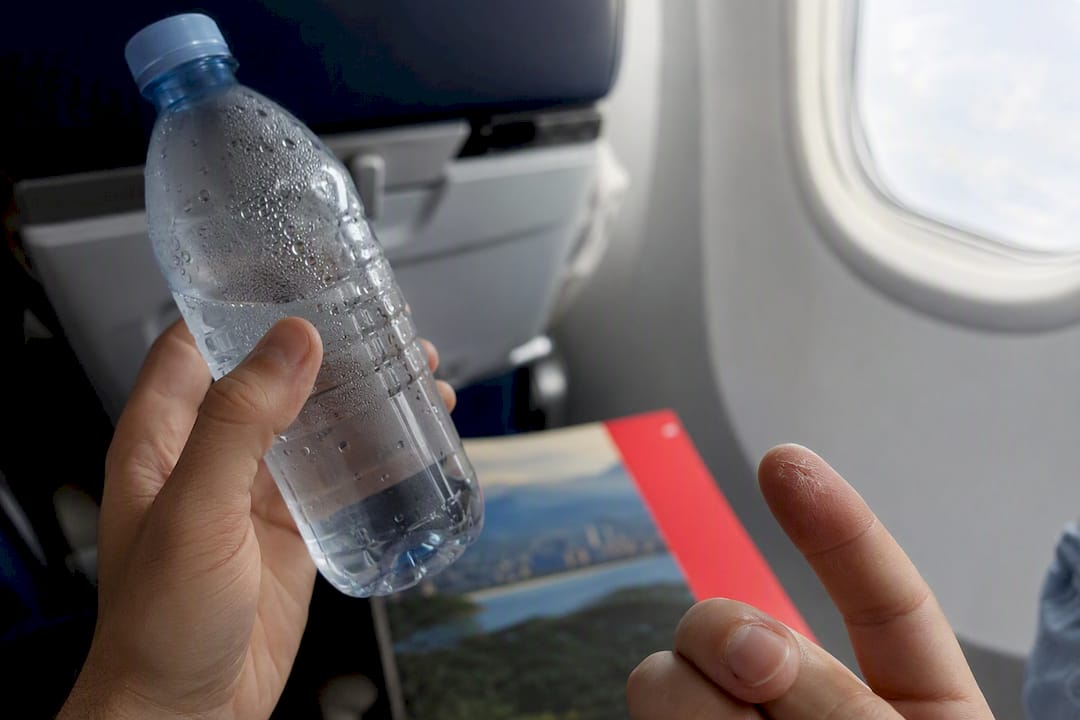
Electrolytes matter most on long flights, in hot climates, or during any bout of digestive upset. Cabin humidity sits below 20%, and that dry air pulls moisture from you faster than you’d notice on the ground. A sodium-forward mix, not plain water, replaces what you actually lose.
Probiotics help most when the strain is shelf-stable. Saccharomyces boulardii tolerates heat and doesn’t need refrigeration, making it a more practical travel choice than many bacterial strains that die off in a hot suitcase.
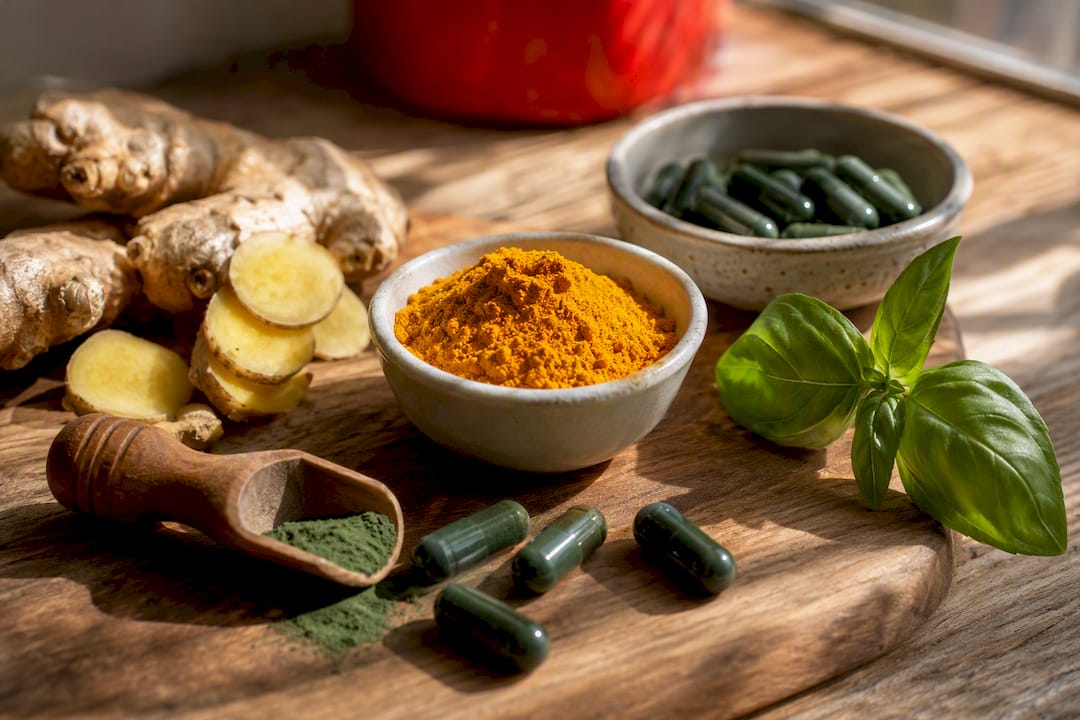
Magnesium, usually as glycinate, supports sleep and muscle recovery with fewer digestive side effects than magnesium oxide. B-complex vitamins address energy dips from disrupted sleep and meal timing. Ginger has a long track record for nausea and motion sickness. Adaptogens like ashwagandha and anti-inflammatories like turmeric have thinner travel-specific research behind them, but practical guides still recommend them for stress and post-flight stiffness when used sensibly.
Dosing, Timing, and What to Pack
Getting the timing right matters as much as picking the right supplement. Here’s a practical sequence for the week before you leave and the days you’re on the road.
- Start melatonin at 0.5 to 3 mg, taken at your destination’s bedtime, beginning the night you arrive (or the night before for eastward trips crossing more than three time zones). Pair it with morning sunlight at your destination to speed the reset.
- Pack electrolyte stick packs, not tubs of powder. A single-dose packet dissolved in water covers a long-haul flight, a hot afternoon, or the first signs of traveler’s diarrhea without you guessing at proportions.
- Begin probiotics at least two days before departure. Starting early gives the strain time to establish before you’re exposed to unfamiliar food and water. Stick with shelf-stable options that don’t need a cooler.
- Take magnesium glycinate in the evening, not the morning, since its calming effect works with your sleep window rather than against your travel day. Skip magnesium citrate or oxide before travel; their laxative effect is the last thing you want mid-flight.
- Favor tablets and capsules over powders and liquids for anything crossing multiple climates. Heat and pressure swings during transit can degrade liquid formulations and clump loose powders, while a sealed capsule holds up fine in a carry-on.
Pro Tip: Split your supply between your carry-on and checked bag. If one bag is delayed, you’re not stuck without melatonin on the one night you need it most.
One more thing worth flagging: if you’re crossing international borders, some countries restrict specific ingredients that are perfectly legal at home. Check destination rules before you pack anything unfamiliar, and keep original labels on everything.
How to Pack Supplements Through Airport Security
Vitamins and pills travel fine in a carry-on. The TSA explicitly allows solid supplements without restriction, but powders get extra scrutiny, sometimes a separate screening step if a container exceeds a certain volume.
- Keep supplements in their original labeled bottles when possible; unlabeled pills invite questions at the checkpoint.
- Swap bulk powders for single-dose electrolyte packets, which move through screening faster than a large tub.
- Bring a prescription copy or doctor’s note for anything that could be mistaken for a controlled substance, and check TSA Cares ahead of time if you’re traveling with medical supplies.
- Use a pill organizer for multi-week trips rather than loose bottles rattling around your bag.
- Review the TSA travel checklist the night before, not at the gate.
Safety Checklist: Interactions to Know Before You Travel
Supplements aren’t risk-free just because they’re sold over the counter. Melatonin can amplify sedatives and interacts with some antidepressants, so timing matters if you’re already on a sleep aid. Turmeric and curcumin carry a blood-thinning effect worth discussing with a doctor if you’re on anticoagulants. Magnesium at higher doses has a laxative effect, not what you want the morning of a long transit day.
- Pregnant, breastfeeding, or immunocompromised travelers should consult a clinician before starting anything new for a trip.
- Adaptogens like ashwagandha can interact with thyroid medication and blood pressure drugs.
- Keep a written list of your medications and supplements to show a pharmacist or doctor if questions come up abroad.
The CDC’s guidance is blunt about this: most complementary approaches lack travel-specific trials, so clinician input fills the gap the research doesn’t cover.
How to Choose the Right Supplements for Your Trip
Match the supplement to the actual problem you’re likely to face, not to what’s trending.
- Identify your primary risk. Crossing time zones points to melatonin. Heat or long flights point to electrolytes. Unfamiliar food points to probiotics.
- Scale to trip length. A short trip of a few days usually only needs melatonin and electrolytes. A multi-week stay justifies adding probiotics and, if you already use one, an adaptogen for sustained stress.
- Check for medication conflicts before you pack anything, especially if you take sleep aids, blood thinners, or thyroid medication.
- Ask three questions: Are you crossing more than two time zones? Will you spend real time in heat or humidity? Are unfamiliar foods and water likely? Each “yes” points you toward a specific category above.
Where Portable Oxygen Fits Into Travel Recovery
Supplements work on digestion, sleep, and inflammation. None of them address the acute fatigue that hits at altitude or after a long, draining travel day, which is where a non-ingestible option like canned oxygen fills a real gap.
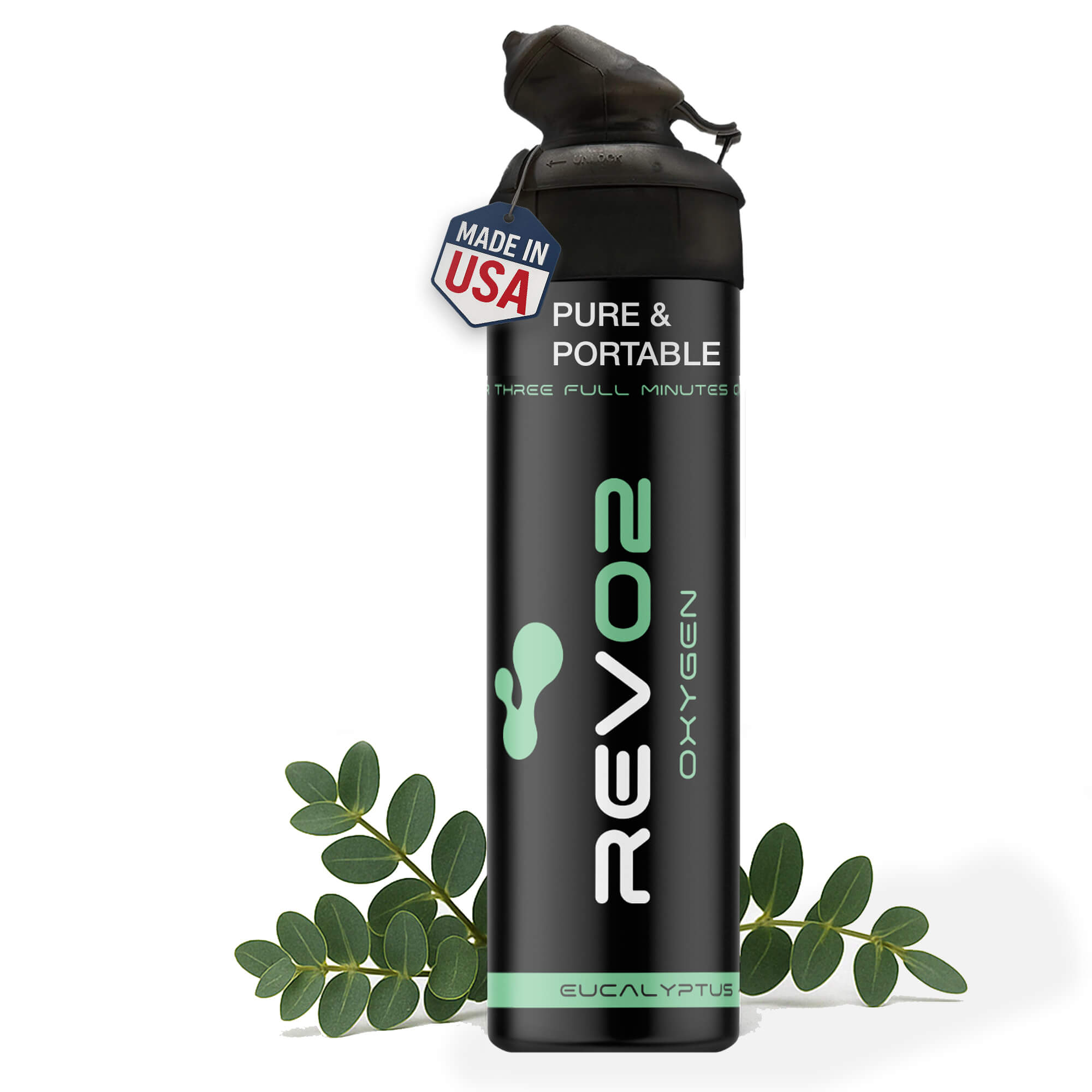
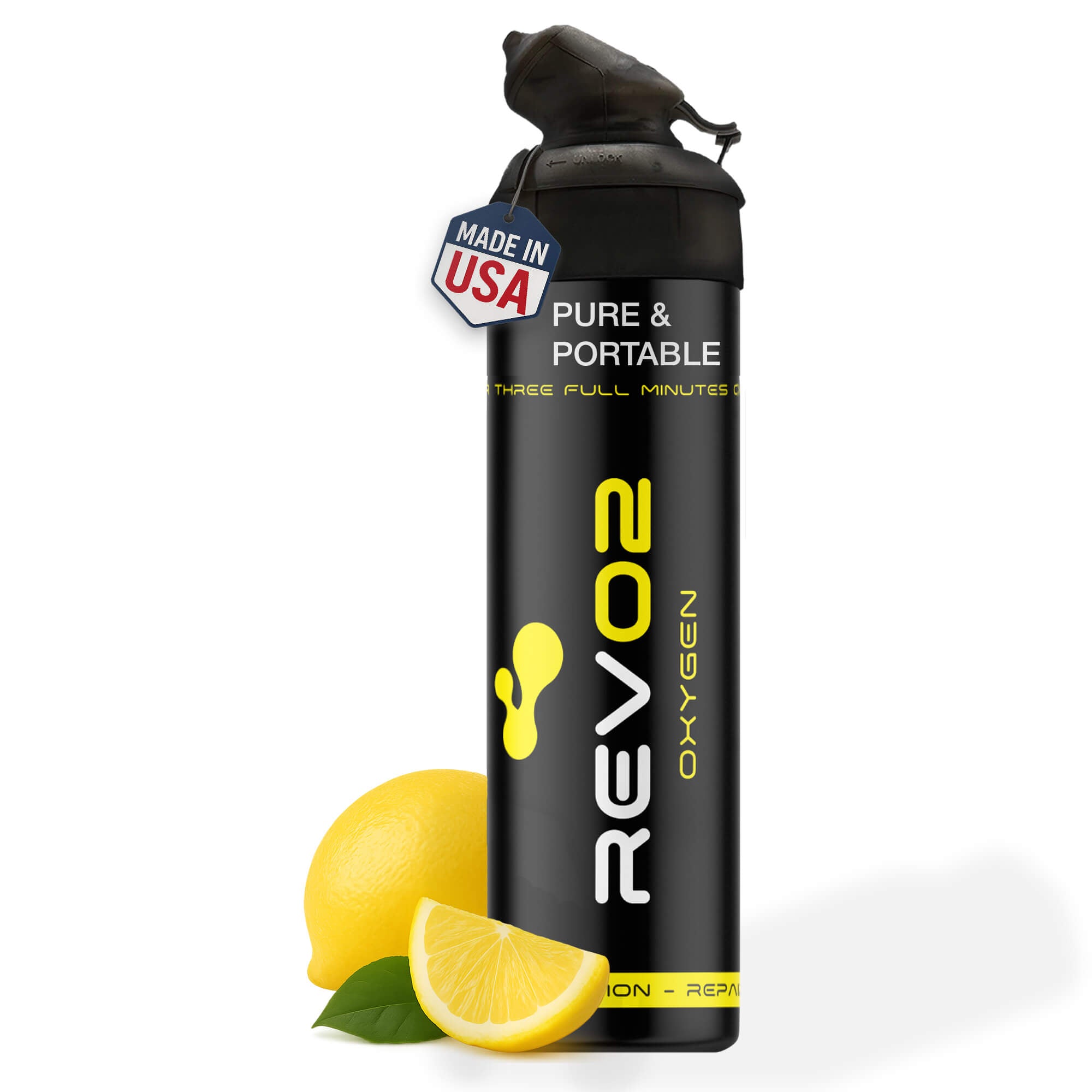
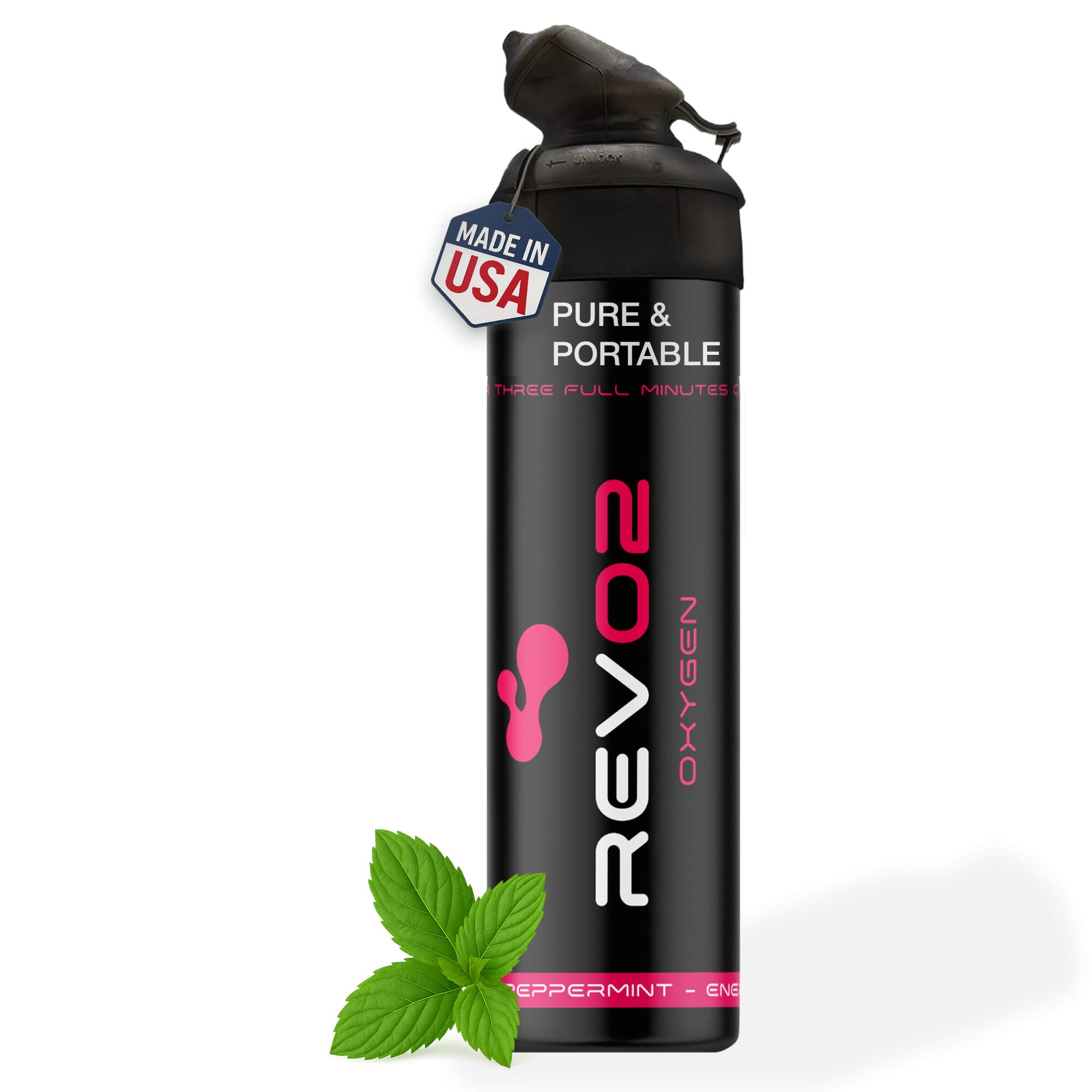
Revo2 makes 98% pure canned oxygen with a zero-leak mouthpiece, built for exactly that moment: a mountain town at elevation, a red-eye landing that leaves you flat, or a stretch of travel where your energy just won’t cooperate.
Oxygen support works alongside hydration and sleep strategies, not instead of them. It’s a short-term boost for altitude fatigue or a rough afternoon, not a substitute for medical oxygen or a stand-in for the supplements covered above.
- Not a medical device, and not a treatment for any diagnosed respiratory condition
- Best used as a quick assist for altitude-related fatigue or a low-energy stretch
- Pairs naturally with the recovery strategies travelers already rely on
Do Antioxidants Actually Support Immune Health While Traveling?
Antioxidant supplements, vitamin C, vitamin E, and compounds like quercetin, get marketed hard around travel season, but the evidence for popping extra antioxidants to dodge a travel bug is thinner than the packaging suggests. Antioxidants neutralize free radicals and support the body’s normal immune signaling, but that’s a different claim than preventing a cold or stomach bug on a trip.
Review-level guidance on travel supplements is fairly consistent here: many “immune boost” travel packs are overhyped, and foundational habits, sleep, hydration, food and water safety, do more for your actual risk of getting sick than a megadose of any single antioxidant. That doesn’t mean antioxidants are useless. Foods and moderate supplementation that support overall immune function have a place in a balanced routine, especially on longer trips where diet quality can slip. It just means don’t expect a vitamin C packet to cancel out five hours of sleep debt or a week of skipped meals.
If you want to include an antioxidant in your travel kit, treat it as a background support, one piece of a routine that also includes the electrolytes, probiotics, and sleep hygiene covered earlier, rather than a frontline defense you’re counting on to do the heavy lifting. The sleep-support strategies that pair well with melatonin timing tend to matter more for how you actually feel on day three of a trip than any antioxidant dose will.

A Simple Packing Habit That Keeps This Manageable
My kit is small on purpose: melatonin, an electrolyte pack, and a shelf-stable probiotic, nothing more unless the trip demands it. What I’ve found matters more than any pill is treating supplements as a supporting act. Sleep, movement, and water still carry most of the weight.
— Paul
Breathe Easier on the Road With Revo2
Supplements handle digestion, sleep, and energy from the inside. Revo2 handles the moment none of them touch: the lightheaded fatigue that hits at elevation or after a brutal travel day, when what you need is a fast, direct boost, not another pill to digest.
Each can delivers 98% pure oxygen through a zero-leak mouthpiece, no mask, no setup, just breathe and go. It’s built for altitude towns, long layovers, and the kind of exhaustion that a nap won’t fully fix. Browse the canned oxygen collection to find a flavor and size that fits your trip, or check the how-to-use guide first if you want the safety basics before you buy. It’s not a medical device and won’t replace prescribed oxygen therapy, but as a quick recovery tool between hikes, flights, or high-altitude stops, it’s worth having in your bag.
Sources
- CDC — Complementary and integrative health approaches for travelers
- TSA — Vitamins
- Supplementscience
- Greatist — The 5 Best Supplements to Take When You Travel
- Supplements4Us — Travel supplements for energy, hydration and digestion