
Yes, you can get altitude sickness in Taos. The town sits near 7,000 feet, and most of what draws visitors, from the ski valley to Wheeler Peak, is much higher. The good news is that the illness is largely predictable. If you give your body time, protect your first two days, and act early on symptoms, most trips go smoothly. This guide explains what to expect, how to pace your arrival, and where portable oxygen such as REV/O2 canned oxygen fits into a calm, well-planned trip.
TL;DR
- Taos is high enough to matter: the town is at 6,969 ft, the ski base at 9,207 ft and Wheeler Peak at 13,161 ft, according to Taos Ski Valley.
- Headache, nausea, fatigue and poor sleep are the usual early signs, and they typically appear within hours of arriving.
- Skip alcohol and hard exercise for the first 48 hours above 8,000 ft, and avoid climbing in sleeping elevation too fast.
- Never go higher while you have symptoms. Confusion, unsteady walking, or breathlessness at rest means going downhill and getting medical care.
- A can of 98% pure oxygen with a zero-leak mouthpiece is a portable way to take a few easy breaths between activities while you adjust.
Table of Contents
- How high is Taos, really?
- Symptoms of altitude sickness and when they start
- Warning signs that call for descent
- A prevention plan for your Taos trip
- Water, food and what to drink
- Where portable oxygen fits
- Pack a can for your Taos trip
- If symptoms develop
- Our perspective
- FAQ
- Sources
How high is Taos, really?
Many visitors expect altitude trouble only in places like Colorado’s high passes. New Mexico surprises them. According to Taos Ski Valley’s visitor FAQ, the Town of Taos sits at 6,969 feet, the ski valley base at 9,207 feet and the summit at 12,481 feet. The same page lists Wheeler Peak, the highest point in New Mexico, at 13,161 feet.
| Place near Taos | Elevation |
|---|---|
| Town of Taos | 6,969 ft |
| Taos Ski Valley base | 9,207 ft |
| Taos Ski Valley summit | 12,481 ft |
| Wheeler Peak | 13,161 ft |
The CDC’s Travelers’ Health guidance says travelers going above 8,000 feet may be at risk for altitude illness, which is caused by lower oxygen levels in the air. Town itself is under that line, but the ski base is well over it. Many people sleep in town and spend the day at the valley, or stay in the valley itself. Either pattern can bring symptoms, especially if you flew in from near sea level.
The U.S. Army even used Taos Ski Valley as the low end of a study range. A 2024 U.S. Army Research Institute of Environmental Medicine report on a tool that predicts altitude sickness describes expanding the altitude range from 12,000 feet at Taos Ski Valley to over 14,000 feet. Taos is a recognized place where elevation effects are taken seriously.

Symptoms of altitude sickness and when they start
Acute mountain sickness (AMS) is the mild-to-moderate form, and it is the one most Taos visitors would meet. The Merck Manual Consumer Version says that within 6 to 10 hours of traveling above 8,000 feet, symptoms may include:
- headache
- light-headedness
- loss of appetite
- upset stomach or vomiting
- feeling tired, weak or cranky
- trouble sleeping
The CDC Yellow Book gives a similar window: onset is usually 2 to 12 hours after arrival, often during or after the first night. It reports that AMS affects, for example, 25% of all visitors sleeping above 8,000 feet in Colorado. If you do not climb higher, it generally resolves within 12 to 48 hours.
The Army research mentioned above adds that the sickness typically peaks between 18 and 24 hours and then fades over the next two to three days. In practice, that means the second morning can feel worse than the first evening. Plan a gentle second day rather than a big hike.
Other changes that are common at altitude
You can also feel the effects of elevation without having AMS. The Merck Manual notes swelling of the hands, feet and face, which is common and usually goes away in a few days, and a headache without other AMS symptoms. Both are worth watching, but they are not alarming on their own.
AMS often looks like a hangover
The CDC Yellow Book points out that early symptoms resemble a hangover. That is why many people brush them off. Its first rule is to know the early symptoms and acknowledge them, rather than pushing on.
Warning signs that call for descent
Two rarer conditions are more serious. Knowing them is part of staying calm, because you will know exactly what to watch for.
High-altitude cerebral edema (HACE) is brain swelling. The Merck Manual describes headache, confusion and unsteady walking, and says it can cause seizures, coma and death if not treated quickly. The CDC lists extreme fatigue, drowsiness, confusion and loss of coordination, and says the person must immediately move, or be moved, to a lower elevation.
High-altitude pulmonary edema (HAPE) is fluid in the lungs. According to Merck, it may begin 24 to 96 hours after quick travel to altitude. Symptoms include a dry cough, shortness of breath after mild activity, then shortness of breath at rest, bluish color in the skin, lips and nails, and sometimes pink or bloody mucus. The CDC says a person with these symptoms must move to a lower elevation right away and will likely need oxygen treatment.
If you or someone with you shows these signs, do not wait for the night to pass. Descend, and call 911 or get to a hospital. In the Taos area, that means heading down toward town and seeking emergency care.
A prevention plan for your Taos trip
The most effective tool is time. The CDC recommends gradual ascent, and its numbers make a handy checklist.
Before you go
- Check your itinerary against the 9,000-foot rule. The CDC advises avoiding travel from a low elevation to above 9,000 feet in a single day. If you are flying into Albuquerque or Santa Fe and driving to Taos, sleeping in town at about 7,000 feet is a gentler first step than going straight to a valley lodge.
- Consider a pre-trip stay at elevation. The CDC notes that spending at least two nights above 9,000 feet within 30 days before a longer high-altitude trip can help you avoid illness.
- Talk to your doctor if your schedule is tight. The CDC says medicines exist to prevent AMS and shorten the time it takes to adjust. If your plans do not allow gradual travel, ask your doctor about them. The American Academy of Family Physicians reports that the usual preventive acetazolamide dose for adults is 125 mg every 12 hours, started the day before ascent. That is a prescription decision for you and your doctor, particularly if you are older, pregnant, or take other medicines.
The first 48 hours
The CDC says to avoid alcohol and heavy exercise for at least the first 48 hours after arriving above 8,000 feet. That includes the welcome margarita and the ambitious first-day ski session. Taos Ski Valley’s FAQ gives similar advice: rest, limit alcohol for the first 24 hours and avoid intense exertion on day one.
A realistic first two days might look like this:
- Day 1: Arrive, walk around town, eat a normal meal, drink water, sleep early.
- Day 2: Take an easy walk or a scenic drive. If you visit the ski valley, return to town to sleep if you can.
- Day 3 onward: Add activity gradually, if you feel well.
The CDC also suggests day trips to higher elevations while returning to a lower one to sleep. Visiting the valley and sleeping in town fits that advice well.
Climbing higher later in the trip
For hikes toward Wheeler Peak or Williams Lake, pace matters. The Taos Ski Valley FAQ describes the Wheeler Peak route as an 8.5-mile round trip with significant elevation gain, and Williams Lake as a moderately challenging 4.4-mile round trip. Once you are above 9,000 feet, the CDC says to increase your sleeping elevation by no more than 1,600 feet per day. The Wilderness Medical Society’s 2024 altitude summary puts it at 500 meters per day, with a rest day every 3 to 4 days above 3,000 meters.
If you are planning a longer high-country trip, this overview of planning high-elevation hikes shows how to match routes to the way you feel on arrival.
Water, food and what to drink
People often ask for the best drink at altitude. The honest answer is simple. The National Park Service says that adequate fluid and food intake does not directly prevent altitude illness. It does help you function well and prevents the dehydration and poor nutrition that can mimic AMS symptoms. So drink water regularly, eat regular meals, and keep alcohol out of the first couple of days. Dry mountain air makes it easy to under-drink without noticing, which blurs the picture when you are trying to work out what is causing a headache.

Where portable oxygen fits
The low-oxygen air is the root cause of altitude illness, which is why many travelers carry a small amount of supplemental oxygen. The CDC Yellow Book notes that medical supplemental oxygen at 1 to 2 liters per minute will improve headache within about 30 minutes and resolve other AMS symptoms over hours.
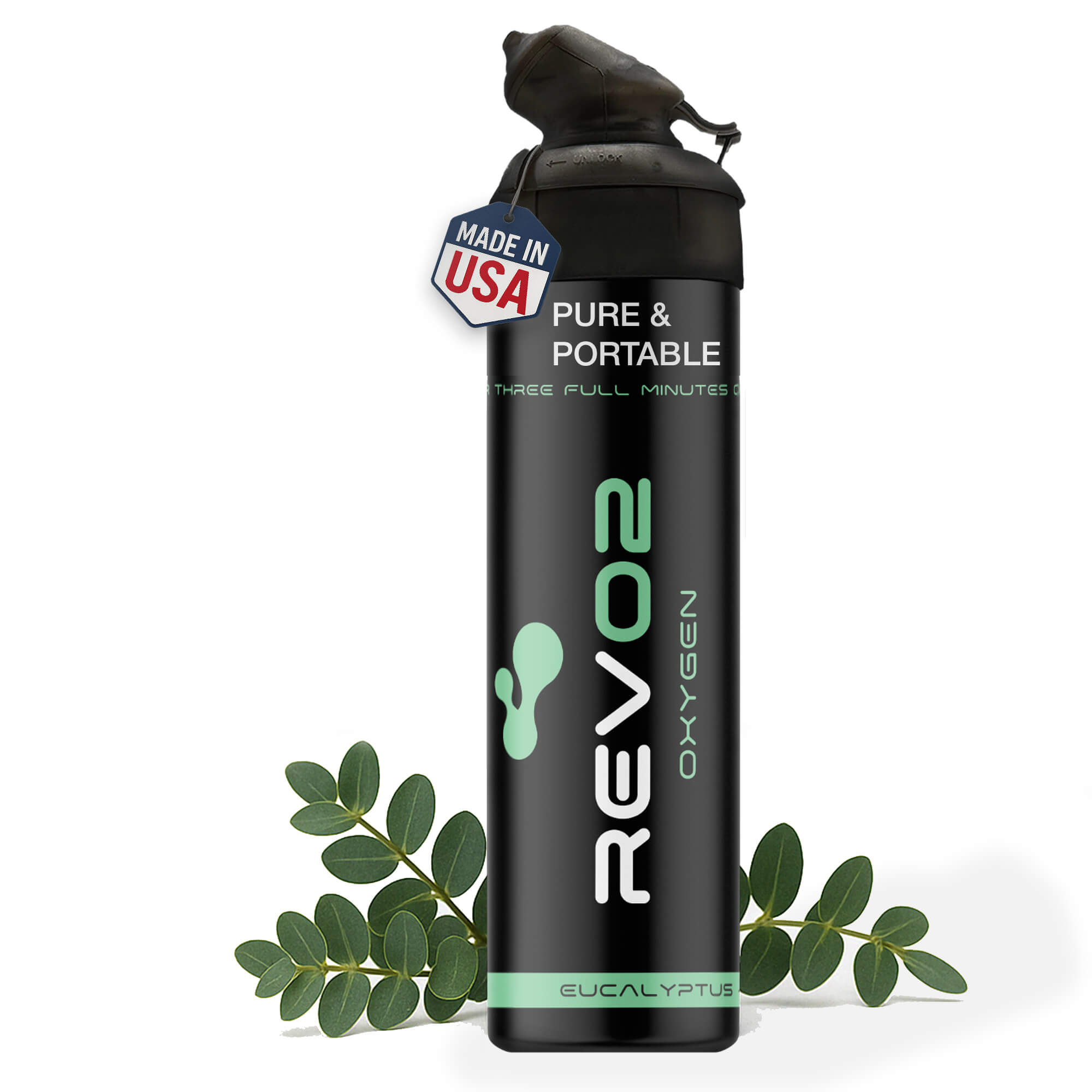
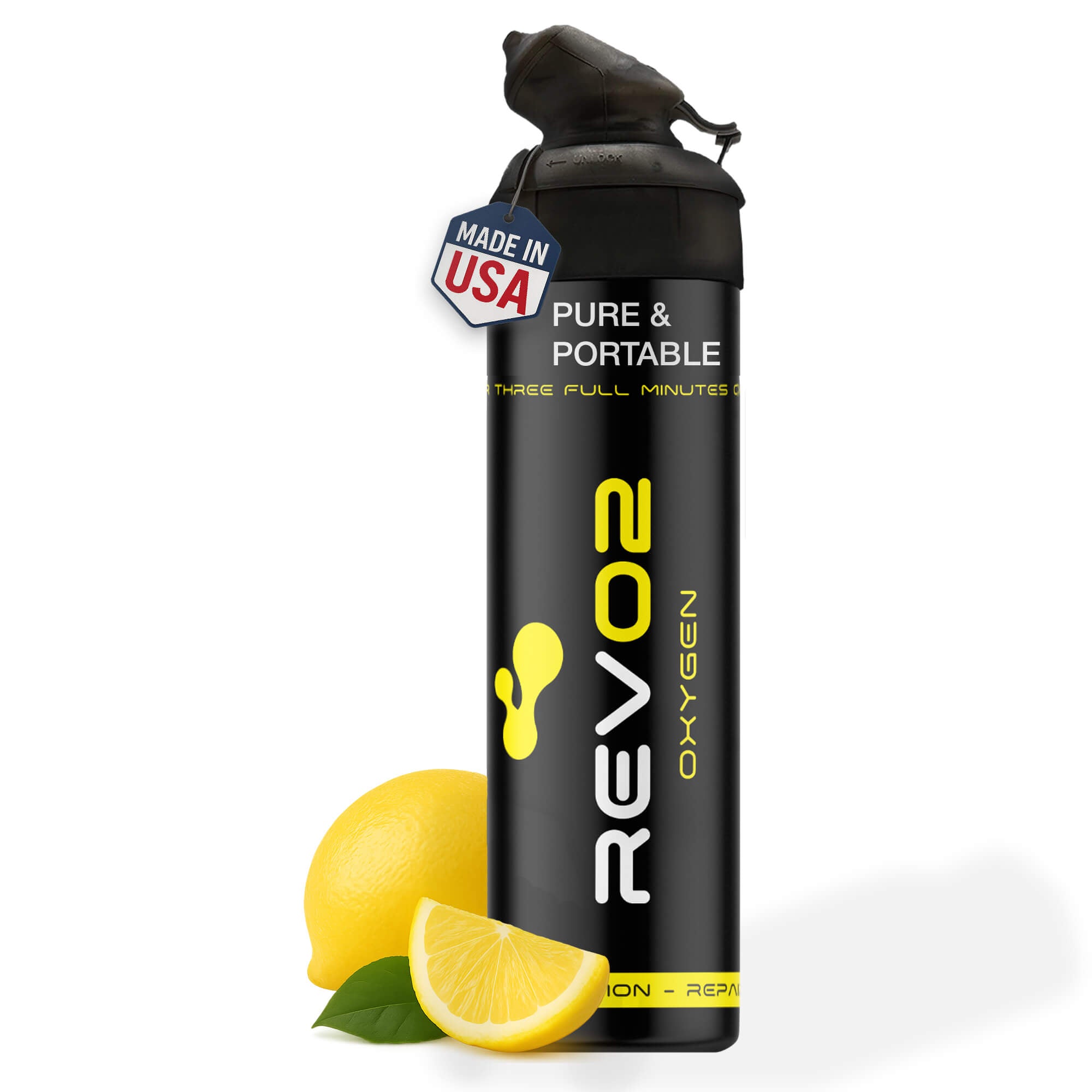
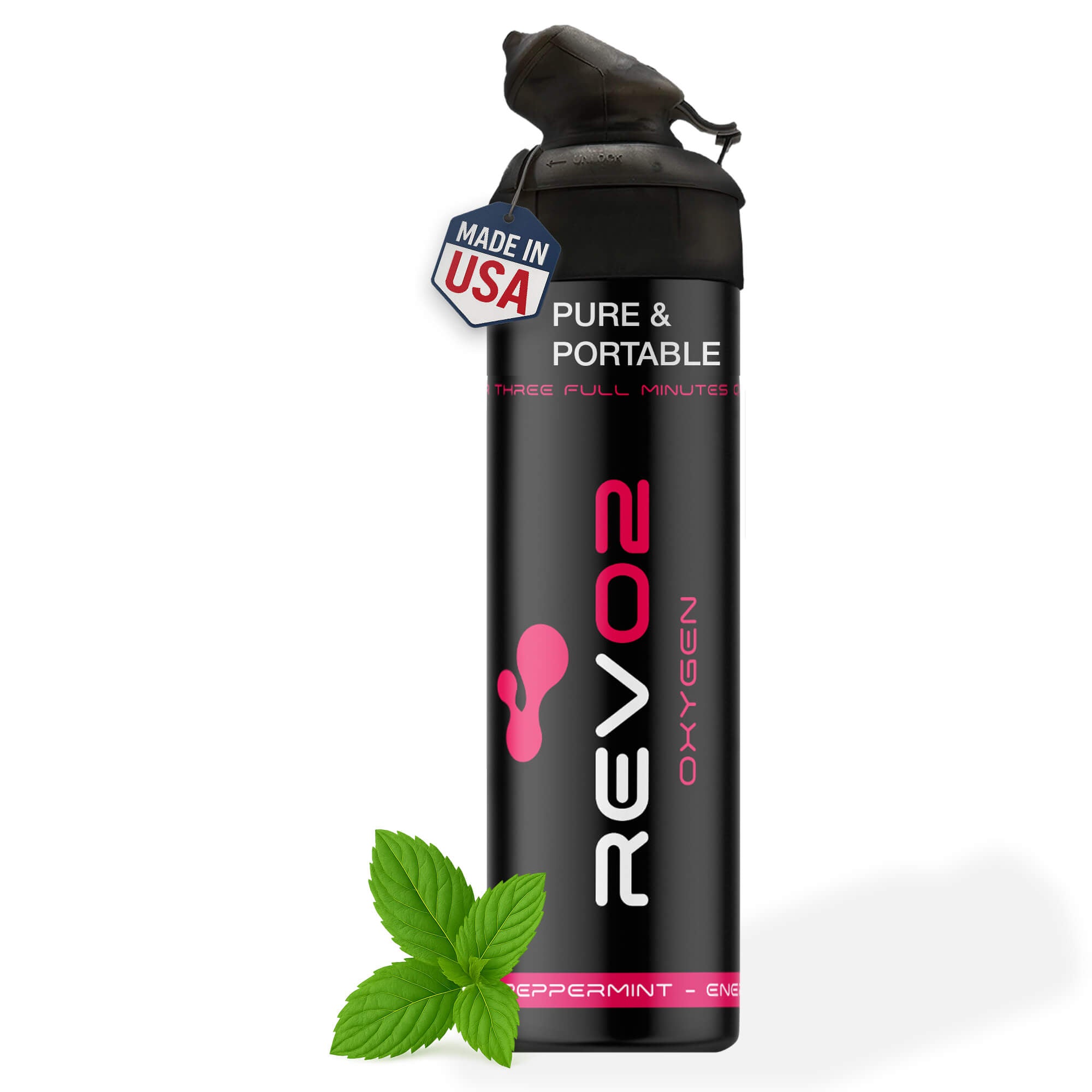
REV/O2 is a different, recreational format: portable cans of 98% pure oxygen with a zero-leak mouthpiece and a trigger-lock cap, made to be easy to carry without prescriptions or bulky equipment. Our cans come in three blends: Peppermint for energy and endurance, Lemon for recovery, and Eucalyptus for focus and relaxation. They are made for the moments you notice the thin air: stepping off a trail, after climbing stairs to your lodge, or on a tired second afternoon.
A few practical habits help:
- Keep a can in your daypack or jacket for breaks between activities.
- Take slow, steady breaths from the mouthpiece while seated, rather than while moving.
- Use it alongside the pacing, hydration and rest above, since those do the heavy lifting.
- If you are using it for breathlessness at rest, confusion or a worsening headache, that is a signal to descend and seek care, not to keep going.
For step-by-step guidance, see our page on how to use canned oxygen safely. Ski days are covered in our ski trip altitude kit, and what to do for a hiking headache or queasy stomach is in our guides to high altitude headache relief and altitude nausea relief.
Pack a can for your Taos trip
If you are heading to Taos for skiing, hiking or a long weekend, REV/O2 offers a ready-to-use way to take a few easy breaths of 98% pure oxygen wherever you are. Choose a single can from the Peppermint, Lemon or Eucalyptus range, or build your own bundle so everyone in your group has one.
Bundles suit families, ski groups and anyone who expects to be active on more than one day of the trip.
If symptoms develop
The CDC Yellow Book gives three rules that prevent most serious outcomes:
- Know the early symptoms and acknowledge them.
- Never ascend to sleep at a higher altitude while you have symptoms, no matter how minor.
- Descend if symptoms worsen despite rest or treatment at the same elevation.
Here is how that looks in Taos.
Mild symptoms (headache, queasiness, tiredness). Stop climbing. Rest, drink water and skip alcohol. The CDC says people with altitude illness should not go higher until symptoms resolve. The Yellow Book says travelers with AMS but without HACE or HAPE can remain at their current altitude and manage symptoms with over-the-counter pain relievers and anti-nausea medicine. Ask your doctor or pharmacist what suits you, especially if you take other medicines or have a heart, lung or kidney condition.
Symptoms that are getting worse while you rest. Go to a lower elevation. The Yellow Book says AMS improves rapidly with a descent of 1,000 feet or more. From the ski valley, that can mean driving back down to town.
Confusion, stumbling, severe breathlessness, blue lips, or a cough with pink mucus. Treat it as an emergency. Descend immediately and call 911. Do not wait to see whether it passes.
Seniors and anyone with a heart or lung condition should speak with their doctor before the trip. A doctor can tell you whether Taos’ elevation is a reasonable plan for you and what to carry.
Our perspective
Most altitude trips go wrong in the same place: the first evening. People arrive excited, skip water, have a drink, and then feel the headache land at 2 a.m. and have no plan.
We built REV/O2 because we wanted a simple, portable way to take a few clean breaths of oxygen when the air feels thin. A can of 98% pure oxygen with a zero-leak mouthpiece and a trigger-lock cap means little is lost between breaths, and there is no mask or tank to set up. The peppermint, lemon and eucalyptus blends make it pleasant to use, whether you are an athlete after a hard session, a hiker pausing on the trail, or someone who just needs to feel steady after a long flight.
Our advice is to pair it with good habits: arrive gently, drink water, sleep low if you can, and listen to your body. The can is there for the moments in between.
Paul
FAQ
Is New Mexico high altitude?
Parts of it are. Taos sits at 6,969 feet, and Taos Ski Valley’s base is at 9,207 feet. The CDC says travelers above 8,000 feet may be at risk for altitude illness, so mountain areas of the state count even though the lower cities do not.
At what elevation should you worry about altitude sickness?
The CDC points to elevations above 8,000 feet. The Merck Manual describes AMS symptoms after traveling to more than 8,000 feet, and the CDC advises extra caution when going from a low elevation to above 9,000 feet in one day.
Can you get altitude sickness at a ski resort like Taos?
Yes. The ski valley base is above 9,000 feet, and the summit is above 12,000 feet. Symptoms usually appear 2 to 12 hours after arrival, according to the CDC Yellow Book. Resting on day one and sleeping lower, if possible, helps.
What is the best drink for high altitude?
Water is the practical choice. The National Park Service says fluids and food do not directly prevent altitude illness, but they help you function and avoid dehydration that mimics AMS. Skip alcohol for the first 48 hours above 8,000 feet, as the CDC advises.
How long does altitude sickness last?
Mild AMS usually resolves within 12 to 48 hours if you do not climb higher, according to the CDC Yellow Book. If symptoms worsen at rest or include confusion or breathlessness, descend and seek medical care.
Sources
- Frequently Asked Questions about Taos Ski Valley
- High-Altitude Travel and Altitude Illness, CDC Yellow Book
- Altitude Sickness, Merck Manual Consumer Version
- Next-generation acute mountain sickness prevention tool, USARIEM
- Mountaineering Medical Issues, National Park Service
- 2024 Altitude Summary, Wilderness Medical Society
- Acute Altitude Illness: Updated Prevention and Treatment, AAFP
- Vail hiking trails and planning