
If your head starts pounding above 8,000 feet, the priority order is simple: stop ascending, rest, use supplemental oxygen if you have it, take ibuprofen or acetaminophen, and descend if you’re not better soon. Most high-altitude headaches ease within a day when you follow that sequence. The ones that don’t are trying to tell you something important.
Here’s what to do in the first hour:
- Stop climbing. Don’t gain more elevation until symptoms settle.
- Rest in shade or shelter and avoid exertion, including carrying heavy packs.
- Take ibuprofen (400 mg) or acetaminophen (1,000 mg) for pain, following label limits.
- Use supplemental oxygen if it’s on hand, at 1 to 2 liters per minute if you have a regulated source.
- Descend immediately if you develop confusion, stumbling, severe vomiting, or breathlessness at rest.
If you notice confusion, loss of coordination, breathlessness while resting, or a cough producing pink or frothy fluid, that’s not a headache anymore. That’s a medical emergency requiring immediate descent.
The Wilderness Medical Society, the CDC Yellow Book, and portable oxygen tools like Revo2 all play a role here. Guidelines set the medical standard. Oxygen gives you a practical bridge while you sort out next steps.
Key Takeaways
Treating a high-altitude headache means stopping ascent, resting, using oxygen and OTC analgesics for comfort, and descending if symptoms don’t improve within a day or worsen at any point.
| Point | Details |
|---|---|
| Stop and rest first | Halt ascent immediately and avoid exertion until symptoms improve. |
| OTC medication works | Ibuprofen (400 mg) or acetaminophen (1,000 mg) reliably reduce headache severity. |
| Prescription options exist | Acetazolamide prevents AMS; dexamethasone treats moderate to severe cases under medical guidance. |
| Descend for red flags | Confusion, ataxia, or breathlessness at rest require immediate descent and emergency care. |
| Oxygen brings quick relief | Supplemental oxygen at 1 to 2 L/min eases headache within about 30 minutes, per the CDC. |
| Revo2 fits as a bridge | Portable canned oxygen from Revo2 offers brief symptomatic comfort, not a substitute for descent. |
Table of Contents
- What Causes a High-Altitude Headache in the First Place?
- What Are the Symptoms, and When Should You Worry?
- How to Relieve Altitude Headaches Right Now
- When Do You Need Prescription Medication for Altitude Illness?
- Preventing Altitude Headaches Before They Start
- What the Research Actually Says About Supplemental Oxygen
- How Long Do Altitude Headaches Usually Last?
- When to Descend and What Counts as an Emergency
- Why Honest Information Matters More Than Hype Here
- REV/O2: A Practical Bridge, Not a Substitute for Descent
- Frequently Asked Questions
- Sources
What Causes a High-Altitude Headache in the First Place?
A high-altitude headache is your brain’s response to low oxygen (hypoxia), and it’s usually the first noticeable sign of acute mountain sickness (AMS). When you climb, thinner air means less oxygen reaches your blood. Your body compensates by breathing faster and shifting blood flow, but that adjustment period comes with a cost: swelling in blood vessels around the brain and a surge in prostaglandins, the same pain-signaling compounds involved in migraines.
This isn’t rare. Depending on how fast you climb and how high you go, 15% to 80% of travelers develop symptoms. A few patterns to watch for:
- Symptoms typically start above 8,000 feet (2,400 meters).
- Risk climbs sharply with rapid ascent, like flying directly into a high-elevation city.
- People with a prior history of AMS are more likely to get it again.
Your headache is a warning signal, not the disease itself. Left unmanaged, it can progress toward more serious altitude illness.
What Are the Symptoms, and When Should You Worry?
A high-altitude headache usually feels like a dull, throbbing pain on both sides of the head. It gets noticeably worse with exertion, coughing, or even bending over to tie your boots. Alongside the headache, you’ll often notice:
- Poor or restless sleep
- Mild nausea
- Dizziness or a heavy, foggy feeling
- Fatigue disproportionate to your activity level
Symptoms typically show up within a few hours of reaching a new altitude, sometimes not until that first night’s sleep. For most people, they resolve within 12 to 72 hours if you rest, hydrate, and avoid further ascent.
Headaches that worsen with exertion or coughing and don’t improve within 24 to 48 hours at the same elevation are a signal to descend rather than wait it out.
Watch closely for red flags that separate a routine altitude headache from something dangerous: confusion, loss of balance (ataxia), severe or repeated vomiting, and shortness of breath even at rest. Any of these mean you stop treating it like a headache and start treating it like an emergency. Descend and get medical help.
How to Relieve Altitude Headaches Right Now
When your head is pounding at 10,000 feet, you want a plan, not a pharmacy aisle of guesses. Work through these steps in order.
- Stop ascending. Every additional foot of elevation works against you. Hold your position until symptoms improve.
- Rest and get out of the sun and wind. Physical exertion increases oxygen demand your body can’t meet right now.
- Reduce exertion for the next several hours. Skip the summit push, the extra mile, the “let’s just see how it goes.”
- Hydrate and eat carbohydrate-rich food. Dehydration headaches mimic altitude headaches closely enough to confuse the two, and carbs are easier to metabolize with less oxygen available.
- Keep your normal caffeine intake if you’re a regular drinker. Skipping your usual coffee can trigger a withdrawal headache that layers on top of the altitude one, muddying what’s actually happening.
- Take a nonopioid analgesic. Ibuprofen and acetaminophen are both endorsed for this by the Wilderness Medical Society, and a randomized trial found ibuprofen significantly reduced headache severity compared to placebo.
- Use supplemental oxygen if you have it. The CDC Yellow Book notes that 1 to 2 liters per minute typically improves altitude headache within about 30 minutes.
- Monitor closely. If you’re not improving after several hours, or symptoms worsen, begin descending.
On dosing: ibuprofen is generally used at 400 mg, repeatable every 6 to 8 hours, while acetaminophen runs 500 to 1,000 mg every 6 hours, staying under 3,000 mg daily. Avoid ibuprofen if you have a history of stomach ulcers or kidney issues, and don’t combine multiple acetaminophen-containing products without checking total dosage. These are general adult guidelines. Anyone with liver or kidney disease, or who’s pregnant, should check with a doctor before using either one.
A few things to avoid: sedatives and alcohol both suppress your breathing drive, which is the last thing you want when you’re already short on oxygen. And don’t treat canned oxygen or OTC medication as a cure. They ease symptoms; they don’t reverse the underlying hypoxia the way descent does.
Pro Tip: Follow the “climb high, sleep low” rule whenever your itinerary allows it. Spending your active hours at a higher elevation and returning to a lower camp to sleep gives your body extra recovery time and meaningfully lowers your risk of a rough first night.
When Do You Need Prescription Medication for Altitude Illness?
Over-the-counter relief covers most routine cases, but three prescription drugs come into play for people at higher risk or with more serious symptoms. None of these should be started without talking to a doctor first, especially since dosing and appropriateness shift based on your health history and trip plans.
Acetazolamide is the most established option and works best as prevention rather than rescue treatment, which is why people with a history of AMS or those doing a fast ascent often start it a day ahead of time. Dexamethasone is reserved for more serious cases, often used alongside descent rather than instead of it. Nifedipine’s role is narrower still, mainly for people prone to high-altitude pulmonary edema (HAPE).
Acetazolamide is better validated for preventing altitude illness than for treating it once symptoms have already started, which is an important distinction if you’re deciding whether to start it mid-trip.
Side effects worth flagging to your prescriber: acetazolamide can make carbonated drinks taste flat and cause mild tingling in the extremities. Pregnant travelers and children need individualized dosing guidance rather than standard adult protocols, so this is a conversation for your doctor, not a forum thread.
Preventing Altitude Headaches Before They Start
The most effective relief option is the one you never need. Prevention comes down to pacing, hydration, and a little planning before you ever leave home.
Build your itinerary around these principles:
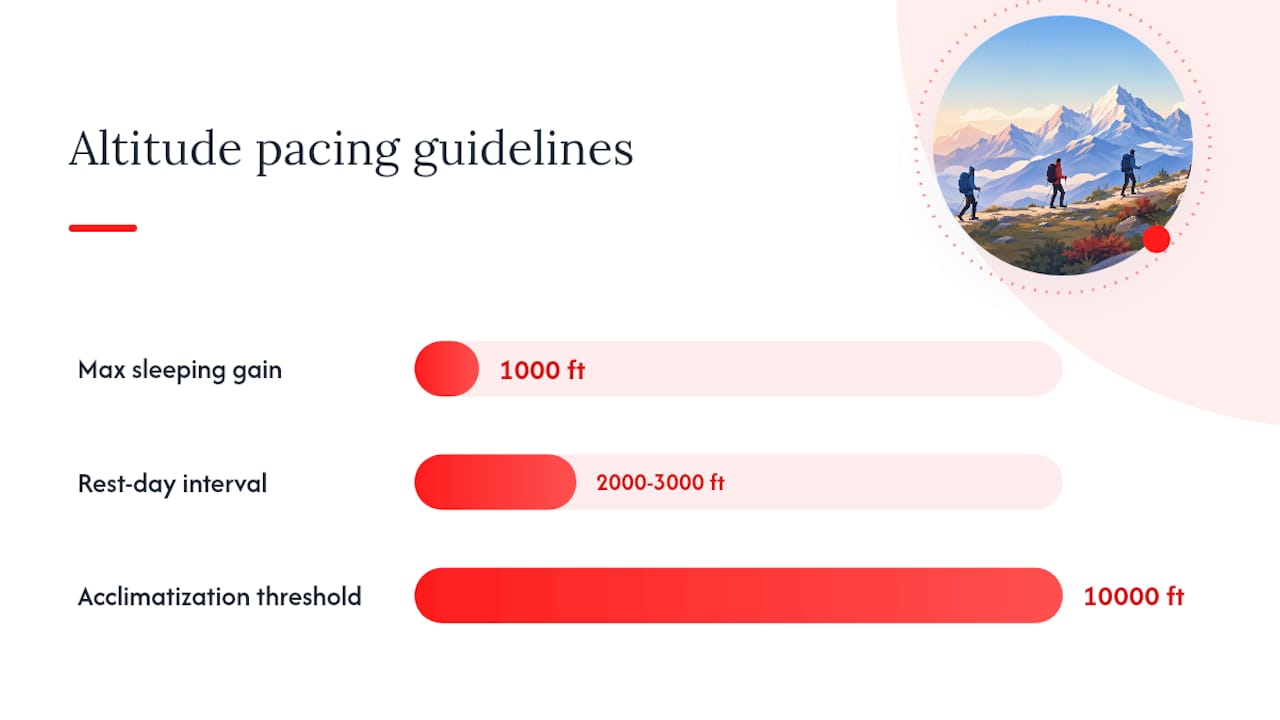
- Ascend gradually, gaining no more than 1,000 feet (300 meters) of sleeping elevation per night above 10,000 feet.
- Schedule rest days every 2,000 to 3,000 feet of elevation gain.
- Check your fitness level honestly. Cardiovascular conditioning helps, but it doesn’t override the need for acclimatization.
- Use tools like an altitude oxygen calculator to understand how much oxygen availability drops at your destination elevation.
On the ground, a few habits make a real difference:
- Drink more water than you think you need. Dry mountain air increases fluid loss even when you’re not visibly sweating.
- Favor carbohydrate-heavy meals over heavy, fatty ones, which are harder to digest at altitude.
- Keep your usual caffeine routine steady instead of quitting cold turkey on your trip.
- Skip alcohol and sedatives for at least the first 48 hours at a new elevation.
- Avoid overexertion on your first day. A high-altitude medicine physician’s core advice is simply to let your body catch up before pushing hard.
If you’re doing a rapid ascent, like flying straight into a high-elevation city with plans to trek the next day, or if you have a history of AMS, talk to a doctor about prophylactic acetazolamide before you go.
What the Research Actually Says About Supplemental Oxygen
Supplemental oxygen works, but it’s not magic and it’s not permanent. The CDC notes that 1 to 2 liters per minute typically relieves altitude headache within roughly half an hour, which makes it one of the fastest symptomatic options available outside of descent itself.
Handheld and canned oxygen products fit into this picture differently than a hospital oxygen line. They typically hold a small, fixed volume, which means the relief they provide is real but brief rather than sustained. Think of it as a short bridge, not a destination.
- Canned oxygen gives quick, temporary symptomatic comfort.
- It does not treat the underlying hypoxia causing AMS long-term.
- It should never replace descent when symptoms are worsening.
| Oxygen Source | Typical Duration of Relief | Best Use Case |
|---|---|---|
| Medical-grade flow oxygen (1 to 2 L/min) | Sustained while in use | Clinical or guided expedition settings |
| Portable canned oxygen (e.g., Revo2) | Brief, several minutes per use | Temporary comfort during breaks or early symptoms |
Pro Tip: Use canned oxygen the way you’d use a temporary pain reliever, not a permanent solution. A few slow inhalations through the mouthpiece can ease a throbbing headache while you assess whether you need to descend, but it’s not a green light to keep climbing.
If you’re curious how a product like this fits into an actual trek, Revo2 has a step-by-step usage breakdown for summit attempts worth reading before you rely on it in the field.
How Long Do Altitude Headaches Usually Last?
Most high-altitude headaches follow a predictable arc if you respond early:
- Noticeable improvement within 12 to 48 hours of rest, hydration, oxygen, and OTC pain relief.
- Full resolution typically by the second or third day at the same elevation.
- Persistent or worsening symptoms after 24 to 72 hours are a signal something more serious may be developing.
Recovery means the headache and associated nausea or dizziness have cleared and you can resume normal activity without symptoms returning. It doesn’t mean you’re cleared to immediately resume aggressive ascent. Give yourself at least a full symptom-free day before gaining significant elevation again, since restarting too soon is one of the most common ways people relapse into AMS on the same trip.
When to Descend and What Counts as an Emergency
Descent is the one intervention nothing else replaces. If you take away a single fact from this article, make it this one.
- Descend 1,000 to 3,000 feet (300 to 1,000 meters) immediately if symptoms are severe or worsening.
- Watch for HACE and HAPE signs: confusion, loss of coordination, breathlessness at rest, or a cough with pink, frothy sputum. Any of these mean immediate descent, no exceptions.
- Contact local rescue services or your guide the moment evacuation looks necessary. Don’t wait to see if it resolves on its own.
- Use oxygen or dexamethasone only as a bridge while arranging descent, not as a reason to delay it.
Supplemental oxygen and dexamethasone can stabilize someone long enough to safely descend, but neither one is a substitute for actually losing elevation when symptoms are serious.
Never let an OTC painkiller talk you out of descending. It can mask the pain while the underlying problem keeps getting worse.
Why Honest Information Matters More Than Hype Here
Altitude illness content online tends to swing one of two ways: overly clinical guideline text that’s hard to act on in the moment, or marketing copy that oversells what a product can do. Neither serves you well when you’re standing at 11,000 feet with a headache and a decision to make.

The most useful framing is the boring one: analgesics relieve pain, oxygen buys you time, and descent fixes the actual problem. Herbal remedies like Ginkgo biloba get recommended constantly in outdoor forums, but the evidence for them remains inconsistent, and some may even interfere with how well acetazolamide works. That’s worth knowing before you pack a supplement instead of a plan.
Portable oxygen has a real, defensible role in this picture, but only when it’s positioned honestly, as short-term comfort rather than a cure. Anyone selling it as a way to skip acclimatization or ignore red-flag symptoms is selling you something that could get you hurt. The physiology doesn’t change because a product is convenient.
REV/O2: A Practical Bridge, Not a Substitute for Descent
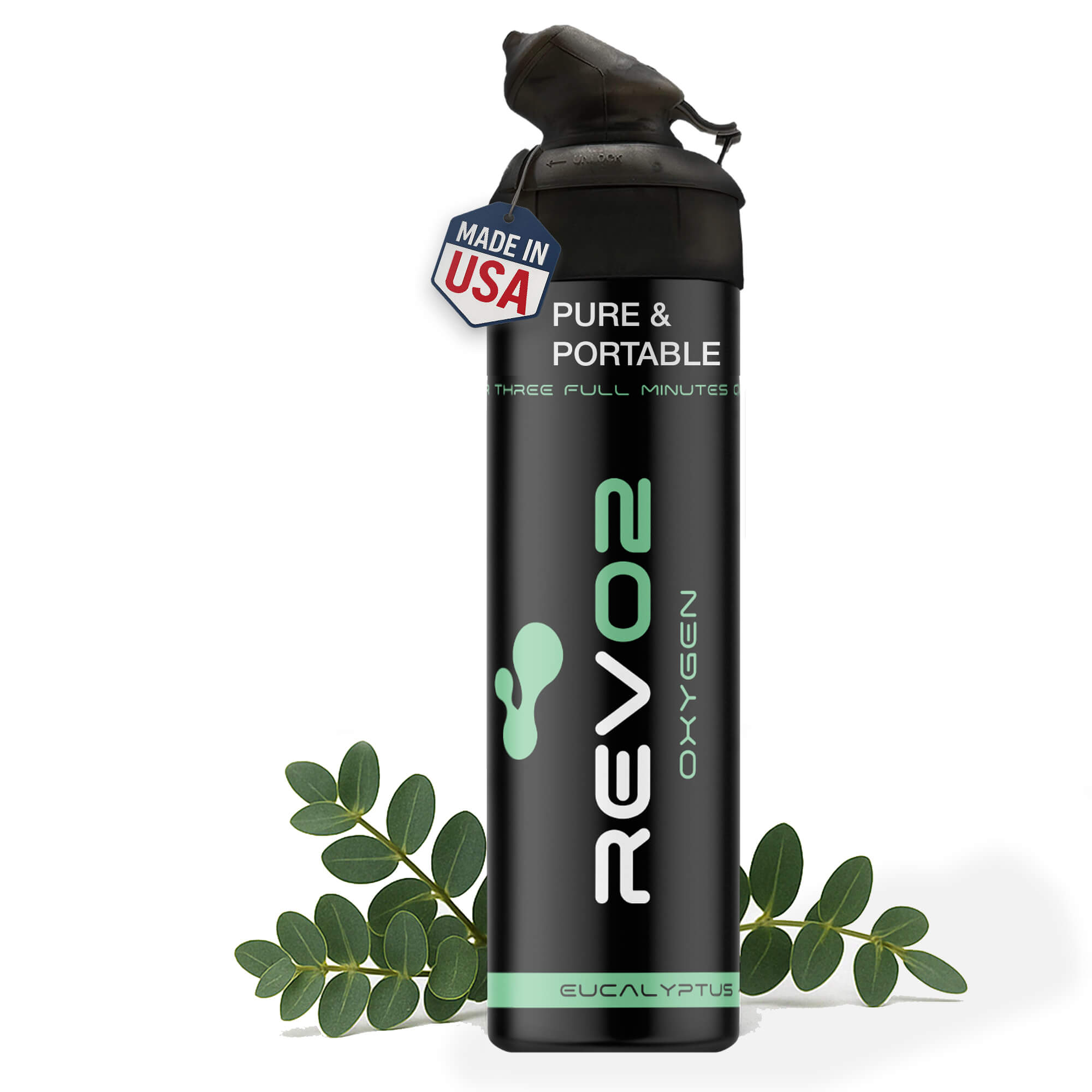
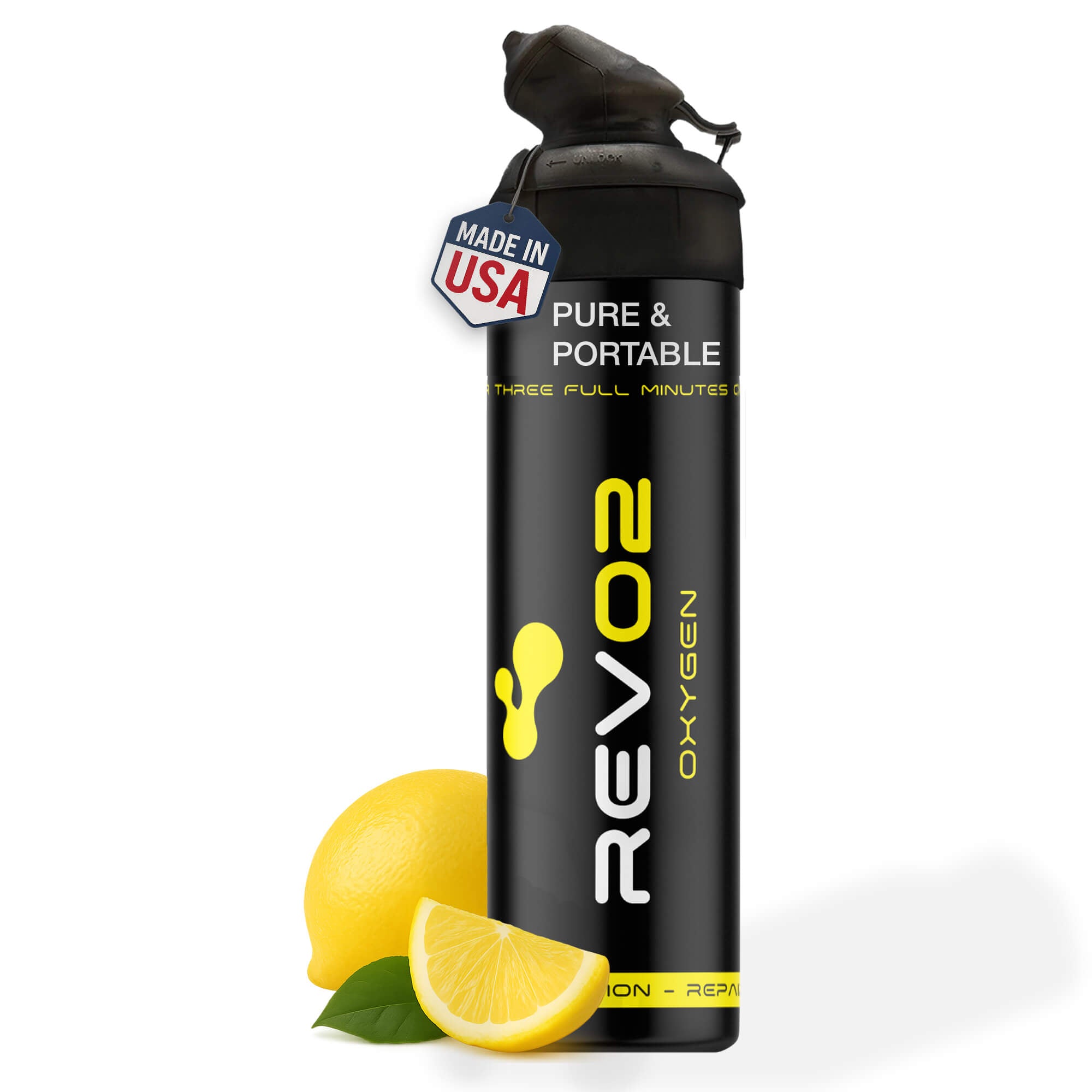
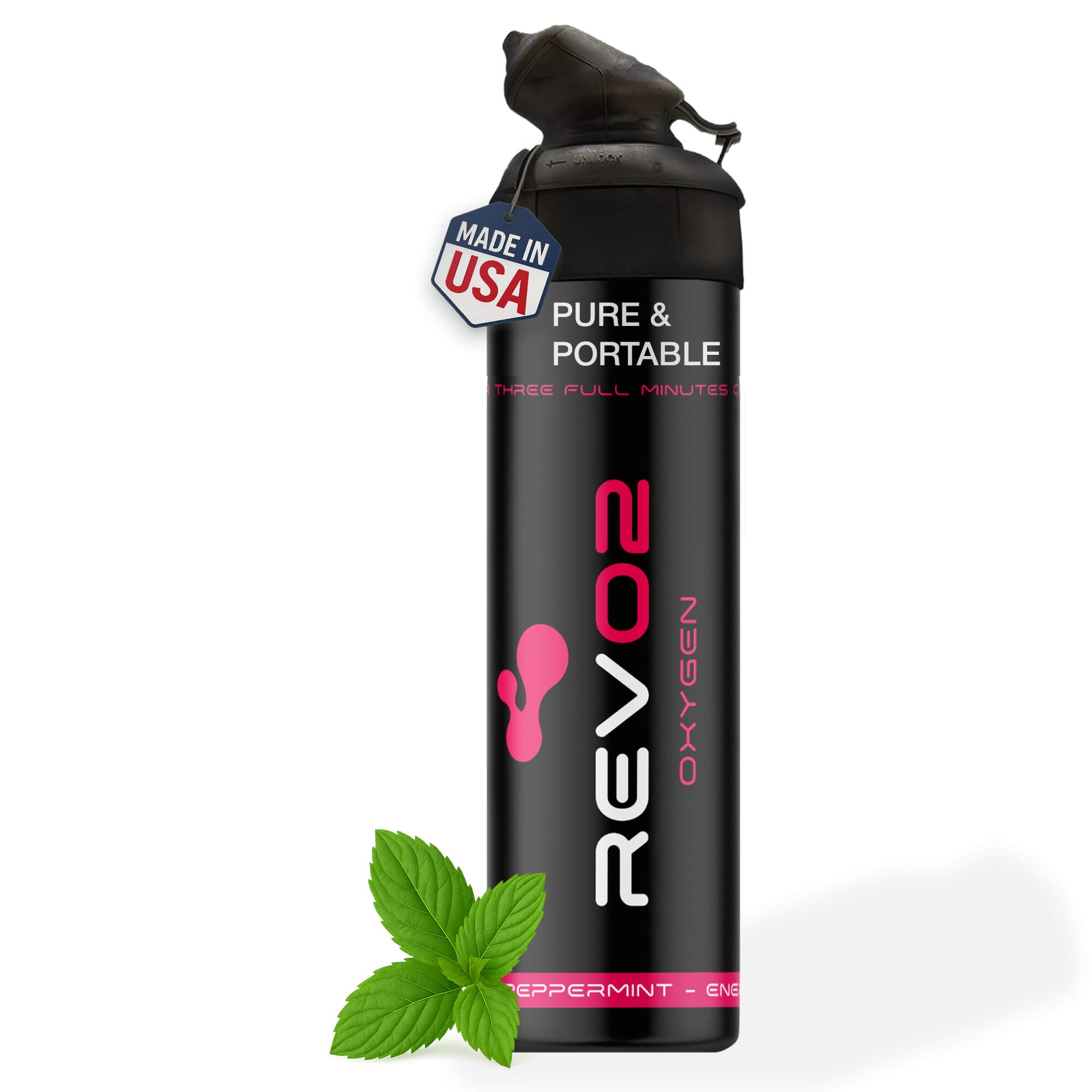
Revo2 exists for exactly the moment described above: your head is pounding, you need relief now, and you’re not in a position to descend immediately. A can of 98% pure oxygen with a zero-leak mouthpiece gives you several minutes of clean oxygen you can use anywhere, no mask, no setup, no waiting around at a clinic.

Use it the way it’s designed: slow, steady inhalations through the mouthpiece, paced rather than rushed, when you first notice symptoms building. It’s built to ease the immediate discomfort of thin air, not to replace medical evaluation or descent if your symptoms are severe or worsening. Revo2’s safe-use guide walks through frequency, technique, and when it’s time to stop relying on the can and start moving downhill.
For travelers packing for a trek, the peppermint multi-pack is an easy way to keep a few cans on hand without adding real weight to your bag. If you want to see the full product lineup and pick a flavor and pack size that fits your trip, browse Revo2’s canned oxygen collection and get one shipped before your next ascent.
Frequently Asked Questions
What is the fastest way to relieve a high-altitude headache? Rest, hydration, and ibuprofen or acetaminophen typically bring relief within a few hours. Supplemental oxygen at 1 to 2 liters per minute can ease symptoms within about 30 minutes.
Can canned oxygen cure altitude sickness? No. Canned oxygen like Revo2 provides brief symptomatic comfort but doesn’t treat the underlying hypoxia. Descent remains the definitive treatment for worsening AMS.
How do I know if my headache is altitude sickness or something else? Altitude headaches typically start within hours of reaching elevation, worsen with exertion or coughing, and come with nausea, dizziness, or poor sleep. Dehydration and caffeine withdrawal can mimic these symptoms, so rule those out first.
When should I take acetazolamide? Acetazolamide works best as prevention, typically started a day before a rapid ascent, especially if you have a history of AMS. Talk to a doctor before starting it.
How long does a high-altitude headache last? Most resolve within 12 to 72 hours with rest and conservative treatment at the same elevation. If it worsens or doesn’t improve after 24 to 48 hours, descend.
What are the warning signs I shouldn’t ignore? Confusion, loss of coordination, severe vomiting, breathlessness at rest, or a cough producing pink or frothy sputum all require immediate descent and emergency medical care.
Sources
For deeper guidance beyond this overview, these sources cover the clinical detail behind the recommendations here:
- Wilderness Medical Society Clinical Practice Guidelines for the Prevention, Diagnosis, and Treatment of Acute Altitude Illness: 2024 Update
- High-Altitude Travel and Altitude Illness | CDC Yellow Book™
- High altitude headache: treatment with ibuprofen
- Therapeutic approaches for headache in acute mountain sickness: A review of best practices
- High Altitude Headache: Symptoms, Treatment, Prevention Guide
If you’re considering prophylactic medication or have a history of recurrent AMS, talk to a travel medicine doctor before your trip rather than figuring it out at altitude.