
A few breaths of concentrated oxygen can feel refreshing, but for most healthy people at sea level the evidence for a real energy boost is thin. Your blood is already close to fully saturated with oxygen. The moments where extra oxygen has the best case are narrower: hard efforts followed by short recovery windows, higher elevations, and the sensation of breathlessness itself. Below we separate what research supports from what it does not, so you can decide whether a can fits your day.
TL;DR
- Healthy lungs already keep blood oxygen at normal levels, so extra oxygen at rest rarely changes how energetic you are. Any lift is usually short and often subjective.
- One 2014 placebo-controlled study found no effect on performance, recovery or cognition, while a 2026 swim study found a sprint benefit after a maximal effort. The evidence is mixed and small.
- Canned oxygen is not medical oxygen. It cannot treat low oxygen saturation, and ongoing fatigue or breathlessness deserves a clinician’s attention.
- Federal rules prohibit canned oxygen in carry-on and checked bags on U.S. flights, so plan for that before you travel.
Table of Contents
- What oxygen does in your body, and why “more” is not automatically better
- What the studies on canned oxygen and fatigue actually show
- How long an energy boost from canned oxygen can last
- Where extra oxygen has the strongest case
- Can you take canned oxygen on a plane?
- Canned oxygen is not medical oxygen
- When low energy is a signal, not a supply problem
- Our perspective
- Choosing a can for your situation
- A sensible way to try it
- FAQ
- Sources
What oxygen does in your body, and why “more” is not automatically better
Every cell uses oxygen to turn food into usable energy. That is the reasoning behind most “oxygen for energy” claims, and it is true as far as it goes. The catch is supply. In a healthy person, hemoglobin in red blood cells picks up oxygen in the lungs and carries it everywhere it is needed in a continuous, efficient process, as University of Colorado Anschutz physician Ben Honigman explains. The same source notes that with healthy lungs the body keeps blood oxygen at normal levels on its own, and there is no good evidence that adding more helps physiologically.
This is why breathing pure oxygen is not like drinking a coffee. Caffeine changes how your nervous system signals tiredness. Oxygen only helps when something is limiting its delivery, such as thin air, lung disease or a very hard effort.
There is also a plain physiological caution. Researchers writing in the American Journal of Physiology point out that supplemental oxygen can narrow blood vessels in some tissues, which may paradoxically expose them to low-oxygen stress despite higher oxygen content in arterial blood. More is not always better, and that is one reason the research stays cautious.
The FDA’s older guidance on recreational oxygen bars says there are no long-term, well-controlled studies backing claims that oxygen raises energy or lowers stress in healthy people. The same FDA report quotes the American Lung Association saying low-flow oxygen of that kind is unlikely to be dangerous to a healthy person. Both statements can be true together: a few breaths are probably harmless, and probably not transformative.
What the studies on canned oxygen and fatigue actually show
The research is small, and it does not point in one direction. Here is what is on record.
| Study | Who | What it found |
|---|---|---|
| 2014, Journal of Strength and Conditioning Research | 20 healthy college-aged adults, placebo-controlled | No significant effect of intermittent personal oxygen on exercise performance, recovery or cognition |
| 2026, Sports | Trained aquatic athletes after a maximal swim | Brief recovery-targeted oxygen from a 98% device improved sprint performance and lowered perceived exertion |
| 2025, Frontiers in Sports and Active Living | Hyperbaric oxygen after moderate exercise | Fatigue ratings improved, but blood tests showed no objective support; authors could not recommend it for faster recovery |
Two things stand out. First, timing matters. The study with a positive result gave oxygen right after a maximal effort, not at a desk at 2 p.m. Second, the authors of that swim study suggest that oxygen during recovery may ease the sensation of air hunger and the felt burden of breathing. That is a real effect on how a hard effort feels, even if it is not the same as a measurable metabolic boost.
The National Council on Aging takes a conservative view. It says there is little scientific research supporting the claimed benefits of over-the-counter canned oxygen for energy, athletic performance or recovery. A fair reading is that a benefit is plausible in specific, short, high-effort situations, and unproven for everyday tiredness.
If you want the longer version of this question, our guide on whether canned oxygen works and why any boost fades in minutes goes deeper.
How long an energy boost from canned oxygen can last
You cannot store oxygen. Because humans cannot “bank” it, the NCOA notes that the effects of a few breaths are transitory and unlikely to meaningfully change blood oxygen saturation. The same page explains that canisters typically hold 3 to 10 liters, doses are measured in one-second inhalations, and one or two of them will not move a home pulse oximeter reading.
In practice, that means:
- Expect minutes, not hours. Whatever you feel is short-lived, which is why we describe it as a pause, not a fuel source.
- Do not use a pulse oximeter to judge it. A few breaths will not show up on a fingertip reading, and a normal reading does not mean the can did nothing.
- Part of the effect is sensory. Cool air on the airway, aroma, slow deliberate breathing and a break from the screen all change how you feel. That is not a trick; it is just worth knowing which part is doing the work.
Where extra oxygen has the strongest case
Right after a hard effort
The 2026 swim study is the clearest recent example of a benefit, and it was specific to recovery between maximal efforts in trained athletes. If you do interval work, you might use a couple of inhalations in the minutes between sets while you recover your breathing. We cover the evidence on timing in more detail in our piece on oxygen around workouts.
At elevation
Air at altitude holds the same share of oxygen but at lower pressure, so each breath delivers less. That is why hikers and travelers to mountain towns often feel flat on day one. Online reviewers do report using canned oxygen for altitude sickness, but a 2025 review of those reviews says the effects of such use remain unknown. So treat a can as comfort at most, not as protection.
Know the line between a tired hiker and an unwell one. A worsening headache, confusion, unusual breathlessness at rest or trouble walking in a straight line are reasons to descend and get medical care, not to take another dose. For lighter options, see our overview of non-prescription breathing aids for energy and altitude.
During a stressful stretch
Stress speeds up breathing and can leave you feeling tight in the chest, which in turn feeds more tension. That loop, the familiar “fight or flight” response, is as much about breathing pattern as oxygen supply. A guided pause can help in either case:
- Sit upright and drop your shoulders.
- Breathe in through your nose for about four seconds.
- Breathe out slowly for six to eight seconds.
- Repeat for two minutes, and notice whether your chest loosens.
If you use a can, take your inhalations during step 2 and keep the rest of the pattern. Slow breathing is free and works without any product, so it is a sensible first step either way.
Jet lag and travel
Jet lag comes from a shifted body clock, not from low oxygen. A can will not reset your circadian rhythm, so light exposure, sleep timing and hydration do more. There is also a hard rule to know about before you pack anything, covered next.
Can you take canned oxygen on a plane?
Not in the United States. The FAA’s PackSafe guidance says passengers may not carry their own oxygen in checked baggage, carry-on baggage or on their person, and that canned, recreational and flavored oxygen are also prohibited. Oxygen used in the cabin must be supplied by the airline, and portable oxygen concentrators are the permitted exception for people who need them medically.
So if you are flying to a high-altitude destination, plan to buy or receive your cans after you land, or ship them ahead to your lodging. Check with your airline for the current rules before you travel.
Canned oxygen is not medical oxygen
This is the most important distinction in the topic. Prescribed supplemental oxygen is delivered through a nasal cannula by pulsed or continuous flow and requires a prescription. To qualify in the U.S., a patient generally needs a measured blood oxygen level of 88% or lower during a clinic visit, according to the same JAMA Internal Medicine article.

Over-the-counter canned oxygen sits in a different category. The NCOA says it is not regulated or approved by the FDA for medical use and that its concentration is considered insufficient to be therapeutic.
The risk is substitution. A 2025 review of consumer reviews found that some people use OTC oxygen in place of prescribed oxygen or to manage respiratory distress, which clinicians warn against. In our own safety guide we look at how often reviews describe medical use, plus fire and delay risks. Never use a can to wait out chest pain, severe shortness of breath, blue lips or confusion. Call 911.
Too much oxygen can also be a problem for some people. The FDA report cited above warns that inhaling too much may be dangerous for individuals with certain heart or lung diseases, potentially causing them to stop breathing. If you have COPD or another lung or heart condition, talk with your pulmonologist or primary care clinician before using any oxygen product. Older adults with breathlessness will find more in our guide to shortness of breath in seniors.
When low energy is a signal, not a supply problem
Persistent fatigue has many causes, and oxygen is rarely the one that explains it. Poor or interrupted sleep, anemia, thyroid problems, depression, medication effects, infections and overtraining all come up before a breathing issue does. Sleep apnea is another common one that people mistake for “just being tired.”
See a clinician if you notice:
- Fatigue that lasts more than a few weeks without a clear reason
- Breathlessness climbing a flight of stairs that used to be easy
- Morning headaches, loud snoring or pauses in breathing reported by a partner
- A home pulse oximeter reading that is repeatedly low
A primary care clinician can check blood counts, thyroid function and oxygen saturation properly. For athletes who feel flat despite training, overtraining can lower testosterone and drain energy, and restoring rest is the first fix. Other recovery tools such as light-based approaches are covered in this look at photobiomodulation benefits and dosage, which helps frame how oxygen compares with other options.
The JAMA Internal Medicine perspective on person-centered oxygen therapy makes a useful point here: the goal is health values, function and shared decisions, not the device itself. The same applies to a wellness can. Start with what you want to be able to do, then pick the tool.
Our perspective
We make portable canned oxygen, so you should hear this from us plainly. A can of 98% oxygen is not a replacement for sleep, food, training load management or medical care, and we do not think of it as a stimulant. The research on healthy people is mixed, and we would rather say so than overpromise.
What we do see is why people reach for it. Athletes want something that eases the first minute or two after a hard set. Hikers want a comfortable breath at the trailhead of a high pass. Busy people want a short, deliberate reset that pulls them out of shallow breathing. Those are modest, honest uses, and they are the ones we designed around: a zero-leak mouthpiece and trigger-lock cap so less oxygen is wasted, and flavor blends that make a slow, intentional breath feel like a break.
Our advice is the same we would give a friend. Try it in the situation where it makes sense, keep expectations small, pay attention to how you feel, and see a clinician if tiredness or breathlessness will not go away.
— Paul
Choosing a can for your situation
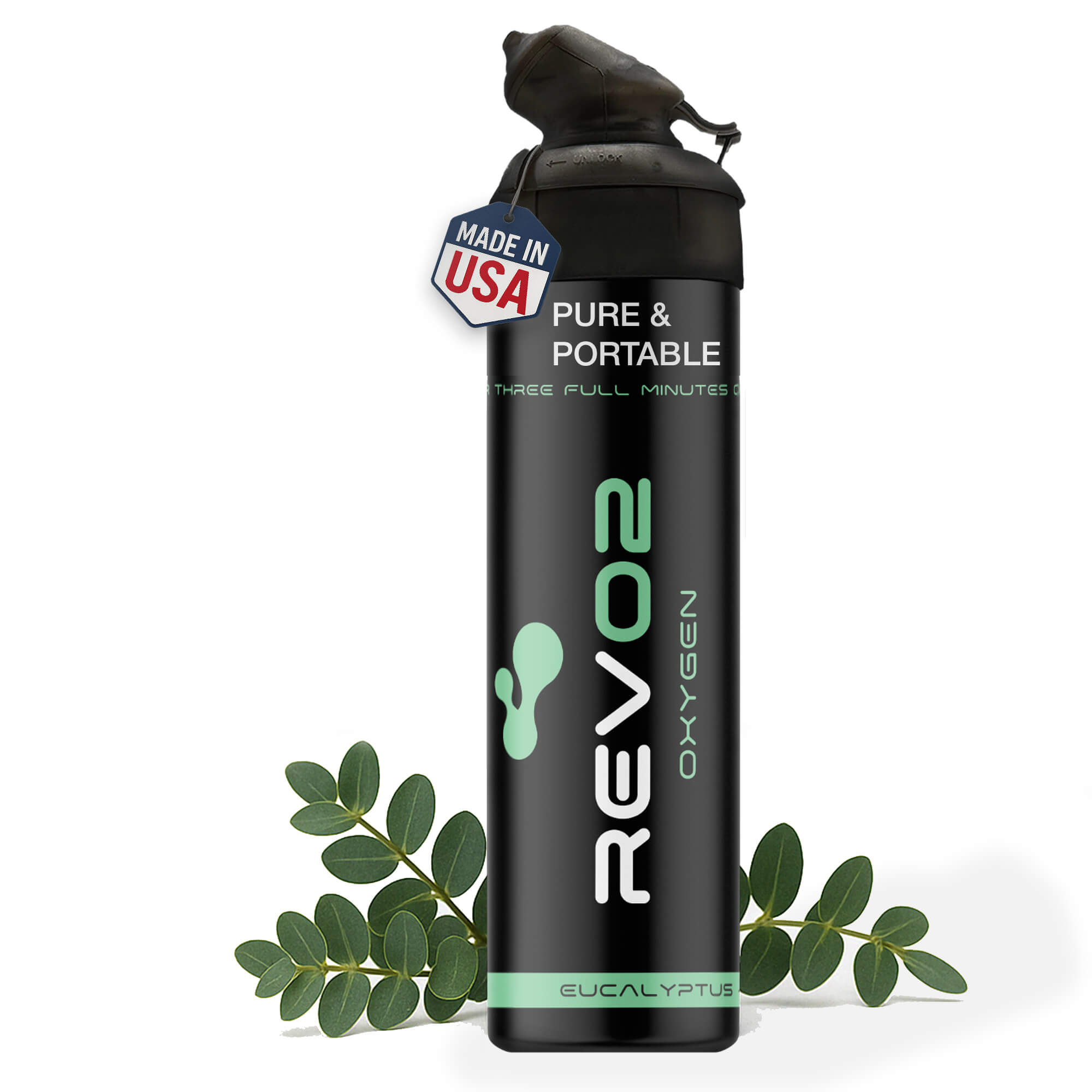
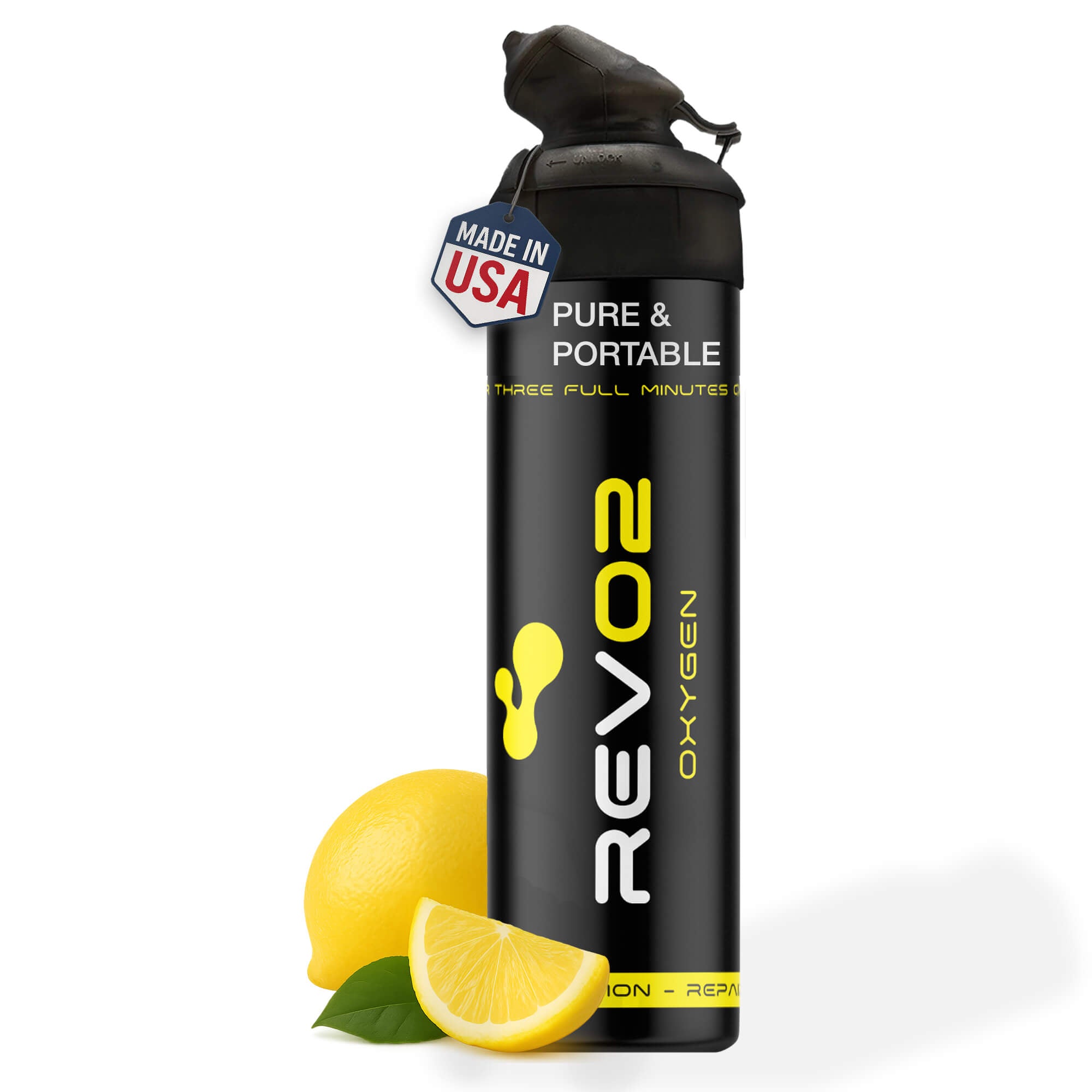
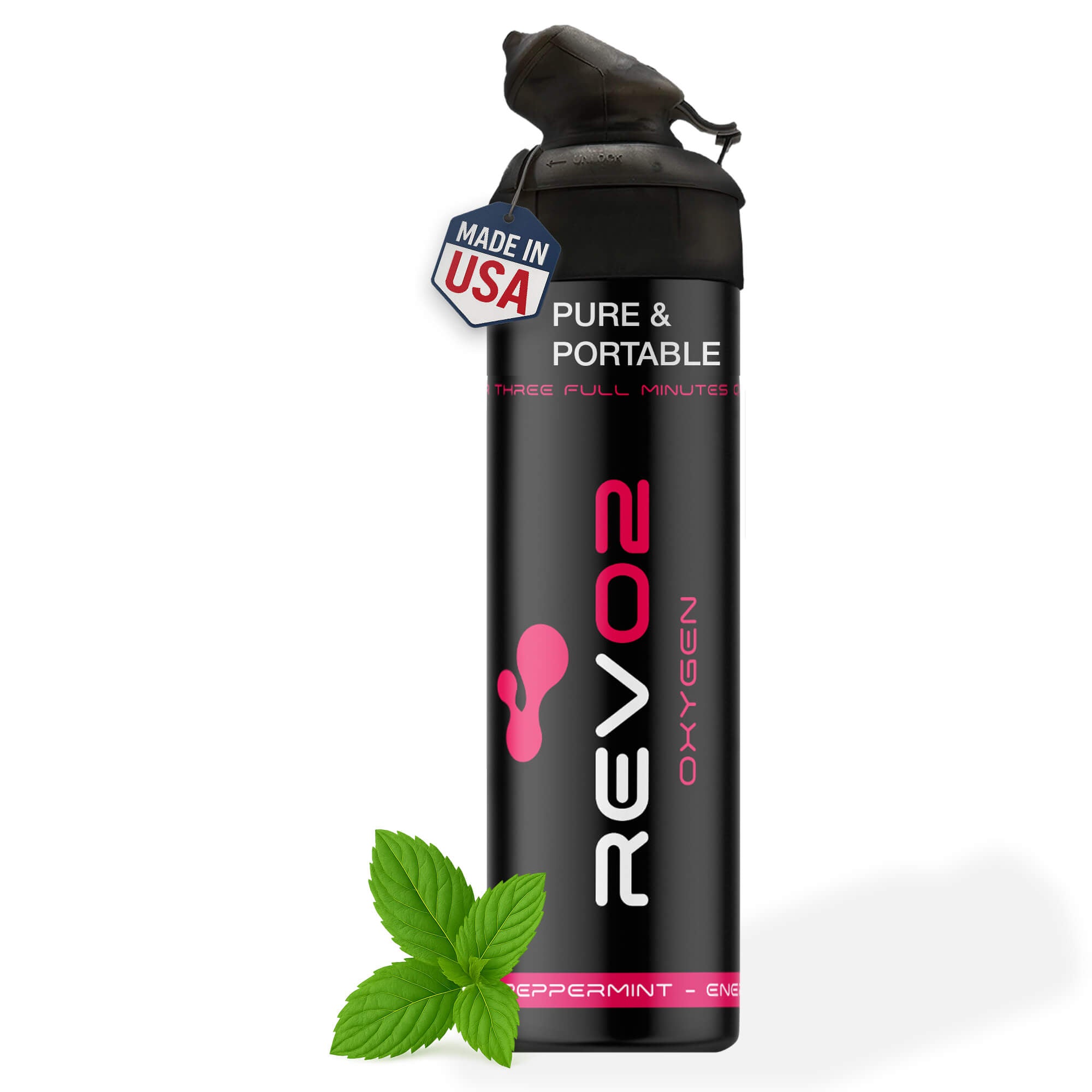
Our three blends are all 98% pure oxygen with essential oil aroma, in a 10L can with a zero-leak mouthpiece. The difference is the scent and the moment it suits:
- Peppermint, Energy & Endurance: a crisp aroma many people like before or during activity. Read more in our peppermint oxygen evidence review.
- Lemon, Recovery & Immunity: a lighter, brighter scent suited to post-workout.
- Eucalyptus, Focus & Relaxation: a cooling menthol aroma for winding down or settling into focused work.
If you are comparing options, our page on flavored oxygen and when 98% cans help explains how aromas fit in. You can browse the canned oxygen collection, see the peppermint 10L can, or read how to use canned oxygen safely before your first order. Athletes can start with our sports oxygen can.
A sensible way to try it
- Pick one situation. For example, the two minutes after a hard interval, or the first afternoon at elevation.
- Take one to three one-second inhalations. Breathe in slowly and fully, then breathe out slowly.
- Rate how you feel. Note breathing comfort and focus before and a few minutes after.
- Compare with a no-can day. Try the same routine with only slow breathing, so you know what the can adds.
- Keep it away from heat and flame. Oxygen supports combustion, so never use it near smoking, open flame or sparks.
If you want to know how a can compares with a caffeinated option, we wrote about portable oxygen versus energy drinks. For a broader overview, see our canned oxygen benefits guide.
FAQ
Does oxygen really give you an energy boost?
For most healthy people at rest, probably not in a measurable way, because the body already keeps blood oxygen at normal levels. Some people report feeling more alert or less winded, and a 2026 study saw better sprint performance after oxygen given between maximal swims. Treat any effect as brief and individual.
Can oxygen help with fatigue?
Only when low oxygen is the cause, and that needs a medical diagnosis and prescribed treatment. Everyday fatigue more often comes from sleep, stress, nutrition, anemia or thyroid problems. If tiredness lasts more than a few weeks, see a clinician rather than relying on a can.
Is there an energy boost from oxygen at altitude?
Thin air does make each breath deliver less oxygen, so extra oxygen may feel comforting. But the effects of canned oxygen for altitude symptoms are not established. Rest, hydration and gradual ascent matter more, and severe headache, confusion or breathlessness at rest means descending and seeking care.
Can I bring canned oxygen on a flight in the U.S.?
No. The FAA says passengers may not carry canned, recreational or flavored oxygen in carry-on bags, checked bags or on their person. Have it shipped to your destination or buy it after you arrive.
Sources
- Oxygen Bars: Is a Breath of Fresh Air Worth It? (FDA)
- Does Oxygen in a Can Deliver on Its Altitude and Energy Claims? (CU Anschutz)
- Highs and lows of hyperoxia (American Journal of Physiology)
- The Effects of a Personal Oxygen Supplement on Performance (JSCR, 2014)
- Recovery-Targeted Supplemental Oxygen Enhances Performance (Sports, 2026)
- Effect of one session of hyperbaric oxygen (Frontiers, 2025)
- Over-the-Counter Oxygen vs. Prescription Oxygen (National Council on Aging)
- Medical Use of Over-the-Counter Canned Oxygen (PMC, 2025)
- I Need Supplemental Oxygen: What Should I Know? (JAMA Internal Medicine)
- A Person-Centered Approach to Supplemental Oxygen Therapy (JAMA Internal Medicine)
- PackSafe: Oxygen (FAA)