
The best oxygen inhalation technique for a canned, non-medical product is simple: sit or stand upright, seal your lips around the mouthpiece, take a slow, deep breath in through your mouth while pressing the trigger, hold it for a moment, and exhale fully before the next breath. Do not rush, do not gulp, and keep the can away from flame. Below we walk through each step, explain why pacing matters, and cover what canned oxygen can and cannot do, so you can use it with realistic expectations and a calm mind.
One distinction first. This guide covers recreational, wellness-format oxygen, the kind used for a lift after a hard workout, at elevation, or on a draining day. It is not a guide to prescription oxygen, which a clinician sets up and titrates for a diagnosed condition. If you have been told you need oxygen, follow your care team’s instructions, not this article.
TL;DR
- Use slow, full breaths through the mouthpiece with a tight lip seal. Short, shallow sips waste the can and deliver little.
- Sit or stand upright, relax your shoulders, and breathe in over two to three seconds, hold briefly, then breathe out completely.
- Oxygen makes fire burn faster. No smoking, no open flame, and no petroleum-based balms on your lips or face while you use it.
- Evidence for performance gains in healthy people is thin, and one or two breaths will not meaningfully change blood oxygen. Treat canned oxygen as a short, refreshing pause, not a treatment.
- If you have asthma, COPD, heart disease, or persistent breathlessness, talk to your doctor before using flavored oxygen, and seek care for symptoms that do not settle.
Table of Contents
- What “technique” means for canned oxygen
- Step-by-step: how to inhale from a can
- A short breathing exercise to pair with it
- Common mistakes that waste oxygen
- What the evidence says, honestly
- Technique by situation
- Safety rules that matter
- Why medical techniques look different
- Perspective: how we think about oxygen technique
- Choosing a blend to practice with
- FAQ
- Sources
What “technique” means for canned oxygen
Search for this topic and you will mostly find clinical pages about nasal cannulas, simple masks, partial re-breather masks and Venturi devices. Those are medical delivery systems, set to a prescribed flow rate, and nurses are trained to check the fit, the tubing, and the humidifier. The NCBI Bookshelf nursing chapter on oxygen therapy opens with a useful reminder: the air around us is 21% oxygen, and several body systems work together to take it in, carry it through the blood, and deliver it to tissues.
Canned oxygen is a different category. There is no flow meter, no tubing, and no prescription. The can holds a limited supply, so technique is about getting the most from each breath without wasting gas. Three things drive that:
- Seal. Any gap between your lips and the mouthpiece lets oxygen escape and room air mix in.
- Depth. A slow, deep breath fills more of your lungs than a quick sip.
- Timing. You want the gas moving as you start to inhale, not before you begin or after you finish.
Our cans use a zero-leak mouthpiece and a trigger-lock cap for exactly these reasons. The mouthpiece is designed so you do not need a mask, and the lock keeps the can from discharging in a bag or pocket.
Step-by-step: how to inhale from a can
Follow the directions printed on your own can first, since designs differ. Our full walkthrough is on the how to use canned oxygen guide. The general sequence looks like this.
- Check your surroundings. Make sure there is no cigarette, candle, stove flame, or other ignition source nearby. Sit down if you are lightheaded or out of breath.
- Prepare the can. Remove the cap and unlock the trigger according to the instructions. Give the can a quick look for damage.
- Settle your posture. Sit upright or stand with your chest open and shoulders down. Slouching compresses the lungs and makes deep breathing harder.
- Exhale first. Breathe out gently and fully through your nose or mouth. Starting from empty lets the next breath go deeper.
- Seal your lips. Place your lips firmly around the mouthpiece. If you feel air against your cheeks or chin, the seal is loose.
- Press and inhale slowly. Press the trigger as you begin to breathe in, over about two to three seconds, drawing the breath down toward your belly rather than just lifting your chest.
- Hold, then release. Pause for a second or two, then release the trigger and breathe out slowly through pursed lips.
- Rest between breaths. Take one or two ordinary breaths of room air before the next inhalation. This keeps you steady and avoids dizziness.
- Stop when you feel refreshed. Most people need only a few breaths per session. Lock the trigger and recap the can.
If you feel lightheaded, tingly, or unusually breathless, stop, sit down, and breathe normally. Persistent symptoms deserve medical attention.
A short breathing exercise to pair with it
Slow breathing is calming on its own, and the oxygen is easier to enjoy when your breathing is already steady. Try this before your first inhalation:
- Sit comfortably and rest one hand on your belly.
- Breathe in through your nose for a count of four, feeling your belly rise.
- Breathe out through pursed lips for a count of six.
- Repeat four or five times, then pick up the can.
The longer exhale is what settles the body’s “fight or flight” response. You are not forcing extra oxygen in. You are creating the unhurried rhythm in which a few good breaths feel noticeably better.
Common mistakes that waste oxygen
Most disappointing first experiences come down to a handful of habits.
- Sipping instead of breathing. Tiny, shallow inhales mix mostly room air. Aim for full, slow breaths.
- Triggering before sealing. Gas released into open air is gone. Seal first, then press.
- Breathing too fast. Rapid breathing can leave you lightheaded. Pace yourself and pause between breaths.
- Holding too long. A one- or two-second hold is plenty. Straining does nothing extra.
- Expecting a dramatic effect. Which brings us to what the science actually says.
What the evidence says, honestly
We sell canned oxygen, and we would rather you buy it knowing what to expect. Here is where the research stands.
For healthy lungs, the body is already efficient. Physicians at the University of Colorado School of Medicine describe a ‘data-free zone’ around canned oxygen claims, and note that one or two breaths from a canister are not enough to significantly oxygenate the blood, unlike the continuous, titrated flow used in medical therapy. That is why we describe our product as a short, refreshing boost rather than a treatment.
Exercise performance results are mixed to flat. A Journal of Strength and Conditioning Research study of a personal oxygen supplement found performance measures such as VO2max and exercise duration statistically equivalent between oxygen and placebo trials. An older study of 13 male athletes tested oxygen breathing after submaximal and maximal exercise to see whether it hastened recovery. If you want a deeper look at timing and results for sprinters and interval athletes, our articles on oxygen before cardio and oxygen after running go through what helps and what does not.
Many people still report feeling better. Reviews of our product mention energy, recovery, and mental clarity. Those are personal experiences, and the controlled studies above do not confirm them as measurable performance gains. Slow breathing, a pause in a busy day, and a cool peppermint or lemon aroma can all contribute to feeling refreshed, and that is a legitimate reason to use the product.

Technique by situation
After a workout
Sit or walk slowly rather than bending over with your hands on your knees, which restricts your chest. Take your first breath from the can once your breathing has begun to settle, then follow the nine steps above, keeping each breath slow. A systematic review of supplemental oxygen found that pre- or post-exercise oxygen lacks consistent evidence for improving performance or recovery, so pair it with the basics that do work: fluids, food, sleep, and easy movement. A structured active recovery plan is a good place to start with those. For more on the athlete angle, see our guide to oxygen role in muscle recovery.
At altitude
Altitude is where people most want oxygen to be a fix, so this is where honesty matters most. The MSD Manual explains that gradual acclimatization is the standard approach, and the main treatment for altitude illness is descent. Above 8,000 feet, its guidance is to limit increases in sleeping altitude to about 1,600 feet (500 meters) per day and to include a rest day every three to four nights. Supplemental oxygen is described as a temporary bridge for severe cases where immediate descent is not possible.

For a hiker, that means technique is secondary to judgment. A few slow breaths from a can may make a rest stop feel better, but a worsening headache, confusion, unsteady walking, or breathlessness at rest are signs to descend and get medical help. Our piece on high altitude headache relief options covers the comfort measures that sit alongside acclimatization.
On a stressful day
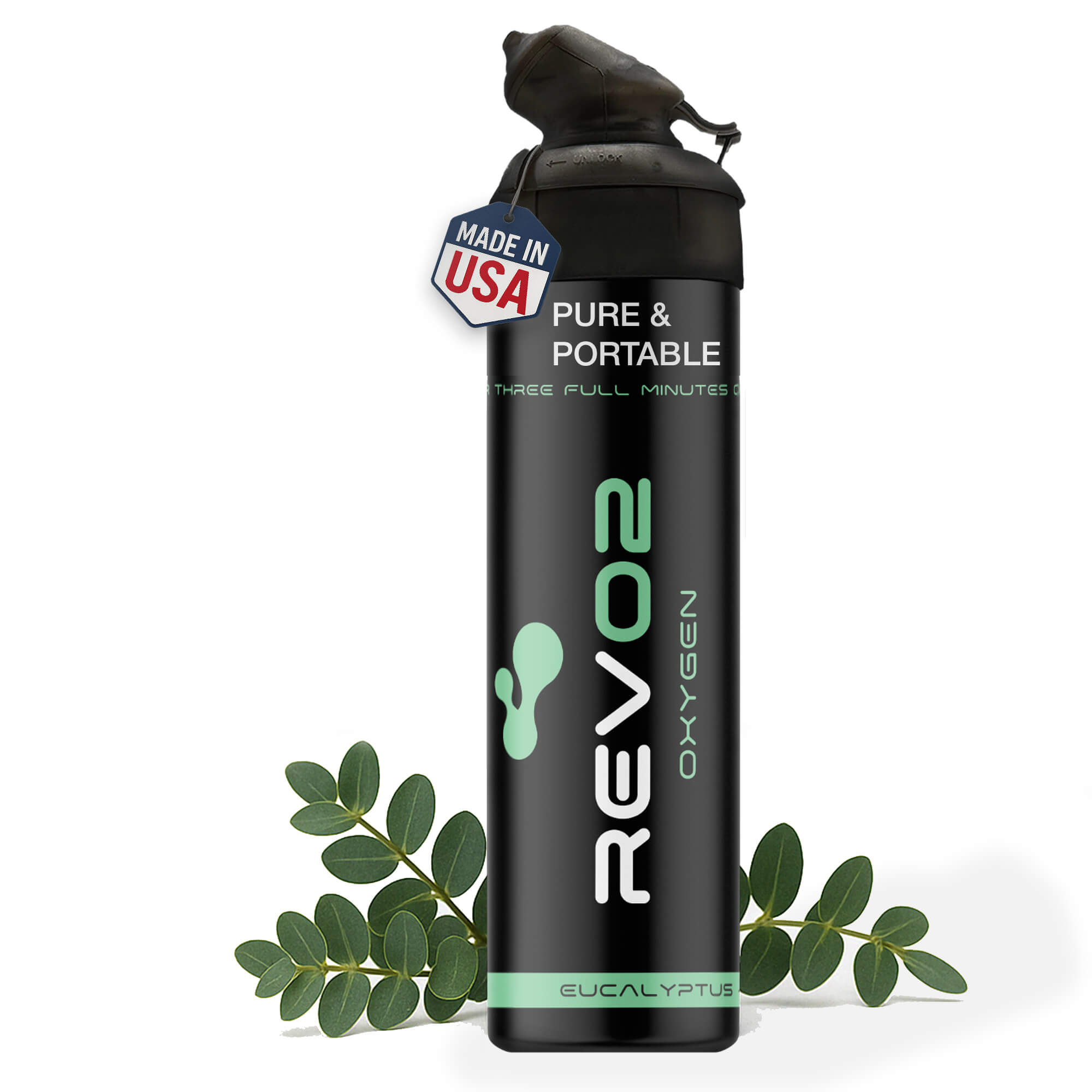
Stress often shows up as quick, shallow chest breathing, which can feel like not getting enough air. Here the technique is mostly the breathing exercise above. Use the can for three or four unhurried breaths at your desk or in your car (parked), and notice whether your shoulders drop. Eucalyptus is the blend we pair with focus and relaxation.
When you travel
Flights and time zones disturb the internal clock, and oxygen does not reset it. Research on oxygen as a resetting cue is largely experimental, while a Cochrane meta-analysis of ten trials supports melatonin at 0.5 to 5 mg for jet lag. Talk with your doctor or pharmacist about whether melatonin suits you. A few slow breaths of oxygen can still be a pleasant way to reset your mood in a long layover.
For seniors
If you are older and notice breathlessness, please do not reach for a can as a substitute for care. Shortness of breath can signal a problem that needs evaluation. If your doctor confirms your lungs and heart are healthy and you simply want a refreshing pause, the same slow technique applies. Sit down, keep your back supported, and take fewer breaths per session.
Safety rules that matter
Oxygen itself does not burn, but it makes other materials burn faster and hotter. The safety guidance for oxygen users is consistent, and it applies at a smaller scale to canned oxygen too.
- No smoking and no flames. MedlinePlus oxygen safety guidance is blunt about smoking near oxygen, and it also advises working smoke detectors and a fire extinguisher at home.
- Skip petroleum products. Avoid Vaseline and certain lip balms near your face while using oxygen. Water-based products are the standard recommendation.
- Mind fabrics and facial hair. Oxygen-enriched air makes clothing, bedding, and facial hair more flammable, so use the can away from heat sources.
- Store sensibly. Keep cans away from heat, direct sun, and hot cars, and out of children’s reach.
- Be careful with scented blends. Physicians quoted in the University of Colorado report note that added essential oils could pose respiratory risks for people with conditions such as asthma or COPD. If you have either, ask your doctor first.
One more point: recreational oxygen is not intended to treat, cure, or manage any disease or low blood oxygen. Medical oxygen is prescribed against defined thresholds, such as an arterial saturation at or below 88% at rest, according to a review of home oxygen therapy. If a pulse oximeter reads low, or you feel short of breath at rest, see a clinician rather than inhaling from a can.
Why medical techniques look different
If you are comparing what you see in hospital guides, the contrast is helpful. A nasal cannula, the usual low-flow interface, needs prongs replaced every two to four weeks and clean tubing, according to MedlinePlus guidance on using oxygen at home, plus padding for the ears to prevent skin breakdown. Those routines exist because medical oxygen runs for hours at a set flow. Canned oxygen is used for seconds at a time, so none of that applies, and you should not try to imitate clinical setups with a can.
Perspective: how we think about oxygen technique
We designed REV/O2 with athletes and scientists, and the lesson we keep returning to is that how you breathe matters at least as much as what is in the can. Our 98% pure oxygen is only useful if it reaches your lungs, which is why we built a zero-leak mouthpiece and a trigger-lock cap rather than asking you to hold a mask against your face.
We also think you deserve a straight answer about limits. Healthy people already carry oxygen efficiently, a few breaths are a pause and not a therapy, and anyone with a medical oxygen need should be working with a clinician. What we hear from customers is that slow, deliberate breathing plus a clean peppermint, lemon, or eucalyptus aroma makes a hard moment feel more manageable. If that is what you want, we think technique is the way to get it reliably.
— Paul
Choosing a blend to practice with
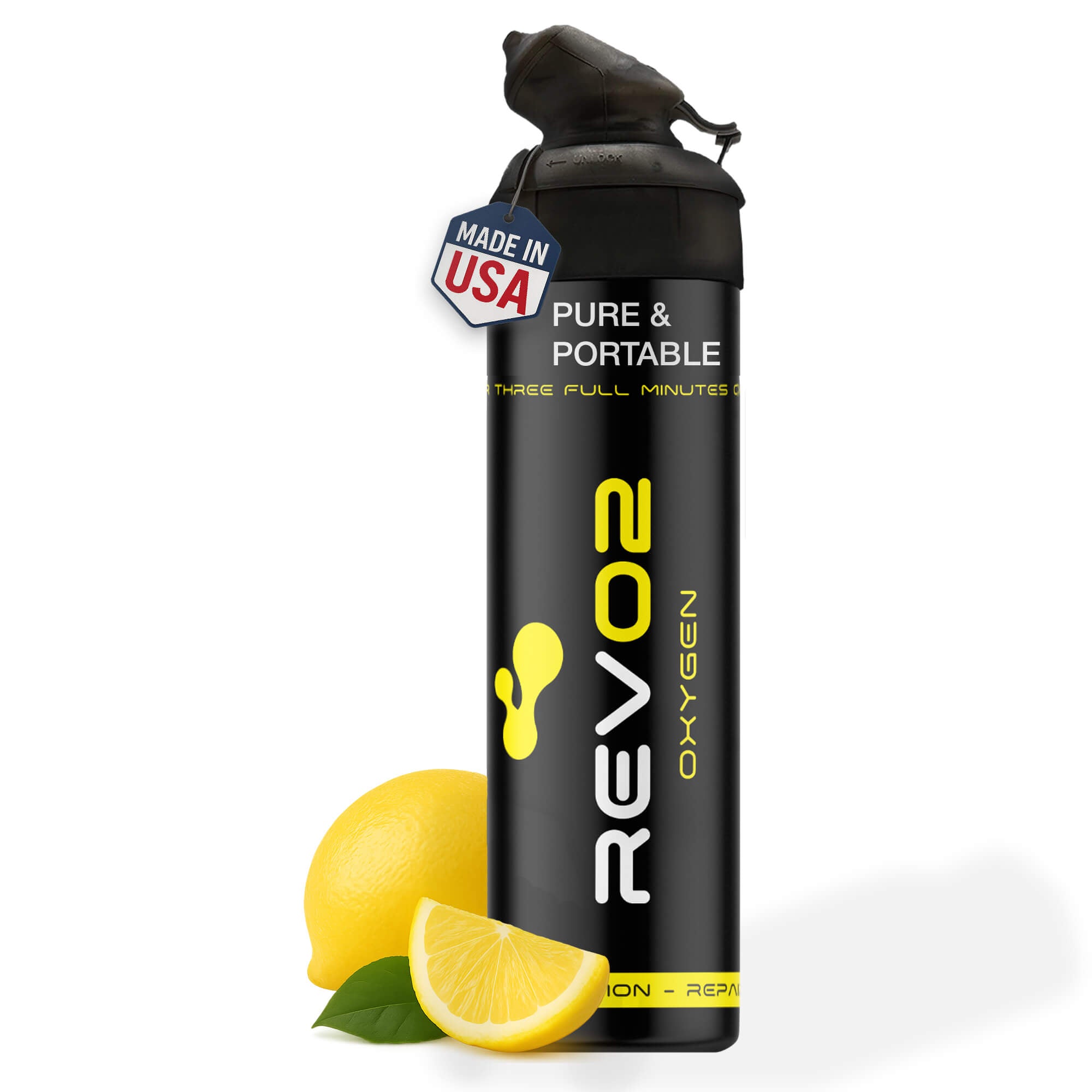
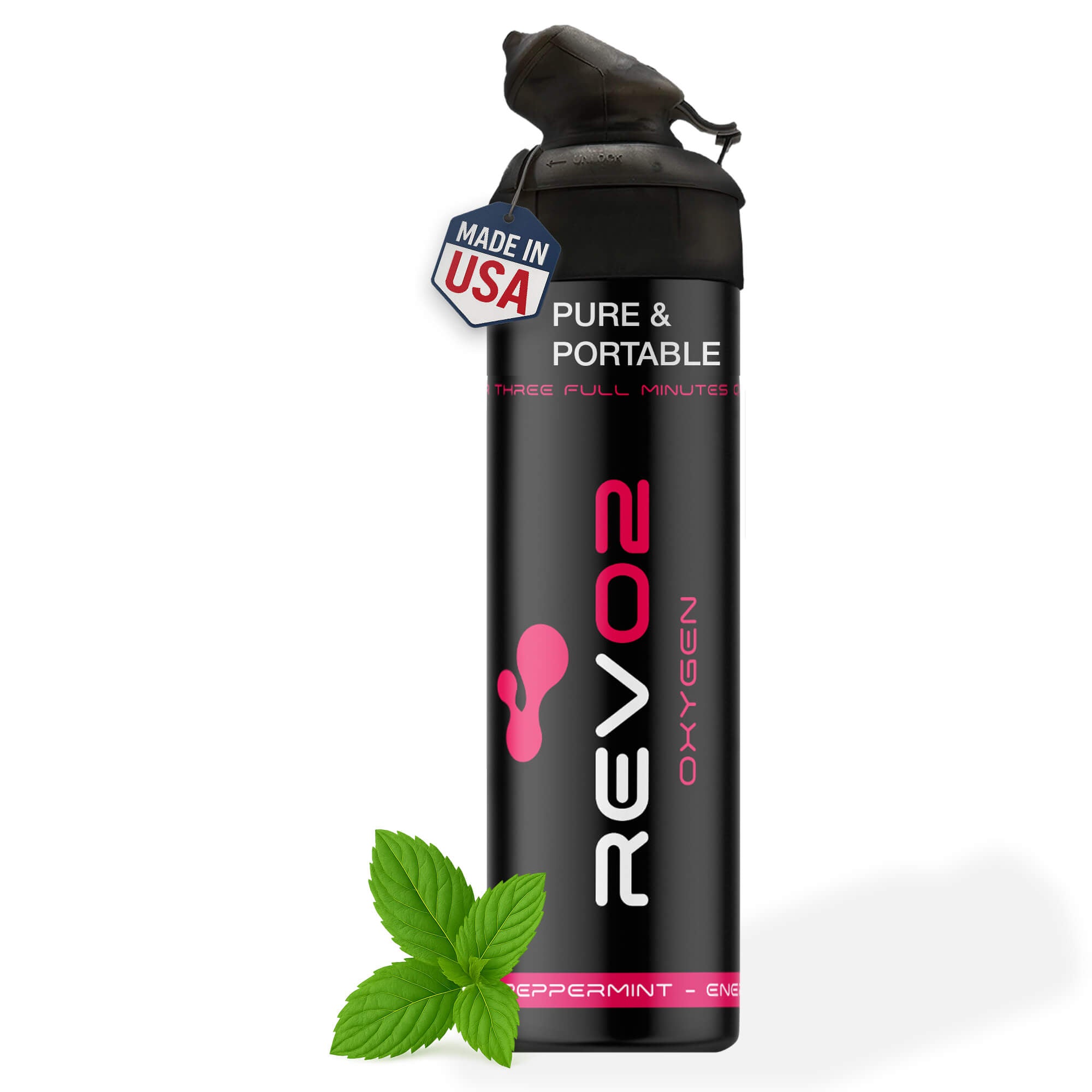
If you are ready to try it, our range comes in three blends, each with 98% pure oxygen and the zero-leak mouthpiece: Peppermint for energy and endurance, Lemon for recovery and immunity, and Eucalyptus for focus and relaxation. You can see everything on our canned oxygen collection, or start with the Essentials Bundle if you want to compare blends.
FAQ
How can I breathe oxygen from a can?
Seal your lips around the mouthpiece, press the trigger as you start a slow, deep breath, hold for a second or two, and exhale fully. Rest with a normal breath or two between inhalations. Check your can’s own directions, because designs vary.
How many breaths should I take at a time?
Most people feel the refreshing effect within a few slow breaths, so there is no need to empty a can in one sitting. Start with three or four and stop if you feel lightheaded. Because evidence for lasting benefit is limited, more breaths are not necessarily better.
Which creams are safe to use with oxygen?
Choose water-based products and avoid petroleum-based ones such as Vaseline or some lip balms, which can ignite in oxygen-enriched air. The MedlinePlus safety guidance recommends water-based alternatives. When unsure, skip the product until you have finished using the oxygen.
Is canned oxygen the same as medical oxygen?
No. Medical oxygen is prescribed and delivered at a set flow to reach specific saturation goals. Canned oxygen is a recreational wellness product that is not intended to treat any condition, and it should never replace care you have been prescribed.
Can canned oxygen cure altitude sickness?
No. Gradual acclimatization and descent are the main approaches to altitude illness. A few breaths may make a rest stop more comfortable, but severe symptoms mean going down and seeking medical help.
Sources
- Does Oxygen in a Can Deliver on Its Altitude and Energy Claims? (CU Anschutz)
- Chapter 11 Oxygen Therapy, Nursing Skills (NCBI Bookshelf)
- The Effects of a Personal Oxygen Supplement on Performance, Recovery, and Cognitive Function (JSCR)
- Effect of oxygen breathing following submaximal and maximal exercise (PubMed)
- Hyperbaric and supplemental oxygen systematic review (DiVA)
- Acute altitude illness (MSD Manual)
- Melatonin for jet lag, Cochrane meta-analysis (PMC)
- Oxygen safety (MedlinePlus)
- Using oxygen at home (MedlinePlus)
- Home oxygen therapy review (PMC)