
Oxygen can help a cyclist in a few specific situations: very hard efforts where your blood oxygen drops, rides at altitude, and the short window after a ride when you are trying to settle your breathing and heart rate. It is not a substitute for fitness, a proper cool-down or good sleep, and it does not raise your VO2 max over time. This guide explains where the science supports supplemental oxygen, where it falls short, and how road riders, climbers and mountain bikers can use a portable can sensibly.
TL;DR
- Breathing extra oxygen has the clearest support during high-intensity efforts, especially for riders whose blood oxygen saturation falls under heavy load.
- It is a short-term aid. It does not replace training, a cool-down, food, fluids or sleep, and it does not build long-term aerobic capacity.
- For climbs and high-altitude rides, thinner air is the real problem, which is why a few controlled breaths before or after an effort can feel noticeably different.
- Recreational oxygen is not medical oxygen. If you have a lung or heart condition, talk with your clinician before using any oxygen product.
- Competitive riders should check anti-doping rules and read the label before using any product.
Table of Contents
- Why cyclists ask about oxygen at all
- What the research says about hyperoxia and hard efforts
- Oxygen for cycling climbs and high-altitude rides
- After the ride: oxygen and recovery
- Recreational oxygen is not medical oxygen
- What about racing and anti-doping?
- Choosing a portable oxygen product as a cyclist
- Perspective: how we think about oxygen for riders
- Using our oxygen on and off the bike
- Beyond oxygen: what actually makes you faster
- FAQ
- Sources
Why cyclists ask about oxygen at all
Cycling is an aerobic sport. Your cells use oxygen to make ATP, the molecule that powers muscle contraction, and the Cyclist magazine guide to breathing lays out that chain plainly: breathe in, move oxygen into the blood, deliver it to working muscle. When the effort gets hard, the chain gets strained, and it is natural to wonder whether giving it more oxygen would help.
The honest answer depends on where the bottleneck is. For most healthy riders, the lungs are not the main limit. The same source explains that the cardiovascular system, meaning how much blood your heart can pump and how well muscles extract oxygen from it, is the true gatekeeper of oxygen transport. In highly trained cyclists, though, the respiratory system can account for roughly 15% of VO2 max and 15 to 25% of exercise-induced limb fatigue. That is a meaningful slice, and it is the part supplemental oxygen tries to address.
So the question is not whether oxygen matters. It obviously does. The question is whether adding more to the air you already breathe changes anything in a given situation. Here is where it can.
What the research says about hyperoxia and hard efforts
Researchers call breathing air with more oxygen than normal hyperoxia. One of the most relevant cycling studies is a randomized crossover study in male cyclists published in Sports Medicine - Open. It found that inhaling a hyperoxic gas extended the time riders could keep going during high-intensity intermittent exercise.
The mechanism matters. Some endurance athletes experience exercise-induced arterial hypoxemia: at intensities approaching maximal oxygen uptake, the oxygen saturation of their blood drops below where it sits at rest. Hyperoxia counteracts that drop. By keeping blood oxygen higher, riders can delay fatigue and hold higher power for longer.

There is an important qualifier. The benefit is largest in athletes who actually show that desaturation during intense effort. If your blood oxygen stays high even at your limit, extra oxygen has less to fix. Many riders will not know which group they are in without lab testing or a pulse oximeter used during hard efforts, and even then wrist and finger devices are imperfect while you are moving.
What this means in practice
- Intervals and repeated sprints: this is where hyperoxia has the best evidence. Short, very hard efforts with incomplete rest are exactly where oxygen availability is pushed.
- Steady endurance riding: the evidence is thinner, and you cannot carry a gas supply and breathe from it while riding a three-hour group ride anyway.
- Long-term fitness: breathing oxygen before or after training does not raise VO2 max over months. Training does. Our own article on oxygen before cardio covers why the gains show up in sprints and exercise-induced desaturation, not in long-term VO2 max.
It also helps to keep the dose in mind. Research protocols typically use controlled gas mixtures delivered continuously, often at higher oxygen fractions than you would get from a few breaths off a can. A handful of inhales is not the same exposure as a lab trial, and we think riders deserve to hear that plainly. We go into this further in Portable Oxygen Myths.
Oxygen for cycling climbs and high-altitude rides
Climbing is where cyclists feel oxygen most. Two things stack up: you are working at a high percentage of your capacity, and, if the climb is high, each breath contains less oxygen than at sea level. The air is still about 21% oxygen, but the pressure is lower, so fewer oxygen molecules reach your lungs per breath. Riders travelling from sea level to a mountain stage, a Colorado pass or a high-country mountain bike trip often notice they cannot hold the power they normally would.
No can of oxygen changes that physics for the duration of a long climb. What it can do is give you a pause point: a few deliberate breaths at the summit, at a trailhead before a big push, or in the car after arriving at altitude. Many riders find this a comfortable way to settle their breathing. If you are heading to altitude, the more important steps are boring ones: arrive with time to acclimate where you can, hydrate, eat enough, and pace the first rides conservatively.

Altitude sickness is a different matter. Headache, nausea, dizziness or confusion at elevation are warning signs, and the answer is to stop climbing and descend, not to inhale more oxygen and keep going. See a doctor for anything severe.
Mountain biking
Mountain bikers face the same thin air plus a stop-start pattern: steep, punchy climbs followed by technical descents. That pattern resembles interval work, which is where the research is most supportive. A few breaths at the top of a hard pitch, before a descent that demands focus, is a realistic way to use a portable can. It is not a way to ride a climb you are not fit enough for.
After the ride: oxygen and recovery
Recovery is the other reason riders look into oxygen. A 2024 crossover study of athletes tested mild hyperbaric oxygen therapy, using 1.25 ATA with 26 to 28% oxygen, after cycling-induced muscle fatigue. It reported reduced subjective fatigue and better recovery of heart rate and blood perfusion afterward, and six days of repeated sessions reduced blood markers tied to muscle damage and oxidative stress.
Two cautions apply. First, that was a chamber setup under controlled pressure, which is not the same as breathing from a handheld can. Second, a sports-medicine view of recovery is that oxygen cannot shortcut a process with several stages. The Cleveland Clinic’s advice on recovering after a cycling race starts with a cool-down: keep spinning slowly for about five minutes after you finish, because stopping suddenly lets blood pool in the legs.
That pooling point is useful for oxygen too. Oxygen is carried by blood, so if circulation to the legs is poor, there is little point in loading the blood with more of it. Cool down first, then breathe.
Muscle data supports the same idea. A 2024 study in Frontiers in Physiology found that muscle reoxygenation after cycling is slower after higher-intensity work and is faster and more reliable in the working leg muscles than in accessory sites. In plain terms, harder rides take longer to recover from, and easy spinning afterward is a sensible way to keep blood moving.
A simple post-ride routine
- Spin easily for five to ten minutes at a pace where you can talk.
- Sit down, relax your shoulders and breathe slowly through your nose for a minute.
- If you use a portable can, take a few slow inhales following the product instructions.
- Drink, eat within the hour, and plan your sleep.
- Add a circulation-focused recovery practice if you like one, such as vibration-based circulation sessions, which can complement oxygen and a cool-down but do not replace them.
Our safety guide to portable oxygen during a cooldown goes through the timing in more detail.
Recreational oxygen is not medical oxygen
The research on supplemental oxygen is not all about athletes, and it is worth keeping the categories apart. In a randomized controlled trial of 19 COPD patients, those given supplemental oxygen cycled for an average of 723 seconds versus 618 seconds on room air, about 106 seconds longer. That is a clinical finding in people who desaturate during exercise because of lung disease, under medical supervision.
A review of hyperbaric and supplemental oxygen research makes the same distinction: prescribed, high-flow medical systems for clinical patients are a different thing from recreational products marketed for performance. Medical oxygen exists to treat low oxygen levels that a doctor has diagnosed. A can of recreational oxygen is not a treatment and is not meant to be one.
If you often feel breathless on easy rides, wake up short of breath, have chest pain, or have been told your oxygen saturation is low, see a physician or pulmonologist. Do not self-treat with a can. Our explainers on recreational versus medical oxygen and oxygen therapy versus supplemental oxygen walk through the differences.
More oxygen is also not automatically better. Overuse of recreational products has its own considerations, which we cover in the risks of too much recreational oxygen.
What about racing and anti-doping?
If you race under USADA or UCI rules, this matters. The USADA Clean Sport Handbook treats blood doping as a prohibited method of increasing oxygen delivery to the tissues, by transfusion for example. That is a very different thing from breathing oxygen gas. Still, athletes are strictly responsible for what is in their system, so check the ingredients of any product, and confirm with your national anti-doping organization or governing body if you are unsure about a specific product or use at an event. Rules change, so check the current version before race season.
Choosing a portable oxygen product as a cyclist
If you decide a can fits your routine, a few practical criteria separate a useful product from a gimmick:
| What to check | Why it matters for riders |
|---|---|
| Oxygen purity stated on the label | You want to know what you are inhaling. |
| Mouthpiece design | Masks are awkward on a bike. A sealed mouthpiece wastes less gas. |
| Cap or trigger control | Prevents accidental discharge in a jersey pocket or bag. |
| Size and weight | It should fit a saddle bag or hydration pack without bother. |
| Clear usage instructions | Short, repeated inhales, not continuous use. |
| Honest claims | No promise to cure, treat or replace medical care. |
| Flavor | Essential oil blends can make breathing more pleasant, but sensitive riders may prefer less scent. |
Also be realistic about volume. A few inhales provide a brief bump in oxygen concentration. They are not a continuous supply, and that is fine when the goal is a short pre-effort or post-ride reset.
Perspective: how we think about oxygen for riders
We make portable canned oxygen, so you should know where we stand. We do not think a can is a performance miracle, and we would rather you understand that than be disappointed later. The science is strongest for short, hard, repeated efforts and for riders who desaturate under load. It is weaker for steady endurance and nonexistent for building long-term VO2 max.
Where we think a can earns its place is as a convenient, ready-to-use tool: a few slow breaths at the top of a climb, at the trailhead at altitude, or during the cool-down when you are trying to settle down. Our cans use 98% pure oxygen, a zero-leak mouthpiece so less gas escapes, and a trigger-lock cap so it stays put in your bag. They were designed with input from athletes and scientists, and no mask or prescription is involved.
What we ask of riders is simple: use it as an addition to good habits, follow the instructions, and see a doctor if breathing problems are persistent. That is what we would tell a friend.
— Paul
Using our oxygen on and off the bike
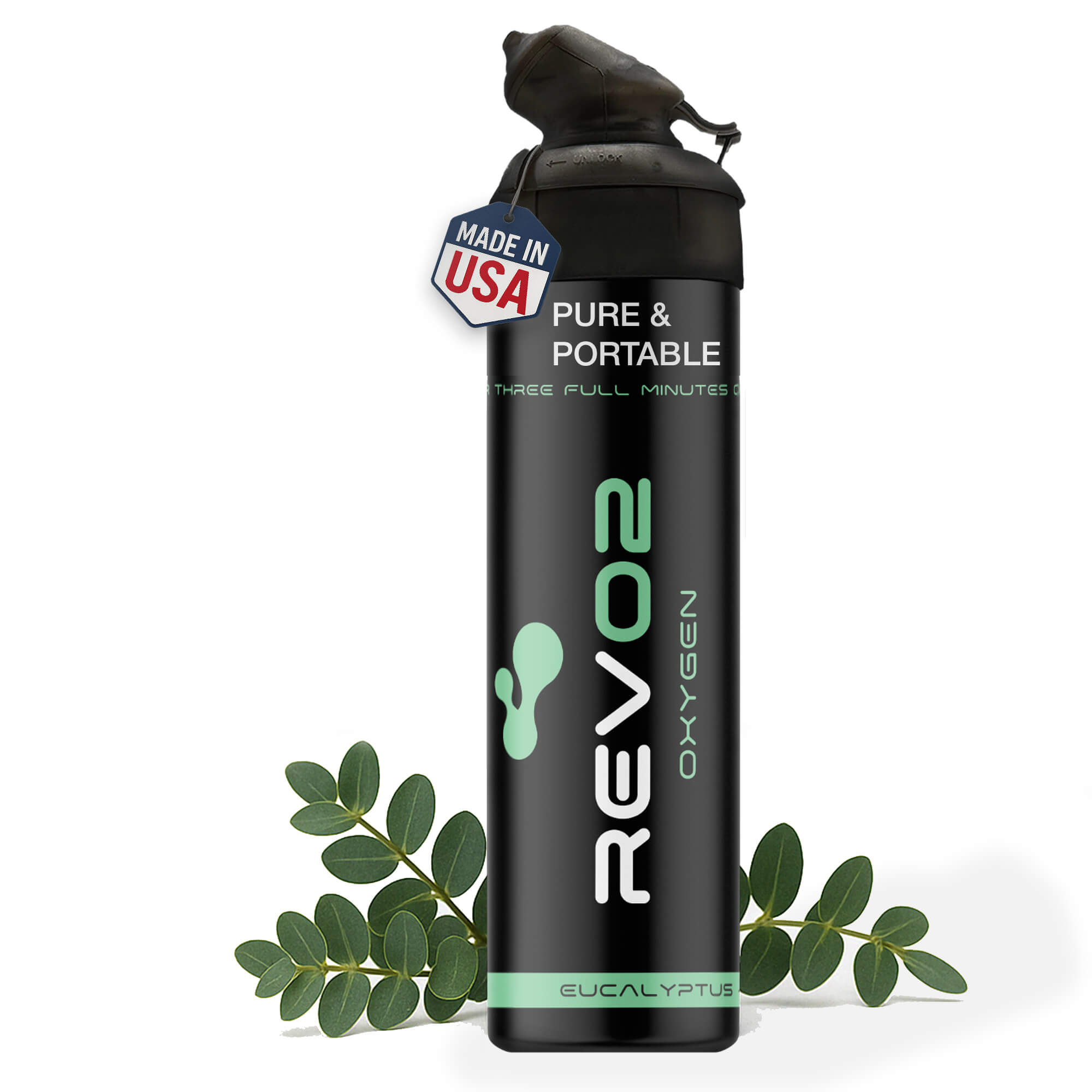
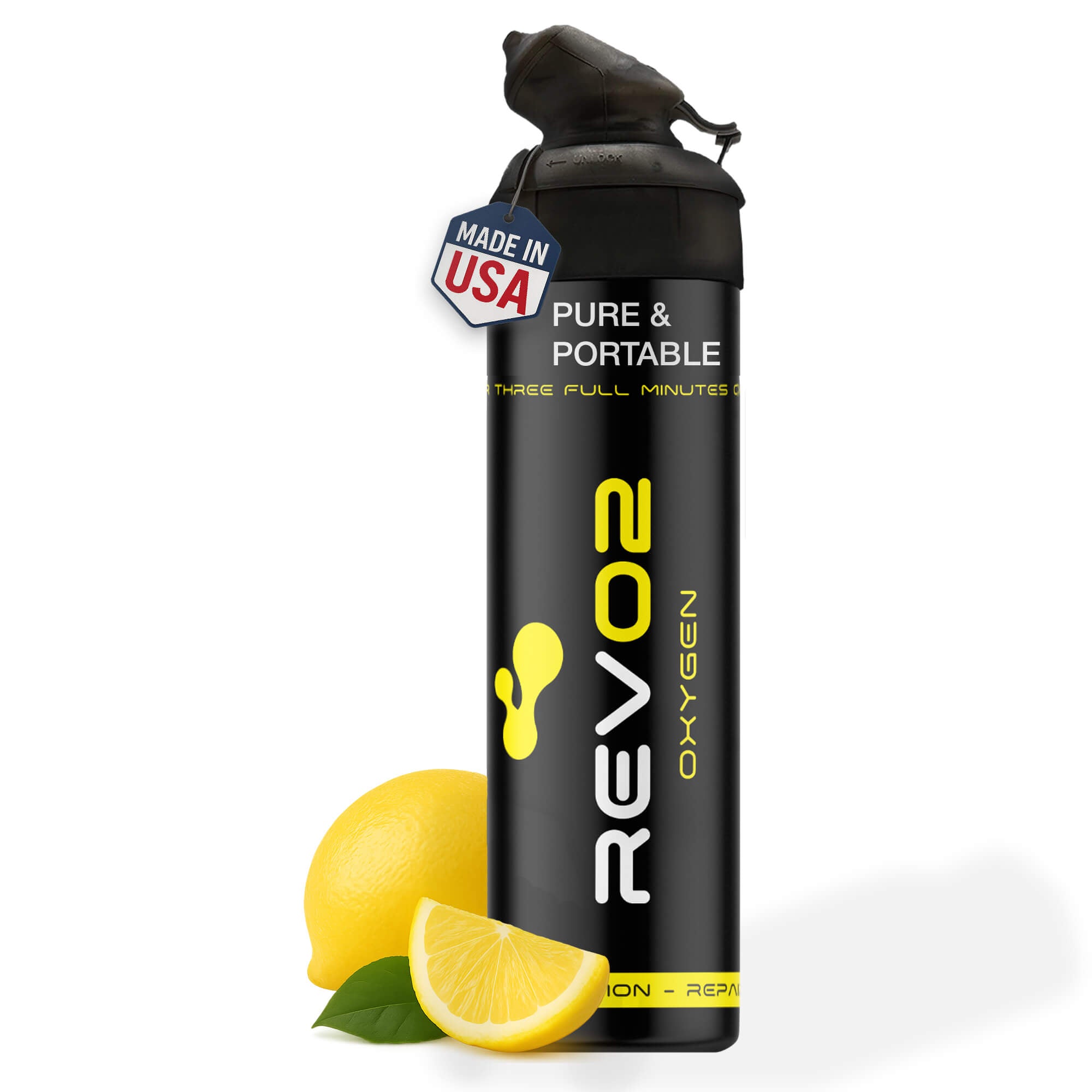
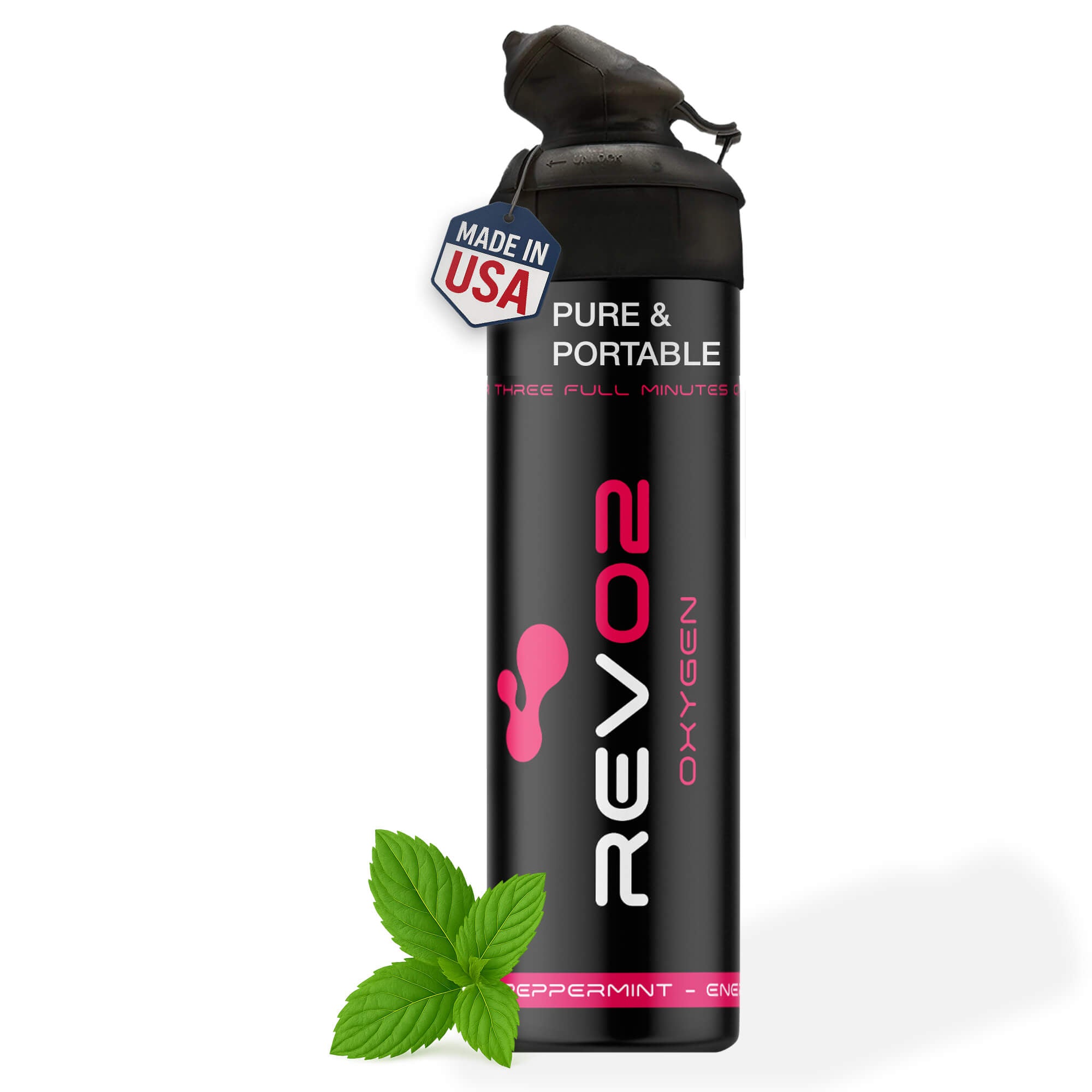
REV/O2 comes in three blends, each in a 10L can: Peppermint Oxygen for energy and endurance, Lemon Oxygen for recovery and immunity, and Eucalyptus Oxygen for focus and relaxation. Many riders reach for peppermint before an effort and lemon afterward. If you want to see everything in one place, browse our canned oxygen collection, and read the guide to using canned oxygen safely before your first can. Athletes who want a deeper look can start with our overview of oxygen for athletes, or the sports oxygen can.
Beyond oxygen: what actually makes you faster
Because the evidence for oxygen is narrow, it makes sense to put it in context. The things that reliably improve cycling are not exotic.
- Consistent training. Beginner cyclists can raise VO2 max by roughly 10 to 20% over several months of structured work, according to coaching sources. No gas can match that.
- Breathing technique. Slow, full breaths with a relaxed upper body use the diaphragm better than shallow chest breathing. The Cyclist guide above covers technique for climbs.
- Altitude exposure. Living or training at elevation stimulates red blood cell production, which is a different route from simply inhaling more oxygen.
- Cool-downs and sleep. Recovery is where adaptation happens.
- Fueling and hydration. Running low on glycogen feels like a breathing problem, but it is an energy problem.
Oxygen sits on top of these, not in place of them.
FAQ
Does breathing oxygen before a ride improve cycling performance?
The best evidence is for high-intensity intermittent efforts, where hyperoxic breathing extended time to exhaustion in trained male cyclists. The effect is largest in riders whose blood oxygen drops under heavy load. For easy or steady riding, expect little to no measurable difference.
Is oxygen good for cycling climbs at altitude?
It can help you settle your breathing before or after a hard pitch, since air at altitude holds fewer oxygen molecules per breath. It will not erase the effect of elevation over a long climb. Acclimatizing, pacing and hydrating matter more, and severe symptoms mean you should descend and seek medical help.
Can oxygen help me recover after cycling?
It may support the recovery routine, but it does not replace it. Controlled chamber studies show promise, though a handheld can is a different exposure. Start with an easy spin to keep blood flowing, then add oxygen, food, fluids and sleep.
Is canned oxygen the same as medical oxygen?
No. Medical oxygen is prescribed and monitored for diagnosed conditions such as COPD. Recreational canned oxygen is a wellness and performance product, not a treatment. If you have a heart or lung condition, ask your doctor before using it.
Is oxygen allowed in competitive cycling?
Breathing oxygen gas is not the same as blood doping, which is prohibited. Even so, riders are responsible for anything in their system. Check your governing body’s current rules and your product’s ingredients before using it at an event.
Sources
- How to breathe better when cycling, Cyclist
- Hyperoxia extends time to exhaustion during high-intensity intermittent exercise, Sports Medicine - Open
- Effects of mild hyperbaric oxygen therapy on recovery of muscle fatigue in male athletes, PMC
- How to Recover After a Cycling Race, Cleveland Clinic
- Muscle reoxygenation is slower after higher cycling intensity, Frontiers in Physiology
- Supplemental oxygen during cycle endurance test in patients with COPD, European Respiratory Society
- Hyperbaric and supplemental oxygen research, PMC
- USADA Clean Sport Handbook