
Oxygen has not been shown to cure delayed onset muscle soreness (DOMS). The best-studied form, hyperbaric oxygen in a pressurized chamber, did not clearly reduce soreness in controlled research, and the evidence for it is a different matter from what you get with a portable can. Oxygen may still have a modest, practical role in how you feel after hard training, and the sections below separate what is known from what is marketing.
TL;DR
- DOMS is muscle pain that starts one to three days after unaccustomed or intense exercise and usually fades within a few days.
- Reviews of hyperbaric oxygen found no reliable benefit for DOMS, and one found some evidence of slightly more pain at 48 to 72 hours.
- Hyperbaric oxygen (pressurized) and portable supplemental oxygen (normal pressure) are different things, so one cannot simply stand in for the other.
- Healthy lungs already keep blood oxygen high at rest, so extra oxygen is best viewed as a comfort and breathing-recovery aid, not a soreness treatment.
- For soreness itself, gradual training progression, easy movement, sleep and time do most of the work.
Table of Contents
- What DOMS is and when it hits
- Can low oxygen cause sore muscles?
- What the research says about hyperbaric oxygen and DOMS
- Hyperbaric oxygen is not the same as portable oxygen
- Does extra oxygen make muscles stronger or recover faster?
- Where portable oxygen may fit
- What actually helps DOMS
- Our perspective
- Trying portable oxygen for recovery
- Safety notes before you use any oxygen
- FAQ
- Sources
What DOMS is and when it hits
DOMS is muscle pain after intense exercise that starts one to three days after a workout and usually goes away in a few days. It is most likely after eccentric work, where a muscle is tensed while it lengthens: lowering a bicep curl, walking or running downhill, or the lowering phase of a squat.
That timing matters for the oxygen question. The soreness peaks long after your breathing has returned to normal. At 24 to 72 hours, your lungs and blood are not short of oxygen. What you feel is the result of microscopic muscle damage and the repair and inflammation that follow, which is why post-workout inflammation is usually discussed alongside DOMS.
It also helps to separate two experiences that people lump together:
- During and just after a hard effort: burning muscles, heavy breathing, a racing heart. This is where oxygen demand is highest.
- One to three days later: tenderness, stiffness, weakness when you stretch or load the muscle. This is DOMS.
Oxygen’s possible role differs for each. We cover the first in our piece on oxygen and lactic acid. This article stays with the second.
Can low oxygen cause sore muscles?
It is a common assumption that soreness means the muscles ran out of oxygen. For DOMS, that is not the usual explanation. Eccentric loading damages muscle fibers mechanically, and the next day’s soreness follows from that damage, not from a lingering oxygen shortage.
During very hard effort, muscles do rely more on pathways that do not need oxygen, and you feel a burn. That burn typically fades within minutes of stopping. It is not the same as the ache that shows up the following morning.
What low oxygen saturation after exercise can mean
Many readers also ask about pulse oximeter readings after a workout. In healthy athletes, saturation can dip during maximal effort. One study of 27 healthy female athletes on a treadmill observed saturation decreases during incremental exercise and linked them to fitness level, not to a problem. Wrist and fingertip readings during movement are also noisy, so a single low number mid-workout is weak evidence of anything.
A reading that stays low at rest, or low numbers with chest pain, faintness, unusual shortness of breath or a known heart or lung condition, is a reason to call a doctor, not to reach for a recreational product. A 2025 JAMA Internal Medicine review reports strong evidence for prescribed oxygen in people with severe resting desaturation (SpO2 of 88% or less), and says the evidence is inconclusive for isolated severe desaturation during exertion. Those are medical decisions made with a clinician.
What the research says about hyperbaric oxygen and DOMS
Most of the search results for this topic are about hyperbaric oxygen therapy (HBOT), which is oxygen breathed inside a pressurized chamber. It is the form researchers have tested most, so it is the right place to start.
The Cochrane review. The Cochrane review of HBOT for DOMS found insufficient evidence to establish its effects. It also found some evidence that HBOT may increase interim pain, with people treated reporting slightly higher pain at 48 to 72 hours than controls. The reviewers said further research was not a high priority given other available interventions.
A 2025 meta-analysis. Some subgroup analyses in a 2025 meta-analysis on exercise-induced muscle soreness hinted at lower soreness at certain pressures or durations. The authors still concluded that HBOT did not provide a significant therapeutic benefit for overall recovery.
Performance and recovery more broadly. A 2021 systematic review and meta-analysis found no significant benefit from HBOT before exercise on later performance and no obvious post-exercise recovery benefit. A possible benefit during exercise needed confirmation and was described as practically uncertain.
A recent trial in athletes. In a double-blind randomized trial of elite youth football players, a single one-hour HBOT session had no significant effect on biochemical recovery markers, though it may have had a moderate positive effect on perceived recovery and wellbeing.
That last finding is worth noticing. Feeling better and measurable muscle repair are not the same outcome, and people often report the first without the second.

Regulation in the United States
In the US, hyperbaric chambers are medical devices. The FDA has cleared them for only 13 specific medical conditions, such as carbon monoxide poisoning and decompression sickness, and DOMS is not among them. The Undersea and Hyperbaric Medical Society also defines clinical HBOT as breathing near-100% oxygen while fully enclosed at 1.4 atmospheres absolute or higher, and says all of its approved indications need at least 2.0 ATA.
Hyperbaric oxygen is not the same as portable oxygen
This is the point most articles skip. MedlinePlus explains that supplemental oxygen is extra oxygen breathed at normal pressure, while HBOT is oxygen breathed in a pressurized chamber or tube. MedlinePlus adds that HBOT can let the lungs take in up to three times more oxygen than breathing oxygen at normal air pressure.
So the HBOT studies above tell you about pressurized, clinic-delivered oxygen. They do not tell you what happens when you take a few breaths from a handheld can at sea-level pressure. The honest conclusion is that neither has been shown to treat DOMS, and the can has not been tested in the same way. For a longer explanation of the terminology, see our guide to oxygen therapy vs supplemental oxygen.
| Hyperbaric oxygen (HBOT) | Portable canned oxygen | |
|---|---|---|
| Pressure | Above normal, inside a chamber | Normal air pressure |
| Where | Clinic or medical setting | Anywhere you carry it |
| US regulatory status | Medical device, cleared for 13 listed conditions | Not a medical treatment |
| Tested for DOMS | Yes, with no clear benefit | No direct DOMS trials we can cite |
| Typical goal | Treating specific medical conditions | Short breathing support and comfort |
Does extra oxygen make muscles stronger or recover faster?
For people with healthy lungs, probably not by much. A 2023 University of Colorado Anschutz expert quoted in a university news article said that healthy lungs generally maintain normal blood oxygen efficiently and that there is not good evidence that oxygen above normal levels offers a physiological benefit.
Where supplemental oxygen has shown a training effect, it was in people with lung disease. In a trial of 28 patients with non-hypoxemic COPD, six weeks of training with supplemental oxygen improved peak work rate and quadriceps cross-sectional area compared with medical air, but knee-extension strength did not differ significantly between groups. That is a clinical population doing supervised training, not a guide for a healthy person with sore quads.
What you can reasonably say is this: oxygen is not a strength supplement, and it is not a DOMS remedy. Whether a few breaths help you feel steadier after a hard set, a long climb or a high-altitude day is a more personal question, and that is where we focus.
Where portable oxygen may fit
Between efforts, many athletes simply want their breathing to settle faster and to feel clear-headed. Some report that a short oxygen session helps with that. This is a perceived-recovery benefit, similar in kind to the improved wellbeing seen in the football trial above, and we do not present it as a cure for muscle damage.
If you want to explore it, these pieces cover the practical angles:
- Oxygen role in muscle recovery for the broader athlete’s view.
- Oxygen post-workout recovery for what people notice after sessions.
- Five second oxygen bursts for intervals for rest periods between hard efforts.
- Oxygen before workouts for how pre-exercise use compares.
What actually helps DOMS
Because DOMS is a repair process, the most dependable steps are unglamorous:
- Progress gradually. DOMS is most likely when a movement is new or the load jumps, especially with eccentric work. Add volume in small steps.
- Keep moving gently. Walking, easy cycling or light mobility work are usually tolerable and keep you active while the soreness passes.
- Sleep and eat enough. Repair happens between sessions.
- Give it a few days. Typical DOMS resolves on its own within a few days.
- Get checked if the pain is unusual. Severe swelling, dark urine, pain that is sharp or one-sided, or soreness that is not easing after about a week are reasons to see a doctor, since they can point to something other than ordinary DOMS.
Try this brief breathing reset after a session, whether or not you use oxygen: sit upright, inhale through the nose for four seconds, exhale through pursed lips for six, and repeat for two minutes. Slower exhales help your breathing and heart rate settle, and it costs nothing.
Our perspective
We make portable oxygen, so we want to be clear about what it is and is not. A can of 98% pure oxygen with a zero-leak mouthpiece is a convenient way to take a few extra breaths of oxygen at normal pressure, without a mask and without a prescription. It was designed with athlete and scientist input for moments when you want to catch your breath, feel clearer, or get through a tough day at altitude.
It is not a chamber, and we do not claim it treats muscle damage. When someone asks us whether oxygen fixes DOMS, we say no: soreness is a repair process, and the research on hyperbaric oxygen gives no reason to expect a can to change it. What many of our customers describe is a feeling of faster breathing recovery and more energy, and we think that is a fair thing to offer, described honestly.
If you have a heart or lung condition, or a doctor has talked to you about oxygen, follow their guidance first. Prescribed oxygen is a medical therapy with its own equipment and safety training, which is separate from a recreational can. Our article on how portable oxygen differs from home oxygen systems explains that line in more detail.
— Paul
Trying portable oxygen for recovery
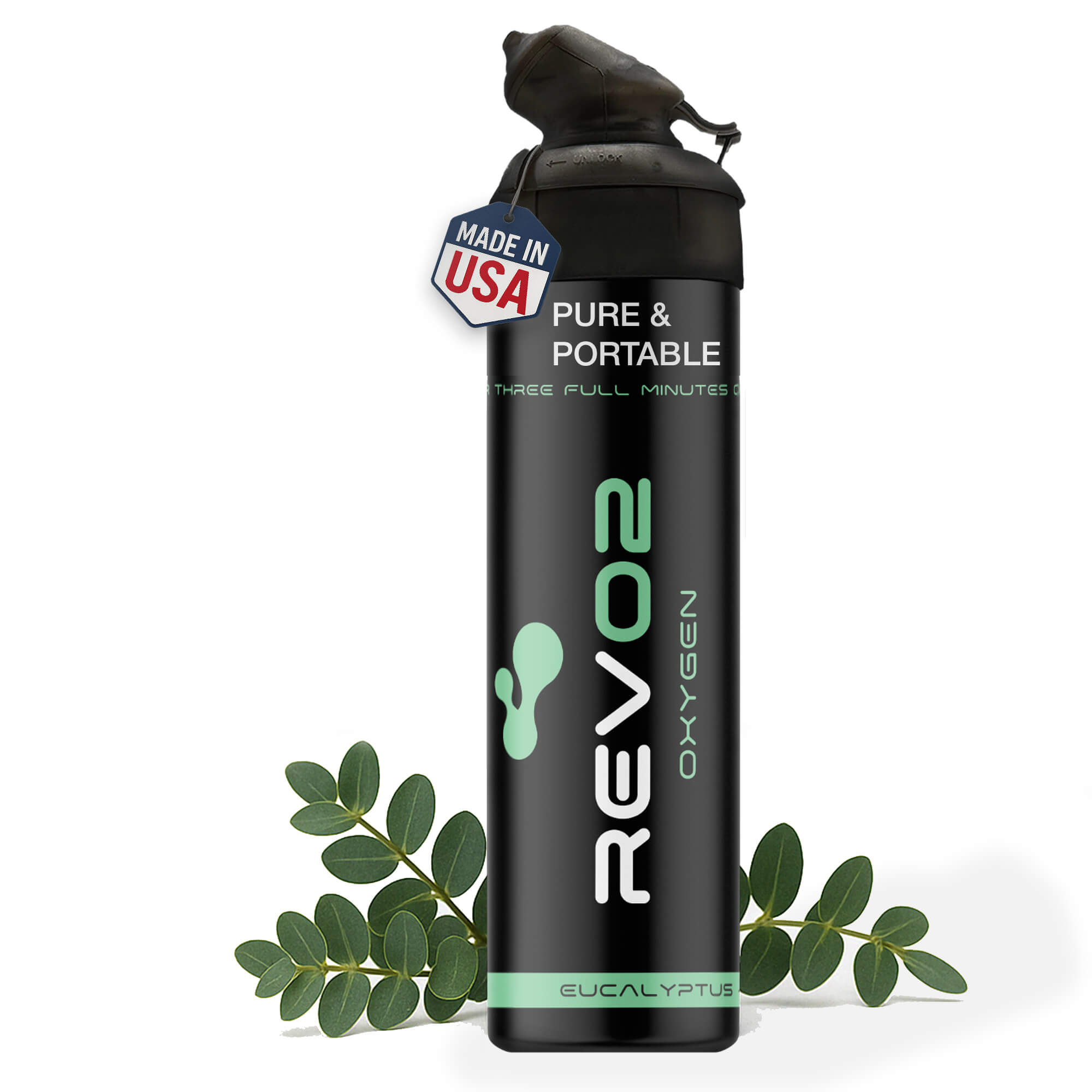
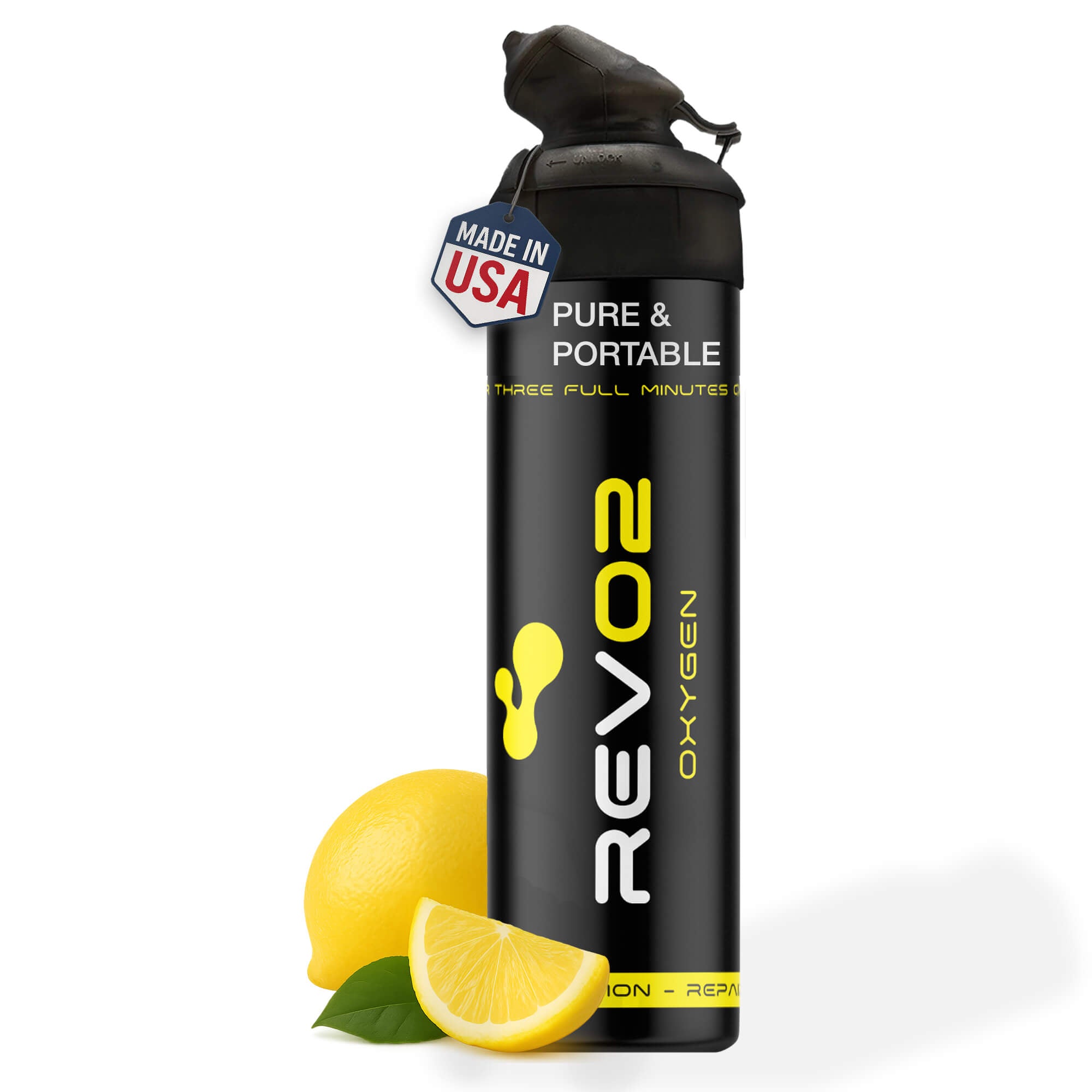
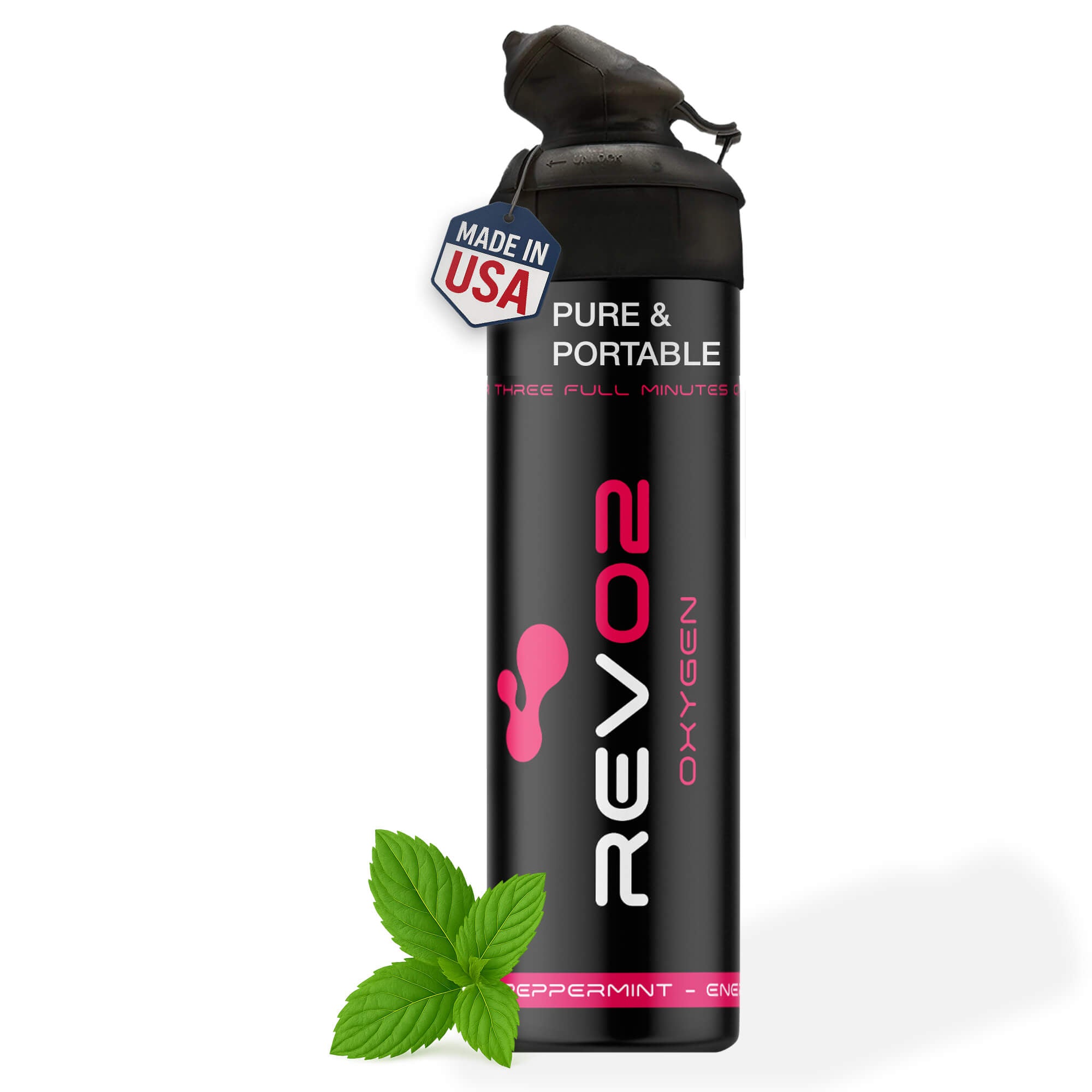
If you want to see whether short oxygen sessions help you feel more settled after hard training, our sports oxygen can for athletes is built for that use. Our three blends are peppermint for energy and endurance, lemon for recovery and immunity, and eucalyptus for focus and relaxation, and you can browse them in the canned oxygen collection. Read the guide to using canned oxygen safely before your first session.
Safety notes before you use any oxygen
Oxygen supports combustion, so keep any oxygen product away from flames, sparks and smoking. The American Thoracic Society guideline on home oxygen recommends education on safety, including fire prevention and avoiding smoking, for patients prescribed oxygen, and the same common sense applies to any canister.
Two more points are worth keeping in mind:
- In the US, supplemental oxygen for medical conditions is regulated as a drug and requires a prescription. A recreational can is not a substitute for that, and it should not replace care if you have cardiopulmonary disease or low blood oxygen.
- Do not use any oxygen product to push through chest pain, dizziness or unusual breathlessness. Stop, rest, and speak to a doctor if symptoms persist. If you live with a lung condition such as COPD, our overview of COPD oxygen level management explains why medical guidance matters there.
FAQ
Does oxygen help with delayed onset muscle soreness?
There is no solid evidence that it does. Reviews of hyperbaric oxygen, the most-studied form, found insufficient evidence of benefit for DOMS, and the Cochrane review noted some evidence of slightly higher pain at 48 to 72 hours. Portable oxygen has not been tested for DOMS in the same way.
Can low oxygen cause sore muscles?
Not in the way most people assume. DOMS comes mainly from eccentric loading and the repair that follows, and it peaks one to three days after exercise, long after your breathing has normalized. A burning feeling during hard effort is different and usually fades within minutes.
Does oxygen make your muscles stronger?
Not in healthy people, as far as the evidence shows. A university expert noted there is no good evidence that oxygen above normal levels provides a physiological benefit when the lungs are healthy. The training gains seen with supplemental oxygen come from trials in people with COPD.
What does it mean if my oxygen saturation is low after exercise?
A brief dip during very hard effort can occur in healthy athletes, and fingertip readings during movement are unreliable. A low reading that persists at rest, or one that comes with chest pain, faintness or severe breathlessness, should be checked by a doctor.
Is it okay to use oxygen while exercising?
Prescribed oxygen during exercise should be set up with your clinician or a physical therapist. For a recreational can, many people use short breaths between efforts or afterward, but if you have heart or lung disease, ask your doctor first and never use it to override warning symptoms.
Sources
- Delayed Onset Muscle Soreness (DOMS): What It Is & Treatment, Cleveland Clinic
- Hyperbaric oxygen therapy for delayed onset muscle soreness, Cochrane
- Effects of Hyperbaric Oxygen Therapy on Exercise-Induced Muscle Soreness, Archives of Physical Medicine and Rehabilitation
- Effects of Pre-, Post- and Intra-Exercise Hyperbaric Oxygen, PubMed
- Effects of hyperbaric oxygen therapy on recovery after a football match, Frontiers in Physiology
- Hyperbaric Oxygen Therapy: Don’t Be Misled, FDA
- UHMS Position Statement on Low-Pressure Fabric Hyperbaric Chambers
- Oxygen Therapy and Hyperbaric Oxygen Therapy, MedlinePlus
- Does Oxygen in a Can Deliver on Its Altitude and Energy Claims?, CU Anschutz
- The Impact of Exercise Training and Supplemental Oxygen on COPD, PMC
- A Person-Centered Approach to Supplemental Oxygen Therapy, JAMA Internal Medicine
- Oxygen Saturation Behavior by Pulse Oximetry in Female Athletes, PMC
- Home Oxygen Therapy for Adults with Chronic Lung Disease, American Thoracic Society
- Supplemental Oxygen During Physical Therapy Interventions, APTA