
Oxygen therapy is the medical practice of supplying the body with additional oxygen when natural breathing fails to maintain adequate blood oxygen levels, a condition called hypoxemia. Supplemental oxygen is the most common form of this treatment, delivered through nasal cannulas, masks, or portable concentrators. The two terms are often used interchangeably, but understanding what is oxygen therapy vs supplemental oxygen reveals an important distinction: supplemental oxygen is one tool within a broader clinical category. Other forms, such as hyperbaric oxygen therapy, serve entirely different purposes. Knowing the difference helps you ask better questions, make informed decisions, and use oxygen support safely.
What is oxygen therapy vs supplemental oxygen?
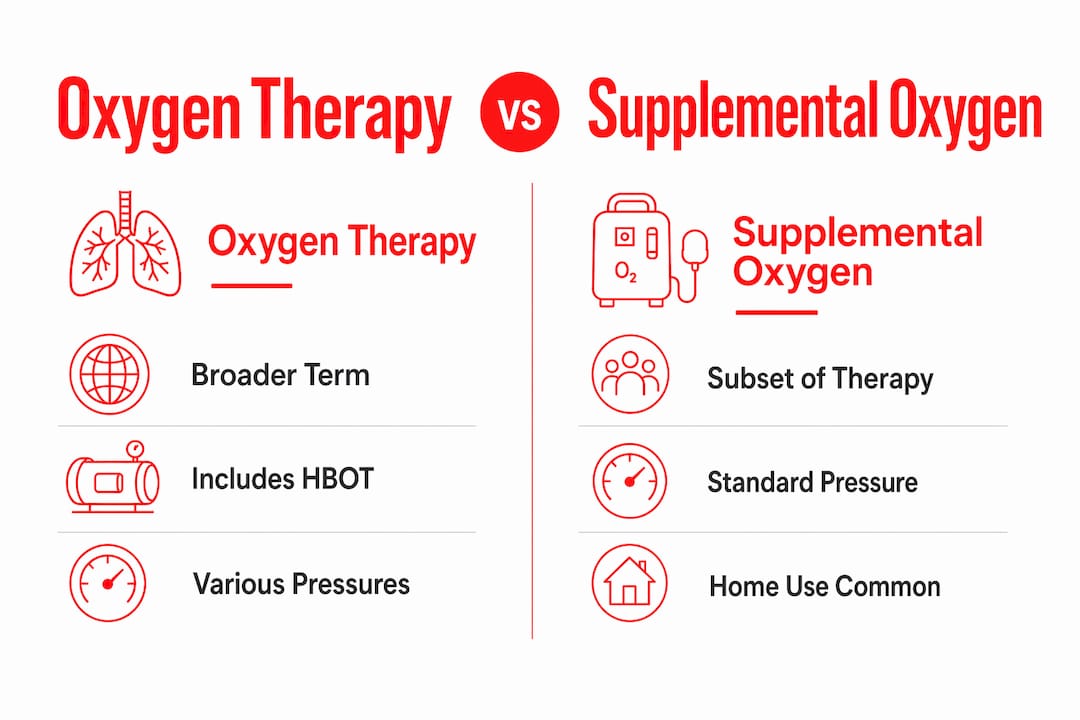
Oxygen therapy is the broader clinical term. It describes any medical intervention that increases the amount of oxygen reaching the body’s tissues. Supplemental oxygen is the most widely used form, meaning it delivers extra oxygen at normal atmospheric pressure through a device you breathe from directly.
The key distinction lies in scope. Supplemental oxygen corrects hypoxemia by raising the concentration of oxygen you inhale above the 21% found in ambient air. Oxygen therapy, as a category, also includes hyperbaric oxygen therapy (HBOT), which delivers 100% oxygen at 1.5 to 3 atmospheres of pressure inside a pressurized chamber. That pressure difference is clinically significant. It forces oxygen into plasma and tissues at levels impossible to achieve through standard breathing.
Standard supplemental oxygen operates at 1 atmosphere of pressure. HBOT operates at 1.5 to 3 atmospheres. The two approaches treat different problems and are not interchangeable.
The table below shows how the main types of oxygen therapy compare across key clinical dimensions.
| Type | Pressure | Oxygen concentration | Primary use |
|---|---|---|---|
| Supplemental oxygen | 1 atmosphere | 24%–100% | Hypoxemia, COPD, respiratory failure |
| Hyperbaric oxygen therapy | 1.5–3 atmospheres | 100% | Wound healing, decompression sickness, carbon monoxide poisoning |
| Canned portable oxygen | 1 atmosphere | ~98% | Altitude support, fatigue, athletic recovery |
Pro Tip: If a clinician prescribes “oxygen therapy,” ask specifically whether they mean supplemental oxygen at home or a referral for hyperbaric treatment. The two require completely different equipment and settings.
Hyperbaric and standard oxygen therapies are complementary tools with distinct clinical purposes. One supports respiratory oxygenation; the other accelerates tissue healing. Neither replaces the other.
When is supplemental oxygen medically necessary?
Clinical guidelines set a clear threshold for prescribing supplemental oxygen. Blood oxygen saturation at or below 88% qualifies a patient for a prescription. This threshold exists because tissues begin to suffer oxygen deprivation below that level, increasing the risk of organ damage and cardiovascular strain.
For most patients without chronic lung disease, clinicians target a saturation range of 92%–98%. For patients with chronic hypercapnic conditions, such as advanced COPD, the target range is narrower: 88%–92%. Pushing saturation too high in those patients can suppress the respiratory drive, which is the body’s signal to breathe.
Current clinical protocols also set an upper boundary. Oxygen administration above 90% saturation is not recommended prophylactically because hyperoxemia, meaning excess oxygen in the blood, carries its own risks. These include oxidative stress, vasoconstriction, and in some cases, worsened outcomes after cardiac events.
Who qualifies for a prescription?
The qualification process involves documented testing. A physician or pulmonologist orders an arterial blood gas test or pulse oximetry reading. If results confirm saturation at or below 88%, the patient qualifies for a durable medical equipment prescription. Insurance coverage, including Medicare, often requires this documentation. You can review Medicare oxygen equipment coverage to understand what is typically reimbursed and what documentation you need.
Common medical indications for supplemental oxygen include:
- COPD with documented hypoxemia at rest or during exercise
- Pulmonary fibrosis causing reduced oxygen transfer across lung tissue
- Heart failure where reduced cardiac output limits oxygen delivery
- Severe asthma during acute exacerbations
- Sleep apnea with nocturnal oxygen desaturation
- Post-surgical recovery where anesthesia or immobility reduces respiratory function
Each condition involves a different underlying mechanism, but the clinical goal is the same: restore saturation to a safe range and reduce the workload on the heart and lungs.
What are the benefits and risks of oxygen therapy?
Oxygen therapy significantly improves quality of life and exercise tolerance in hypoxemic patients. For people with COPD or pulmonary fibrosis, consistent oxygen use reduces breathlessness, supports better sleep, and in long-term studies, has been associated with improved survival. These are not minor quality-of-life gains. They represent meaningful functional improvements for people whose daily activity is otherwise severely limited.
The benefits extend beyond chronic disease management. In emergency settings, high-flow oxygen treats acute respiratory failure, carbon monoxide poisoning, and severe infections. In wound care, hyperbaric oxygen therapy accelerates healing in diabetic foot ulcers and radiation-damaged tissue. The uses of oxygen therapy in medicine span nearly every clinical specialty.
Common myths about supplemental oxygen
Two persistent myths cause unnecessary anxiety for patients newly prescribed oxygen.
- “Oxygen is addictive.” Supplemental oxygen is not addictive. It does not weaken lung function or create physical dependence. It supports a body that cannot maintain adequate saturation on its own.
- “Using oxygen means my condition is terminal.” Oxygen therapy is a management tool, not a death sentence. Many patients use supplemental oxygen for years while maintaining active, independent lives.
Real risks that require clinical oversight
Oxygen toxicity is a genuine risk from excessive or prolonged high-concentration oxygen use. It can slow heart rate, suppress breathing, and damage lung tissue over time. This is why self-prescribing high-flow oxygen without medical supervision is dangerous.
Practical tips for safe use:
- Never adjust your prescribed flow rate without consulting your clinician
- Keep equipment clean to prevent bacterial contamination in tubing
- Store oxygen tanks away from heat sources and open flames
- Use a pulse oximeter to monitor your saturation during activity
- Report nasal dryness or headaches to your care team, as these may signal flow rate issues
Pro Tip: A small, wrist-worn pulse oximeter costs under $30 and gives you real-time saturation data. Tracking your numbers during daily activities helps your clinician fine-tune your prescription far more accurately than a single clinic reading.
How do patients use supplemental oxygen day to day?
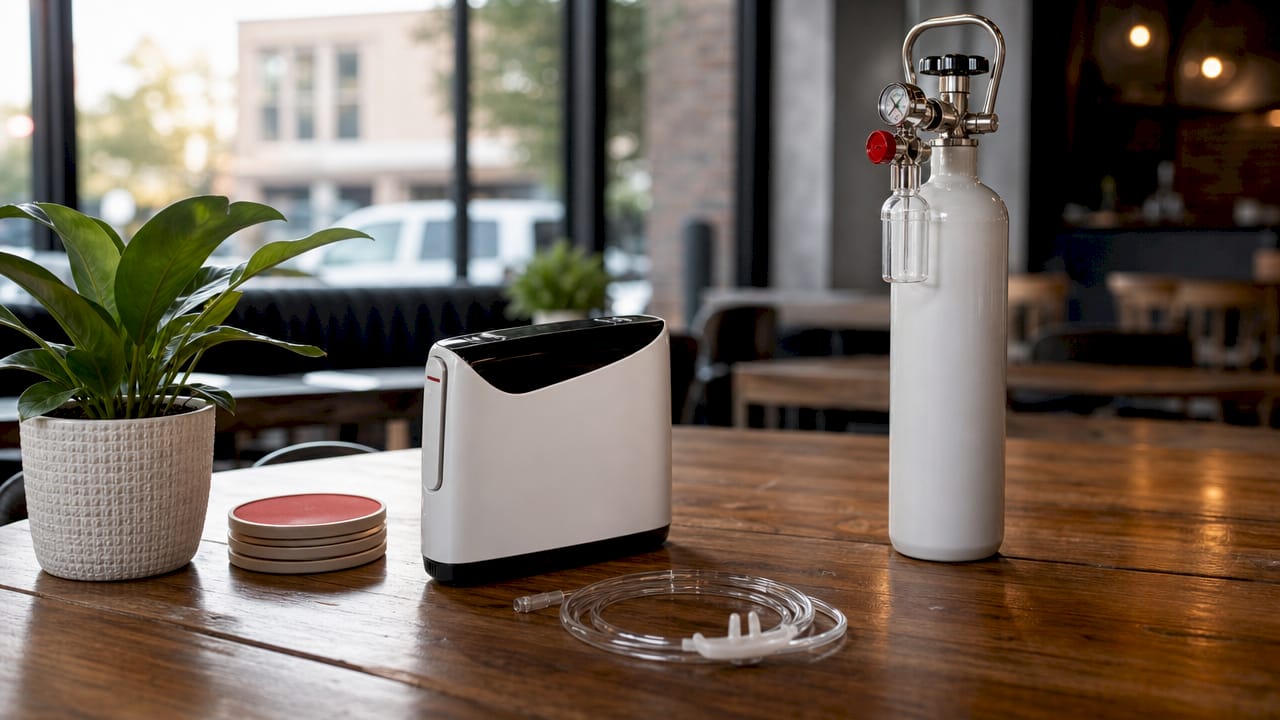
Supplemental oxygen is delivered through nasal cannulas, stationary concentrators, portable concentrators, and metal tanks, with flow set as either continuous or pulsed. Continuous flow delivers oxygen at a steady rate throughout the breathing cycle. Pulsed flow releases oxygen only during inhalation, which conserves supply and extends battery life on portable devices.
Most patients use a combination of equipment. A stationary concentrator handles home use, where power is available and portability is not needed. A portable oxygen source covers errands, travel, and social activities. Planning around battery life and tank refill schedules becomes part of daily life, but most patients adapt quickly once they establish a routine.
Daily life with supplemental oxygen involves a few practical adjustments:
- At home: Stationary concentrators run on household current and produce oxygen continuously from room air. They require no refills but limit mobility to the length of the tubing.
- On the go: Portable concentrators weigh as little as 5 pounds and run on rechargeable batteries. Tank duration depends on flow rate and tank size.
- During sleep: Nocturnal oxygen is prescribed separately from daytime use in some patients. A sleep study determines whether nighttime desaturation occurs.
- During exercise: Exercise-induced desaturation is common in COPD and pulmonary fibrosis. Some patients require a higher flow rate during activity than at rest.
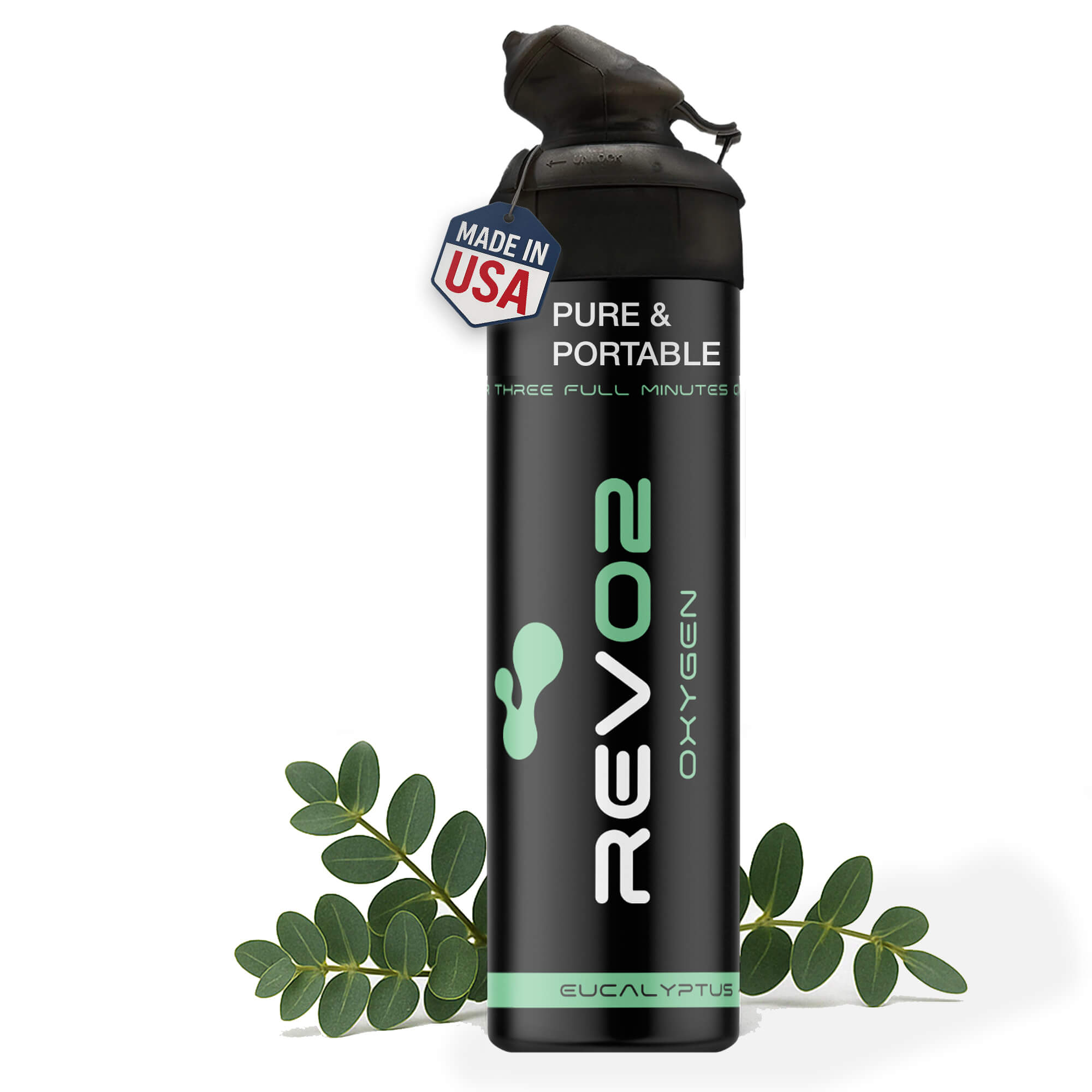
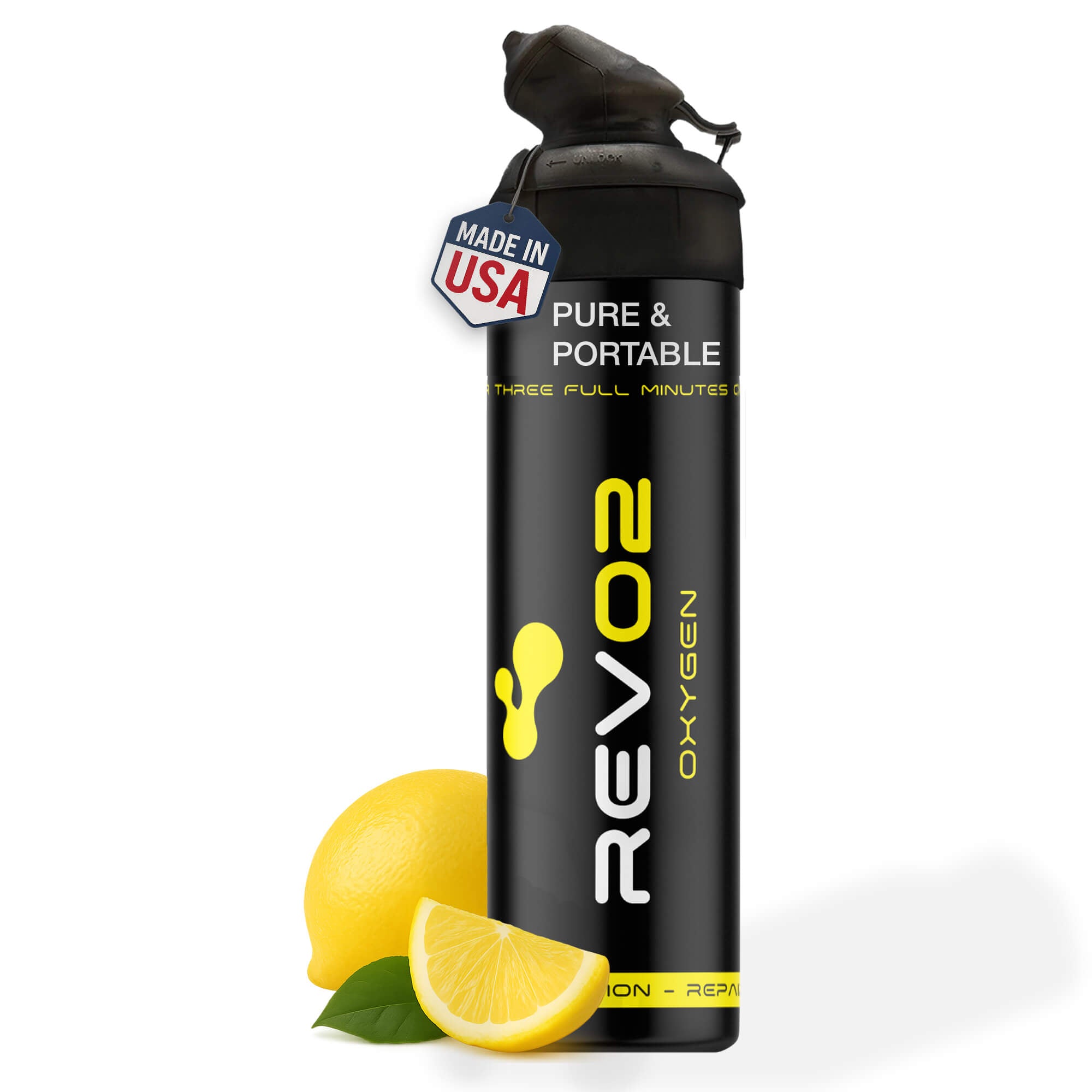
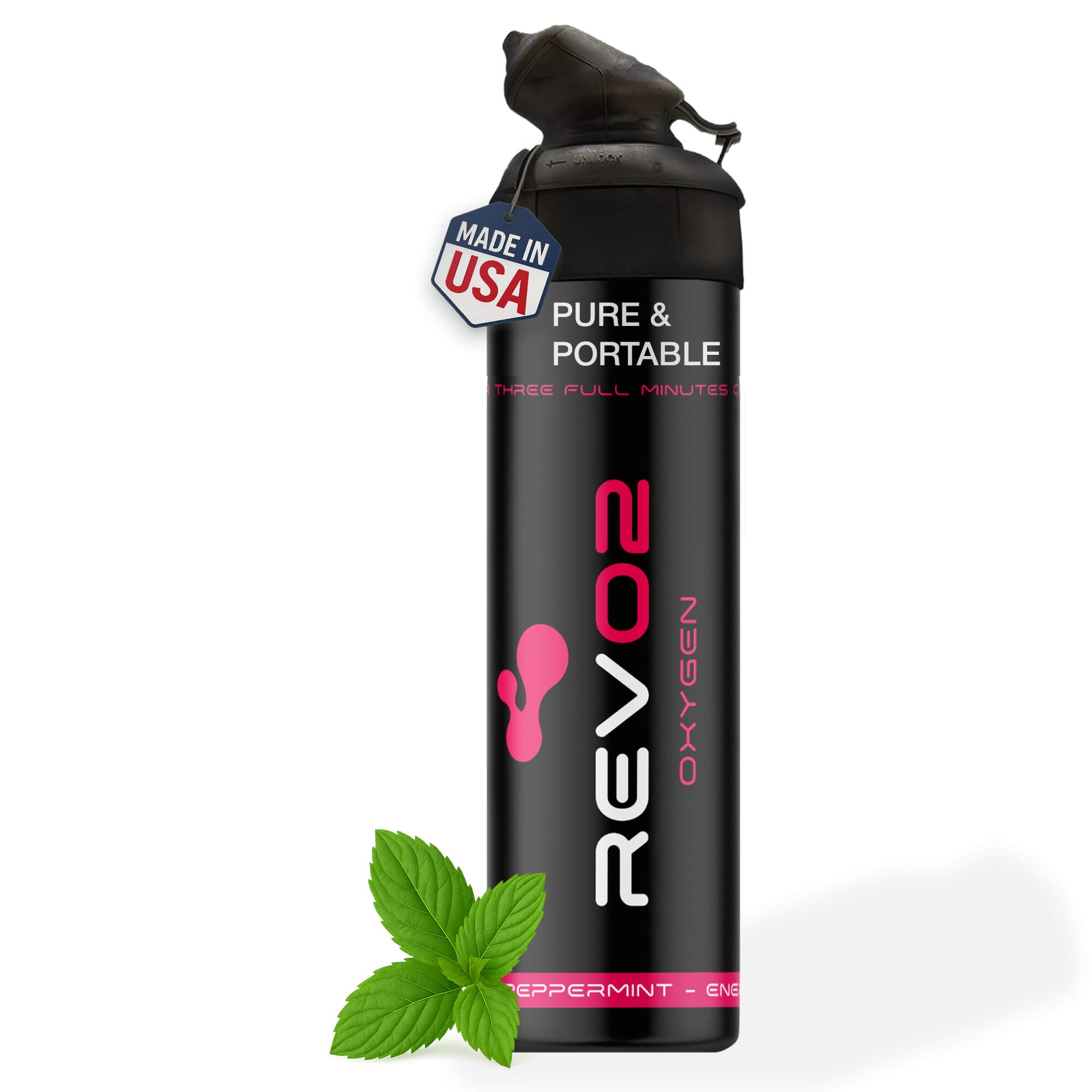
For people at altitude, during athletic recovery, or managing everyday fatigue without a clinical hypoxemia diagnosis, canned portable oxygen offers a convenient, non-prescription option. Revo2 delivers 98% pure oxygen in a portable can with a zero-leak mouthpiece, designed for quick, on-demand inhalation without the bulk of medical equipment.
Key Takeaways
Supplemental oxygen and oxygen therapy are not the same thing: supplemental oxygen is one form of a broader clinical category that includes hyperbaric treatment, each with distinct pressure levels, concentrations, and medical purposes.
| Point | Details |
|---|---|
| Oxygen therapy vs supplemental oxygen | Supplemental oxygen is a subset of oxygen therapy; hyperbaric oxygen therapy is a separate, higher-pressure modality. |
| Clinical prescription threshold | Saturation at or below 88% qualifies a patient for prescribed supplemental oxygen. |
| Upper limit matters too | Oxygen above 90% saturation is not recommended prophylactically due to hyperoxemia risks. |
| Myths are medically unfounded | Supplemental oxygen is not addictive and does not weaken the lungs. |
| Device choice affects daily life | Stationary concentrators suit home use; portable options and canned oxygen support active, mobile routines. |
Why the terminology confusion actually matters
People often assume “oxygen therapy” and “supplemental oxygen” are the same phrase said two different ways. I understand why. Clinicians use them interchangeably in casual conversation, and most patient-facing materials do not bother to explain the difference. But the confusion has real consequences.
A patient who hears “you need oxygen therapy” and assumes it means hyperbaric treatment may delay getting a simple home concentrator. A person who self-prescribes high-flow oxygen because they read about its benefits risks oxygen toxicity without ever knowing the threshold exists. The terminology is not academic. It shapes decisions.
What I find most underappreciated is the upper limit guidance. Most public discussion focuses on when oxygen is too low. The clinical reality is that too much oxygen is also harmful, and current protocols reflect that clearly. Oxygen therapy should be viewed as a carefully monitored medical intervention, not a comfort measure you dial up at will.
The practical takeaway: if you are prescribed supplemental oxygen, ask your clinician for your target saturation range, not just your flow rate. That number tells you far more about whether your therapy is working correctly.
— Paul
Revo2 portable oxygen for everyday support
Not every situation that calls for extra oxygen involves a clinical diagnosis. Athletes pushing hard at elevation, travelers adjusting to high-altitude destinations, and anyone dealing with fatigue or mental fog can benefit from a quick, clean oxygen boost. Revo2 delivers 98% pure canned oxygen in a portable, easy-to-use can with a zero-leak mouthpiece that eliminates waste with every breath. The design is built around real-world use: no mask, no prescription, no bulky equipment. Whether you need support during a mountain hike, post-workout recovery, or a long travel day, Revo2 fits in a bag and works in seconds. Explore the full range of Revo2 portable oxygen products to find the option that fits your routine.
FAQ
What is the difference between oxygen therapy and supplemental oxygen?
Oxygen therapy is the broader medical category covering all treatments that increase oxygen delivery to the body. Supplemental oxygen is the most common form, delivered at normal atmospheric pressure through nasal cannulas or masks.
How does supplemental oxygen work?
Supplemental oxygen raises the concentration of inhaled oxygen above the 21% found in room air, increasing the amount absorbed into the bloodstream and delivered to tissues.
When is supplemental oxygen necessary?
A clinician prescribes supplemental oxygen when blood oxygen saturation falls to 88% or below, as documented by pulse oximetry or arterial blood gas testing.
Is supplemental oxygen necessary for COPD?
Not all COPD patients require supplemental oxygen. It is prescribed specifically when resting or exercise-induced saturation drops to or below 88%, which typically occurs in moderate to severe stages of the disease.
Can you use too much supplemental oxygen?
Yes. Current guidelines advise against oxygen use when saturation is above 90% in most patients, because excess oxygen, called hyperoxemia, can cause oxidative stress, suppress breathing, and worsen outcomes in certain cardiac conditions.