
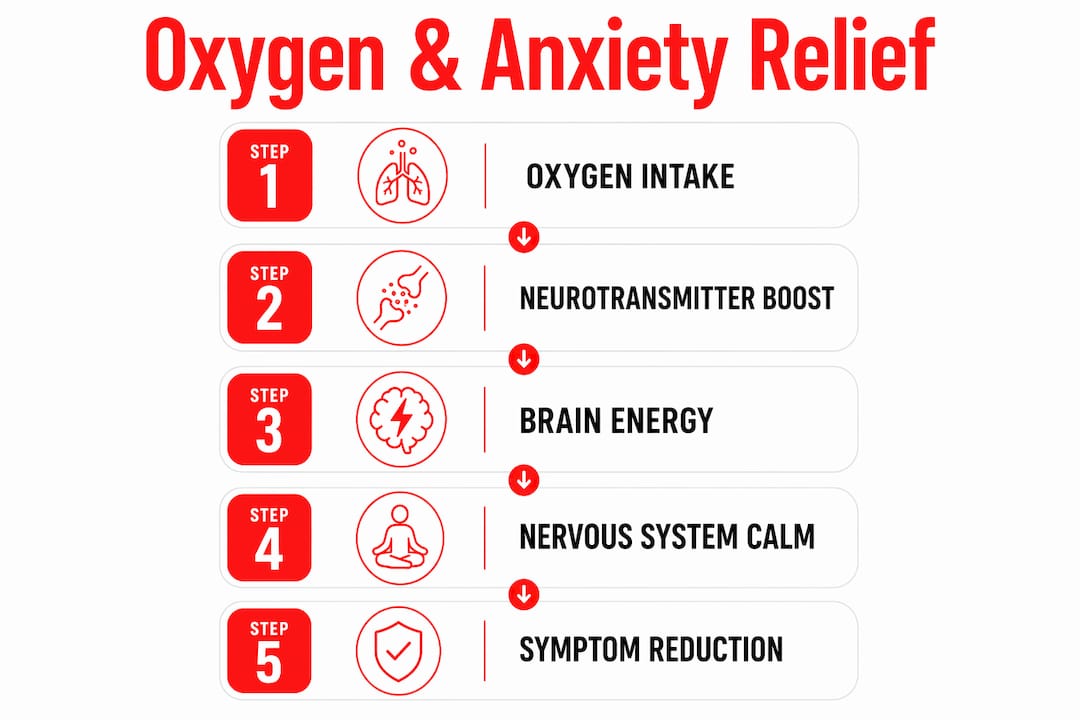
Oxygen is defined as the primary fuel for every neuron in your brain, and its role in anxiety relief is more direct than most people realize. How oxygen helps anxiety symptoms comes down to three core mechanisms: it increases brain energy, reduces neuroinflammation, and restores balance in your autonomic nervous system. A 2026 meta-analysis of 17 studies found that hyperbaric oxygen therapy (HBOT) produced a moderate effect on anxiety symptoms (Cohen’s d = -0.59) and a large effect on PTSD symptoms. That data signals a meaningful shift in how clinicians and researchers view oxygen as a tool for mental health support, not just physical recovery.
How does oxygen help anxiety symptoms at a biological level?
Oxygen improves anxiety symptoms by directly changing how your brain functions under stress. When oxygen supply to the brain drops, even slightly, the prefrontal cortex loses its ability to regulate the amygdala, the brain’s fear center. The result is an overactive threat response, which is the biological engine behind anxiety.
Here is what happens when brain oxygenation improves:
- Mitochondrial energy production increases. Neurons get the fuel they need to maintain calm, focused signaling rather than reactive, fear-driven patterns.
- Neuroinflammation decreases. Elevated oxygen levels suppress pro-inflammatory cytokines that are directly linked to anxiety and depression. Lower inflammation means a quieter, less reactive nervous system.
- BDNF (brain-derived neurotrophic factor) rises. BDNF supports neuroplasticity, which means your brain becomes better at forming new emotional regulation pathways and breaking old fear-response habits.
- Autonomic nervous system balance shifts. Oxygen therapy promotes parasympathetic dominance, the “rest and digest” state that counters the “fight or flight” response driving anxiety.
- Heart rate variability (HRV) improves. HRV is a reliable marker of autonomic balance. Higher HRV after oxygen therapy indicates that your nervous system has become more flexible and less locked into stress states.
Oxygen also regulates key neurotransmitters. Serotonin, dopamine, and GABA all depend on adequate oxygenation to function properly. GABA, in particular, acts as a natural sedative in the brain, reducing hypervigilance and physical tension. When oxygen levels support healthy GABA activity, the nervous system can genuinely settle down.
Pro Tip: If you notice your anxiety spikes in stuffy, poorly ventilated rooms, that is not a coincidence. Low indoor oxygen and high carbon dioxide levels directly impair prefrontal cortex function and amplify stress responses.
How does hyperbaric oxygen therapy (HBOT) treat anxiety?
HBOT delivers 100% pure oxygen at pressures between 2.0 and 2.5 ATA (atmospheres absolute) inside a pressurized chamber. That pressure forces oxygen into plasma, tissues, and the brain at concentrations far beyond what normal breathing achieves. The result is a cascade of neurological effects that standard breathing cannot replicate.
The clinical evidence for HBOT and anxiety is specific. A 2026 meta-analysis of 17 studies involving 920 participants found a moderate effect size (Cohen’s d = -0.59) for anxiety reduction in sham-controlled trials. The effect on PTSD was even stronger, with Cohen’s d = -1.96. These are not trivial numbers. An effect size above 0.5 is considered clinically meaningful in psychiatric research.
What pressure threshold produces results?
The 2.0 ATA pressure level is the minimum threshold for neurological benefit. Soft-chamber wellness devices that operate below this pressure do not produce the neuroplastic or anti-inflammatory effects documented in clinical trials. Medical-grade HBOT requires clinical equipment and physician oversight to reach and maintain therapeutic pressure safely.
What does a typical HBOT protocol look like?
- Initial assessment. A physician evaluates your anxiety history, comorbidities, and suitability for pressurized oxygen treatment.
- Session frequency. Most protocols involve daily or near-daily sessions, five days per week.
- Session duration. Each session typically lasts 60–90 minutes inside the chamber.
- Early response window. Some people notice anxiety symptom improvement after 10–20 sessions.
- Full neurological benefit. Neuro-modulatory effects generally require 40–60 sessions to accumulate fully.
- Duration of benefit. HBOT benefits can last up to a year, reflecting a restorative process rather than a temporary fix.
| HBOT factor | Clinical detail |
|---|---|
| Pressure threshold | 2.0 ATA minimum for neurological benefit |
| Anxiety effect size | Cohen’s d = -0.59 (moderate, clinically meaningful) |
| PTSD effect size | Cohen’s d = -1.96 (large) |
| Sessions for early relief | 10–20 sessions |
| Sessions for full benefit | 40–60 sessions |
| Common side effects | Mild ear discomfort, brief pressure adjustment |
The calming environment of the HBOT chamber itself contributes to parasympathetic activation. The quiet, controlled setting helps break the sympathetic nervous system cycles that keep anxiety running. That environmental factor is real and worth acknowledging.
Pro Tip: Ask any HBOT provider specifically whether their chamber reaches 2.0 ATA. Wellness soft chambers often cap at 1.3–1.5 ATA, which is below the evidence-based threshold for anxiety and neurological benefits.
What natural breathing techniques reduce anxiety through oxygen?
You do not need a pressurized chamber to use oxygen therapeutically. Natural breathing techniques change how oxygen enters your bloodstream and how your nervous system responds to stress. The benefits of oxygen for anxiety are accessible through deliberate, practiced breathing every day.
- Diaphragmatic breathing. Breathing from the belly rather than the chest maximizes lung volume and oxygen intake per breath. It also directly stimulates the vagus nerve, which activates the parasympathetic nervous system and lowers heart rate.
- Slow controlled breathing. Reducing your breathing rate to 5–6 breaths per minute has a measurable effect on autonomic balance. Deep belly breathing promotes parasympathetic activity and emotional regulation in ways that fast, shallow breathing cannot.
- Paced breathing with mindfulness. Pairing breath awareness with a slow inhale-exhale rhythm improves oxygen utilization and prevents the carbon dioxide imbalances that trigger panic.
- Avoid hyperventilation. Fast, shallow breathing during anxiety attacks actually lowers carbon dioxide too quickly, which constricts blood vessels in the brain and worsens panic symptoms. Slowing down is always the correct response.
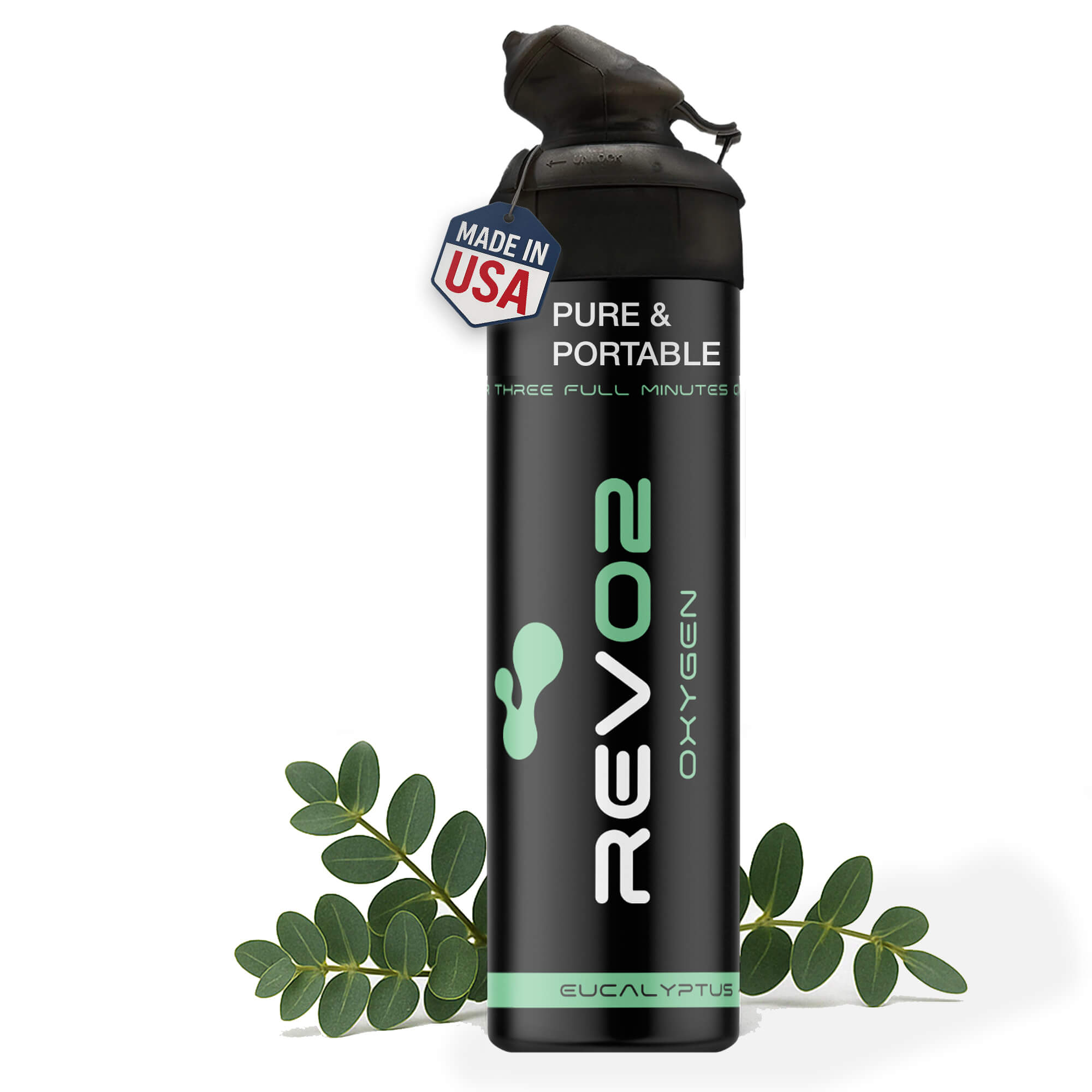
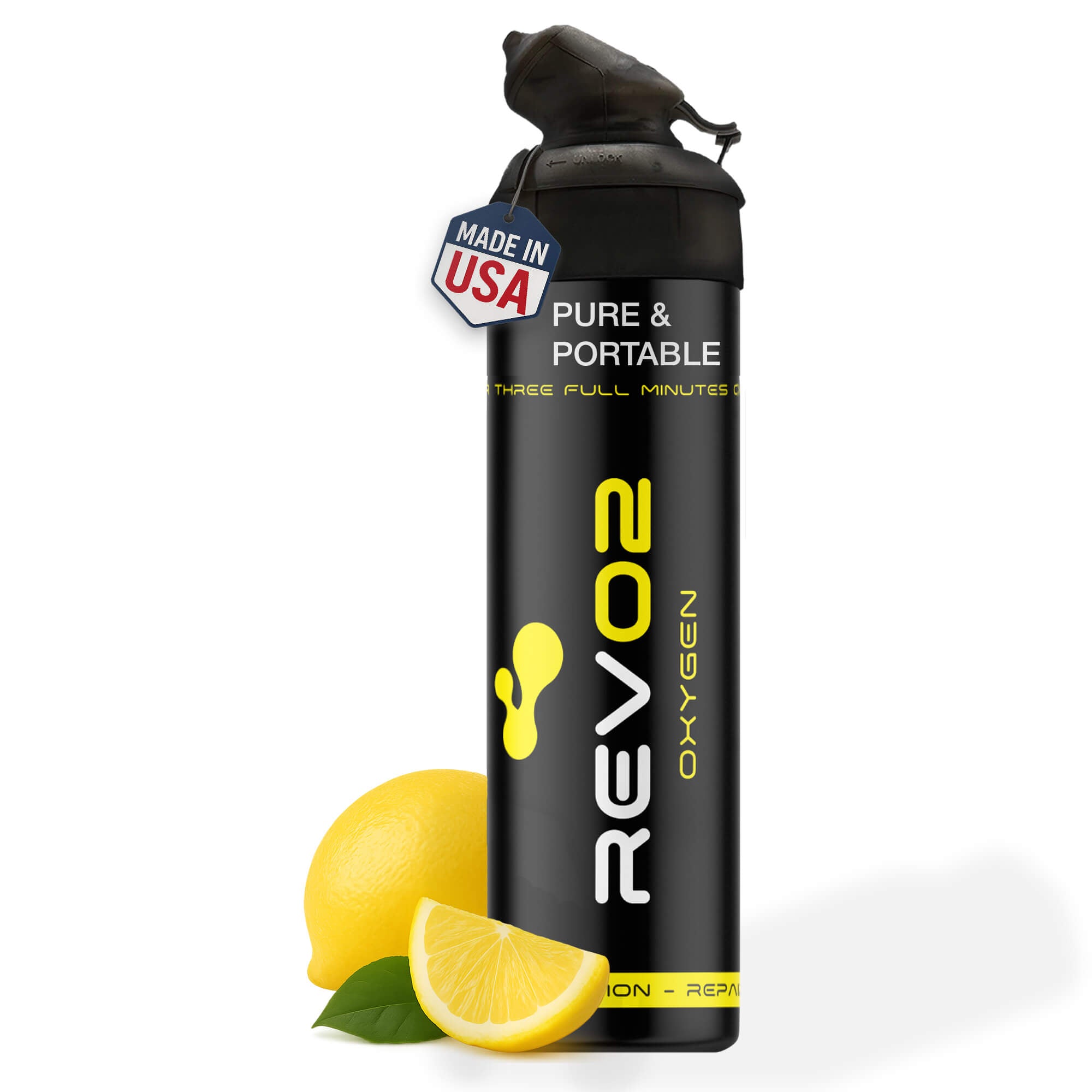
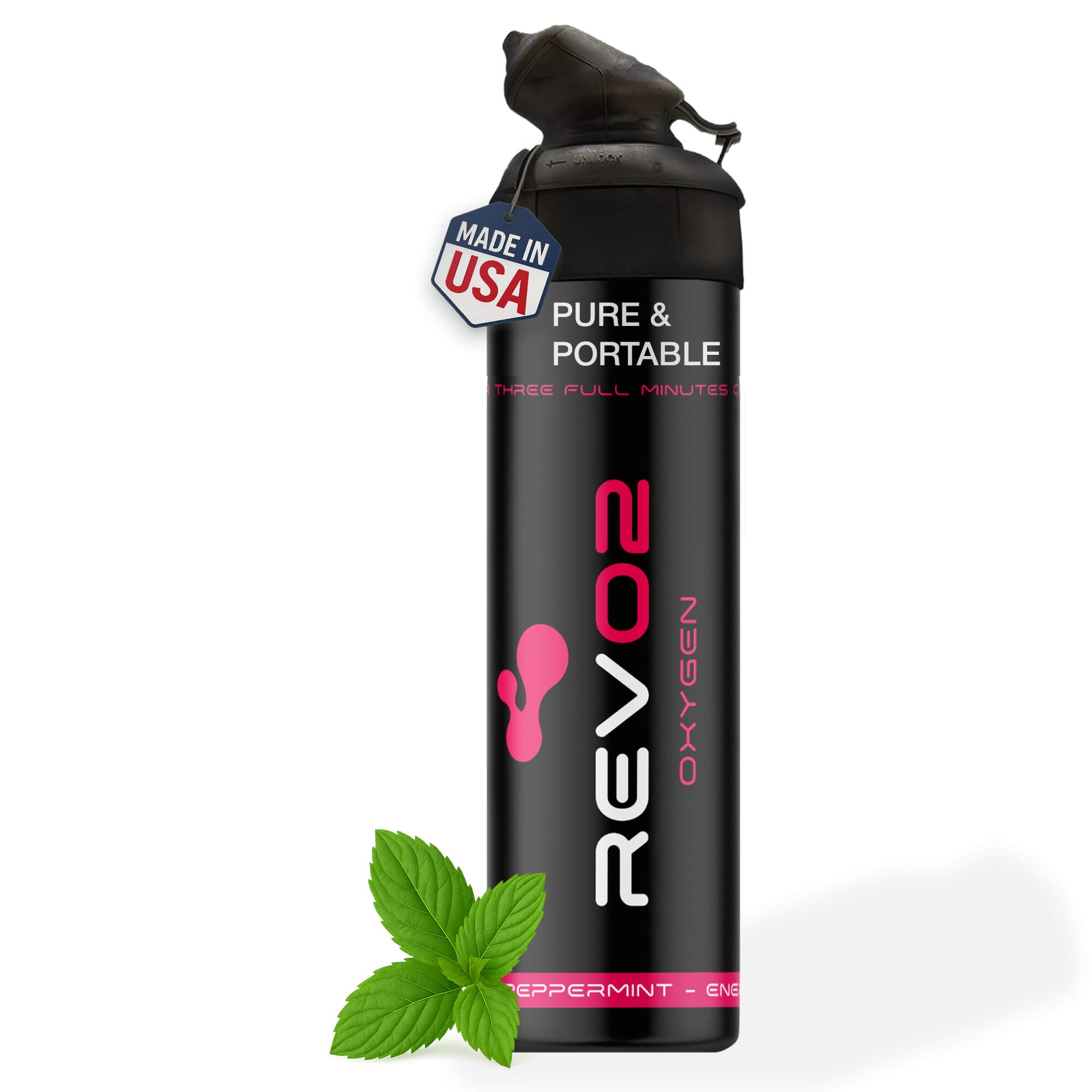
- Supplemental oxygen for on-the-go support. Portable canned oxygen, like Revo2’s 98% pure oxygen cans, provides a quick, accessible way to raise oxygen saturation during moments of acute stress or fatigue. This is not a medical treatment, but it supports the same physiological direction as therapeutic breathing.
- Lifestyle optimization. Spending time outdoors in fresh air, keeping indoor spaces ventilated, and adding indoor plants all raise ambient oxygen levels and reduce the cognitive load that worsens anxiety.
Pro Tip: Try the 4-7-8 breathing method: inhale for 4 counts, hold for 7, exhale for 8. This pattern forces a longer exhale, which is the phase most responsible for activating your parasympathetic nervous system.
Improved oxygenation also supports cognitive focus and sleep quality, both of which are directly tied to anxiety management. Poor sleep amplifies anxiety, and anxiety disrupts sleep. Better oxygen intake at night, through open windows or nasal breathing, breaks that cycle at its root.
Are there risks or misconceptions about oxygen therapy for anxiety?
Oxygen therapy is not a universal fix, and several misconceptions can lead people toward ineffective or unsafe choices.
- More oxygen is not always better. Hyperoxia, meaning excess oxygen in tissues, can cause oxidative stress and lung irritation. Medical-grade HBOT is carefully dosed and monitored for exactly this reason.
- Soft chambers are not equivalent to clinical HBOT. Wellness devices that operate below 2.0 ATA do not produce the neuroplastic or anti-inflammatory effects shown in clinical trials. HBOT for generalized anxiety remains investigational, and protocols are not yet standardized.
- Side effects are real but usually mild. Ear discomfort during pressure changes is the most common complaint. It typically resolves as people acclimate to the chamber environment.
- HBOT is an adjunct, not a replacement. Oxygen therapy works best alongside psychological support, not instead of it. Cognitive behavioral therapy (CBT), medication, and lifestyle changes remain the foundation of anxiety treatment.
- Canned supplemental oxygen is a wellness tool, not a medical device. It supports oxygen saturation and can ease acute fatigue or stress, but it does not replicate the neurological effects of clinical HBOT.
The strongest evidence for HBOT and anxiety comes from populations with comorbid conditions: PTSD, traumatic brain injury (TBI), and post-COVID neurological symptoms. For primary generalized anxiety disorder, the evidence is promising but still developing.
Key Takeaways
Oxygen reduces anxiety symptoms by restoring brain energy, lowering neuroinflammation, and shifting the nervous system toward parasympathetic balance, with clinical HBOT and daily breathing techniques offering two distinct but complementary paths to relief.
| Point | Details |
|---|---|
| Biological mechanism | Oxygen restores prefrontal cortex control over the amygdala and boosts GABA, serotonin, and dopamine. |
| HBOT clinical evidence | A 2026 meta-analysis found a moderate anxiety effect (Cohen’s d = -0.59) at a minimum of 2.0 ATA pressure. |
| Session commitment | Full neurological benefit from HBOT typically requires 40–60 sessions, with early relief possible after 10–20. |
| Natural breathing | Diaphragmatic and slow controlled breathing promote parasympathetic activity and reduce anxiety daily. |
| Realistic expectations | HBOT is an adjunct to comprehensive anxiety care, not a standalone cure or quick fix. |
My take on where oxygen therapy actually fits in anxiety care
Oxygen therapy for anxiety sits in an interesting place right now. The science is real, the mechanisms are well-documented, and the 2026 meta-analytic data is genuinely encouraging. But I have seen too many people approach HBOT as a shortcut around the harder work of therapy and lifestyle change, and that is where expectations go wrong.
The people who benefit most from oxygen-based approaches are those who treat it as one layer in a broader plan. HBOT does not replace the emotional processing that CBT or trauma therapy provides. What it does is create a more receptive neurological environment for that work to take hold. Think of it as preparing the soil before planting.
Natural breathing techniques deserve more credit than they typically get. Diaphragmatic breathing and slow paced breathing are free, immediate, and backed by solid autonomic nervous system research. If you are not doing those consistently, starting there before pursuing clinical HBOT makes practical sense.
The gap between soft-chamber wellness marketing and clinical-grade HBOT is significant. Patients deserve honest information about that distinction. A device that cannot reach 2.0 ATA is not delivering the therapy that the research supports. That is not a minor detail.
Oxygen therapy’s role in mental health is emerging, not established. Patience and medical guidance are not optional extras. They are the difference between a meaningful intervention and an expensive disappointment.
— Paul
Revo2 and natural oxygen support for anxiety relief
Anxiety takes a real toll on your energy, focus, and sense of calm. Revo2’s 98% pure canned oxygen gives you a portable, accessible way to support your oxygen levels when stress hits hardest, whether you are at your desk, traveling, or recovering from a difficult day.
Revo2’s zero-leak mouthpiece delivers pure oxygen without waste, making each breath count. For those who want consistent support, the peppermint multi-pack offers a convenient way to keep oxygen on hand throughout the week. Before starting any supplemental oxygen routine, the safe usage guide walks you through exactly how to use canned oxygen effectively and responsibly for mood and relaxation support.
FAQ
Does oxygen actually reduce anxiety symptoms?
Yes. Oxygen reduces anxiety by restoring prefrontal cortex function, lowering neuroinflammation, and promoting parasympathetic nervous system activity. A 2026 meta-analysis confirmed a moderate clinical effect for HBOT on anxiety symptoms.
What pressure does HBOT need to reach to help anxiety?
Clinical evidence shows that 2.0 ATA is the minimum pressure threshold for neurological and anti-inflammatory benefits. Soft-chamber devices operating below this level do not replicate those effects.
How many HBOT sessions are needed for anxiety relief?
Early symptom improvement can appear after 10–20 sessions, but full neuro-modulatory benefits typically require 40–60 sessions. Benefits from a complete course can last up to a year.
Can breathing exercises deliver the same benefits as oxygen therapy?
Breathing exercises and clinical HBOT work through overlapping but distinct mechanisms. Diaphragmatic and slow controlled breathing improve autonomic balance and reduce anxiety effectively on their own, though they do not replicate the neuroplastic effects of pressurized HBOT.
Is canned supplemental oxygen safe for anxiety support?
Supplemental canned oxygen is a wellness tool that supports oxygen saturation and can ease acute stress or fatigue. It is not a medical treatment and works best as part of a broader approach that includes breathing practice and, where appropriate, clinical care.