

Oxygen is the essential fuel that powers your brain’s ability to concentrate, process information, and stay mentally sharp. The brain consumes over 20% of your daily oxygen intake despite accounting for only 2% of your body weight. That gap is striking. A drop of just 5% in blood oxygen is enough to impair cognitive agility and memory. Understanding how oxygen improves mental focus gives you a real physiological foundation to work from, not just another wellness tip. The good news is that both natural breathwork and supplemental oxygen offer practical, science-backed ways to keep your brain running at its best.
What physiological mechanisms link oxygen to mental clarity and focus?
Oxygen does not simply keep you alive. It directly controls how well your neurons fire, how efficiently your brain produces energy, and how clearly you think under pressure.
Mitochondrial energy production
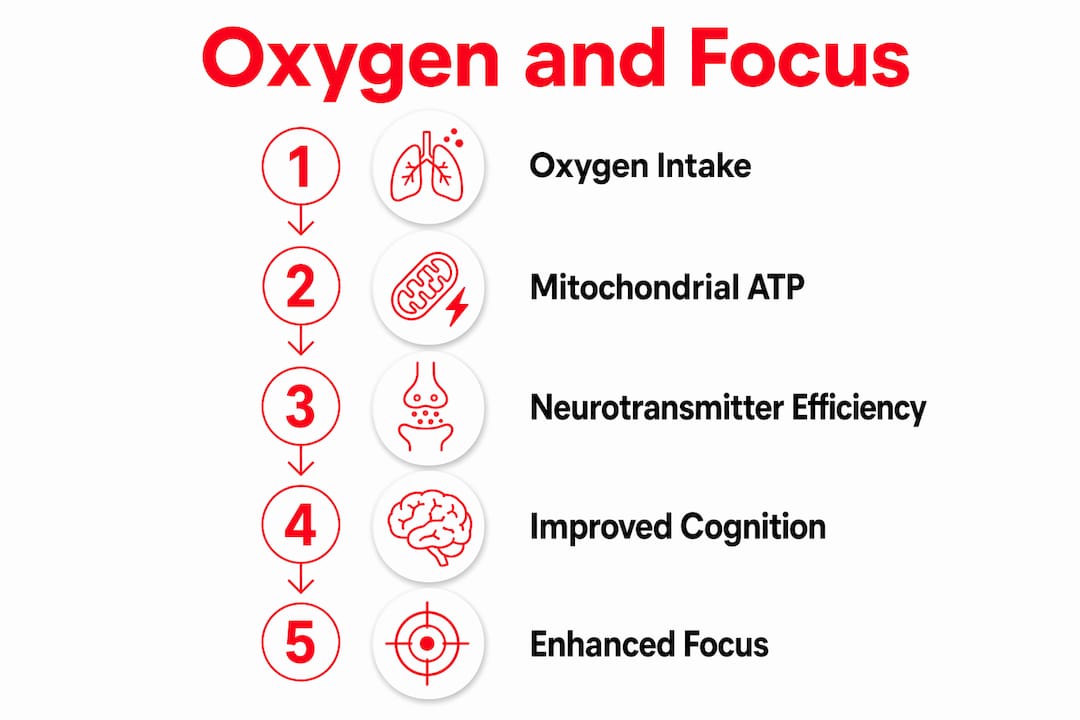
Every neuron in your brain runs on adenosine triphosphate, or ATP. Mitochondria produce ATP through a process that requires oxygen at every step. When oxygen supply drops, ATP production slows, and your neurons lose the energy they need to sustain attention and working memory. Oxygen supports mitochondrial ATP production by removing the metabolic “brakes” on brain performance rather than acting as a stimulant. That distinction matters because it means oxygen restores your brain’s natural capacity instead of forcing it past its limits.

Neurotransmitter efficiency and neuroinflammation
Optimal oxygen levels improve the efficiency of neurotransmitters like dopamine and serotonin, which regulate mood, motivation, and concentration. When oxygen is insufficient, neurotransmitter synthesis slows and mental fatigue sets in faster. Oxygen also plays a protective role: adequate oxygen prevents neurotoxic glutamate buildup, protecting cognitive functions like memory and focus. Think of it as a physiological protective switch your brain depends on to stay clear and calm.
Cerebral blood flow and CO2 regulation
Here is a counterintuitive fact most people miss. Brain fog often results from mild cerebral hypoperfusion caused by low CO2 levels, not just low oxygen. When CO2 drops too low, blood vessels in the brain constrict, reducing the delivery of oxygen to brain tissue. This is why breathing too fast or too shallowly can actually leave your brain under-oxygenated even when your lungs are working hard.
- Oxygen fuels ATP production in neurons, the direct energy source for sustained focus
- Neurotransmitter synthesis depends on consistent oxygen availability
- Low CO2 causes cerebral vasoconstriction, reducing oxygen delivery to brain tissue
- Oxygen prevents neurotoxic buildup that impairs memory and concentration
Pro Tip: If you feel mentally foggy after a stressful meeting, the cause may be rapid shallow breathing that depleted your CO2 and restricted cerebral blood flow. Slow your breath before reaching for coffee.
How can natural breathwork techniques improve brain oxygenation and focus?
Breathwork is one of the fastest and most accessible tools for improving oxygen delivery to the brain. The way you breathe directly shapes how much oxygen your neurons actually receive.
Why breath patterns matter more than you think
Chronic shallow or mouth breathing reduces cerebral blood flow even when oxygen intake appears sufficient. Nasal and diaphragmatic breathing improve CO2 tolerance and promote cerebral vasodilation, which widens blood vessels and delivers more oxygen to brain tissue. Slowing the breath also stimulates the vagus nerve, shifting the nervous system into a parasympathetic state that supports sustained focus rather than reactive stress responses.
Three breathwork techniques that work
-
Box breathing. Inhale for 4 counts, hold for 4, exhale for 4, hold for 4. Structured breathwork like box breathing improves focus within 2–3 minutes, with effects lasting up to an hour. Athletes and military personnel use this technique before high-stakes performance for exactly that reason.
-
Diaphragmatic breathing. Place one hand on your chest and one on your belly. Breathe so that only your belly hand rises. This activates the diaphragm fully, increases tidal volume, and raises CO2 tolerance over time. Most adults default to chest breathing, which is shallower and less efficient.
-
Nasal breathing. Breathing through your nose filters, warms, and humidifies air. It also produces nitric oxide in the nasal passages, which dilates blood vessels and improves oxygen uptake in the lungs. Switching from mouth to nasal breathing during low-intensity work is one of the simplest upgrades you can make.
Common breathing mistakes that reduce brain oxygenation
Breathing too fast during stress is the most common error. Hyperventilation drops CO2 rapidly, constricts cerebral blood vessels, and creates the dizzy, foggy feeling many people associate with anxiety. Breathing through the mouth during sleep is another significant issue, as it bypasses the nasal nitric oxide system and reduces overnight oxygen efficiency.
Pro Tip: Set a timer for 5 minutes before any focused work session. Practice nasal diaphragmatic breathing at a rate of about 5–6 breaths per minute. You will notice a measurable shift in mental clarity before you even start the task.
What are the benefits and applications of supplemental oxygen for mental focus?
Breathwork improves how your body uses available oxygen. Supplemental oxygen raises the concentration of oxygen you are breathing in the first place. These two approaches work on different parts of the same system.
Hyperbaric oxygen therapy and cognitive function
Hyperbaric oxygen therapy, or HBOT, places you in a pressurized chamber where you breathe pure oxygen. HBOT delivers 10–15 times more dissolved oxygen to brain tissue than normal breathing. The cognitive benefits from a course of HBOT sessions can persist for over a year. That duration suggests HBOT does more than temporarily boost oxygen. It appears to support neuroplasticity and reduce neuroinflammation at a structural level.
Supplemental oxygen cans for everyday cognitive demand
HBOT requires clinical access and significant time investment. Portable supplemental oxygen fills a different need: on-demand cognitive support during daily activities. Supplemental oxygen is most effective when used proactively during periods of cognitive demand rather than as a rescue after fatigue has already set in. That means using it before a long meeting, a demanding study session, or a high-pressure presentation.
| Approach | Oxygen delivery method | Best use case | Onset time |
|---|---|---|---|
| Normal breathing | Ambient air (~21% O2) | Baseline daily function | Continuous |
| Breathwork techniques | Optimized air use | Quick focus reset, stress relief | 2–3 minutes |
| Portable oxygen cans | 98% pure O2 inhalation | On-demand cognitive boost | Under 1 minute |
| Hyperbaric oxygen therapy | Pressurized 100% O2 | Long-term cognitive rehabilitation | Sessions over weeks |
Safety and distinction from stimulants
Oxygen does not create the jitteriness, dependency, or crash associated with caffeine or stimulant supplements. Clinical data links improved brain oxygenation to faster mental processing, reduced fatigue, and better concentration during demanding tasks. The effect is physiological restoration, not artificial stimulation. For healthy adults, short-term use of supplemental oxygen cans carries no significant risk when used as directed.
What lifestyle adjustments support optimal oxygen delivery?
Breathwork and supplemental oxygen work best when your baseline habits support healthy oxygen saturation and cerebral blood flow. Several daily factors either protect or undermine that baseline.
- Posture. Slouching compresses the diaphragm and reduces lung capacity by a meaningful margin. Sitting upright or standing during focused work allows full diaphragmatic expansion and better oxygen intake.
- Physical movement. Even a 10-minute walk increases heart rate, cardiac output, and oxygen transport to the brain. Regular aerobic exercise strengthens the cardiovascular system’s ability to deliver oxygenated blood to brain tissue consistently.
- Sleep quality. Sleep is when the brain clears metabolic waste through the glymphatic system, a process that depends on adequate oxygen saturation. Poor sleep or sleep-disordered breathing reduces overnight oxygenation and leaves you cognitively impaired the next day regardless of how well you breathe while awake.
- Avoiding chronic shallow breathing. Stress, screen time, and sedentary work all promote shallow chest breathing. Building CO2 tolerance through nasal breathing practice and regular breathwork sessions counteracts this drift over time.
- Altitude awareness. At higher elevations, ambient oxygen concentration drops. You can check your oxygen level by altitude to understand how much your environment may be affecting your cognitive baseline.
Key Takeaways
Oxygen is the single most direct physiological lever for improving mental focus, and both breathwork and supplemental oxygen offer practical ways to use it.
| Point | Details |
|---|---|
| Brain oxygen demand is high | The brain uses over 20% of daily oxygen despite being 2% of body weight. |
| CO2 balance is critical | Low CO2 constricts cerebral blood vessels and reduces oxygen delivery even with normal breathing. |
| Breathwork works fast | Box breathing improves focus within 2–3 minutes, with effects lasting up to an hour. |
| Supplemental oxygen is proactive | Use portable oxygen before cognitive demand peaks, not after fatigue has already set in. |
| Lifestyle habits set the baseline | Posture, movement, sleep, and nasal breathing all determine your resting oxygen delivery to the brain. |
Why I think most people are solving the wrong problem
People reach for caffeine, nootropics, or productivity apps when their focus slips. I understand the instinct. Those tools feel active and deliberate. But in my experience, the underlying issue is almost always respiratory, not motivational.
The physiology is clear. Your brain is running a metabolic operation that consumes a disproportionate share of your body’s oxygen. When that supply is even slightly compromised, whether from stress-induced shallow breathing, poor posture, or a high-altitude environment, your cognitive output drops before you even notice it happening. Brain fog is not a character flaw. It is frequently a sign of mild chronic cerebral hypoperfusion that most people never identify.
What I find most underappreciated is the CO2 piece. Most people assume more oxygen always means better focus. The reality is more nuanced. Without adequate CO2, your blood vessels constrict and oxygen cannot reach brain tissue efficiently. That is why hyperventilating during stress makes things worse, not better. Slowing down and breathing through your nose is often more effective than breathing harder.
The combination I keep coming back to is simple: build a nasal breathing habit during the day, practice box breathing before demanding tasks, and use supplemental oxygen proactively when the cognitive load is genuinely high. That sequence addresses the problem at every level, from baseline physiology to acute demand. No jitteriness, no crash, no dependency.
— Paul
Revo2 pure oxygen for on-demand mental clarity
When breathwork alone is not enough, having 98% pure oxygen on hand changes the equation. Revo2 designs portable oxygen cans specifically for moments when cognitive demand spikes and your body needs more than ambient air can provide.

Revo2’s zero-leak mouthpiece delivers pure oxygen directly without waste or awkward equipment. Whether you are preparing for a high-stakes presentation, pushing through a long study session, or recovering from travel fatigue at altitude, Revo2 canned oxygen gives you a clean, fast option that complements every breathwork practice covered here. For athletes who need both physical and mental performance, the sports oxygen can is built with that dual demand in mind. No prescription, no clinic, no compromise on purity.
FAQ
How does oxygen improve mental focus?
Oxygen fuels mitochondrial ATP production in neurons, the direct energy source for sustained attention and working memory. When oxygen delivery drops even slightly, cognitive performance declines measurably.
Why does shallow breathing cause brain fog?
Shallow breathing depletes CO2, which causes cerebral blood vessels to constrict and reduces oxygen delivery to brain tissue. The result is reduced mental clarity even when your lungs are technically functioning.
How quickly does breathwork improve focus?
Structured techniques like box breathing improve focus within 2–3 minutes, with effects lasting up to an hour. Consistent daily practice builds CO2 tolerance and improves baseline cerebral blood flow over time.
Is supplemental oxygen safe for everyday use?
For healthy adults, short-term use of supplemental oxygen cans is considered safe when used as directed. Oxygen works by restoring physiological function rather than stimulating the nervous system, so it does not produce the side effects associated with caffeine or stimulants.
When is the best time to use supplemental oxygen for focus?
Supplemental oxygen is most effective when used proactively before a cognitively demanding task rather than after fatigue has already set in. Using it at the start of a study session, meeting, or high-pressure event delivers the best results.