
If you feel desert-hike fatigue setting in, stop, seek shade, sip an electrolyte solution, cool your neck and armpits, eat a salty 150 to 200-calorie snack, and slow your pace. Prevent fatigue in the first place by drinking a baseline of 3 to 4 liters daily, closer to 1 liter per hour once temperatures spike, and eating that same 150 to 200-calorie snack every 90 minutes to two hours.
TL;DR:
- Maintaining hydration with 3 to 4 liters daily and increasing to nearly 1 liter per hour during heat prevents early fatigue buildup.
- Consuming 150 to 200 calories every 90 minutes to two hours stabilizes blood sugar and sustains energy over long desert hikes.
- Recognizing early signs of dehydration such as headache, dry lips, and dark urine enables timely rehydration before symptoms worsen.
- Implementing micro-breaks every 60 to 90 minutes, along with shade and shade planning, significantly reduces cumulative fatigue.
- Pre-activity decision rules and honest group communication are crucial for preventing heat-related incidents and maintaining safety in extreme conditions.
Table of Contents
- What Are the Best Desert Trail Recovery Tips When Fatigue Hits?
- How Should You Prepare for a Desert Hike to Prevent Fatigue?
- How Much Water and Food Do You Need to Avoid Bonking?
- What Pace Actually Prevents Desert Hiking Exhaustion?
- How Do You Recognize and Treat Heat Illness on the Trail?
- What’s the Best Way to Recover After a Desert Hike?
- When Can Portable Oxygen Help With Desert Hiking Fatigue?
- Does Caffeine Help With Hiking Fatigue in the Desert?
- How Do You Manage Mental Fatigue on a Long Desert Trail?
- What Footwear and Foot Care Prevent Discomfort-Related Fatigue?
- What Are the Early Signs of Dehydration Beyond Thirst?
- How Often Should You Rest on a Desert Hike?
- Author’s Perspective: What Actually Moves the Needle Out There
- Keep Mental Clarity in Your Fatigue-Reduction Kit
- Sources
- FAQ
What Are the Best Desert Trail Recovery Tips When Fatigue Hits?
Fatigue on a desert trail rarely arrives out of nowhere. It builds through small deficits: a skipped snack, water sipped too slowly, a pace pushed past what your body can sustain in the heat. The good news is that most of it responds fast to the right sequence of actions, done in the right order.
Here’s what to do the moment your legs feel heavy, your thinking gets foggy, or you notice your pace dropping without meaning to slow down.
- Stop moving and find shade. Even a boulder’s shadow or a mesquite thicket buys your body a break from direct solar load. Sit or lie down, and if you feel lightheaded, elevate your legs above heart level.
- Cool your core points fast. Soak a bandana in water and drape it around your neck. Splash cool water on your armpits and groin, where blood vessels sit close to the skin and cooling transfers quickly to your bloodstream.
- Sip electrolytes, not just water. If you’ve been sweating heavily, plain water dilutes your remaining sodium further. A solution with sodium, potassium, and magnesium replaces what you’ve actually lost.
- Eat something salty and carb-based. Around 150 to 200 calories, the same cadence you’d use on a normal fueling schedule, helps stabilize blood sugar and gives your muscles something to burn.
- Rest 10 to 30 minutes and check your mental status. Are you answering questions clearly? Do you remember the trailhead? Improvement within that window is a good sign.
Know when this stops being a rest break and becomes an emergency. Any confusion, slurred speech, collapse, or failure to improve after cooling and rest means you call 911 immediately. According to the American Red Cross, altered mental status is the defining sign of heat stroke, and it requires aggressive cooling and emergency care without delay, not a wait-and-see approach.
Pro Tip: Keep a pre-mixed electrolyte tablet in an easy-to-reach pocket, not buried in your pack. When fatigue hits, you want a 10-second fix, not a 5-minute pack dig.
How Should You Prepare for a Desert Hike to Prevent Fatigue?
The fatigue you feel at mile six often traces back to decisions made the night before. Pre-hydrating matters more in the desert than in almost anywhere else, because you can’t out-drink a heat deficit once you’re several miles from the trailhead.
Start hydrating the evening before your hike, then again the morning of. A simple check: your urine should run light yellow, not dark, before you leave the car. Dark urine at the trailhead means you’re starting behind, and the desert won’t let you catch up easily.
- Plan a baseline of 3 to 4 liters of water per day, rising to roughly 1 liter per hour in extreme heat, plus extra reserved specifically for cooling your neck and wrists, rather than for drinking.
- Pack electrolyte powders or tablets and decide your intake cadence before you start walking, not mid-trail when you’re already depleted.
- Bring salty snacks, pretzels, salted nuts, jerky, that replace sodium lost through sweat faster than water alone can.
- Train on the actual gradient you’ll face, and keep pack weight around 20% of your body weight or less; every extra pound compounds fatigue over desert miles.
- Give yourself 1 to 2 weeks of acclimatization if you’re new to heat or arriving from a cooler, lower-elevation climate.
Gear choices matter almost as much as hydration math. Light, breathable long sleeves protect skin from sun exposure without trapping heat the way heavy cotton does. A wide-brim hat shades your neck and ears, not just your face. Trekking poles reduce the load on your legs on uneven desert terrain, which conserves energy you’ll need later. A hydration bladder with a sipping tube encourages the frequent small sips that work better than occasional large gulps.
If you’re conditioning for a hike that also involves elevation gain, a structured plan makes the difference between showing up ready and showing up already behind. Revo2’s 12-week conditioning plan for elevation hikes walks through pacing your training the same way you’d pace the hike itself.
How Much Water and Food Do You Need to Avoid Bonking?
Guesswork is where most desert hikers get into trouble. The numbers below aren’t rules of thumb, they’re the baseline most heat-safety guidance converges on, and they work because they match how your body actually loses fluid and fuel under desert conditions.
Hydration: sip constantly, don’t wait for thirst. Aim for roughly 1 liter per hour once temperatures climb, and carry extra beyond your drinking needs for cooling your bandana or splashing your neck. A hydration bladder with a bite valve makes frequent small sips almost automatic, which beats the start-stop pattern of unclipping a bottle every time.
Fueling: 150 to 200 calories every 1.5 to 2 hours. This is the same cadence the CDC references for keeping blood sugar stable during sustained activity. On shorter hikes, quick carbs like gummy bears or fruit chews do the job. On longer days, pair those fast carbs with something slower to digest, string cheese, nut butter packets, or jerky, so your energy doesn’t crash between snack breaks.
Electrolytes: sodium first, then potassium and magnesium. Heavy sweating strips sodium faster than almost any other mineral, and replacing it with electrolytes rather than water alone helps prevent hyponatremia, a dangerous dilution of blood sodium that can mimic the confusion of heat stroke. If you’re drinking liter after liter of plain water on a hot day and still feel foggy or nauseated, that’s often the problem, not dehydration itself.
Hikers who rely only on water during heavy sweating risk diluting their remaining sodium. Combining salty snacks with electrolyte powders addresses both fluid loss and mineral loss at once.
A practical snack list for a hot, waterless stretch:
- Salted pretzels or crackers (portable, calorie-dense, easy on a queasy stomach)
- Gummy bears or fruit chews for a fast carbohydrate hit
- Electrolyte tablets that dissolve directly in your water bottle
- Beef jerky or salted nuts for sodium plus slower-burning protein and fat
- A small bag of trail mix with dried fruit for a mixed carb and fat source
If you’re new to a route, practice your hydration and fueling rhythm on a shorter, similar-climate hike first. Everyone sweats at a different rate, and learning yours before a long desert day beats discovering it the hard way at mile eight. Timing your meals well before a trip also helps; general nutrition timing guidance on maintaining steady energy translates directly to trail days, even though it’s written for travel.
What Pace Actually Prevents Desert Hiking Exhaustion?
Fatigue isn’t just about how far you’ve walked. It’s a function of gradient, pace, pack weight, terrain, and heat load all interacting at once, and pushing endurance alone rarely fixes a pacing problem caused by one of those other variables.
The simplest tool for staying in a sustainable zone is the talk test.
- Check your breathing every 15 to 20 minutes. Can you speak a full sentence of 5 to 6 words without gasping? If yes, you’re likely at 60 to 70% effort, a pace you can hold for hours.
- If you can only manage single words, slow down immediately. You’ve crossed into a pace that burns through glycogen and hydration faster than you can replace either.
- Take a micro-break every 60 to 90 minutes. Sit, elevate your feet for a minute or two, and let venous return catch up. This resets both your legs and your focus.
- Adjust the variable that’s actually causing the strain. If it’s gradient, slow your cadence. If it’s pack weight, redistribute or shed unnecessary items at your next stop. If it’s heat, prioritize shade timing over raw speed.
- Use trekking poles and a steady breathing rhythm on uneven ground. Micro-oscillations, the small up-and-down wobbles from unstable footing, drain energy in ways that feel invisible until you’re exhausted.
Starting before sunrise and finishing by mid-morning, the classic desert hiking window in early morning to before midday, sidesteps the worst of the thermal load entirely. Pacing yourself well in cooler hours means you arrive at the hottest part of the day already near your car, not still climbing.
How Do You Recognize and Treat Heat Illness on the Trail?
Heat cramps, heat exhaustion, and heat stroke sit on a spectrum, and knowing which one you’re looking at determines whether you rest for ten minutes or call for emergency evacuation.
- Heat cramps show up as painful, involuntary muscle spasms, usually in the calves, thighs, or abdomen. Stop activity, sip an electrolyte solution, and gently stretch the affected muscle. Don’t push back into strenuous hiking right away; cramps are an early warning, not a nuisance to walk off.
- Heat exhaustion brings heavy sweating, weakness, nausea, dizziness, and sometimes a headache. Move to shade, cool the neck, armpits, and groin with wet cloths, elevate the legs, and sip electrolytes steadily. Most people improve within about 30 minutes of consistent cooling and rest.
- Heat stroke is the medical emergency on this spectrum, marked by altered mental status: confusion, slurred speech, or collapse. Call 911 immediately and begin aggressive cooling, soaking clothing, applying ice packs to the neck, armpits, and groin. Do not give fluids if the person can’t swallow safely or is not fully alert.
That 30-minute window matters. If someone with heat exhaustion symptoms isn’t clearly improving after half an hour of proper cooling and rest, treat it as an escalation, not a slow recovery, and start moving toward emergency care.
Pack a few essentials specifically for heat-illness response before you leave: electrolyte tablets, sun protection, and a way to call for help where cell service might fail, like a satellite messenger. Set a turn-back time before you start hiking, and commit to it regardless of how the group feels in the moment. Decisions made calmly at the trailhead beat decisions made under heat stress three miles in.
What’s the Best Way to Recover After a Desert Hike?
Recovery starts the moment you’re back at the car, not the next morning. Rehydrating with an electrolyte solution rather than plain water restores the sodium balance your sweat stripped away over the hike, closing the gap that plain water alone leaves open.
- Drink an electrolyte solution steadily over the first hour post-hike, rather than one large volume all at once.
- Eat 20 to 30 grams of protein within 30 to 60 minutes of finishing, paired with carbohydrates to refill glycogen stores your muscles just burned through.
- Do light active recovery: a short walk, gentle stretching, or foam rolling to ease soreness and support circulation.
- Rinse and dry your hydration bladder and any gear seals fully; desert heat degrades adhesives and rubber faster than most hikers expect.
- Prioritize sleep that night. It’s when most of the physical repair actually happens.
Recovery routines built for other high-exertion activities carry over well here. Post-activity recovery guidance from surf coaching emphasizes the same sequence: rehydrate, refuel with protein, then move gently rather than sitting rigid.
Pro Tip: If you’re planning back-to-back hiking days, treat the evening of day one as seriously as the morning of day two. Skipping electrolyte replacement the first night is the most common reason hikers feel worse, not better, on day two.
When Can Portable Oxygen Help With Desert Hiking Fatigue?
Portable canned oxygen isn’t a substitute for water, electrolytes, or emergency care. It’s a short-term adjunct, something that can support mental clarity and perceived energy in specific moments, not a fix for the underlying cause of desert fatigue.
Where it may genuinely help: acute mental fog after a strenuous climb, short-term stress from elevation gain layered on top of heat exposure, or moments when you’ve already cooled down, rehydrated, and eaten, but clarity still hasn’t fully returned.
The safety line here matters. Canned oxygen is never the answer for someone showing signs of heat stroke, and it should never be used as the sole response for anyone who’s unconscious or unresponsive. Heat stroke calls for aggressive cooling and 911, not a canister. Anyone managing a chronic respiratory or cardiac condition should talk with a doctor before adding supplemental oxygen to their routine, desert hike or otherwise.
- Use as a short-term adjunct only, always paired with cooling, hydration, and rest.
- Never substitute it for calling emergency services when someone shows altered mental status.
- Review the how-to guide for canned oxygen before your first trail use.
- If elevation gain is part of your route, acclimatization timelines matter as much as any canister you’re carrying.
Does Caffeine Help With Hiking Fatigue in the Desert?
Caffeine can sharpen focus and reduce perceived effort on a long hike, but the desert changes the math. It’s a mild diuretic, meaning it can nudge you toward faster fluid loss right when you can least afford it.
That doesn’t mean cutting it out entirely. A cup of coffee before an early start, timed with your pre-hydration routine, works fine for most hikers. The problem shows up when caffeine becomes a substitute for calories and electrolytes rather than a supplement to them. If you’re relying on a caffeinated gel or energy chew to push through fatigue instead of eating a proper 150 to 200-calorie snack, you’re masking the real issue instead of solving it.
Other legal stimulants, energy chews with taurine or guarana, work similarly: useful for a short cognitive lift, unhelpful if they replace real fueling. Time any stimulant use to complement your existing snack cadence, not override it. And watch your response on hot days specifically; heat already raises heart rate and taxes your cardiovascular system, so stacking a heavy caffeine dose on top of thermal stress can amplify jitteriness or a racing pulse in a way that mimics early heat exhaustion. If you notice that overlap, ease off the stimulant before you ease off the trail.
How Do You Manage Mental Fatigue on a Long Desert Trail?
Physical fatigue gets most of the attention, but the mental kind often arrives first and pushes the physical kind along with it. Boredom, heat frustration, and the monotony of long, flat desert stretches all chip away at motivation well before your legs actually give out.
A few simple habits interrupt that slide. Break the hike into small, visible landmarks, the next ridge, the next wash crossing, rather than fixating on total mileage. Counting down miles on a featureless desert trail is one of the fastest ways to make the day feel longer than it is.
Short mindfulness resets help too: a minute of deliberate, slow breathing during a shade break lowers perceived exertion without costing you any real time. Pay attention to your breath, the texture of the trail, the color of the rock, anything that pulls focus away from the discomfort loop.
Hiking with others changes the mental math significantly. Honest communication within a group, checking in on how everyone’s actually feeling rather than assuming everyone’s fine, catches fatigue and mood dips earlier than any solo hiker will catch them in themselves. A trail group that talks openly about how they’re doing tends to make safer, earlier decisions than one that pushes through silently.
What Footwear and Foot Care Prevent Discomfort-Related Fatigue?
Foot discomfort drains energy in a way that’s easy to underestimate. Every adjustment you make to compensate for a hot spot or blister, a slightly altered gait, a shifted stride, burns extra energy over miles, and it compounds fatigue that has nothing to do with hydration or calories.
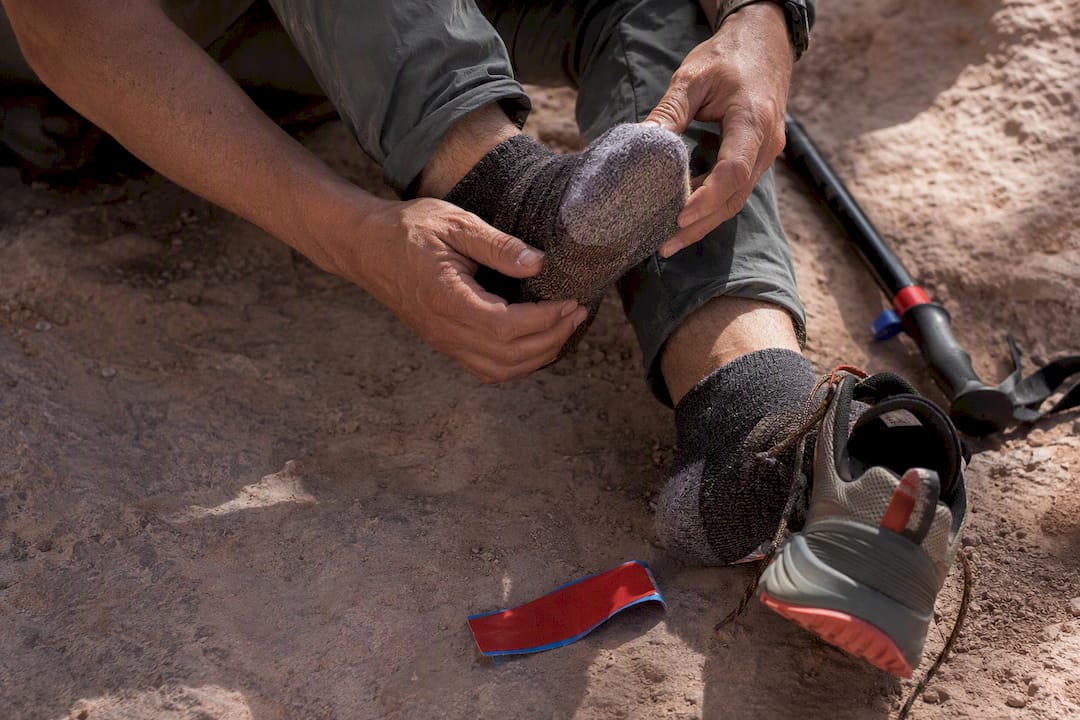
Choose boots or trail shoes broken in well before your hike, never on the trip itself. Desert terrain runs hot, and sand or fine grit works into loose-fitting shoes fast, creating friction points that a well-fitted shoe avoids from the start. Moisture-wicking socks matter more in the desert than people expect; sweat inside a boot on a hot day softens skin and speeds blister formation.
This is also where the old hiker habit of applying a thin layer of petroleum jelly to feet before a long day earns its reputation. It reduces friction between skin and sock, which is the direct mechanical cause of most blisters, especially on hot, sweaty feet covering desert miles. Check your feet during any extended break: catching a hot spot before it becomes a blister takes thirty seconds and saves hours of discomfort later.
Trim toenails before a trip, not the morning of, and give any adjustment a day to settle. Long descents on loose desert terrain push toes forward inside the shoe, and a nail that’s too long turns every downhill stretch into a source of low-grade pain that adds up over a full day.
What Are the Early Signs of Dehydration Beyond Thirst?
Thirst is a lagging indicator. By the time you feel genuinely thirsty, you’re often already a liter or more behind, which is exactly why relying on it as your only signal fails hikers in dry desert air where sweat evaporates before you notice it.
Watch for these earlier, more reliable signs instead: a headache that builds gradually rather than appearing suddenly, dry lips or a sticky feeling in your mouth, dark yellow urine, reduced urine output overall, or a subtle drop in coordination that shows up as stumbling on flat ground. Irritability and difficulty concentrating are also early markers, and they’re easy to write off as trail boredom rather than what they actually are.
Monitoring hydration effectively means checking in on a schedule, not waiting for a symptom. Glance at your urine color at every bathroom break; pale yellow is the target. Track how much you’ve actually sipped against your planned hourly volume, since it’s easy to carry three liters and only realize at the summit that you’ve barely touched them. If you’re hiking with others, watch each other for the subtler cues, slower speech, a stumble, unusual quietness, since dehydration often clouds a person’s ability to notice it in themselves before someone else does.
How Often Should You Rest on a Desert Hike?
Micro-breaks work better than one long rest stop, because they interrupt fatigue before it accumulates rather than trying to reverse it after the fact.
Plan a short break, sixty seconds to two minutes, every 60 to 90 minutes of steady walking. Use it to elevate your feet slightly, even just propped on a rock, which helps venous return and takes pressure off tired calf muscles. This is also the natural moment to check your hydration pace, eat a bite of your next scheduled snack, and glance at everyone’s mental state if you’re hiking with a group.
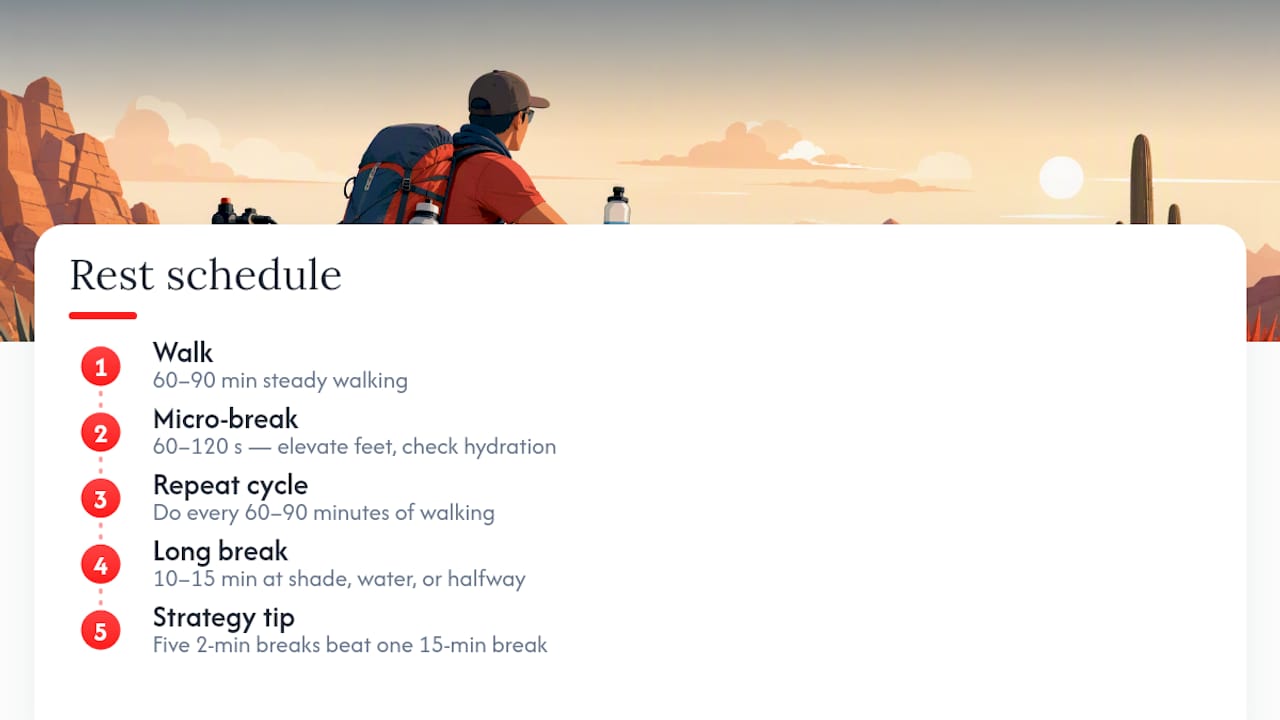
Longer breaks, ten to fifteen minutes, belong at natural landmarks: a confirmed shade patch, a water cache, the halfway point of a known route. Verifying those shade and water locations through recent trip reports before you rely on them avoids the bad surprise of arriving at a “reliable” spring that’s run dry.
Resist the urge to push past a scheduled break because you’re “making good time.” The point of a micro-break isn’t lost time, it’s banked energy. A hiker who takes five two-minute breaks across a hike almost always finishes stronger than one who pushes through and takes one exhausted fifteen-minute break at mile eight.
Author’s Perspective: What Actually Moves the Needle Out There
The single habit that separates hikers who handle desert heat well from those who don’t isn’t fitness. It’s pre-committing to decision rules before the heat starts clouding judgment: a real turn-back time, a mileage checkpoint, a rule that says if anyone shows confusion or stumbling, the group stops, full stop, no negotiating in the moment.
Honest group communication does more heavy lifting than most people expect. A trail group willing to admit “I’m not feeling great” early, rather than pushing silently, catches problems while they’re still small. Micro-breaks, shade planning, a quick pack audit before departure, none of these look dramatic. But they compound, and compounding is exactly how serious desert incidents get prevented long before they start.
— Paul
Keep Mental Clarity in Your Fatigue-Reduction Kit
Cooling, hydration, and electrolytes handle the physical side of desert fatigue.

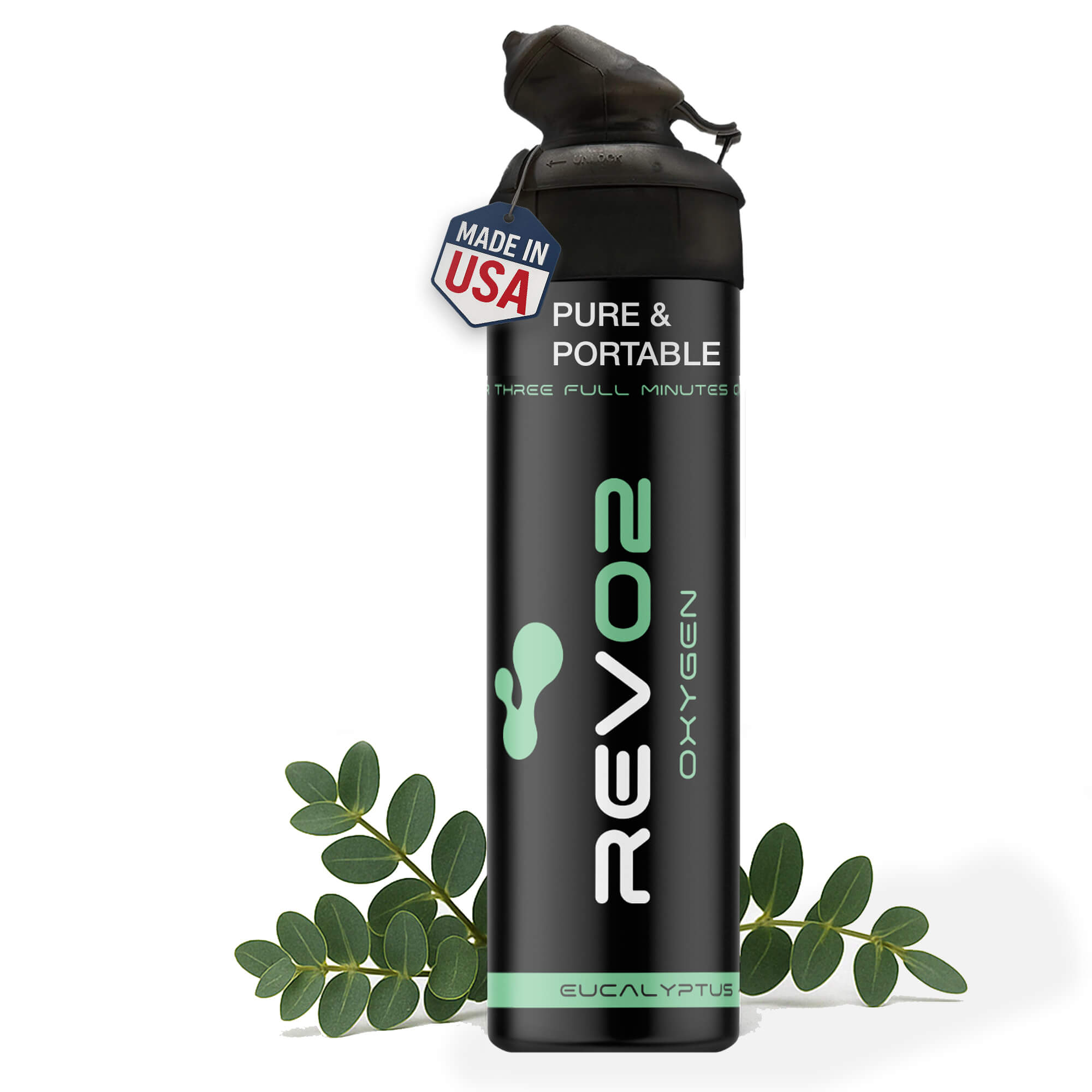
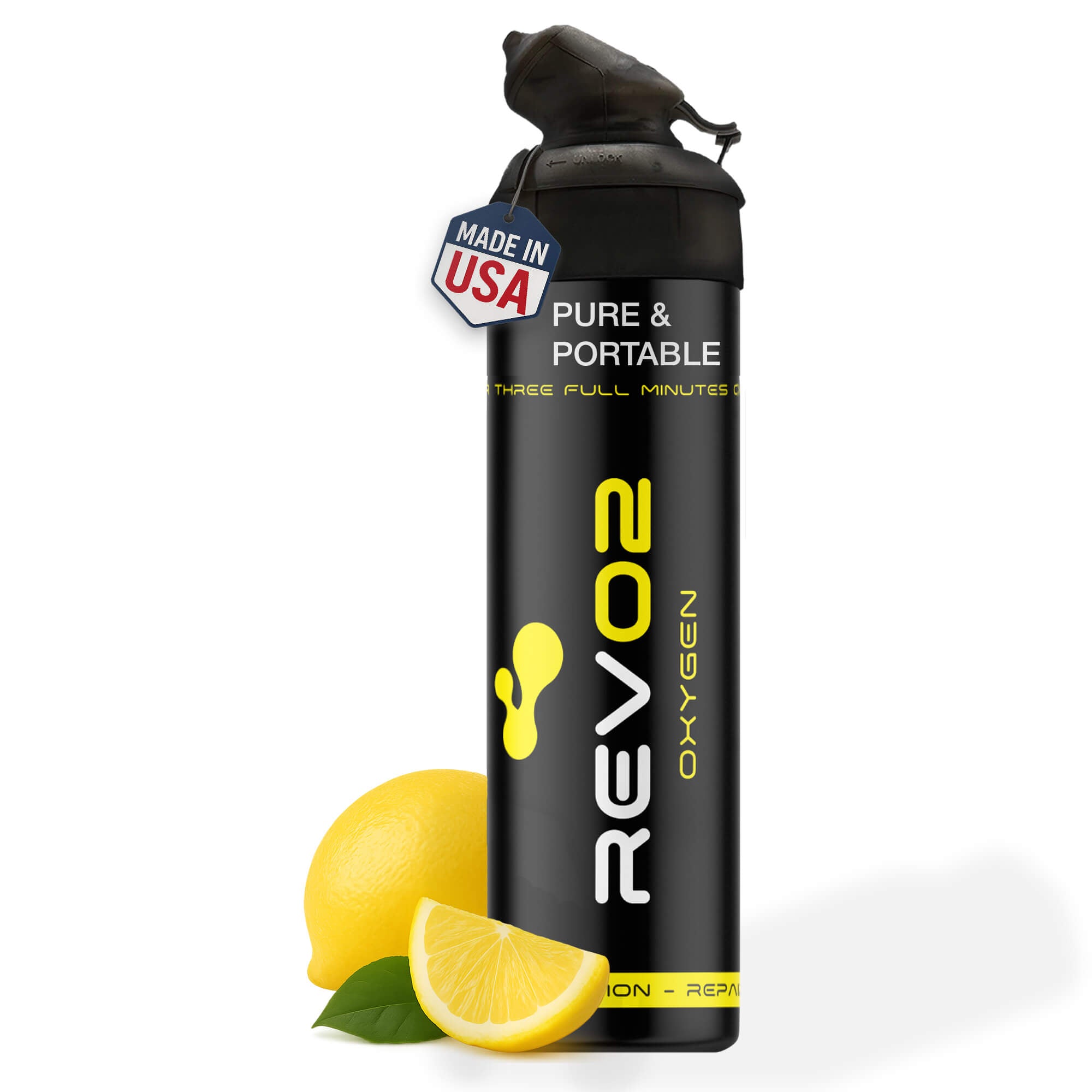
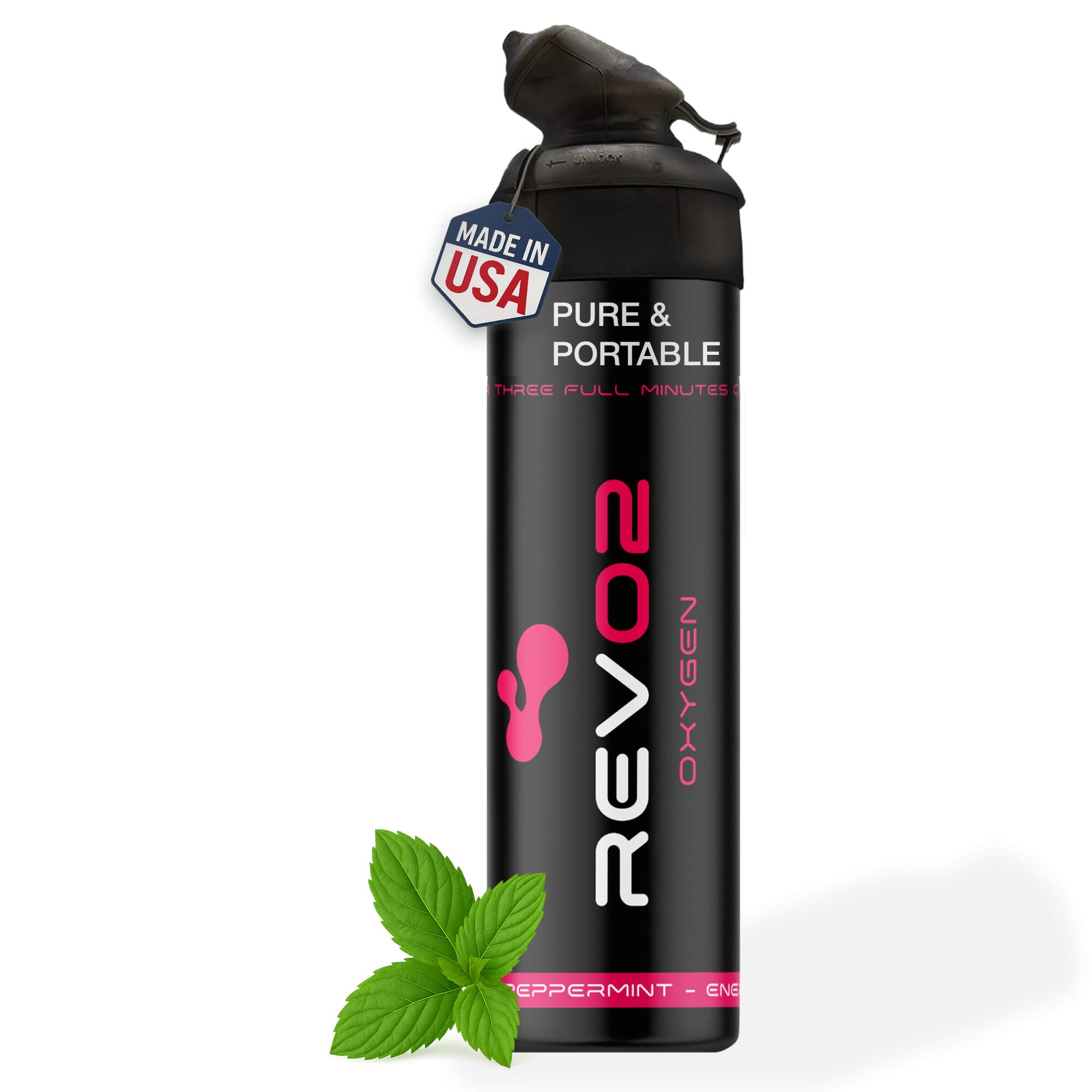
Picture a scenario a lot of desert hikers know: you’ve reached a high ridge, the sun’s brutal, and even after your scheduled water and snack break, your head still feels wrapped in cotton. That’s the moment portable canned oxygen with a zero-leak mouthpiece can earn its place in your kit, a few inhalations of oxygen, no mask, no leakage, no fumbling at altitude. Read the usage guidance before your first trip so you know exactly how and when it fits into your routine, then browse the canned oxygen collection to find a flavor and size that matches your pack space and trip length.
Sources
The guidance in this article draws on the National Park Service’s heat safety resources, the CDC’s activity-monitoring guidance, and the American Red Cross’s heat stroke first-aid protocol. For hiking-specific field advice, Palm Desert’s visitor safety guide and wilderness medicine practices from trail-guide professionals round out the practical, on-trail side of this advice.
This article is general information, not a substitute for advice from a qualified doctor. Consult a qualified healthcare professional about your own circumstances before acting on anything here.
FAQ
How can I get less tired when hiking in the desert?
Sip electrolytes rather than plain water, eat 150 to 200 calories every 1.5 to 2 hours, and keep your pace slow enough to speak 5 to 6 words comfortably. Starting before sunrise to avoid peak heat cuts fatigue significantly before it even builds.
Why do hikers use petroleum jelly on their feet?
A thin layer reduces skin-to-sock friction, which is the direct cause of most blisters, especially on hot, sweaty feet covering long desert miles. It’s a low-effort way to prevent the discomfort-related fatigue that comes from an altered gait later in the hike.
Why do hikers eat gummy bears on the trail?
Gummy bears deliver a fast, easily digestible carbohydrate hit that stabilizes blood sugar quickly, which fits the recommended cadence of 150 to 200 calories every 1.5 to 2 hours. They’re compact, don’t melt as easily as chocolate, and work well paired with a slower-burning snack like jerky on longer days.
What is post-hike fatigue and how do you recover from it?
Post-hike fatigue is the lingering exhaustion, soreness, and mental fog that follow a demanding hike, often worsened by incomplete rehydration or skipped protein intake. Recovery involves rehydrating with electrolytes, eating 20 to 30 grams of protein within an hour, gentle movement, and prioritizing sleep that night.
Can canned oxygen help with hiking fatigue?
Portable oxygen like Revo2’s 98% pure canned oxygen can support mental clarity in acute moments, such as lingering fog after a strenuous climb, but it works as an adjunct alongside hydration and cooling, not as a replacement for either.