
The Lake Louise Acute Mountain Sickness Score (LLS) is a self-report questionnaire that measures the presence and intensity of four altitude-related symptoms to detect Acute Mountain Sickness (AMS). The diagnostic rule is straightforward: if you have recently ascended to a new altitude, waited at least 6 hours, and your total score is 3 or higher with at least 1 point coming from headache, you meet the criteria for AMS.
Knowing where your score falls gives you an immediate sense of urgency:
- Mild AMS. Stop ascending, rest, and monitor closely.
- Moderate AMS. Rest, hydrate, and prepare to descend if symptoms do not improve.
- Severe AMS. Descend immediately and seek medical care.
Three actions apply the moment you score positive, regardless of severity: stop any further ascent, rest and rehydrate at your current altitude, and descend if your symptoms worsen or do not improve within 24 hours. These severity bands are widely used in clinical practice, though the 2018 consensus notes they are not formally validated as strict severity thresholds.
Key Takeaways
The Lake Louise AMS Score diagnoses Acute Mountain Sickness when a recent ascent produces a total symptom score of 3 or higher, with headache contributing at least 1 point, assessed after roughly 6 hours at the new altitude.
| Point | Details |
|---|---|
| Diagnostic rule | Headache ≥ 1 point plus total score ≥ 3, after recent ascent and ~6 hours at new altitude. |
| 2018 revision | Sleep disturbance was removed; the score now covers four symptoms with a maximum of 12 points. |
| Severity bands | 3–5 mild, 6–9 moderate, 10–12 severe — widely used in practice but not formally validated. |
| Score trends matter | A rising score despite rest signals the need for descent more reliably than any single reading. |
| Revo2 portable oxygen | Revo2 canned oxygen offers short-term symptom support as an adjunct while descent is arranged. |
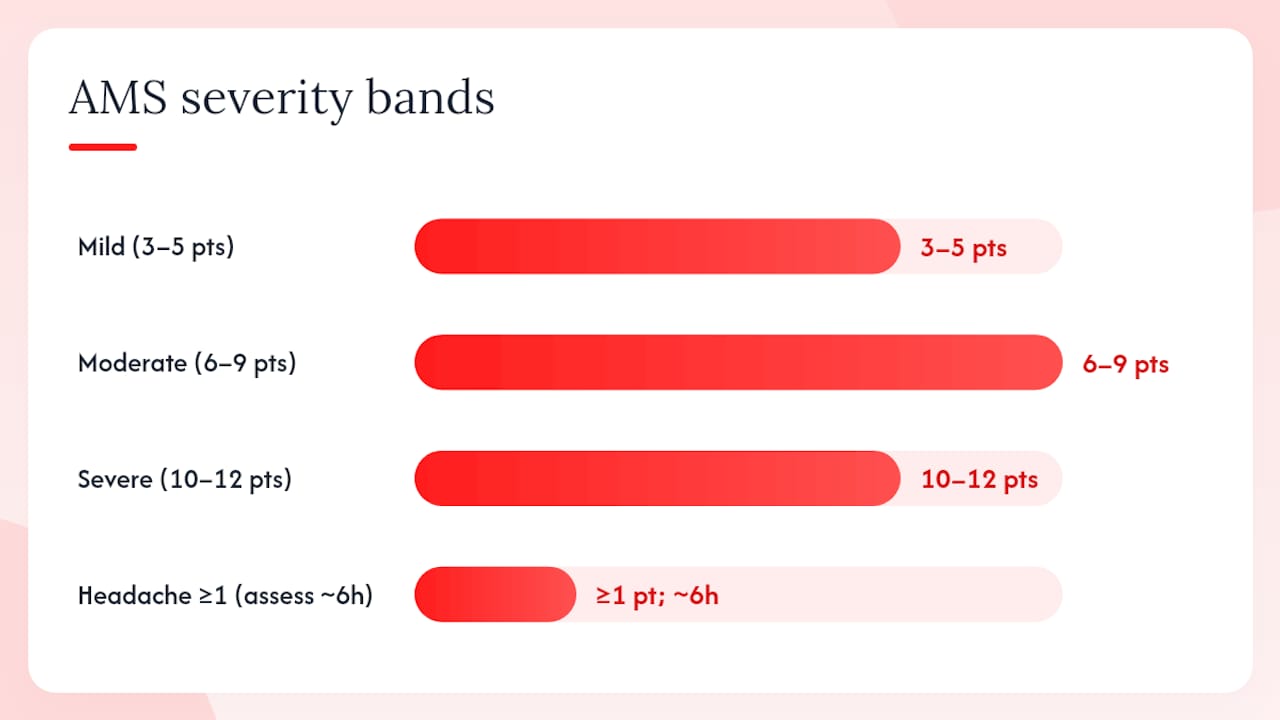
Table of Contents
- Where the Lake Louise Score came from, and why 2018 changed everything
- How each symptom is scored on the 2018 questionnaire
- How to calculate your Lake Louise score, with two worked examples
- What the score can and cannot tell you
- What to do when your score indicates AMS
- How to make your self-assessment more reliable
- A field perspective on using the Lake Louise Score in practice
- Portable oxygen as an adjunct when your score climbs
- Sources
Where the Lake Louise Score came from, and why 2018 changed everything
The original Lake Louise consensus was established in 1991 at a meeting in Lake Louise, Alberta, Canada. Researchers needed a standardized, reproducible tool for altitude medicine studies, and the questionnaire quickly became the de facto research standard worldwide. For nearly three decades, it included five items: headache, gastrointestinal symptoms, fatigue, dizziness, and sleep disturbance.
In 2018, Roach and colleagues published a revised consensus that removed the sleep disturbance item entirely. The reasoning was clinically sound: poor sleep at altitude is nearly universal and often reflects normal physiological adaptation rather than true AMS. Keeping it in the score inflated totals and produced false positives, particularly in the first night at a new elevation.
Removing sleep also reduced false negatives tied to subjective sleep complaints, making the revised score more responsive to true AMS pathophysiology. If you encounter an older version of the questionnaire that still includes a sleep question, you are looking at the pre-2018 form. The current standard uses four symptoms only.
How each symptom is scored on the 2018 questionnaire
The 2018 Lake Louise Score evaluates four symptom domains, each rated on a 0–3 intensity scale. The maximum possible total is 12 points.

The intensity scale works as follows: 0 means the symptom is absent, 1 means mild and not limiting activity, 2 means moderate and beginning to limit activity, and 3 means severe or incapacitating.
Sleep disturbance is not included in the current version. The Physiopedia summary of the diagnostic rule confirms that headache must contribute at least 1 point for the total to qualify as AMS, regardless of how high the other three scores are.
How to calculate your Lake Louise score, with two worked examples
Calculating your score takes under two minutes. Follow these steps carefully, and pay attention to the timing rule before you begin.
- Wait at least 6 hours after arriving at your new altitude. Scoring too soon risks a false positive from travel fatigue, dehydration, or the body’s acute hypoxia response, none of which indicate true AMS. Self-assessment guidance consistently reinforces this timing window.
- Rate each of the four symptoms (headache, gastrointestinal, fatigue, dizziness) on the 0–3 scale above. Be honest; under-reporting is a common pitfall.
- Add the four scores to get your total (maximum 12).
- Check the headache requirement. Your headache score must be at least 1. A total of 3 or higher with zero headache points does not meet the AMS diagnostic rule.
- Apply the diagnostic rule: recent ascent + headache ≥ 1 + total ≥ 3 = AMS.
Example A — Mild AMS (positive diagnosis): Headache: 2, Gastrointestinal: 1, Fatigue: 1, Dizziness: 1. Total = 5. Headache score ≥ 1 ✓. Total ≥ 3 ✓. Diagnosis: mild AMS. Action: stop ascending, rest, monitor.
Example B — No AMS despite equal total (negative diagnosis): Headache: 0, Gastrointestinal: 2, Fatigue: 2, Dizziness: 1. Total = 5. Headache score = 0 ✗. Despite a total of 5, the headache requirement is not met. AMS is not diagnosed by this tool. These symptoms still warrant attention and hydration, but the LLS criterion is not satisfied.
The Travel Health Doc calculator offers a practical field-ready version of this scoring process if you want to work through your numbers interactively.
What the score can and cannot tell you
The Lake Louise Score was designed primarily as a research standardization tool, giving altitude medicine investigators a consistent, reproducible measure across studies. In clinical and field settings, it functions as a practical screening instrument, not a replacement for a clinician’s judgment.
Its strengths are real: it is brief, requires no equipment, and produces a number that guides immediate safety decisions. Its limitations are equally real and worth understanding before you rely on it in the field.
Limitations to keep in mind:
- The severity bands (3–5 mild, 6–9 moderate, 10–12 severe) are common clinical conventions, but the consensus committee explicitly stated they are not formally validated as strict severity thresholds.
- Self-assessment tends to under- or over-report symptoms compared with investigator-led scoring. Fatigue and mild dizziness are especially prone to under-reporting when people are motivated to continue ascending.
- Confounding factors such as travel fatigue, dehydration, viral illness, or a hangover can mimic AMS symptoms and inflate your score without true altitude pathology being present.
- Cognitive impairment from altitude itself can reduce scoring accuracy at higher elevations.
The Lake Louise Score does not screen for High Altitude Pulmonary Edema (HAPE) or High Altitude Cerebral Edema (HACE). These are life-threatening emergencies with distinct presentations that require immediate evacuation, not a questionnaire.
HAPE warning signs include breathlessness at rest, a persistent dry cough that progresses to producing frothy or pink-tinged sputum, and extreme fatigue disproportionate to exertion. HACE warning signs include confusion, loss of coordination (ataxia), severe headache unresponsive to ibuprofen, and altered consciousness. If you observe any of these, treat it as an emergency, not a scoring exercise. Altitude also interacts with cognitive and neurological function in ways that extend beyond AMS; research on altitude and neurocognitive effects highlights why subjective symptom reporting can be unreliable at elevation.
Pro Tip: If you are unsure whether your symptoms reflect AMS or dehydration, drink 500–750 ml of water, rest for 30 minutes, then re-score. Dehydration-driven symptoms often improve; true AMS symptoms typically persist or worsen.
What to do when your score indicates AMS
A positive score is a signal to act, not to wait and see. Here is the priority order:
- Stop ascending immediately. No further altitude gain until your score returns below 3 or you have been symptom-free for 24 hours.
- Rest at your current altitude. Light activity is acceptable; strenuous exertion worsens AMS.
- Rehydrate. Dehydration compounds altitude symptoms; aim for clear urine.
- Re-score after 12–24 hours of rest. If your score improves, cautious acclimatization can resume. If it stays the same or rises, descend.
- Descend if symptoms persist or worsen. A descent of 300–1,000 meters typically produces rapid improvement. Descent is the most reliable treatment available in the field.
- Use supplemental oxygen if available. Portable supplemental oxygen can provide temporary symptom relief while you prepare to descend or await evacuation. See the supplemental oxygen for altitude guide for practical usage notes. It is an adjunct, not a substitute for descent.
- Seek professional medical care if symptoms are moderate to severe, if descent is not immediately possible, or if you have any doubt about the diagnosis.
Emergency red flags requiring urgent evacuation:
- Confusion, disorientation, or unusual behavior (HACE)
- Loss of coordination or inability to walk a straight line (ataxia)
- Breathlessness at rest or a cough producing frothy or pink sputum (HAPE)
- Severe headache unresponsive to ibuprofen or acetaminophen
- Loss of consciousness
Do not attempt to score someone who is confused or ataxic. Treat it as HACE and evacuate.
How to make your self-assessment more reliable
Timing is the single most controllable variable in LLS accuracy. Scoring within the first few hours of arriving at altitude frequently produces false positives because travel fatigue, mild dehydration, and the body’s acute hypoxia response all mimic AMS symptoms. The 2018 consensus recommends waiting roughly 6 hours after reaching a new altitude before assessing, and practical self-assessment resources reinforce this consistently.
A partner verification step adds meaningful reliability. Ask your hiking partner to read each question aloud and confirm your answer before you record it. This “read-back” method reduces under-reporting driven by summit motivation and catches cognitive impairment that the person being scored may not notice in themselves.
Trend monitoring matters more than any single score. A score of 4 that rises to 6 after 12 hours of rest is a stronger signal for descent than a stable score of 5. Practitioners consistently prioritize a rising score over an isolated reading, and ongoing research into extended scoring approaches is exploring how trend data and additional symptom items might improve AMS measurement further.
Pro Tip: Keep a simple log: note your score, the time, your current altitude, and your hydration status at each assessment. Three data points tell a story that one never can.
A field perspective on using the Lake Louise Score in practice
The Lake Louise Score is most useful when it becomes a habit rather than a reaction. Checking your score proactively every morning at a new altitude, before symptoms become obvious, gives you a baseline and catches early AMS before it escalates.
For group leaders and guides, the most practical approach is to ask each team member the four questions individually rather than as a group. People tend to anchor to the first answer they hear, which suppresses honest reporting. Frame each question neutrally: “How would you describe your head right now?” rather than “You don’t have a headache, do you?”
Recording scores in a shared group log, even a simple notes app, creates accountability and makes trend monitoring straightforward. If one member’s score rises while others remain stable, that person needs attention regardless of whether they are complaining. Altitude sickness does not always feel dramatic in its early stages, and the score exists precisely to catch what subjective self-reporting misses.
When scores suggest a borderline situation (total of 3–4, mild headache only), the conservative call is always to rest at the current altitude for a full day before ascending further. The mountain will still be there tomorrow.
Portable oxygen as an adjunct when your score climbs
When your Lake Louise score rises and descent is not yet possible, supplemental oxygen can provide meaningful short-term relief from AMS symptoms. Revo2’s portable canned oxygen delivers 98% pure oxygen through a zero-leak mouthpiece, making it practical to carry and use on the trail without the bulk of traditional medical oxygen systems.
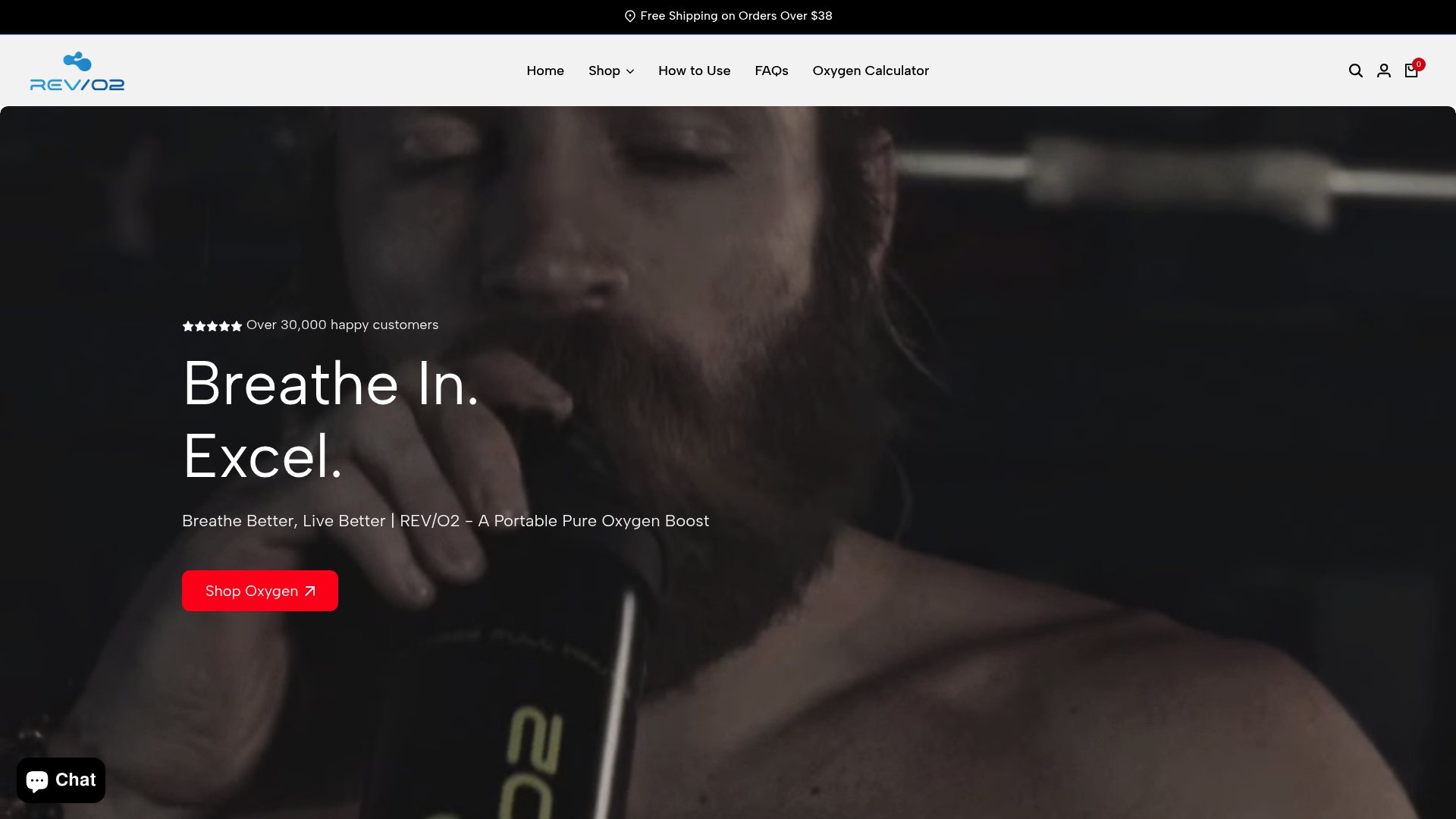
Portable oxygen works as a bridge: it can ease headache, reduce dizziness, and support clearer thinking while you organize a safe descent or wait for evacuation support. It is not a treatment for AMS, and it does not replace descent or professional medical care in moderate to severe cases. For anyone with a medical condition or seeking prescription-grade oxygen therapy, consult a physician before use.
If you are planning a high-altitude hike or trek, consider adding oxygen for hiking to your kit alongside your altitude sickness prevention plan. Browse Revo2’s range and find the canister that fits your pack.
Sources
The primary reference for the current scoring system is the 2018 Roach et al. consensus paper, available in full through Plymouth University’s research repository: The 2018 Lake Louise Acute Mountain Sickness Score. This is a peer-reviewed consensus document and the authoritative source for the diagnostic rule, the four symptom domains, and the rationale for removing sleep disturbance.
For a concise clinical summary of the scoring items and severity bands, the FP Notebook entry on the Lake Louise AMS Score is a reliable quick reference used by emergency and wilderness medicine practitioners.
Physiopedia’s Lake Louise Questionnaire page provides a structured clinical summary that reproduces the diagnostic rule and symptom domains, useful for readers who want a peer-reviewed-adjacent overview without reading the full consensus paper.
For interactive field use, the Travel Health Doc Lake Louise Score calculator lets you enter your scores and receive an immediate interpretation, making it practical for use on a phone at altitude.
Researchers and readers interested in where altitude medicine scoring is heading can consult the Extended Lake Louise Score article in Travel Medicine and Infectious Disease, which explores expanded item sets and methodological refinements currently under evaluation.
For readers who want to understand the physiological context behind why altitude reduces available oxygen, Revo2’s altitude-to-oxygen level calculator illustrates how atmospheric oxygen saturation changes with elevation.
This article provides general educational information about the Lake Louise AMS scoring system and is not a substitute for professional medical advice. If you experience symptoms of altitude sickness, consult a qualified healthcare provider or emergency services as appropriate.
- The 2018 Lake Louise Acute Mountain Sickness Score.
- Lake Louise Acute Mountain Sickness Score
- Lake Louise Questionnaire for the Symptoms of Acute Mountain Sickness - Physiopedia
- Lake Louise Score - Travel Health Doc
- Extended Lake Louise Score: a novel standard evaluation …