
Occasional use of recreational canned oxygen is generally low-risk for healthy people, but it is not a medical treatment. A few puffs before a hike or a workout won’t meaningfully change your blood oxygen levels, and it won’t hurt you either. The real “too much oxygen risks” concerns show up around misuse: relying on a can instead of seeing a doctor, storing it near heat, or assuming it works like the oxygen in a hospital. The sections below walk through the physiological limits, the practical hazards, and the specific warning signs that mean it’s time to stop and call a clinician.
TL;DR:
- Short bursts of recreational canned oxygen do not sustainably raise blood oxygen levels or treat altitude sickness, as effects disappear within minutes.
- Using canned oxygen to mask symptoms can delay proper medical diagnosis, especially for severe breathlessness or chest pain.
- Store cans upright, away from heat or flames, and never bring them on flights, as they are pressurized and pose fire hazards or will be confiscated.
- People with respiratory or heart conditions, or recent lung infections, should avoid recreational oxygen and seek medical advice for genuine symptoms.
- Proper use involves following manufacturer instructions, using unscented formulations if sensitive, and treating it as a short-term aid rather than a medical solution.
Table of Contents
- How Recreational Canned Oxygen Works (And Why the Effects Fade Fast)
- What Are the Real Risks of Using Too Much Canned Oxygen?
- Who Should Avoid Canned Oxygen, and What Symptoms Mean Stop
- Storage, Handling, and Travel Rules You Need to Know
- How to Use Canned Oxygen Safely for Occasional Boosts
- How Revo2 Approaches Recreational Oxygen Safety
- Get Reliable Recreational Oxygen Without the Guesswork
- The Gap Between Oxygen Marketing and What It Actually Does
- Sources
How Recreational Canned Oxygen Works (And Why the Effects Fade Fast)
A can of recreational oxygen delivers short bursts through a mouthpiece, not a continuous stream. Most consumer cans hold enough compressed 98% oxygen for dozens of one to two second inhalations, compared to medical oxygen therapy, which runs continuously for hours through a nasal cannula or mask at a controlled flow rate. That difference in delivery is the whole story.
Your body doesn’t bank oxygen for later. Hemoglobin in healthy lungs is already close to fully saturated on room air, so a quick puff from a can barely nudges your blood oxygen level, and any bump disappears within minutes. Research from CU Anschutz found that these short, intermittent puffs simply don’t provide the sustained delivery needed to meaningfully raise arterial oxygen or treat altitude sickness. The same analysis notes that sustained rises in blood oxygen require continuous flow over minutes, not seconds, which is why a canister can’t substitute for prescribed therapy.
A few practical facts worth knowing before your first can:
- Canned oxygen is sold and labeled for recreational use only. It is not FDA-approved as a medical device.
- Manufacturer instructions specify dose counts and puff duration. These aren’t arbitrary. They reflect how little oxygen a single burst actually delivers.
- Any perceived energy boost or mental clarity tends to be short and subjective, not a measurable change in oxygen saturation.
Understanding this distinction matters more than any marketing claim on the can. Recreational oxygen is a short-term comfort tool, not a substitute for the sustained flow that treats genuine hypoxemia.
What Are the Real Risks of Using Too Much Canned Oxygen?
The dangers with canned oxygen rarely come from the gas itself. They come from how people use, store, or rely on it. Four risks deserve your attention before you buy your first multi-pack.
Masking symptoms and delaying real care is the most serious. A PMC review documented public reviews describing people using over-the-counter canned oxygen as a substitute for prescribed medical oxygen or to avoid an emergency room visit. If shortness of breath, chest tightness, or dizziness feels like something more than routine exertion, a canister is the wrong tool. It buys you a feeling of relief while an underlying problem goes untreated.
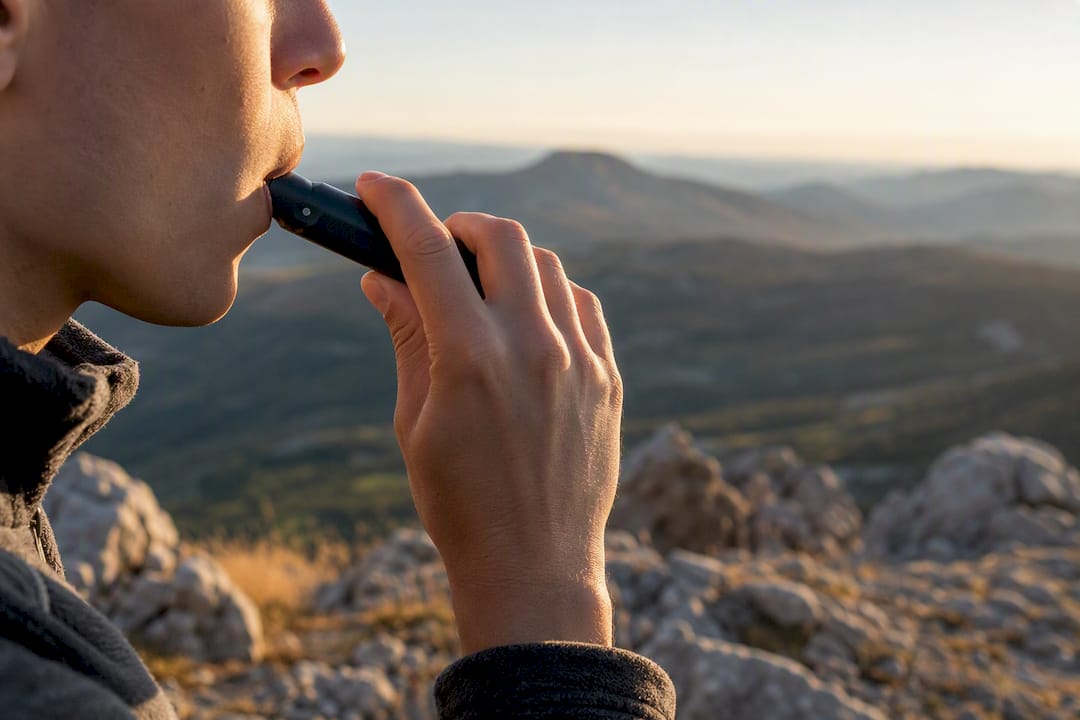
Respiratory irritation from scented additives affects a smaller but real slice of users. Flavored oxygen blends use trace aromatics, and anyone with asthma, COPD, or airway sensitivity can react to inhaled fragrances with coughing or wheezing.
Fire hazard from oxygen-enriched air is a physical, not physiological, risk. Oxygen doesn’t burn on its own, but it dramatically accelerates combustion of nearby materials. The National Council on Aging notes that OTC canned oxygen is unregulated by the FDA and that consumers should treat every can as a flammability risk near heat or flame.
Classic oxygen toxicity (the lung and central nervous system damage seen in prolonged high-concentration exposure) is a clinical phenomenon tied to sustained, high-flow therapy or hyperbaric settings, not occasional consumer puffs. For recreational users, the practical concern isn’t toxicity in that clinical sense. It’s misuse: treating a can as medicine, using it too often, or ignoring warning symptoms it can’t fix.
- Delayed treatment from substituting canned oxygen for prescribed therapy
- Airway irritation from scented formulations in sensitive users
- Increased fire risk from oxygen-enriched air near open flames
- Overreliance on a short-term product to manage a persistent symptom
Who Should Avoid Canned Oxygen, and What Symptoms Mean Stop
Some readers should skip recreational oxygen entirely, or at minimum, talk to a doctor first. Certain health conditions change the calculation.
- People with COPD or chronic lung disease. Supplemental oxygen in this group needs to be dosed and monitored by a clinician, not self-administered from a flavored can.
- People with asthma, especially those sensitive to scents or aerosolized particles, face a real irritation risk from flavored formulations.
- People with heart disease, including arrhythmias or heart failure, should never treat breathlessness with an over-the-counter product before medical evaluation.
- Anyone recovering from a recent serious respiratory infection, including pneumonia or COVID-19, since lingering lung inflammation changes how the airway responds to inhaled substances.
None of these groups should use canned oxygen as a stand-in for prescribed oxygen therapy. If you experience severe shortness of breath, chest pain, fainting, blue-tinted lips or fingertips, or a pulse oximeter reading under 90%, that is not a moment for a canister. It’s a moment to call a doctor or go to urgent care. When you’re unsure whether a symptom is routine fatigue or something more, ask a clinician rather than guessing with a can in hand.
Storage, Handling, and Travel Rules You Need to Know
Canned oxygen is pressurized, and that changes how you store and transport it. Get the basics wrong and the risk shifts from “wasted purchase” to genuine fire hazard.
Keep cans upright, away from direct heat sources, and never near open flames or lit cigarettes. The National Council on Aging points out that oxygen-enriched environments increase flammability of surrounding materials, so a can sitting near a stove or campfire is a bad idea regardless of how sealed it looks. Avoid leaving canisters in a hot car or in direct sunlight, since heat buildup raises internal pressure. Revo2 has a dedicated guide on storing oxygen cans in your car if you’re packing one for a road trip.
Air travel is where people most often get caught off guard. The FAA prohibits passengers from carrying compressed or liquid oxygen in checked or carry-on baggage. Don’t plan on bringing a canister for in-flight altitude support. It will be confiscated at security, and there’s no workaround.
- Store upright, away from heat, flame, and direct sun
- Never smoke near an open or stored canister
- Leave canned oxygen at home when flying; it won’t clear TSA or airline screening
- Follow the exact handling instructions printed on the label
Pro Tip: Read the safety label before your first use, not after. Manufacturer instructions cover dose limits and storage conditions that vary slightly between brands, and skipping that thirty seconds is where most avoidable mistakes start.
How to Use Canned Oxygen Safely for Occasional Boosts
If you’ve read this far and still want to keep a can in your gym bag or glove compartment, here’s how to do it without turning a short-term comfort tool into a bad habit.
- Follow the manufacturer’s dosing guidance. Most cans specify puff count and frequency for a reason. Stick to it rather than treating the can as unlimited.
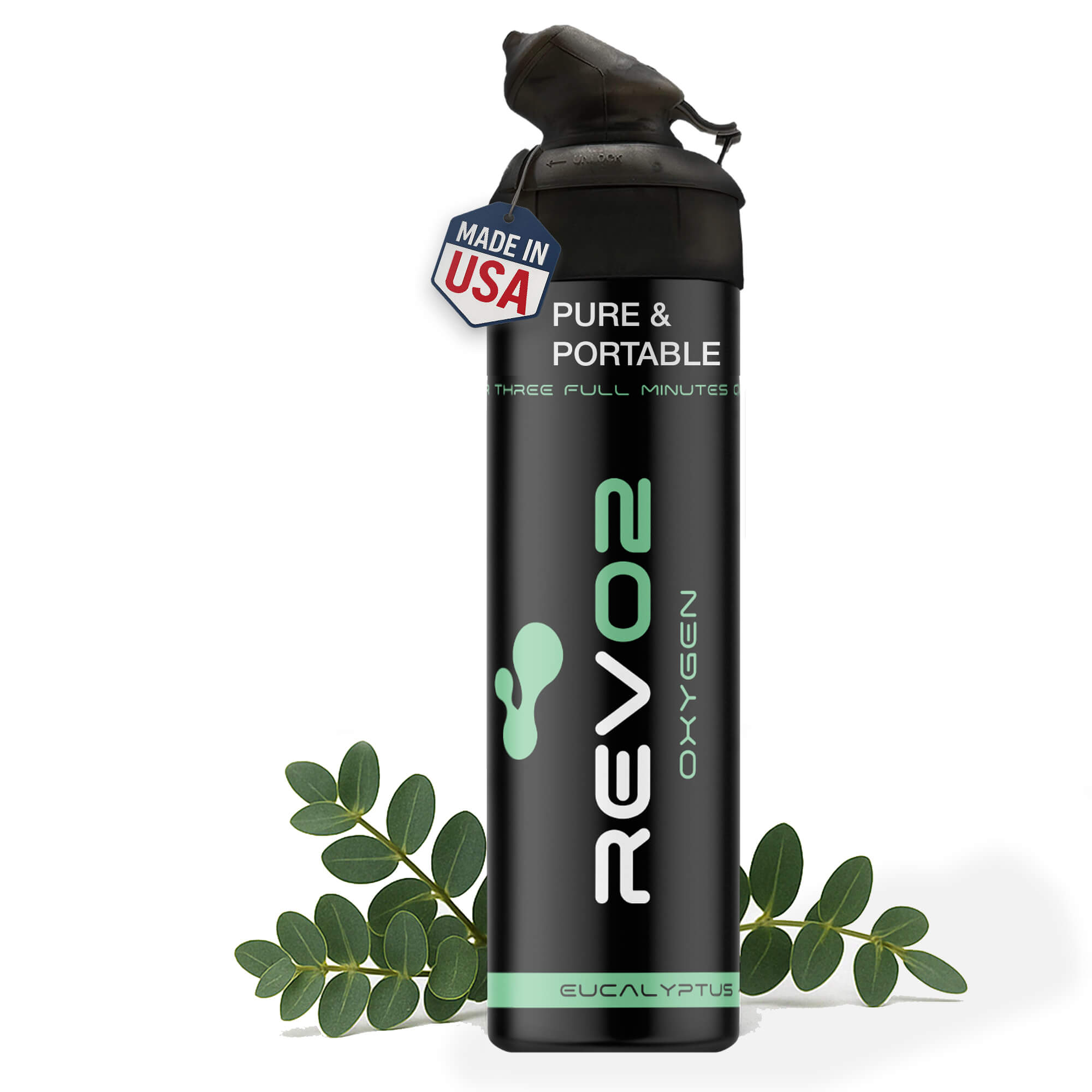
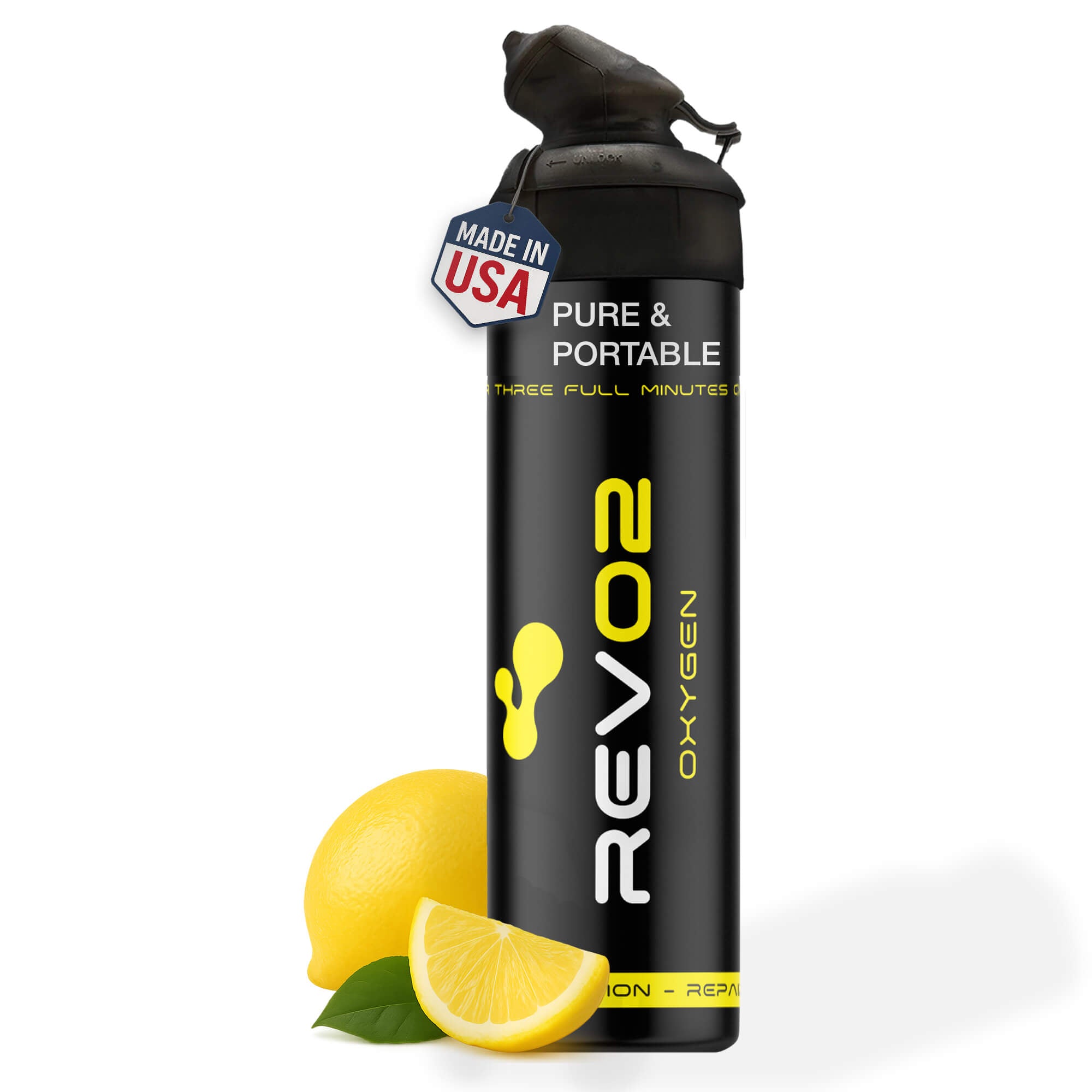
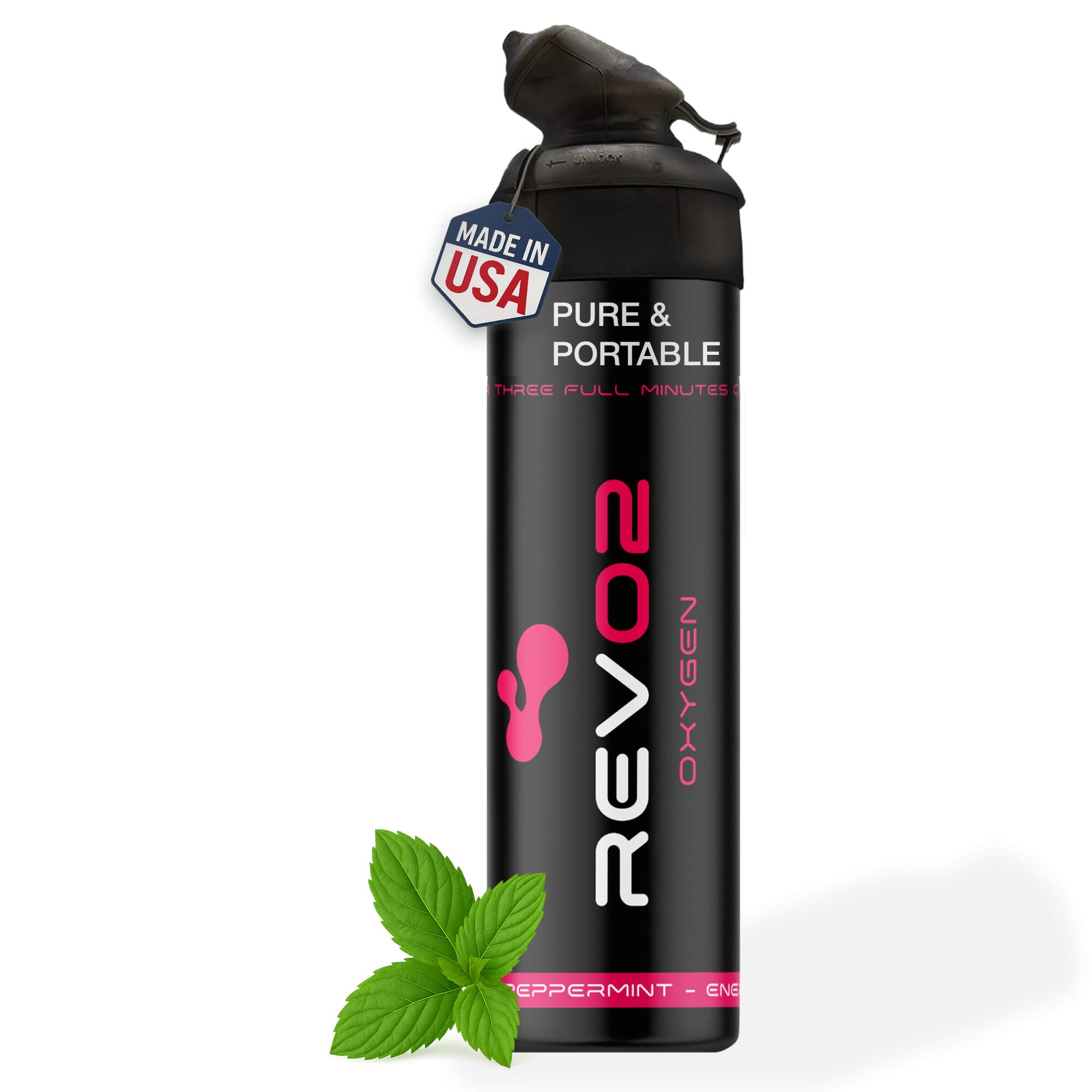
- Choose unscented formulations if you have any airway sensitivity. Peppermint, lemon, and eucalyptus blends are pleasant for most users, but if you notice coughing or throat tightness, switch or stop.
- Use it as a brief aid, not a treatment. A few puffs after a hard set or a high-altitude scramble can support a short recovery window. It is not a fix for persistent breathlessness.
- Keep your expectations realistic. Any sensation of clarity or calm typically fades within minutes, consistent with how briefly a single puff affects circulating oxygen.
A neutral third-party review of ergogenic aids makes a similar point about most performance products marketed to athletes: the measurable physiological effect is often smaller than the subjective one. Treat canned oxygen the same way, and you’ll use it more sensibly.
How Revo2 Approaches Recreational Oxygen Safety
Revo2 builds its cans around a simple idea: if you’re going to breathe recreational oxygen, the delivery should waste as little as possible. The zero-leak mouthpiece is designed so each puff reaches your airway instead of dispersing into the air around a loose mask, which is one reason athletes and frequent travelers gave input during development.
None of that changes the core guidance in this article. Revo2 cans are not a medical device, and they’re not a substitute for prescribed therapy or a doctor’s evaluation. What good design does is reduce the everyday friction and waste that come with lower-quality delivery systems, so the oxygen you do inhale during a short recovery break or an altitude hike actually gets used. If you want the specifics on dosing and technique, the how-to-use guide covers it in more depth than a label can.
Get Reliable Recreational Oxygen Without the Guesswork
Revo2 is the straightforward option for hikers, athletes, and travelers who want a short-term oxygen boost without navigating unclear labeling or flimsy delivery systems.
If you’re heading into thinner air soon, check your expected conditions with the altitude oxygen calculator before you pack. For a fast pick, the peppermint canned oxygen collection covers most everyday recovery and energy needs, and the multi-pack option is worth it if you use it regularly. Grab a can, read the label, and keep your expectations exactly where this article set them: short-term support, not a substitute for medical care.
The Gap Between Oxygen Marketing and What It Actually Does
Most of the anxiety around “too much oxygen” for recreational users is misplaced. The physiology is almost boring: a couple of puffs from a can barely register against a healthy person’s baseline saturation, and the effect is gone before you’ve caught your breath from the hike itself. The actual risk isn’t a chemistry problem. It’s a judgment problem.
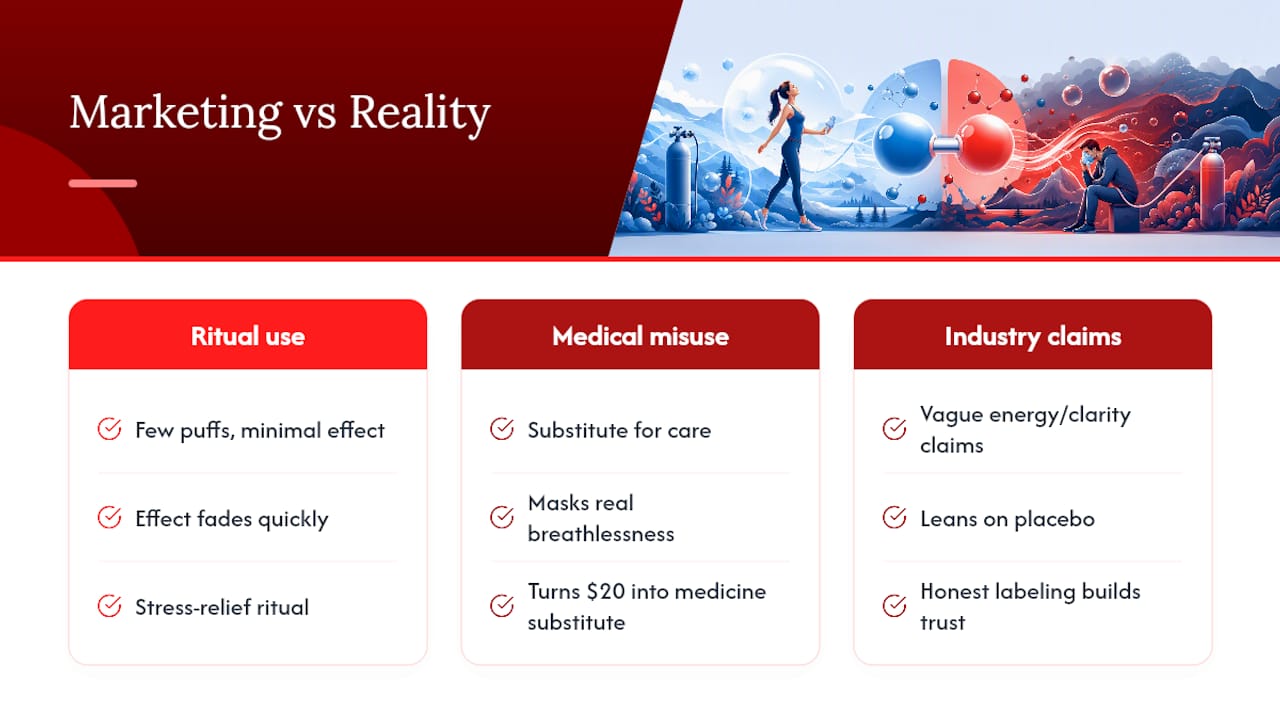
What gets overlooked in most coverage of this topic is that the danger scales with how you think about the product, not how much oxygen comes out of the nozzle. Someone who treats a can as a stress-relief ritual before a big presentation is using it exactly as intended. Someone who treats it as a way to avoid an ER visit for genuine breathlessness has turned a $20 recreational item into a substitute for medicine it was never built to be. The label warnings and the FAA restrictions exist because that gap between intention and use is where real harm lives, not in the gas itself.
The industry could do a better job being blunt about this instead of leaning on vague energy and clarity claims. A product built around honest labeling and a delivery system that doesn’t waste oxygen through a leaky mask earns more trust than one riding on placebo-driven marketing. That’s the standard worth holding every recreational oxygen brand to, including this one.
— Paul
Sources
- Does Oxygen in a Can Deliver on Its Altitude and Energy Claims?
- PMC review reporting public reviews showing OTC canned oxygen used for potential medical purposes
- Over-the-Counter Oxygen vs. Prescription Oxygen: What’s Safe and What Works
- FAA guidance on compressed or liquid oxygen