
A single can of recreational oxygen typically runs within a moderate price range depending on size, while a full home oxygen setup can cost several hundred to a few thousand dollars for concentrators, plus monthly rentals, refills, or service plans that vary widely. Those two price categories solve very different problems, and understanding which one you actually need is the first decision, before you ever look at a dollar figure.
Here’s the caveat that matters more than any price tag: over the counter canned oxygen is a wellness and recovery product, not a substitute for prescribed medical oxygen. If a doctor has ordered oxygen therapy for a diagnosed condition, that’s a different category entirely, governed by Medicare’s durable medical equipment rules and a physician’s prescription, not a retail purchase decision.
Quick price snapshot:
- Pocket-size 3L canned oxygen: generally low-cost per single can
- Mid-size 5L canned oxygen: moderately priced per can
- Large 10–12L canned oxygen: higher per unit price but better per-breath value
- Portable home concentrators: prices vary widely, typically in a range from a few hundred to several thousand dollars
- Stationary home concentrators: more expensive units across roughly similar price bands
- Home oxygen rental/service plans: monthly costs span a broad range depending on service level and equipment.
The rest of this guide breaks down exactly what drives those numbers, how many breaths you actually get per can, and where the smart money goes depending on whether you’re chasing an altitude boost or managing a prescribed condition.
Key Takeaways
Canned oxygen costs $7 to $25 per can depending on size, while home oxygen equipment ranges from $600 for portable concentrators to $4,000 for stationary units plus $50 to $400 monthly.
| Point | Details |
|---|---|
| Canned oxygen pricing | Expect $7–$15 for 3L cans, $8–$18 for 5L cans, and $12–$25 for 10–12L large cans. |
| Cost per breath | A 10–11L can delivers roughly 210 inhalations, often working out to under $0.10 per breath. |
| Home equipment costs | Portable concentrators run $600–$3,000+; stationary units run $1,000–$4,000 new. |
| Medicare reduces costs | Medicare typically covers a substantial portion of the approved rental rate for qualifying patients. |
| Safety boundary | Recreational canned oxygen never replaces a physician-prescribed oxygen regimen for a diagnosed condition. |
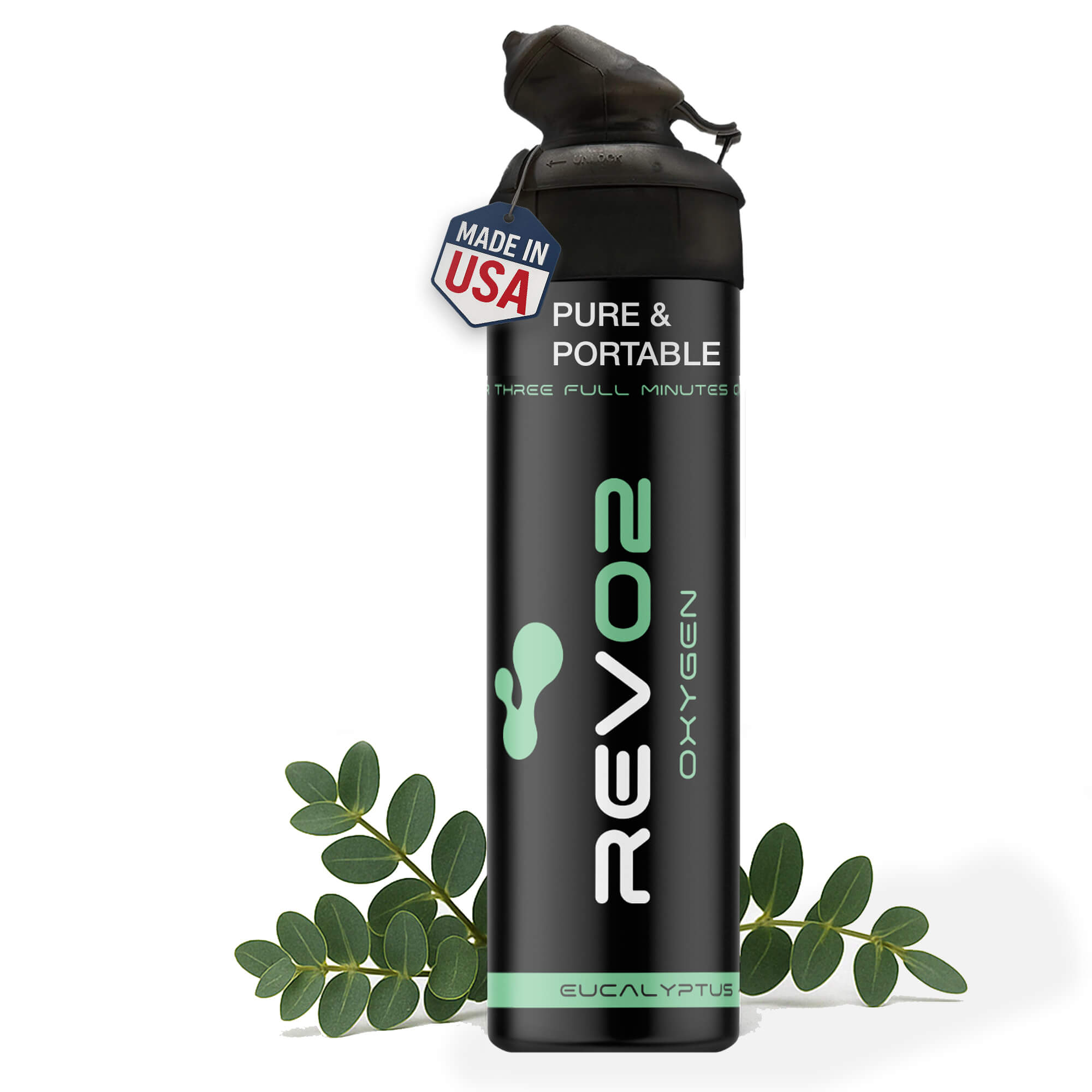
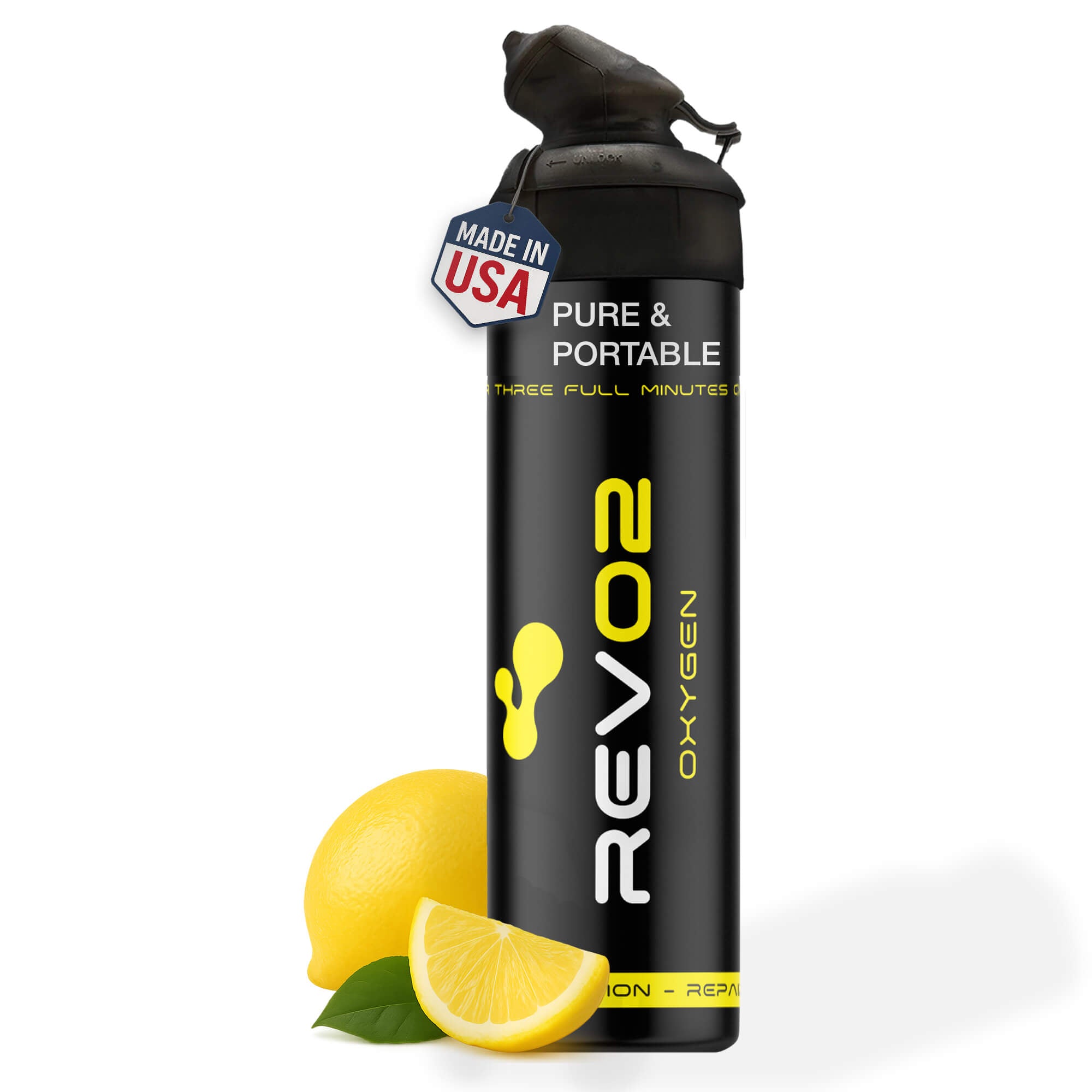
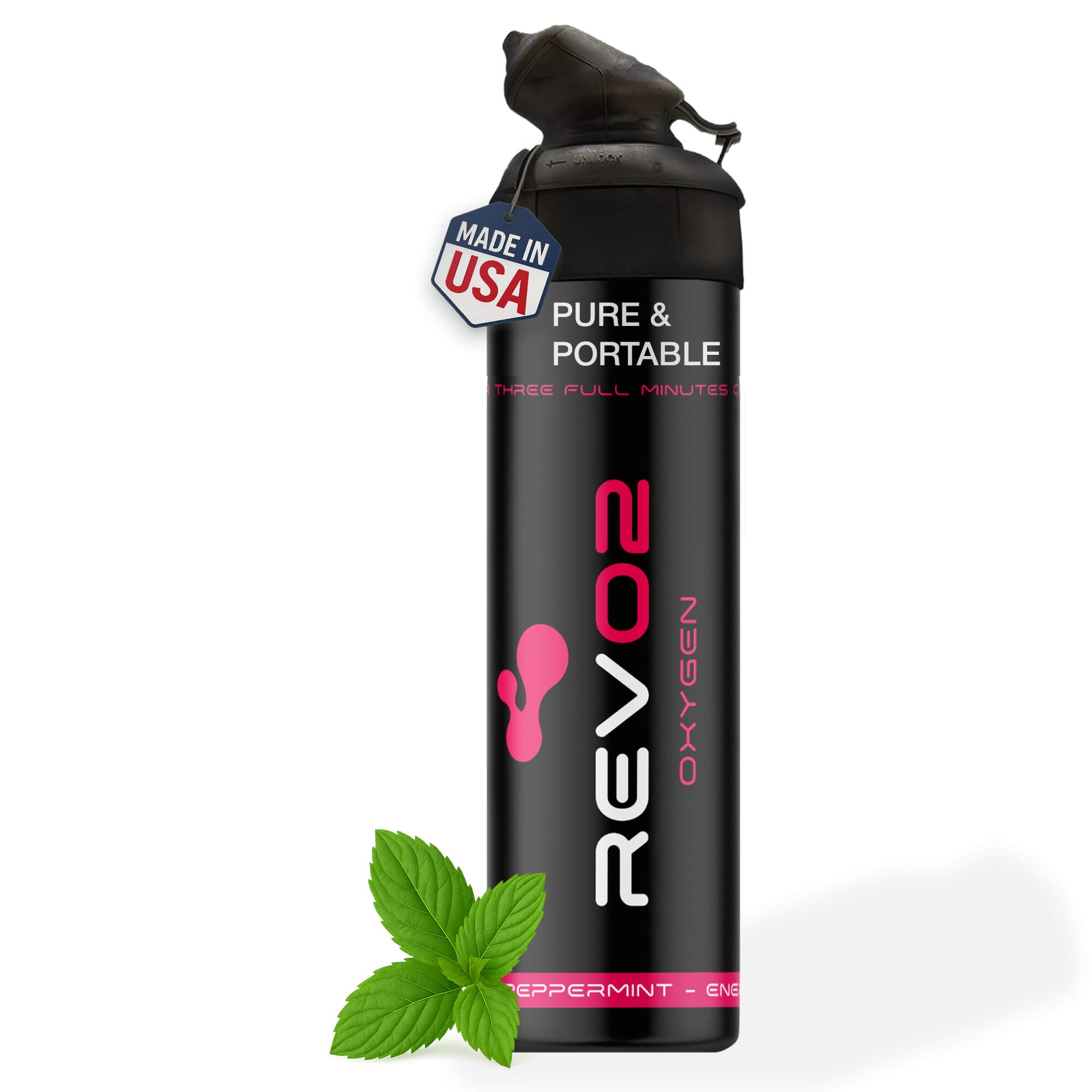
| REV/O2 fits the wellness category | REV/O2 offers 98% pure oxygen in peppermint, lemon, and eucalyptus cans with multi-pack pricing for frequent recreational use. |
Table of Contents
- How Much Does an Oxygen Can Cost by Size and Format?
- What Does Home Oxygen Equipment Cost? Concentrators, Rentals, and Tanks
- What Drives Oxygen Prices Up or Down?
- Where to Buy Oxygen: Retail, Direct-to-Consumer, and Medical Suppliers
- How Many Breaths Do You Actually Get, and What’s the Real Cost?
- Recreational Oxygen Is Not a Substitute for Prescribed Therapy
- Where REV/O2 Fits in the Oxygen Pricing Picture
- Get REV/O2’s Recreational Oxygen Without the Guesswork
- Sources
How Much Does an Oxygen Can Cost by Size and Format?
Canned oxygen pricing tracks almost entirely with volume, and volume determines how many usable breaths you get before the can runs dry. That relationship is the whole game when you’re comparing brands or pack sizes at checkout.
Price bands by canister size
Pocket-size cans, generally in the 3-liter range, are built for a quick hit of oxygen between activities. Expect to pay $7 to $15 for a single can at this size, whether you’re buying flavored or unflavored formats. Retail listings for mid-range products, including multi-pack canned oxygen sold through mainstream retailers, show this same pattern across brands: smaller cans cost less per unit but more per breath.
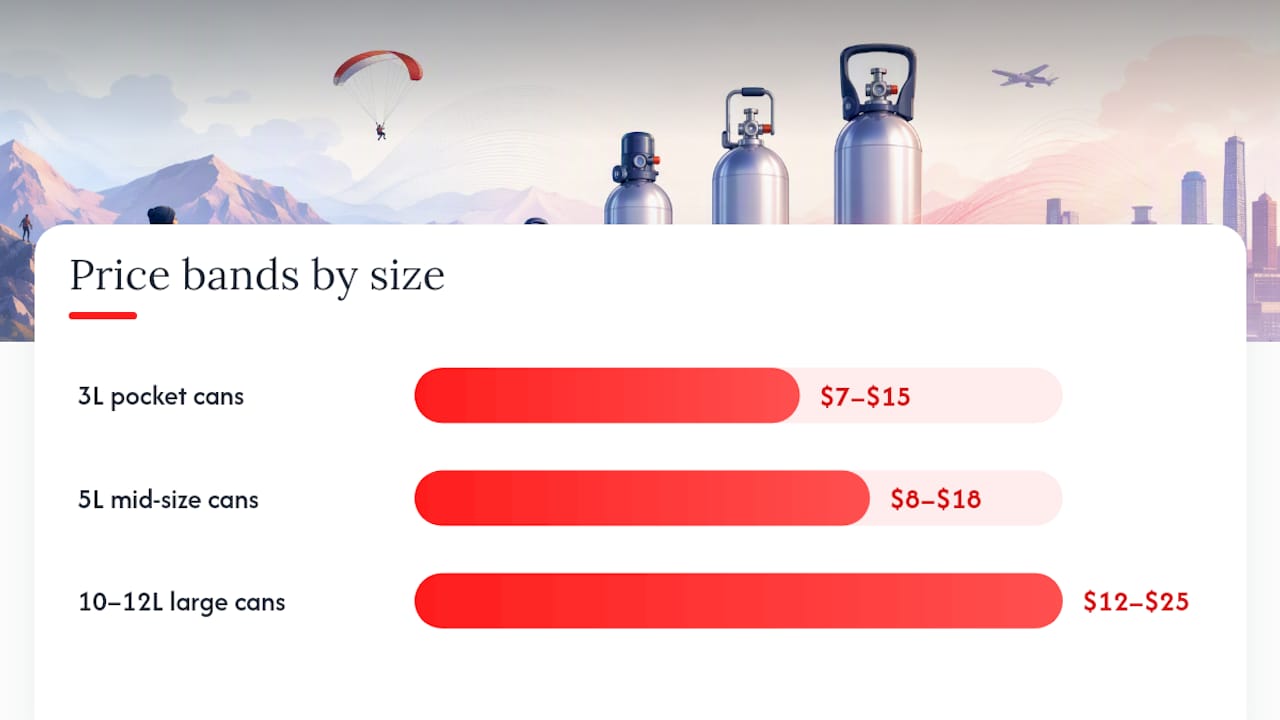
Mid-size 5-liter cans sit in the $8 to $18 range and represent the most common format for casual or occasional users. These are the cans you’ll see stocked at gyms, travel shops, and altitude-heavy retail locations like ski resort gift shops.
Large format cans, in the 10 to 12-liter class, cost $12 to $25 per unit. This is where per-breath economics improve noticeably, which matters if you’re using canned oxygen regularly rather than as an occasional novelty.
- 3L pocket cans cost less upfront but deliver fewer total inhalations, making them best for a single, isolated use.
- 5L mid-size cans balance price and volume for someone using oxygen a few times a month.
- 10 to 12L large cans offer the best per-breath value for frequent users, athletes, or anyone doing regular altitude travel.
How liters translate into actual breaths
Volume numbers on a label don’t mean much until you convert them into inhalations. According to reporting from the University of Colorado Anschutz Medical Campus, a 5-liter canister provides roughly 100 one-second inhalations, while a 10 to 11-liter canister delivers approximately 200 to 220 one-second inhalations. That conversion is the single most useful number in this entire pricing conversation, because it lets you calculate real cost-per-use instead of guessing from the can size alone.
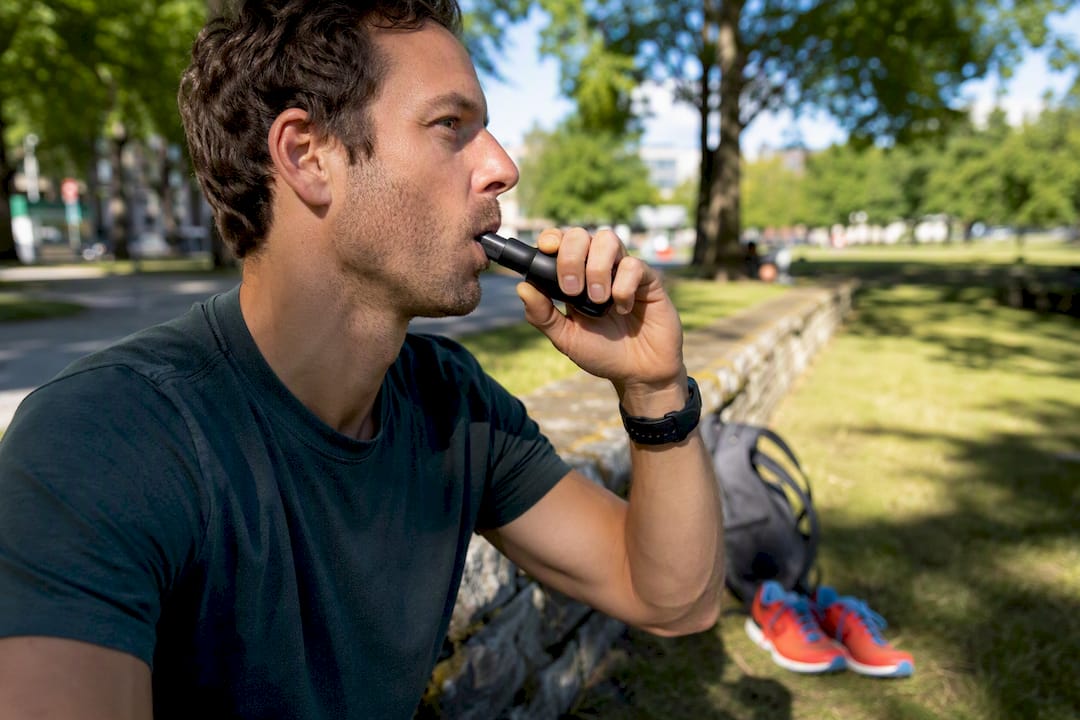
Run the math on a $12 large can with 210 inhalations, and you land around $0.057 per inhalation. A $10 mid-size can with 100 inhalations comes out closer to $0.10 per inhalation. The larger format wins on cost efficiency almost every time, assuming you’ll actually use the full can before it loses pressure or you misplace it in a gym bag.
Shipping costs also factor in here: a single can ordered online often carries a flat shipping fee that eats into any savings, while multi-packs spread that fee across more units and improve your effective price per breath.
- Flavored cans (peppermint, lemon, eucalyptus) generally cost the same as unflavored versions; the flavoring is a formulation choice, not a premium add-on.
- Buying three or more cans at once is almost always cheaper per unit than single purchases.
- Factor shipping into your real cost, especially for single-can orders under $20.
- Check the printed inhalation count against the liter size to sanity-check any brand’s claims.
If you’re trying to match a can size to how you’ll actually use it, this practical guide to choosing an oxygen canister walks through use-case scenarios in more detail.
What Does Home Oxygen Equipment Cost? Concentrators, Rentals, and Tanks
Home oxygen therapy operates on a completely different cost structure than a can you pick up at a sporting goods store. This is equipment designed for people managing a diagnosed respiratory condition under a physician’s care, and the price reflects that complexity.
Concentrators: the biggest single purchase
Portable oxygen concentrators, the battery-powered units patients carry in a shoulder bag or on a rolling cart, run $600 to $3,000 or more, with the wide range driven by flow rate capacity, battery life, and whether the unit is new or refurbished. Stationary home concentrators, the larger units that plug into a wall outlet and stay in one room, typically cost $1,000 to $4,000 new, according to figures compiled by the National Council on Aging.
That upfront number rarely tells the whole story. Most people managing chronic oxygen needs don’t pay cash for a concentrator outright. They work through a durable medical equipment supplier, and that changes both the price and the paperwork involved.
Rental plans and what they actually include
Rental and service-plan arrangements for home oxygen typically involve monthly fees that vary broadly, influenced by equipment selection, delivery schedules, and included maintenance services. Aggregated cost scenarios from monthly pricing guides for U.S. buyers show that the low end of that range typically covers a basic stationary concentrator with standard delivery, while the high end includes portable units, battery backups, and more frequent service visits.
A typical monthly service plan bundles several things together:
- Routine maintenance and filter replacement
- Battery charging or replacement for portable units
- Scheduled tank or cylinder delivery
- A support line for equipment troubleshooting
Tank-based systems and refill costs
Compressed oxygen cylinders remain common for backup supply or for patients who need a simpler, no-electricity option. Refills typically have a price range influenced by cylinder size and geographic location, often accompanied by additional delivery charges. Regional supply factors, including logistics and energy costs feeding into broader industrial oxygen price trends, can push refill pricing higher in some markets than others.
How Medicare changes the math
Medicare covers oxygen equipment under its durable medical equipment benefit, and that coverage substantially changes what a patient actually pays out of pocket. Under Medicare’s oxygen equipment guidelines, beneficiaries who meet coverage criteria typically pay 20% of the Medicare-approved rental amount after meeting their Part B deductible, with Medicare covering the remainder. Suppliers are required to follow specific reimbursement structures, which is why working with a Medicare-approved DME provider tends to produce far more predictable monthly costs than shopping independently.
For readers weighing a disposable canister against a full concentrator system, this comparison of portable versus home oxygen systems breaks down which category actually fits which situation.
What Drives Oxygen Prices Up or Down?
Two products can both be labeled “oxygen” and land at wildly different price points, and the gap almost always comes down to four variables: purity requirements, delivery terms, accessories, and regional supply conditions.
Purity and intended use set the baseline. Recreational canned oxygen is typically sold at 98% purity with no medical formulation requirements attached, which keeps manufacturing and regulatory costs lower. Medical-grade oxygen prescribed for a diagnosed condition carries stricter purity verification, tracking, and delivery documentation, all of which show up in the price a DME supplier quotes. This distinction is why comparing a $12 recreational can to a $200-a-month medical rental isn’t really an apples-to-apples comparison. They’re solving different problems under different regulatory frameworks.
Delivery and contract terms move the needle on ongoing costs. Scheduled delivery for tanks or concentrator servicing often comes with a service-level agreement that locks in a delivery window, and longer-term rental contracts frequently unlock a lower monthly rate than month-to-month arrangements. If you’re signing up for home oxygen equipment, ask specifically whether a longer commitment reduces your rate, because many suppliers don’t volunteer that discount upfront.
Accessories add up faster than most people expect. Nasal cannulas, masks, replacement batteries, and filter cartridges are recurring purchases, not one-time costs, and they rarely show up in the headline price of a concentrator. Budget an extra $10 to $30 a month for consumables once you’re past the first few weeks of ownership.
Geography and industry conditions affect refill pricing too. Regional shifts in industrial oxygen supply, tied to energy costs and healthcare demand, can shift cylinder refill prices from one market to another, even for the same tank size and supplier type.
Pro Tip: When comparing DME supplier quotes, ask whether the monthly price includes filter replacement and battery servicing, or whether those are billed separately. A quote that looks $50 cheaper often adds those costs back within the first three months.
Therapy equipment pricing outside the oxygen category follows a similar logic. PEMF therapy equipment costs show the same pattern where medical-grade devices carry a price premium tied to certification and clinical oversight, not just the hardware itself.
Where to Buy Oxygen: Retail, Direct-to-Consumer, and Medical Suppliers
Your purchase path depends entirely on which category of oxygen you need, and mixing up those paths wastes both time and money.
For recreational canned oxygen, three channels dominate:
- Retail stores (sporting goods shops, pharmacies, travel retailers) offer the convenience of buying in person, usually at single-can prices without multi-pack discounts.
- Direct-to-consumer online retailers typically offer better per-unit pricing through multi-pack bundles and subscription options, though shipping costs need to factor into your comparison.
- General e-commerce marketplaces carry a wide mix of brands and sizes, which makes price comparison easy but quality consistency harder to verify.
For prescribed medical oxygen, the path runs through a durable medical equipment supplier or pharmacy that handles DME, not a retail shelf. A supplier will typically request a physician’s prescription, documentation of a qualifying oxygen saturation reading, and your insurance information before setting up equipment. That paperwork step is exactly why medical oxygen isn’t something you can buy on impulse the way you would a canned product.
Before signing anything with a DME supplier, verify these items on the quote:
- The exact refill or cylinder exchange price, not just the equipment rental rate.
- How often delivery happens and whether missed deliveries carry a fee.
- Whether the rental agreement has a minimum term, and what the early termination terms look like.
- Battery warranty length and replacement cost for portable concentrator units.
- The supplier’s return policy if the equipment doesn’t fit your needs after a trial period.
Purchase versus rental comes down to frequency and budget. If you’re facing a long-term or permanent oxygen need, purchasing equipment outright, once insurance coverage is factored in, often costs less over two or three years than continuous rental. If your need is temporary, post-surgical, or still being evaluated by a physician, rental keeps your upfront cost low and your commitment flexible. For a broader look at how different oxygen formats serve different lifestyles, this guide to portable oxygen for athletes and wellness users covers use cases beyond the medical equipment conversation.
How Many Breaths Do You Actually Get, and What’s the Real Cost?
The liter number printed on a can is nearly meaningless without converting it into inhalations, and that conversion is where the real value comparison happens.
Those inhalation figures for the 5L and 10 to 11L sizes come directly from reporting by the University of Colorado Anschutz Medical Campus; the 3L figure is a proportional estimate based on that same volume-to-breath ratio.
The pattern holds consistently: larger cans deliver more value per inhalation, but only if you’ll actually use the full canister. A hiker who takes a can along “just in case” and uses six breaths on a single trip is paying a very different effective price than someone using a full can across a training week.
A typical use session, drawing 10 one-second inhalations to address a moment of fatigue or altitude discomfort, costs somewhere between $0.86 and $1.70 depending on which can size you’re pulling from. Someone using canned oxygen several times a week for recovery or altitude support will see multi-pack pricing pay for itself within the first month, since the per-unit discount compounds across dozens of uses rather than one occasional session.
Recreational Oxygen Is Not a Substitute for Prescribed Therapy
This is the boundary that matters more than any price comparison in this guide. Over-the-counter canned oxygen is built and marketed as a situational wellness product, something you reach for during altitude travel, a tough workout recovery, or a stressful afternoon. It is not designed, tested, or approved as a treatment for a diagnosed respiratory condition.
Clinical commentary summarized by CU Anschutz researchers notes that evidence for systemic, long-term performance improvement from canned oxygen in healthy individuals remains limited, with many reported benefits tied to situational relief rather than measurable physiological change. That doesn’t make the product useless. It makes it exactly what it claims to be: a short-term wellness tool, not a medical intervention.
Never use over-the-counter canned oxygen as a substitute for a physician-prescribed oxygen regimen. Doing so can delay necessary medical evaluation and poses real risk for people with chronic respiratory failure, according to guidance from the National Council on Aging.
If you or someone you’re caring for experiences persistent shortness of breath, chest tightness, or low oxygen saturation readings on a home pulse oximeter, that’s a conversation for a physician, not a shopping decision. A few practical safety habits apply regardless of which product category you’re using:
- Store oxygen canisters away from open flames, heat sources, and direct sunlight.
- Follow the manufacturer’s guidance on can pressure and storage temperature.
- Never attempt to refill a canned oxygen product yourself.
- If you have a diagnosed lung condition, talk to your doctor before using any recreational oxygen product, even occasionally.
Where REV/O2 Fits in the Oxygen Pricing Picture
REV/O2 sits squarely in the recreational wellness category covered throughout this guide, built around 98% pure oxygen and a zero-leak mouthpiece design that avoids the fit and seal issues common with traditional masks. That mouthpiece detail matters more than it sounds. A leaky seal wastes inhalations, which directly undercuts the cost-per-breath math worked out earlier in this article.
The product comes in peppermint, lemon, and eucalyptus formulations, positioned for athletes managing recovery, hikers and travelers dealing with altitude, and anyone facing a stretch of fatigue or stress that a quick oxygen boost might ease. Customer-reported benefits center on energy levels, recovery time, and mental clarity, consistent with how the broader canned oxygen category is used and marketed.
- Available in multi-can bundles, which lowers the effective per-breath cost discussed in the sizing section above.
- Designed with athlete input alongside the underlying scientific rationale for supplemental oxygen use.
- Positioned for situational, short-term use rather than as a medical therapy substitute.
Pro Tip: If you’re deciding between a single can and a multi-pack, revisit your own use frequency first. Occasional travelers save more with single cans; regular gym-goers or frequent hikers almost always come out ahead with a bundle.
Where does this leave the honest buyer?
The conventional wisdom around canned oxygen tends to swing to one of two extremes: either it’s dismissed as snake oil, or it’s oversold as a performance miracle. Neither framing holds up well against the actual math. A 10-liter can delivering 210 breaths at roughly nine cents each is a genuinely reasonable price for situational relief, whether that’s altitude discomfort on a mountain trail or a rough stretch at the office. What it isn’t, and what no honest seller should claim it is, is a replacement for prescribed oxygen therapy in someone with a real respiratory diagnosis.
Where I think most buying guides get it wrong is treating price as the only variable that matters. The real comparison isn’t “cheap can versus expensive can.” It’s “does this product match what I actually need it to do.” Someone managing COPD needs a DME supplier and a Medicare conversation, not a flavored canister from a gas station rack. Someone hiking at altitude for a weekend needs exactly the opposite: a portable, no-prescription product they can grab and use immediately. Buying the wrong category for your situation wastes money regardless of which direction you err.
The most practical habit I’d recommend to any regular canned oxygen user is doing the per-breath math before comparing sticker prices, and buying in multi-packs once you know you’ll use more than one can within a few weeks. For anyone dealing with a diagnosed condition, that math is irrelevant. Talk to a physician first, every time.
— Paul
Get REV/O2’s Recreational Oxygen Without the Guesswork
Everything in this guide points to one practical conclusion: match the product to the use case, and know exactly what you’re paying per breath before you buy. REV/O2 makes that math simple, with transparent per-can and multi-pack pricing across three flavor options, all built around a zero-leak mouthpiece that avoids the wasted-inhalation problem common with mask-style competitors.
If you’re a hiker, athlete, or someone managing regular fatigue and want a straightforward wellness option rather than a maze of medical paperwork, REV/O2’s canned oxygen collection gives you sizes from pocket cans to large 10 to 12-liter formats, with multi-pack bundles that lower your cost per inhalation. Frequent users should start with a multi-pack bundle to capture the per-unit savings covered earlier in this guide, and anyone new to the product should review REV/O2’s safety and usage guidance before their first can. Pick your flavor, choose single or multi-pack based on how often you’ll actually use it, and check out.
Sources
- Does Oxygen in a Can Deliver on Its Altitude and Energy Claims? — University of Colorado Anschutz Medical Campus
- What to Know about OTC Oxygen: Should You Use It? — National Council on Aging (NCOA)
- Medicare
- Oxygen Cost: Monthly Price Guide for U.S. Buyers 2026 | Official Site