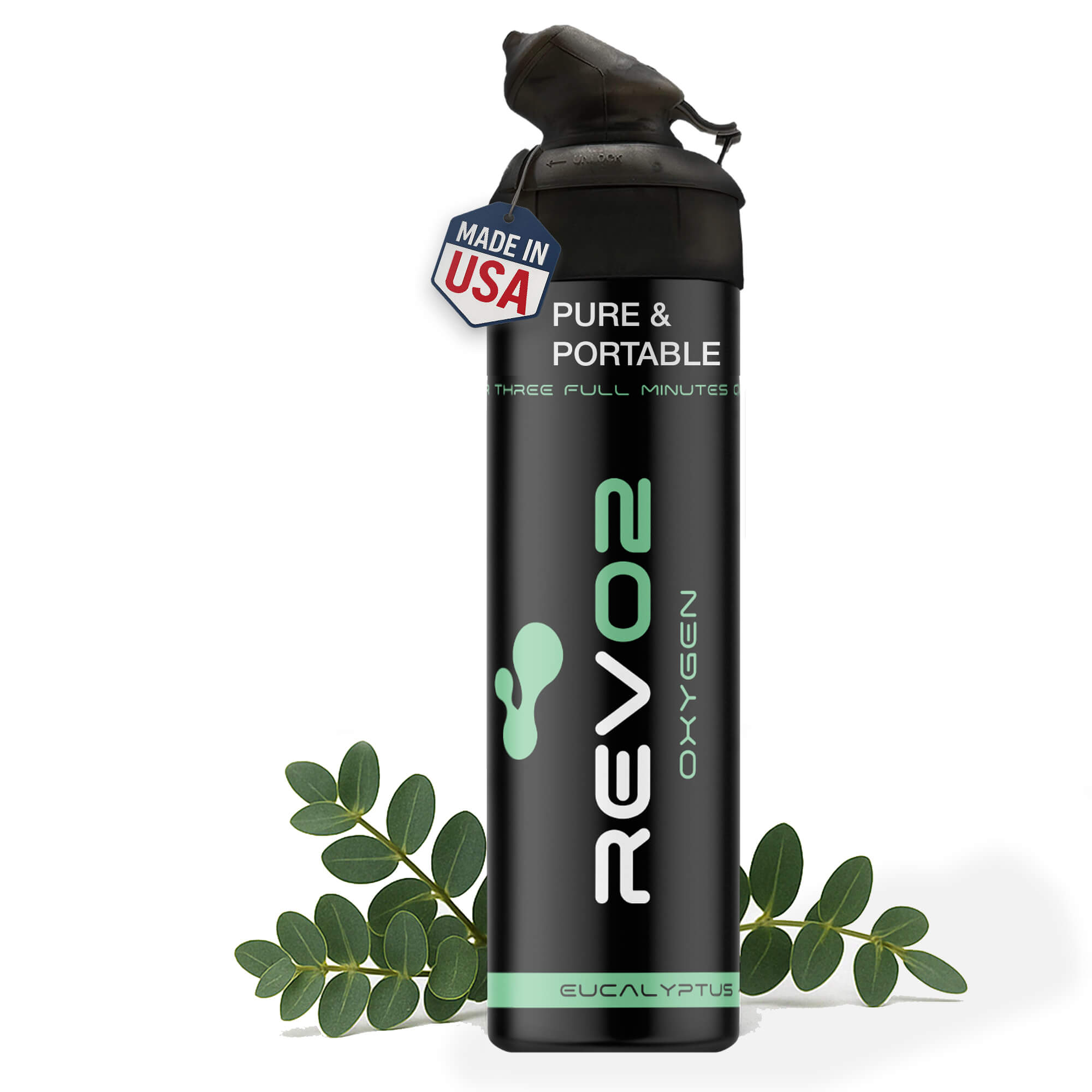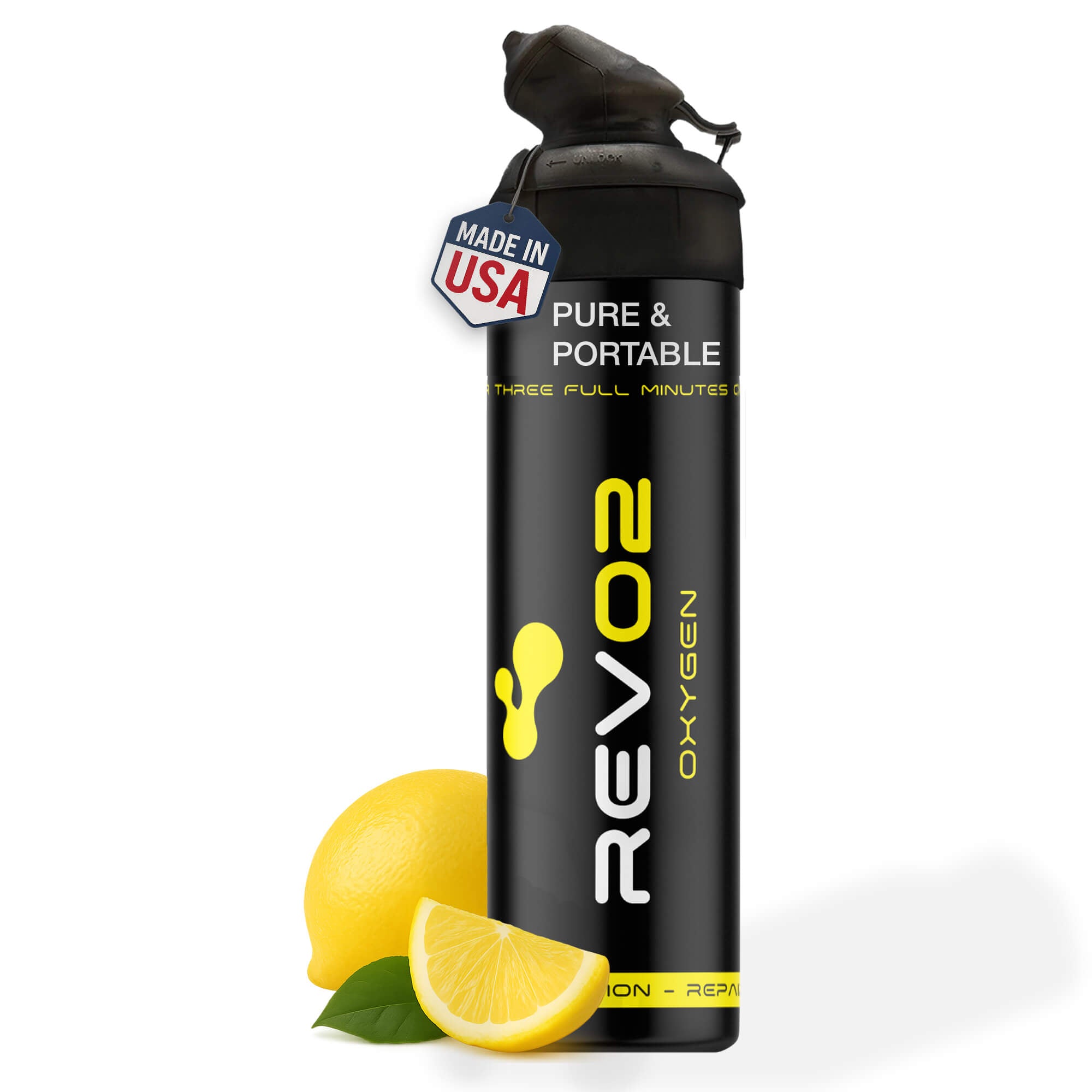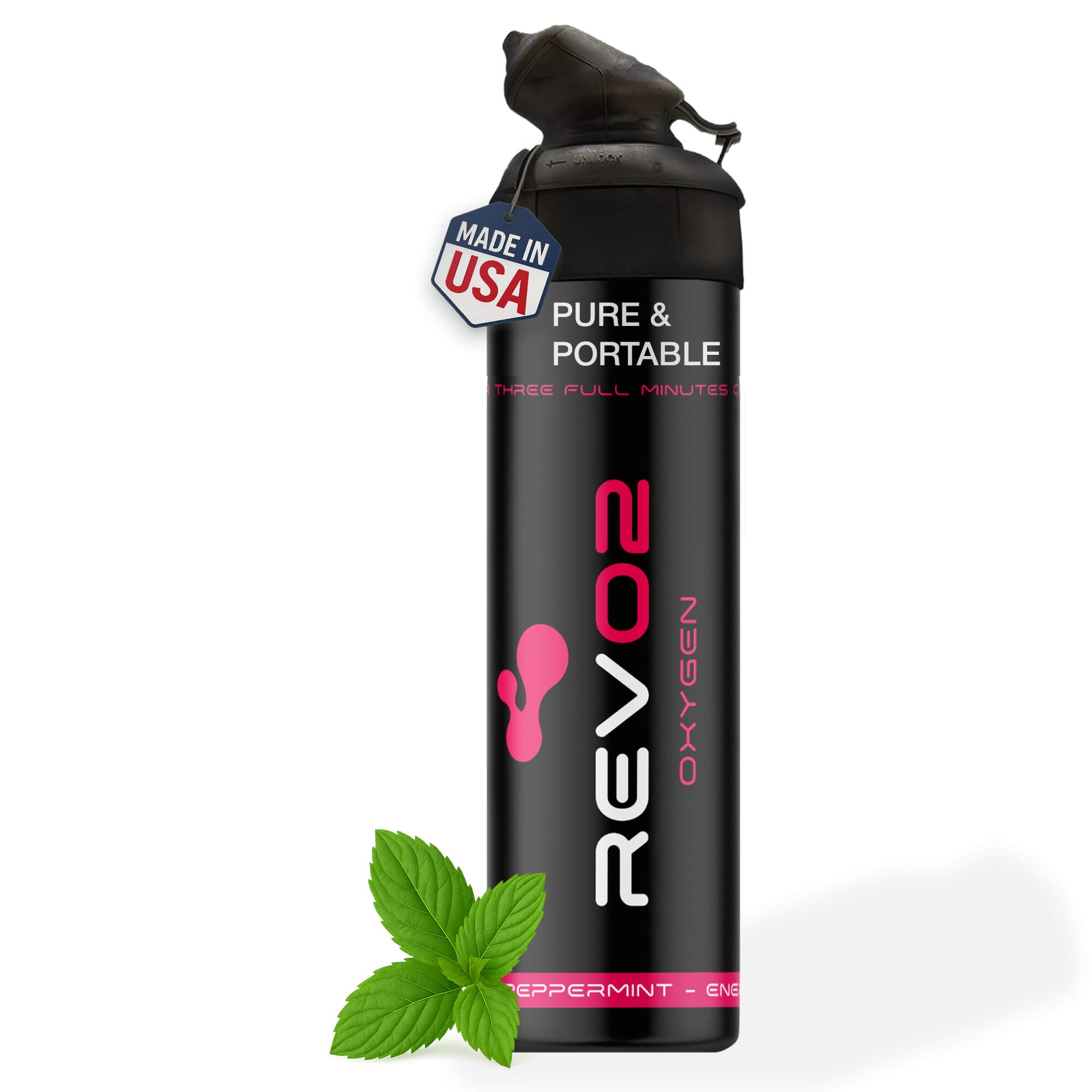

You can order non-medical canned oxygen and have it shipped to most U.S. addresses through standard ground carriers. You cannot bring canned oxygen onto a commercial flight, in a carry-on or checked bag, under any circumstance. If air travel is part of your plan, call your airline before you buy anything, and confirm your seller’s shipping policy before you check out.
TL;DR:
- Canned oxygen can be shipped via ground carriers within the US if properly classified, labeled, and packaged under hazmat regulations; it cannot be brought on a plane at any time.
- Airlines and the FAA prohibit carry-on or checked canned oxygen due to safety risks, but TSA permits medically necessary personal oxygen cylinders through security before the flight.
- Shipping restrictions depend on product classification, carrier acceptance, state regulations, and labeling, so buyers should verify seller policies and ask specific questions beforehand.
- Buying directly from the brand ensures clearer shipping practices and safety information, while marketplace listings vary and may involve third-party fulfillment.
- Proper storage, handling, and ventilation are essential, and consumers should follow safety instructions detailed on product pages to prevent accidents or misuse.
Table of Contents
- How Ship Oxygen Cans Works: Carriers, Hazmat Basics, and Ordering Tips
- Can You Fly With Canned Oxygen? FAA and TSA Rules Explained
- Why Do Sellers Limit Where Canned Oxygen Ships?
- Where to Buy Canned Oxygen Online and What to Ask First
- Is Canned Oxygen Safe? Usage Limits and Storage Rules
- What I’d Tell a Friend Buying Canned Oxygen for the First Time
- Order Canned Oxygen From REV/O2 With Confidence
- Where to Verify These Rules Yourself
- Sources
How Ship Oxygen Cans Works: Carriers, Hazmat Basics, and Ordering Tips
Not all “oxygen” ships the same way, and that distinction matters before you add anything to your cart. Over-the-counter canned oxygen, the kind sold for altitude relief and recovery, is a consumer product filled with 98% pure oxygen at relatively low pressure. Medical oxygen cylinders, the kind prescribed for chronic respiratory conditions, are regulated differently, often require a prescription, and typically ship through medical supply channels rather than standard e-commerce checkout.
That difference shapes how carriers treat each product. Ground carriers in the U.S. generally accept small, non-medical oxygen cans under limited-quantity hazmat provisions, provided the seller classifies and packages them correctly under 49 CFR. Sellers who ship these cans regularly build their fulfillment process around that classification. It shows up on the invoice, the packaging, and often the tracking number itself.
Before you buy, look for a few specific signals on the product page:
- A clear statement of which states or regions the seller ships to.
- Quantity limits per order, which many hazmat-compliant sellers set deliberately.
- Packaging language describing hazmat compliance, not just “ships fast.”
- A visible customer service contact for shipping questions, not just a generic contact form.
Once your order ships, treat it like any other regulated product moving through the mail. Confirm the delivery address is accurate and someone can receive the package, since some hazmat-classified shipments require a signature. Track it actively. Hazmat processing can add a day or two to standard delivery windows compared to ordinary retail packages, because carriers route these shipments through specific hubs equipped to handle them.
Pro Tip: Order a few days earlier than you think you need to, especially around holidays or extreme weather. Hazmat shipments sometimes get held for manifest review, and that buffer saves you from a last-minute scramble before a hike or a flight to altitude.
Can You Fly With Canned Oxygen? FAA and TSA Rules Explained
No. The Federal Aviation Administration’s PackSafe guidance states plainly that passengers may not carry canned or personal compressed oxygen in checked or carry-on baggage on U.S. flights. This isn’t a judgment call left to individual airlines or gate agents. It’s a blanket prohibition rooted in how compressed gas behaves under cabin pressure changes and in confined cargo holds.
Airlines are required to supply oxygen in the cabin under 14 CFR when medically necessary, but that’s a different system entirely from bringing your own can. The Transportation Security Administration allows medically necessary personal oxygen cylinders through security screening as far as the gate area. Personal compressed oxygen is still classified as hazardous material once you reach the aircraft door, and it is not permitted in the cabin. TSA’s own guidance is direct: contact your airline ahead of time to arrange oxygen service for the flight itself.
For travelers who need supplemental oxygen in the air, a Portable Oxygen Concentrator is the practical alternative canned oxygen can’t replace. 14 CFR § 121.574 lays out the FAA’s acceptance criteria for POCs, and airlines follow it closely.
- The device must carry a manufacturer label confirming FAA acceptance for use aboard aircraft.
- It must run on battery power for the full flight duration plus a safety reserve, since cabin outlets aren’t guaranteed.
- Passengers using a POC cannot sit in an exit row.
- The airline must approve the specific device model before departure, not just oxygen use in general.
Airlines commonly ask travelers to arrange in-flight oxygen well in advance before departure, allowing ground staff and gate crews sufficient time to confirm the paperwork and seating logistics. Call the airline directly rather than relying on a general customer service chat. Ask three things: whether your specific POC model is on their approved list, what battery documentation they need at the gate, and where the device must be stowed during taxi, takeoff, and landing. If you’re new to flying with any medical equipment, BasicMed limitations guidance offers useful background on medical requirements that intersect with air travel more broadly.
Why Do Sellers Limit Where Canned Oxygen Ships?
Federal hazmat rules under 49 CFR govern how compressed gases move through the mail, and that framework explains almost every shipping restriction you’ll encounter as a buyer. Sellers moving canned oxygen at scale usually classify their product under a limited-quantity exemption, which only applies when the can size and internal pressure fall below specific thresholds. Staying inside that classification requires accurate labeling, proper packaging, and a documented manifest for every shipment, and that paperwork burden is exactly why some sellers restrict where and how much they’ll ship.
A few practical reasons show up again and again:
- Carrier reluctance. Some regional carriers or last-mile delivery partners simply decline hazmat-classified packages, forcing sellers to route through carriers that accept them.
- State-level caution. A seller might avoid shipping to certain states not because of a blanket state ban, but because their carrier contract or insurance terms get complicated at scale.
- Insurance and labeling costs. Compliant hazmat labeling and packaging cost more per unit, so sellers sometimes cap order quantities to control liability.
If your package gets held, refused, or returned, don’t assume the worst. Contact the seller’s customer service first. A legitimate seller shipping hazmat-classified goods will have a documented process for exactly this situation and can usually tell you within a day whether the issue was a carrier routing error, an address mismatch, or a documentation gap. If the seller is unresponsive, contact the carrier directly with your tracking number. Most refused hazmat shipments get returned to the sender rather than destroyed, so a refund or reshipment is the normal outcome once the paperwork gets sorted.
Where to Buy Canned Oxygen Online and What to Ask First
Buying directly from the brand that makes the product usually gives you the clearest picture of how your order will actually ship. A direct-to-consumer seller controls its own hazmat classification, packaging, and carrier relationships end to end, which means the shipping policy on their site reflects exactly what will happen to your order, not a third-party fulfillment arrangement layered on top. Direct brand sites also tend to publish dedicated safety pages, subscription options for repeat buyers, and a customer service team that actually understands the product’s regulatory status.
Marketplace retailers offer a different tradeoff. Fulfillment speed can be excellent, particularly for orders eligible for two-day shipping programs. The catch is that many marketplace listings are fulfilled by third-party sellers, not the retailer itself, and shipping terms can vary from one listing to the next even for what looks like the identical product. Retail listings for canned oxygen show this pattern clearly: availability and shipping notes differ by seller even on the same platform.
Before you complete any purchase, ask the seller these questions directly:
- What carrier handles the shipment, and does it require a signature on delivery?
- How long does hazmat processing typically add to the stated delivery window?
- What’s the return policy if the can arrives damaged or the shipment gets refused?
- How long is the shelf life, and how should the can be stored until use?
A seller that answers all four clearly, ideally in writing on their site rather than only through a support ticket, is one you can trust to handle the logistics competently.
Is Canned Oxygen Safe? Usage Limits and Storage Rules
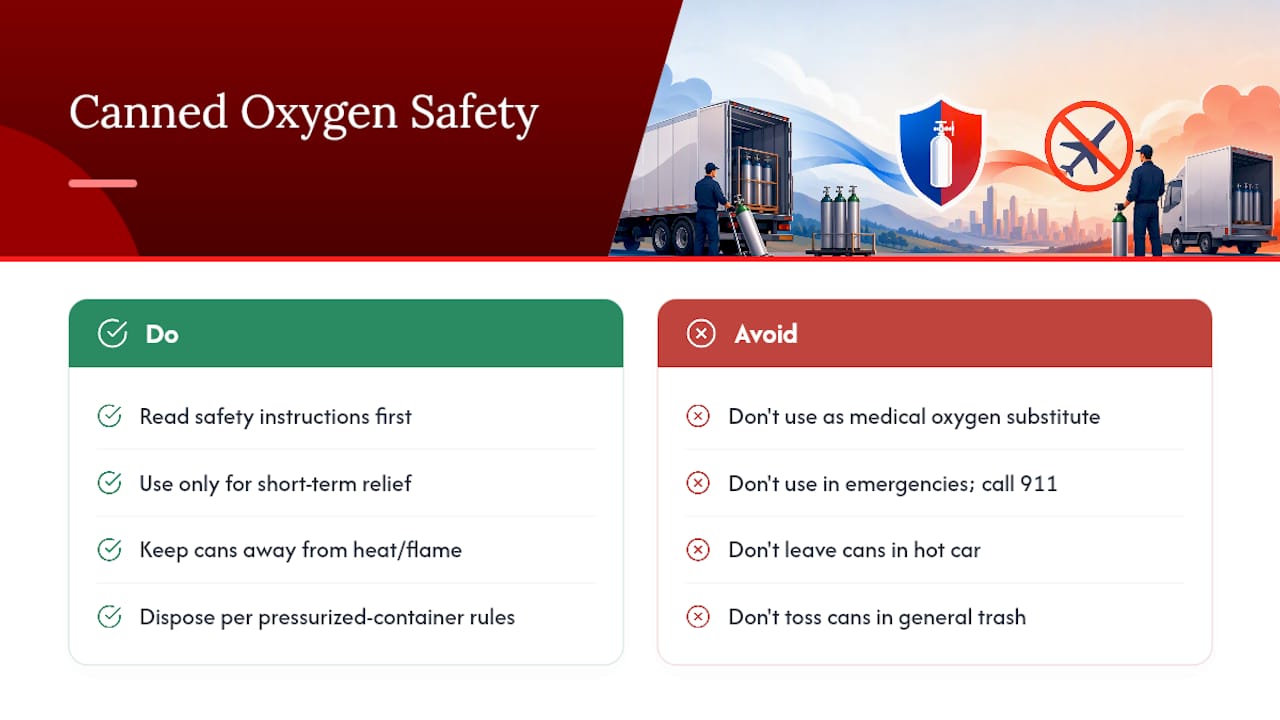
Canned oxygen sold over the counter is not a medical device, and it should never replace prescribed oxygen therapy or emergency treatment. A peer-reviewed review of public comments on OTC canned oxygen found that some consumers have used these products as substitutes for prescribed oxygen, a pattern that prompted researchers to flag clearer labeling and consumer education as genuine safety priorities. If you or someone near you shows signs of real respiratory distress, bluish lips or fingertips, confusion, or severe shortness of breath, that’s a call to emergency services, not a reach for a can.
Within its intended use, canned oxygen serves a narrower, more practical purpose: short-term relief at altitude, faster-feeling recovery after intense exercise, or a boost when fatigue and stress leave you feeling foggy. Understanding how altitude affects your oxygen saturation helps explain why hikers and travelers reach for it heading into thinner air, and the broader benefits of portable canned oxygen cover the everyday use cases most buyers actually have in mind.
Storage matters more than most buyers expect. Keep cans away from direct heat and open flame, and never leave one sitting in a hot car; pressurized cans respond poorly to temperature swings, and manufacturer guidance consistently warns against it. Dispose of empty cans according to local recycling rules for pressurized containers rather than tossing them in general trash.
Statistic Callout: The peer-reviewed review linked above documented real instances of consumers substituting canned oxygen for prescribed medical oxygen, a finding that underscores why clear “non-medical use” labeling on every can genuinely matters.
Pro Tip: Read the safety and usage instructions before your first use, not after. Proper inhalation technique with a zero-leak mouthpiece design makes a noticeable difference in how much oxygen you actually get per can.
What I’d Tell a Friend Buying Canned Oxygen for the First Time
Buy from a brand that states its shipping policy in plain language, not buried in a terms page you’d need a lawyer to parse. If a seller can’t tell you clearly which carrier handles hazmat shipments or how long processing takes, that’s a signal to look elsewhere, not a detail to shrug off.
The bigger mistake I see people make isn’t about shipping at all. It’s treating canned oxygen as a workaround for a medical problem it was never built to solve, or assuming a can that ships fine to their door will somehow make it through airport security because “it’s just oxygen.” Neither assumption holds up. Plan your air travel around a POC and an airline phone call, not a can in your carry-on.
Some sellers market canned oxygen for altitude, recovery, and everyday fatigue, with non-medical labeling and shipping processes intended to inform buyers. That’s the standard worth holding any seller to.
— Paul
Order Canned Oxygen From REV/O2 With Confidence
REV/O2 ships 98% pure canned oxygen directly to your door, with a zero-leak mouthpiece designed to deliver every breath without the waste you get from mask-based systems. That direct-to-consumer setup means you’re not gambling on a marketplace listing from an unnamed third-party seller. You know exactly who packed your order and how it’s shipping.

Browse the full canned oxygen collection to compare flavors like peppermint, lemon, and eucalyptus, each built around the same 98% oxygen fill. Frequent users can save through multi-pack bundles, a practical option if you’re stocking up before a hiking season or a stretch of high-altitude travel. Hikers specifically can check out the oxygen for hiking page for guidance suited to trail use.
Before your first can arrives, read the safety and usage guide so you know proper technique and storage from day one. Ready to order? Head to the collection page, pick your flavor, and check out. Your first can typically ships within the standard hazmat processing window discussed above.
Where to Verify These Rules Yourself
Regulations change, and airline policies vary by carrier, so confirm the details that matter to your trip or your order directly at the source:
- FAA PackSafe: Oxygen (Compressed or Liquid), the federal guidance on flying with oxygen.
- TSA: Medically Necessary Personal Oxygen, for screening and gate-area rules.
- 14 CFR § 121.574, the legal text governing POC acceptance on aircraft.
- Peer-reviewed review of OTC canned oxygen, for safety and appropriate-use findings.
Always check with your specific airline before departure, since carrier-level policies can be stricter than the federal floor.
Sources
- PackSafe - Oxygen (compressed or liquid) | Federal Aviation Administration
- Medically Necessary Personal Oxygen | Transportation Security Administration
- Medical Use of Over-the-Counter Canned Oxygen: A Review of Public Comments
- 14 CFR § 121.574 - Oxygen and portable oxygen concentrators for medical use by passengers