
Breathing extra oxygen can shorten reaction time in some situations, but the evidence is mixed for healthy people at sea level and clearer when oxygen is low, as at altitude. Several small studies found faster responses with oxygen-enriched air, while a larger set of controlled tests found no reliable gain on the ground. Below, we separate what the studies measured from what is often claimed, so you can judge where supplemental oxygen might help and where it will not.
TL;DR
- Some small lab studies found faster simple and choice reaction times when healthy adults breathed oxygen-enriched air, with differences of roughly 20 milliseconds in one study.
- A 2017 aerospace medicine study found no statistical evidence of better psychomotor reaction performance at ground level with extra oxygen in healthy people.
- At simulated altitude, low oxygen slows reaction time, and oxygen supplementation has shortened it in a randomized trial at 4000 m.
- Breathing pattern, sleep, focus and training also move reaction time, often by as much as oxygen does.
- Canned oxygen is a recreational wellness product, not medical treatment. See a clinician for breathlessness or low oxygen readings.
Table of Contents
- What reaction time measures
- Why oxygen could affect reaction speed at all
- Studies that found faster reaction times with oxygen
- Studies that found no benefit at sea level
- Where oxygen matters most: low oxygen at altitude
- A summary of the evidence
- Other things that change reaction time
- Our perspective: a short, honest view
- Using oxygen sensibly for focus and response speed
- Try REV/O2
- FAQ
- Sources
What reaction time measures
Reaction time is the gap between a stimulus (a light, a sound, a ball leaving a hand) and your first response. It covers detection, a decision, and the signal traveling to your muscles. Researchers usually split it into two kinds:
- Simple reaction time: one stimulus, one response, such as pressing a button when a light appears.
- Choice reaction time: several possible stimuli, each needing a different response. It is slower because the brain has to decide.
The often-quoted benchmark of about 0.2 seconds is a reasonable ballpark for a fast, alert young adult on a simple visual task. In the 1999 Physiology & Behavior study described below, healthy young adults breathing air averaged about 256 ms on a simple reaction task, so 0.2 to 0.3 seconds is the normal range, and a 0.2-second response is possible but not typical. Choice tasks, tiredness and age push the numbers higher.
This matters for reading oxygen studies. The differences researchers report are usually tens of milliseconds. That is meaningful in a lab and in sport, but it is not the dramatic change that product marketing sometimes implies.
Why oxygen could affect reaction speed at all
The brain is a small share of body weight but uses a large share of the body’s oxygen. One idea in the research is that cognitive performance may be fuel-limited, meaning it can be augmented by raising the availability of the brain’s metabolic resources, oxygen among them. A related hypothesis is that extra oxygen in the blood during a mental task may be used by the brain regions doing the work.
These are hypotheses, not settled mechanisms. They explain why researchers tested the question, and they set up the two situations worth separating: people who are already well oxygenated, and people whose oxygen is lowered.
If you want the physiology in more depth, our explainer on brain oxygen levels, focus and productivity covers how oxygen availability connects to attention, and the cognitive performance oxygen link goes through the broader evidence.
Studies that found faster reaction times with oxygen
Three findings are the ones most often cited in support of oxygen and faster responses.
Graduate students, 2009. In nine healthy male graduate students, reaction time was significantly lower while inhaling 43.2% oxygen than 22.1% oxygen. The sample is small and all male, but the comparison was direct.
Young adults, 1998. A UK study of healthy young adults found that oxygen administration improved simple and choice reaction times, and the improvement depended on how long the oxygen was inhaled.
Young adults, 1999. Participants receiving supplemental oxygen had faster simple reaction times, with a mean of 237.46 ms, than those receiving air, with a mean of 256.05 ms, in research published in Physiology & Behavior. That is a difference of about 19 ms.
A fourth, more recent item is a 2023 report of 40 healthy young adults. Those who inhaled pure oxygen while learning a complex motor task performed 20% faster on a demanding button-pressing task than those without the oxygen boost. Note that this measured learning of a motor task, not plain reflexes, and it was a news report of the research.
Studies that found no benefit at sea level
The picture changes when researchers test larger sets of tasks in healthy people at normal pressure. A 2017 paper in Aerospace Medicine and Human Performance reported no statistical evidence that ground-level performance on psychomotor reaction tasks improved under hyperoxic versus normoxic conditions in healthy people.
A 2020 study using hyperbaric oxygen in healthy young people found it significantly enhanced episodic memory but did not produce significant improvements in other domains, such as information processing speed or working memory.
How do you reconcile these with the positive studies? A few honest reasons:
- Sample sizes in the positive studies are small, so chance and individual variation play a bigger role.
- Tasks, oxygen concentrations and inhalation durations differ from study to study.
- People who breathe normal air at sea level already carry blood that is nearly saturated, so there is little room to improve.
The fair summary: a boost in simple reaction time from extra oxygen is plausible and has been reported, but it is not a dependable effect in healthy people at sea level.
Where oxygen matters most: low oxygen at altitude
The stronger case comes from the opposite direction. When oxygen falls, reaction time gets worse, and supplying oxygen can bring some of it back.
What low oxygen does to response speed
A 2024 study of acute hypoxic exposure in simulated altitude found impaired reaction time, response accuracy and memory in healthy adults. The 2017 Aerospace Medicine and Human Performance paper also found total response time rose by 15 to 25 ms in healthy subjects at simulated altitudes of 3048 m, 4572 m and 6096 m (about 10,000, 15,000 and 20,000 feet).
A 2018 Canadian study found that severe hypoxia selectively impaired reaction time while more complex cognitive tasks remained unaffected. The authors note that overall blood flow to the brain is often maintained during acute hypoxia, yet local changes in oxygen tension might still cause impairment.
For hikers, that translates to something familiar: feeling slower, clumsier and a bit foggy high up. Our pages on breathing in thin air and brain fog at altitude explain why inspired oxygen drops as you climb.

What happens when you add oxygen at altitude
In a randomized trial at a simulated 4000 m, oxygen supplementation shortened reaction time on a psychomotor vigilance task at 5 minutes and on average, but the difference was not significant at 30 minutes. The authors say repeated ascents, sleep deprivation and other stressors need further study.
That result has two practical lessons. First, the effect was real in a group working in a hypoxic setting. Second, it was short-lived in that test, which fits how a single dose of oxygen behaves: it helps while you are breathing it and its effect fades.
For athletes, the evidence is less tidy. A 2023 review notes that the effect of supplemental oxygen on performance at moderate-to-high altitude remains debated, with some studies showing no significant difference in peak muscle performance or balance and others proposing benefits during training. The review also notes that the Court of Arbitration for Sport and the World Anti-Doping Agency have referred to findings suggesting supplemental oxygen does not necessarily enhance several types of muscular work or performance at altitude.
A summary of the evidence
| Situation | What studies found | Strength of evidence |
|---|---|---|
| Healthy adults, sea level, simple tasks | Some studies show faster responses; a 2017 study found no benefit | Mixed, small samples |
| Healthy adults, complex cognition | No clear gain in processing speed or working memory (hyperbaric study) | Limited |
| Simulated altitude, no oxygen | Slower reaction time, less accuracy | Consistent |
| Simulated 4000 m, with oxygen | Shorter reaction time at 5 minutes, not significant at 30 | One randomized trial |
Other things that change reaction time
Oxygen is one input among many, and several others are easier to control.
Your breathing cycle
This one is surprising. A German study found that reaction times covaried with the respiratory cycle, with the strongest effect when looking at respiratory state around the moment of the response. Effect sizes reported for the link between respiration and reaction time in sensory-cognitive tasks range from 10 to 110 ms, depending on task type and breathing method.
A later study of 277 participants found that respiratory phase holds significant predictive power for reaction times, with the strongest influence about 2 seconds before a response. In plain terms, when in your breath you act can matter as much as how much oxygen you carry. That is one reason we pair any oxygen use with calm, steady breathing.
Sleep, stress and attention
Tired, stressed or distracted people react more slowly, and no gas fixes a missed night of sleep. The Aerospace trial above specifically flags sleep deprivation as an open question for oxygen. General advice from training sites also points to focus and practice: reaction drills train your brain to link what you see to an action, so the same stimulus gets a faster response over time. If mental sharpness is your goal, our partners at Neurofuel publish a guide to improving mental sharpness that covers lifestyle habits beyond oxygen.
Age and the type of stimulus
Reaction time generally lengthens with age, and a choice task is slower than a simple one. If your timing slows suddenly, or you feel confused, dizzy or short of breath, that is a reason to see a doctor, not to reach for a can.
Our perspective: a short, honest view
We make canned oxygen, so you might expect us to promise faster reflexes. We do not. What the research supports is narrower and, we think, more useful.
Our product is 98% pure oxygen with a zero-leak mouthpiece, made for athletes, hikers, travelers and people who want a short lift on a demanding day. The place where the studies and our customers’ experience line up best is when oxygen is lower than it should be: a high trailhead, a long climb, a day when you are run down. There, a few breaths of oxygen has plausible, studied support for sharper responses, and many customers report better energy and clarity in their reviews.
At sea level, in a rested, healthy body, the research is mixed, and we would rather tell you that than oversell. Treat a can as a short-term tool, pair it with slow breathing, and keep the basics (sleep, food, water, practice) in place. It is not a substitute for medical oxygen, and it is not a treatment.
— Paul
Using oxygen sensibly for focus and response speed
If you decide to try supplemental oxygen, these habits keep expectations realistic:
- Match it to a need. Altitude, a hard session, a long drive or a slump are better reasons than “I want faster reflexes.”
- Breathe slowly. Given the breathing-cycle findings, a steady inhale before the task is a sensible habit. Our guide to using canned oxygen safely walks through technique.
- Expect a short window. In the 4000 m trial, the benefit faded by 30 minutes.
- Do not use it to mask warning signs. Severe headache, confusion, or breathlessness at altitude calls for descending and getting medical help. See our pages on supplemental oxygen for altitude and oxygen on summit attempts for context.
- Test it yourself. Use the same simple reaction test at the same time of day, with and without oxygen, over several days. Individual results vary.
Try REV/O2
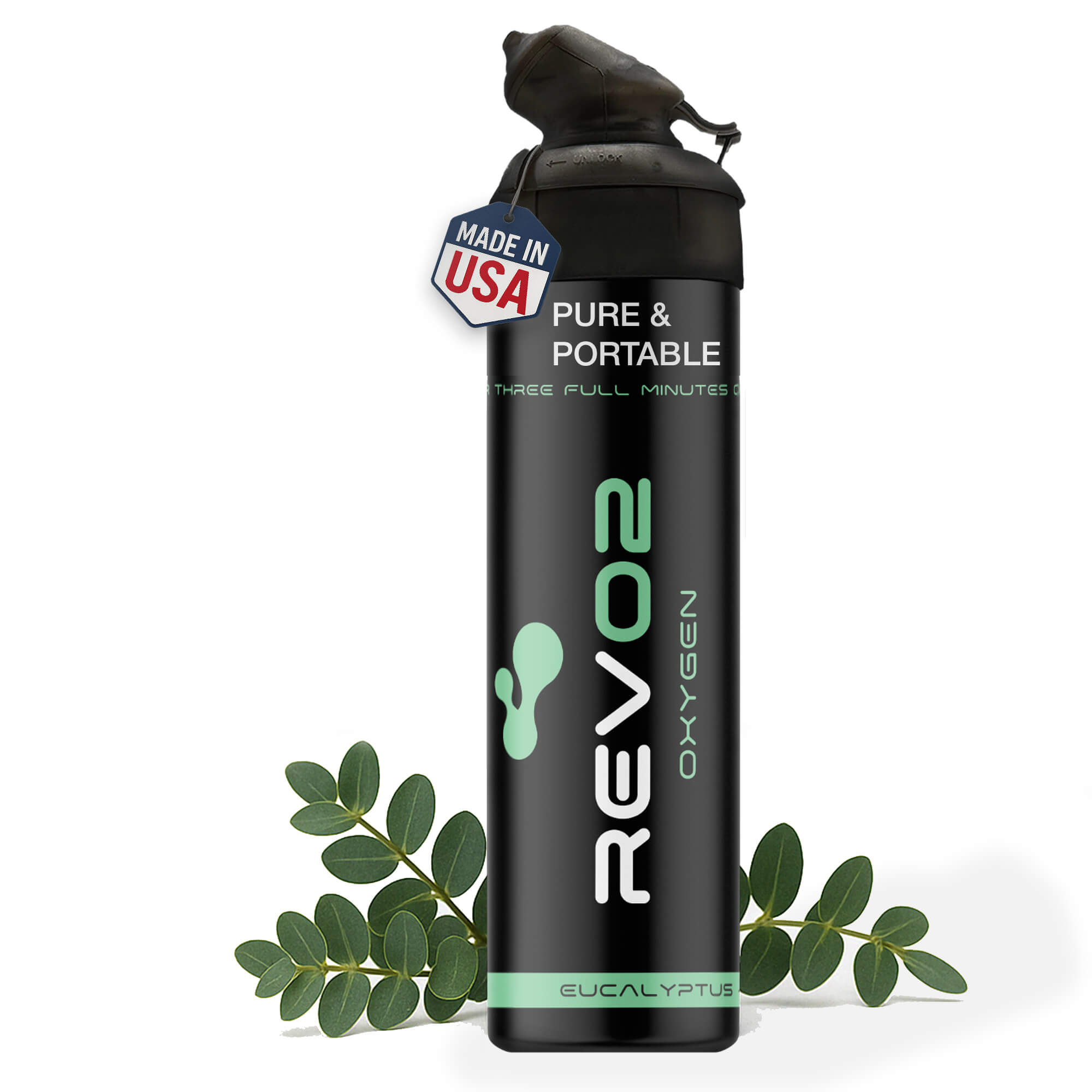
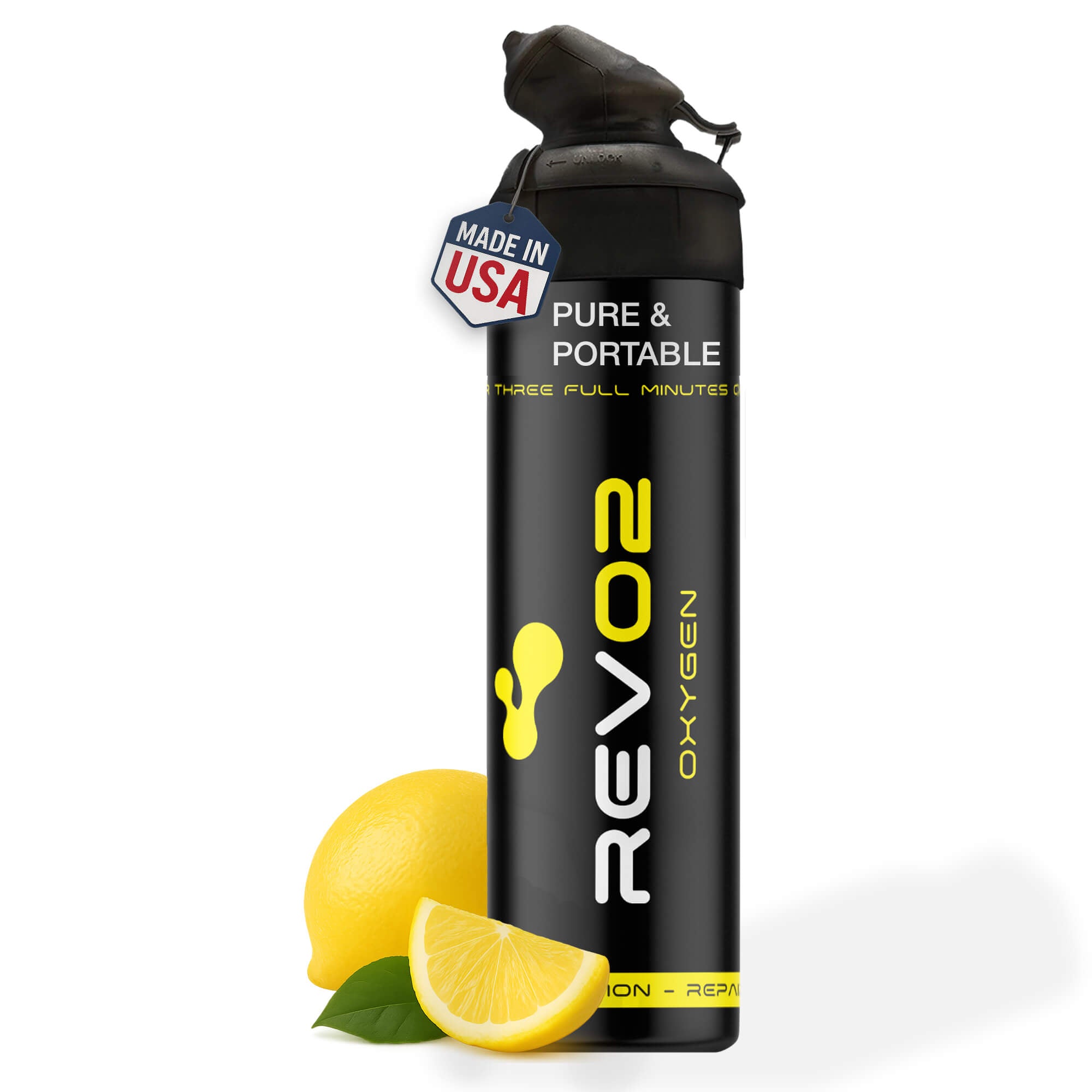
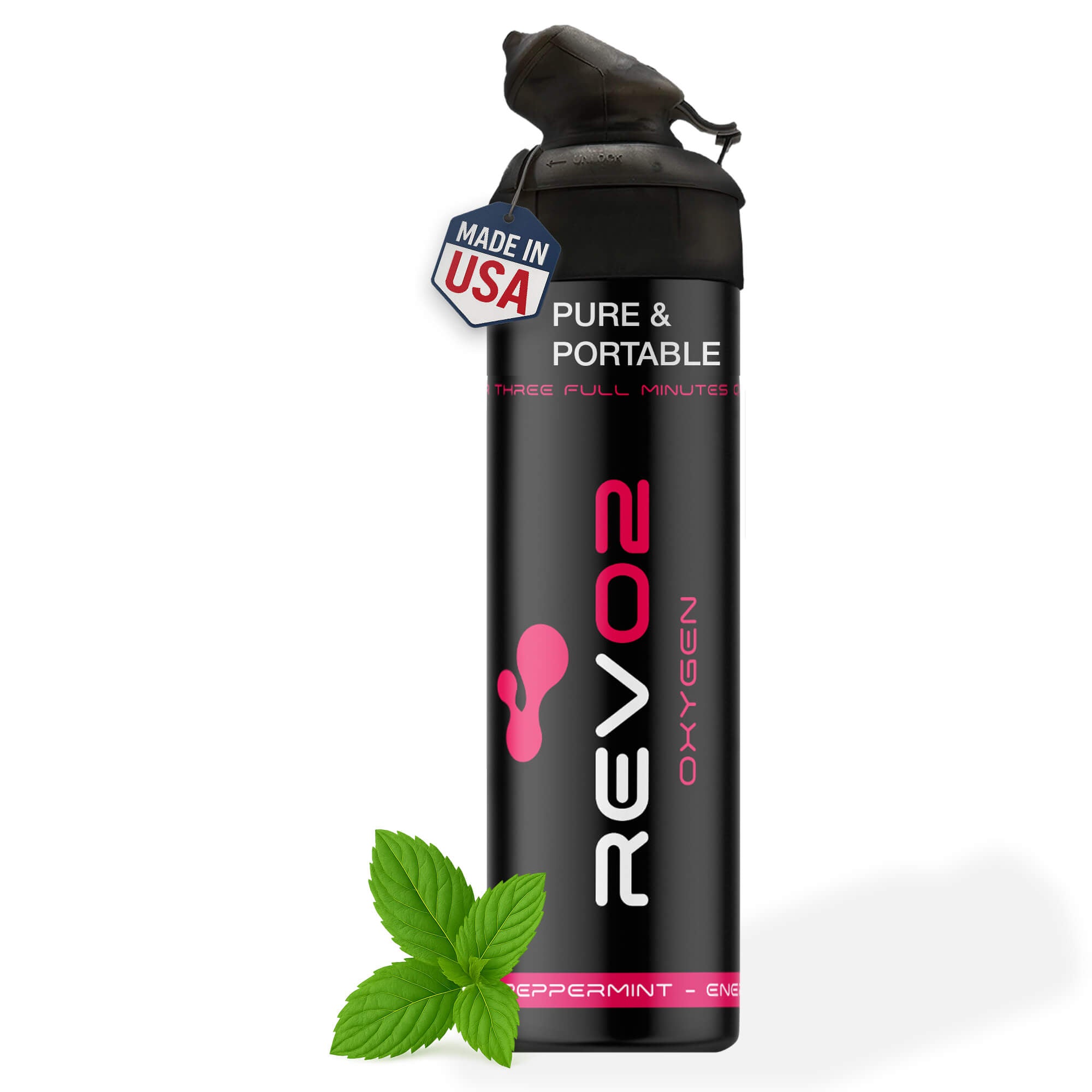
If you spend time at elevation or want a portable option for training days, travel or long workdays, REV/O2 offers canned oxygen in Peppermint (Energy & Endurance), Lemon (Recovery & Immunity) and Eucalyptus (Focus & Relaxation) blends, each with 98% pure oxygen and a zero-leak mouthpiece. You can browse the full range in our canned oxygen collection.

Athletes can look at our sports oxygen can, and hikers can see oxygen for hiking.
FAQ
Is reaction time faster when inhaling?
Research suggests your breathing phase influences reaction speed. A 2022 German study found reaction times covaried with the respiratory cycle, and a 2025 study of 277 participants found the strongest influence about 2 seconds before a response. Which phase is faster depends on the task and the person, so the studies do not give a single rule. Steady, calm breathing is the safest approach.
Can a human react in 0.2 seconds?
Yes, on a simple task and for an alert young adult. Lab means in the 1999 oxygen study were about 237 to 256 ms for simple reactions. Choice tasks, fatigue and age push times higher, and sub-0.2-second responses are typically seen only in the best trials of fast individuals.
Does oxygen improve reaction time at sea level?
Some small studies say yes, with differences of around 20 ms, but a 2017 paper found no statistical evidence of improvement on ground-level psychomotor tasks in healthy people. The effect is not dependable, so do not expect a noticeable change if you are healthy, rested and at low elevation.
Does oxygen help reaction time at high altitude?
The evidence is more encouraging. Low oxygen slows reaction time, and in a randomized trial at a simulated 4000 m, supplementation shortened reaction time at 5 minutes and on average, though not significantly at 30 minutes. It may help for short periods, but it does not replace acclimatization or descent if you feel unwell.
Sources
- Changes in reaction time when using oxygen inhalation (2009)
- Oxygen administration selectively enhances cognitive performance (1998)
- Cognitive Performance, Hyperoxia, and Heart Rate (Physiology & Behavior, 1999)
- Hyperoxia and Hypoxic Hypoxia Effects on Simple and Choice Reaction Time (2017)
- Effects of Acute Hypoxic Exposure in Simulated Altitude (2024)
- Severity-dependent influence of isocapnic hypoxia (2018)
- Effect of oxygen supplementation on cognitive performance at simulated altitude
- Oxygen: The Rate-Limiting Factor for Episodic Memory (2020)
- The Question is Still Open: Is Supplemental Oxygen Ergogenic at Altitude? (2023)
- Pure Oxygen Speeds Up Learning (Wired, 2023)
- The influence of the respiratory cycle on reaction times (2022)
- Respiration shapes response speed and accuracy (2025)