
Oxygen and heart rate variability (HRV) are connected through your autonomic nervous system. When the oxygen reaching your blood drops, as it does at altitude, your body shifts toward a more stressed, sympathetic state, and HRV often changes with it. HRV is the variation in time between heartbeats. Oxygen saturation (SpO2) is an estimate of how much oxygen your blood is carrying. One is a nervous-system signal and the other is a gas-exchange signal, but they influence each other. This guide explains how, what moves each number, and how to read both without over-reading them.
TL;DR
- HRV reflects how flexibly your autonomic nervous system adjusts your heartbeat. SpO2 estimates the oxygen level in your blood. They measure different things.
- Low oxygen exposure, such as high altitude, is associated with sympathetic overactivation and shifts in HRV. The size of the shift depends on altitude, time spent there and how acclimatized you are.
- Stress, poor sleep, hard training, alcohol and caffeine move HRV too, so a single low reading rarely points to oxygen alone.
- Neither number diagnoses anything. Headache, dizziness, nausea or worsening fatigue at altitude call for descent and medical attention, not a closer look at your watch.
Table of Contents
- What HRV and SpO2 actually measure
- How oxygen saturation and HRV are linked
- What changes SpO2 and HRV in everyday life
- How fast do the numbers bounce back?
- Reading your wearable without over-reading it
- A short guided breathing reset
- When low oxygen signals call for medical care
- Our perspective on oxygen, HRV and recovery
- Where portable oxygen fits in
- Putting your numbers to use
- FAQ
- Sources
What HRV and SpO2 actually measure
Heart rate variability is the fluctuation in the intervals between adjacent heartbeats. Researchers describe it as an index of neurocardiac function, and an optimal level is associated with health, self-regulation, adaptability and resilience. Your heart does not tick like a metronome. It speeds up and slows down by milliseconds as your brain balances two branches of the autonomic nervous system: the sympathetic branch (the “fight or flight” side) and the parasympathetic branch (the resting side).
HRV is also not one thing. It is an emergent property of several regulatory systems working on different time scales, which is why different apps and devices can report different numbers for the same night.
SpO2 is simpler. It estimates the percentage of your blood’s oxygen-carrying capacity that is currently loaded with oxygen. According to Google’s health documentation, nighttime SpO2 is usually lower than daytime SpO2 and typically stays above 90%.
In short:
| HRV | SpO2 | |
|---|---|---|
| What it tracks | Beat-to-beat timing, a proxy for autonomic balance | Oxygen carried in the blood |
| What moves it | Stress, sleep, training, alcohol, caffeine, age, altitude | Altitude, sleep, lung and heart conditions, measurement quality |
| Typical use | Recovery and stress trends | Spot checks, altitude and sleep monitoring |
How oxygen saturation and HRV are linked
The link runs through your chemoreceptors. When the oxygen supply falls, arterial saturation drops. This has been documented at high altitude, where reduced oxygen supply lowers arterial oxygen saturation. Chemoreceptors in the carotid arteries detect the change and send signals to the brain. During hypoxia, these peripheral chemoreceptors help reset baroreflex control of heart rate and sympathetic activity. Your breathing quickens, your heart rate rises, and sympathetic tone goes up.
Because HRV is largely a window onto the balance between those two branches, a sympathetic shift tends to show up as a change in HRV. A study of acute hypoxia in patients described hypoxia as associated with sympathetic overactivation in the autonomic literature, and several of the highest-ranking papers on this topic look specifically at the correlation between SpO2 and HRV measures.
The important caveat is that the response is not uniform. The magnitude of the HRV response to hypoxia depends on altitude, duration of exposure and individual differences in acclimatization. Two people on the same trail on the same day can show different readings, and the same person can look different on day one and day four.
Why a drop in HRV at altitude can matter
Some researchers suggest that reduced HRV at high altitude may indicate inadequate physiological adaptability to the low-oxygen environment. That is a population-level observation, not a personal diagnosis. The same authors stress that HRV is an indicator of general physiological status and cannot identify a specific disease.
What changes SpO2 and HRV in everyday life
Altitude
At about 3,050 meters (10,000 feet), the inspired partial pressure of oxygen falls enough that arterial saturation can drop to 88 to 91% according to the CDC Yellow Book. The air is still about 21% oxygen, but each breath delivers fewer oxygen molecules because the pressure is lower. If you want the mechanics, our explainer on why reduced air pressure at altitude starves your body of oxygen walks through it, and our altitude oxygen calculator lets you see the effect for a specific elevation. For a plain-language look at what thin air feels like, see breathing in thin air.
Exercise
Exercise raises oxygen demand, and exercise-induced desaturation can occur, particularly at high altitude. Hard efforts also suppress HRV for a while afterward, which is why many athletes use morning HRV as a recovery gauge. We cover the oxygen side in oxygen saturation during exercise.
Stress
Stress pushes the body toward sympathetic dominance. Breathing gets faster and shallower, HRV tends to fall, and a vicious cycle can start where tension and poor breathing feed each other. Stress, age, sex, sleep, hormones, exercise and caffeine or alcohol are all documented influences on HRV. Chronic stress deserves its own attention: this overview of chronic stress symptoms and causes helps put a persistently low HRV trend in context, since HRV alone cannot say why it is low. We also discuss the oxygen angle in can stress cause low oxygen levels.
Sleep
SpO2 can run lower during sleep, at high altitude, and in people with some medical conditions, according to the CDC. HRV also follows a normal overnight pattern, so comparing a nighttime value with a daytime spot check is not a fair comparison. If you track sleep, the habits around it matter as much as the numbers, and something as simple as dim red light before sleep is one way some people wind down their evenings.
How fast do the numbers bounce back?
The encouraging part is that the body responds quickly. A systematic review found that after acute hypoxic exposure, SpO2, heart rate and HRV typically normalize within seconds to minutes after return to normal oxygen levels or to extra oxygen (hyperoxia).
That finding is about short, acute exposures under study conditions. It does not mean a rough night at altitude resets in minutes, and it does not mean supplemental oxygen is a treatment for altitude illness or a way to improve your HRV score. It does explain why many people feel a short-term shift when they breathe oxygen-enriched air for a few breaths.
Reading your wearable without over-reading it
Consumer devices are useful for trends, less so for single numbers.
- Accuracy limits. Clinical pulse oximeters may be inaccurate below 75% saturation, and at altitude, cold and motion artifacts can complicate readings. Interpretation takes experience. Cold fingers on a windy ridge are a classic source of bad readings.
- Validation is ongoing. Researchers note a continuing need for validation studies of wearable-derived HRV and SpO2 to confirm consumer-grade accuracy.
- Use several indices. Comprehensive assessments of autonomic health often combine linear and non-linear HRV measures instead of leaning on one score.
- Compare like with like. Measure at the same time of day, in the same position, under similar conditions.
- Watch your own baseline. Google’s guidance says a significant drop in HRV may suggest stress, strain or possible illness, while higher HRV is linked with better health. It also says these readings are for well-being and not intended to diagnose a condition.
What a good result looks like
There is no universal healthy HRV number. Your 37 ms may be fine for you and someone else’s 100 may be low for them, because age, sex, fitness and the device all matter. The useful question is whether today’s reading sits well below your own recent range, and whether you can explain it with a late night, alcohol, illness, hard training or a trip to altitude.
A short guided breathing reset
If your numbers look stressed and you feel tense, a slow breathing exercise is a reasonable, low-risk place to start. It does not change your blood oxygen, but slow breathing is a common way to shift toward the resting side of the nervous system.
- Sit or lie comfortably and let your shoulders drop.
- Breathe in through your nose for about four seconds.
- Breathe out gently through your mouth for about six seconds.
- Repeat for two to five minutes, keeping the breath easy and never forced.
- Stop if you feel lightheaded, and return to normal breathing.
If you often feel breathless at rest, or your readings are persistently low, talk with a doctor rather than relying on breathing exercises.
When low oxygen signals call for medical care
The first signs of low oxygen at altitude can include headache, loss of appetite, dizziness, fatigue, nausea or vomiting. The CDC advises that worsening symptoms call for descent, and that suspected HACE or HAPE requires urgent treatment. Confusion, trouble walking in a straight line, a cough with breathlessness at rest, or severe headache are reasons to get down and get help immediately.
If you have a heart or lung condition, including COPD, talk with your clinician before travel to altitude or before using any oxygen product. Our overview of COPD oxygen level management explains why prescribed oxygen is a different matter from recreational products.
Our perspective on oxygen, HRV and recovery
We make portable canned oxygen, so we want to be precise about what it is and what it is not. Our cans hold 98% pure oxygen and come with a zero-leak mouthpiece and a trigger-lock cap, so you can take a few easy breaths without a mask or a prescription. People tell us they use them for a lift on the trail, between workouts, on stressful days and when traveling.

What we do not claim is that a can will raise your HRV, fix your sleep score or treat altitude illness. HRV is shaped by too many things for any single product to own it. What we do see is that the people who get the most from supplemental oxygen are the ones who understand their numbers first: they know their baseline, they know altitude lowers SpO2, and they know when a symptom means it is time to descend or see a doctor.
Our advice is to treat your wearable as a trend line, treat oxygen as a comfort and performance tool for healthy people, and treat concerning symptoms as a medical matter. If you hike, our notes on ways to boost oxygen intake while trekking at altitude and on brain fog at altitude go deeper.
— Paul
Where portable oxygen fits in
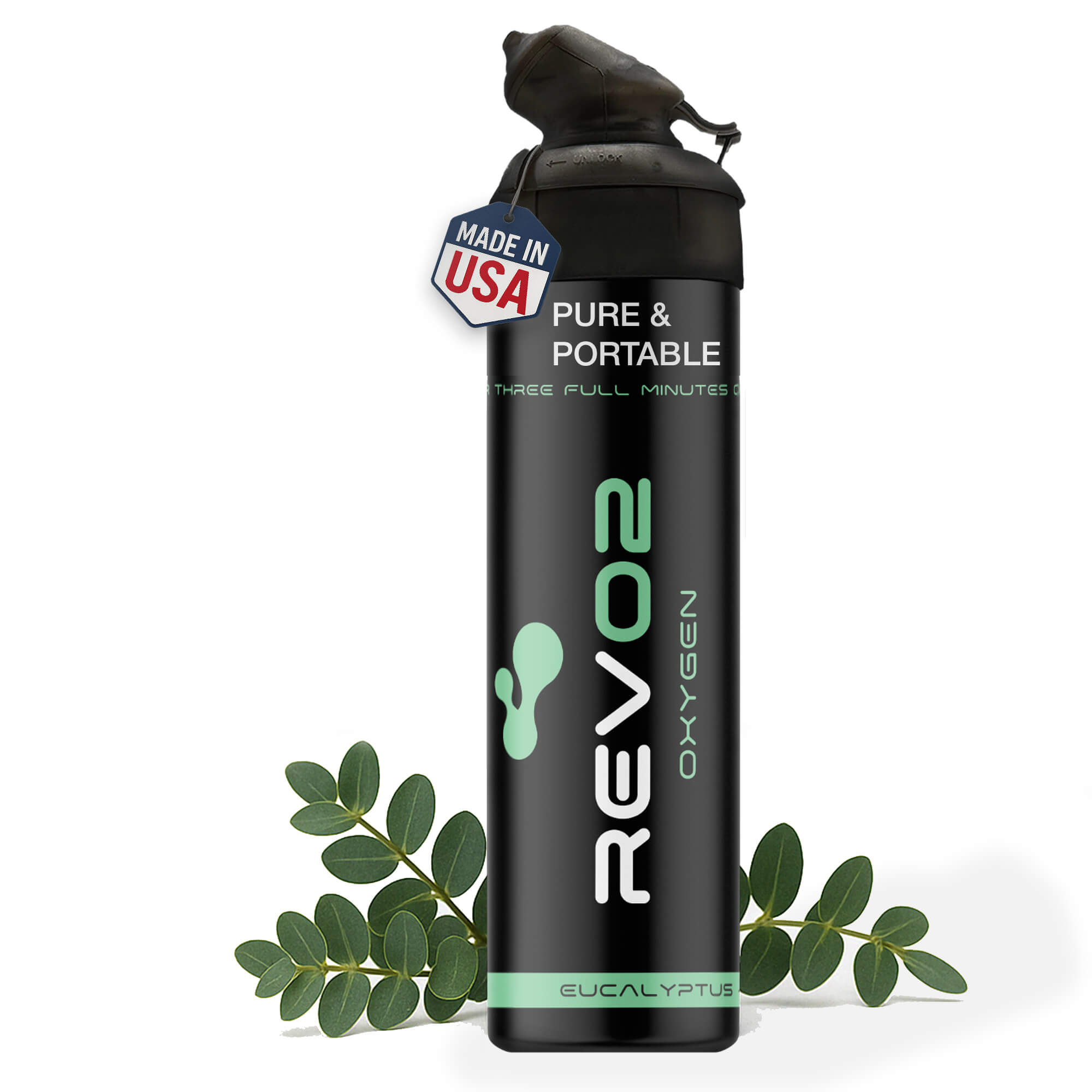
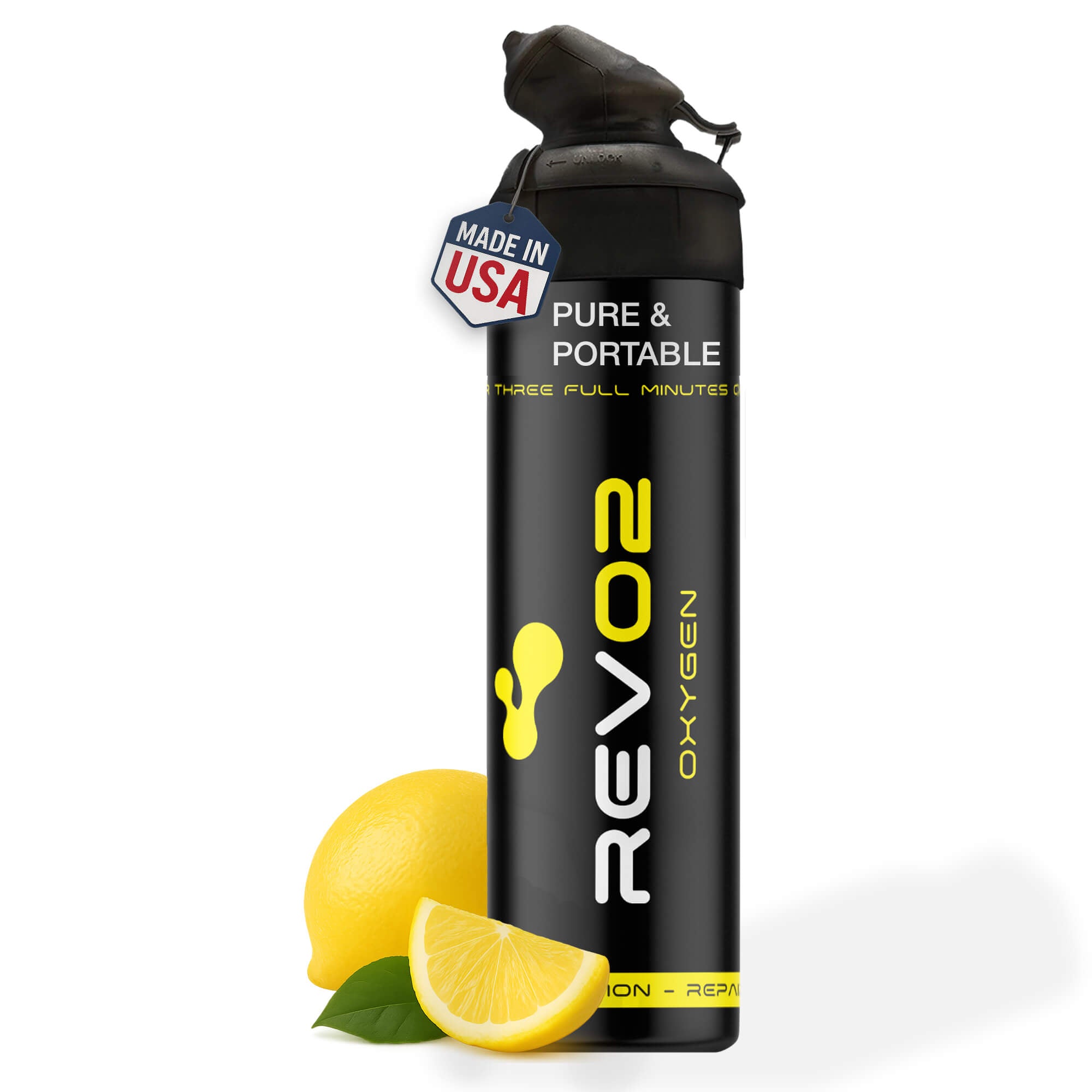
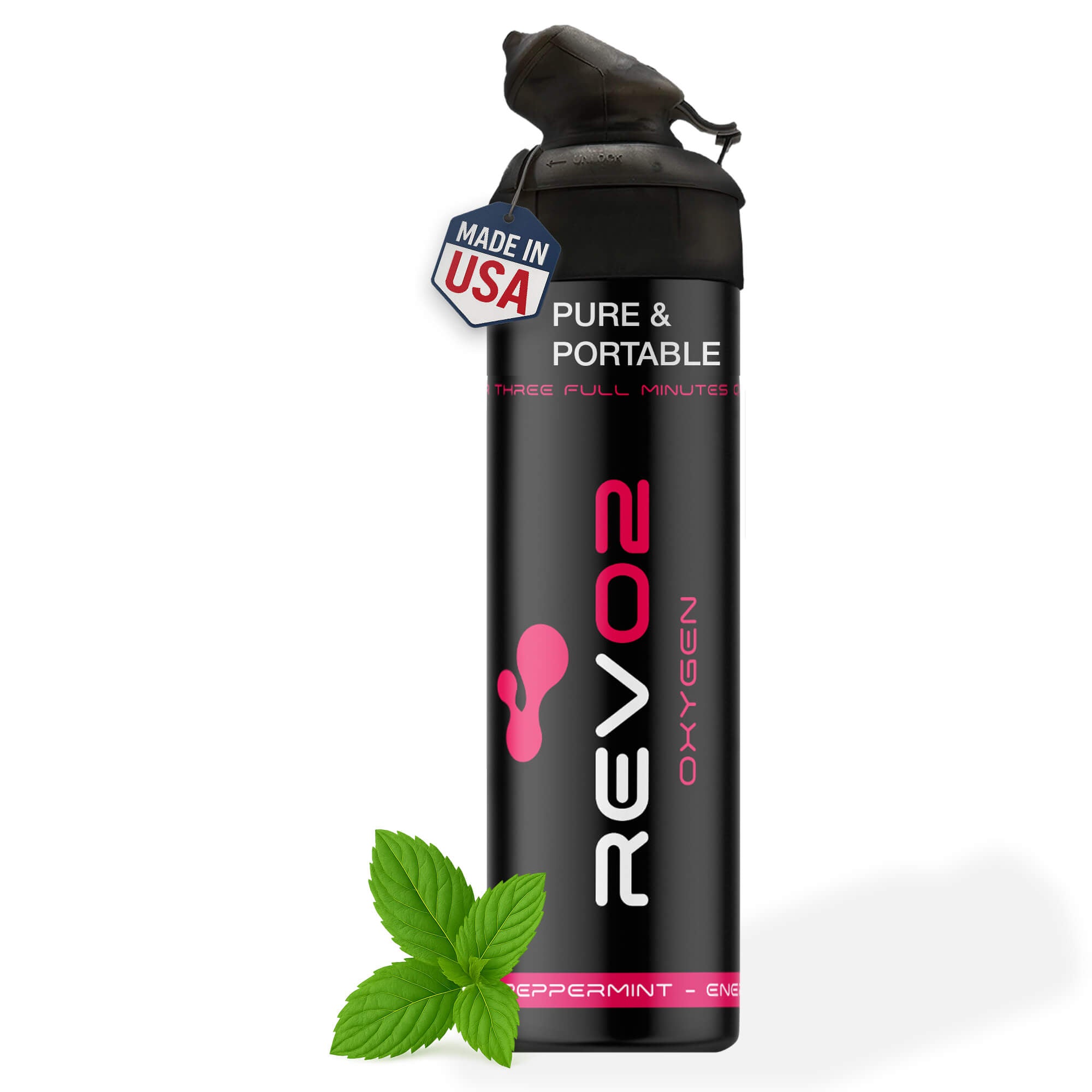
If you are a hiker, athlete, traveler or simply someone who wants a short, easy breathing boost, REV/O2 offers peppermint (energy and endurance), lemon (recovery and immunity) and eucalyptus (focus and relaxation) blends. You can see all of them on our canned oxygen collection, and our guide to using canned oxygen safely covers technique before your first can.

For trail use, start with oxygen for hiking. For training days, see sports oxygen for athletes. REV/O2 is a recreational product, not a medical device, and it is not a substitute for care if you have symptoms or a diagnosed condition.
Putting your numbers to use
A practical routine looks like this:
- Learn your baseline: a week or two of morning HRV and resting SpO2 under normal conditions.
- Note context: sleep, alcohol, training load, illness and stress.
- Before altitude, expect lower SpO2 and plan a gradual ascent, rest and water.
- At altitude, judge how you feel first and the watch second.
- After a trip or hard block, give HRV a few days to settle before drawing conclusions.
FAQ
Does low oxygen lower HRV?
Often it changes it, because low oxygen shifts the nervous system toward sympathetic activity. But the size of the effect depends on altitude, how long you are exposed and how acclimatized you are. Stress, sleep and alcohol can look similar on a wearable.
Is an HRV of 37 ms low?
It depends on you. HRV varies widely with age, sex, fitness and the device used, so compare against your own baseline rather than a universal number. If your HRV is far below your usual range for several days and you feel unwell, see a doctor.
What are the first signs of low oxygen?
At altitude, early signs can include headache, loss of appetite, dizziness, fatigue, nausea or vomiting, according to the CDC. If symptoms worsen, descend. Suspected HACE or HAPE needs urgent treatment.
Can a pulse oximeter be wrong?
Yes. Cold, motion and very low saturation levels can make readings unreliable, and consumer wearables are still being validated. Use them for trends, not diagnosis.
Sources
- Track your vitals in the Google Health app
- An Overview of Heart Rate Variability Metrics and Norms
- Effects of Acute Exposure and Acclimatization to High Altitude
- Effects of Hypoxia on Heart Rate Variability
- High-Altitude Travel and Altitude Illness, CDC Yellow Book
- Recovery from acute hypoxia: a systematic review
- Comprehensive viewpoints on heart rate variability
- Use of heart rate variability and oxygen saturation
- Validation of Wearable Derived Heart Rate Variability