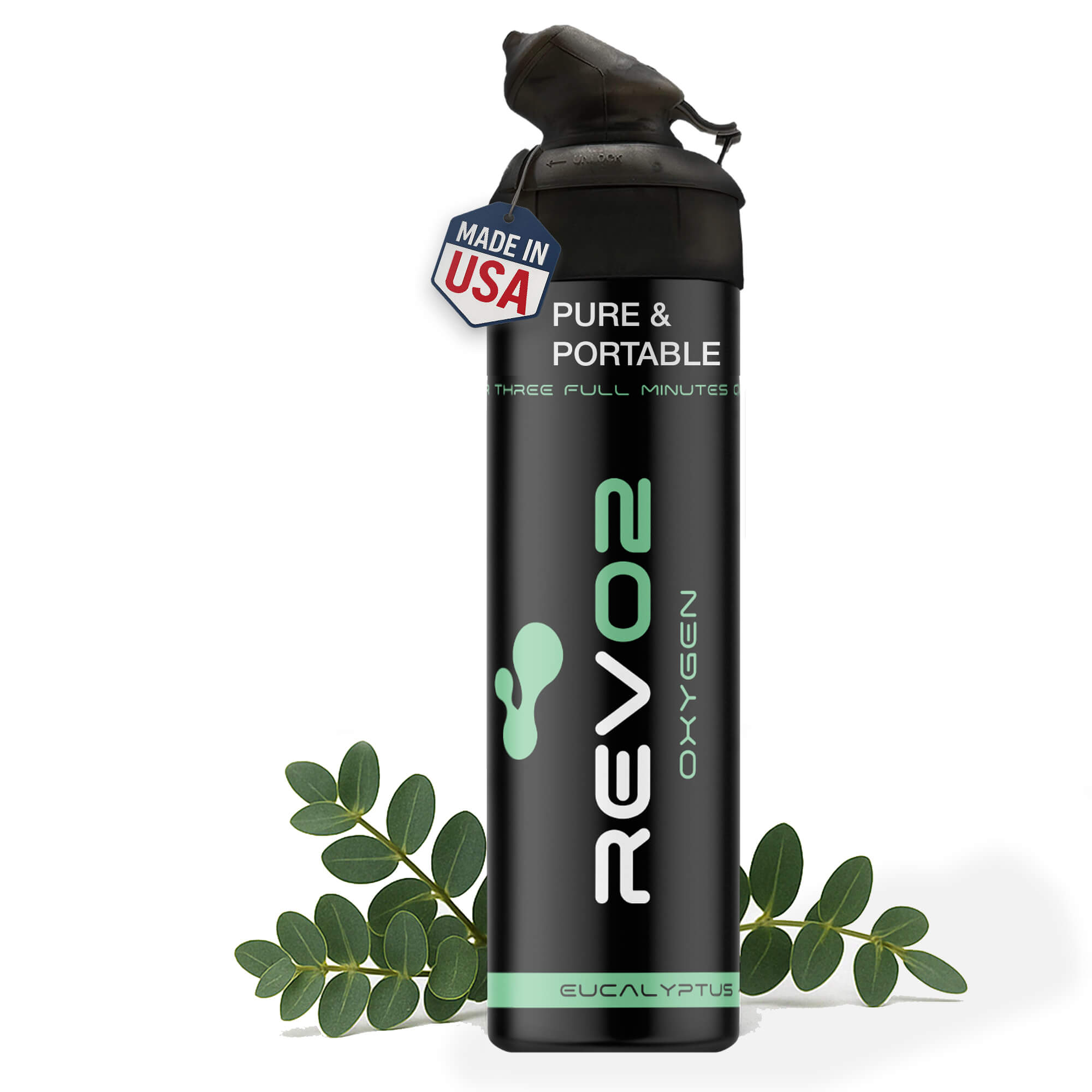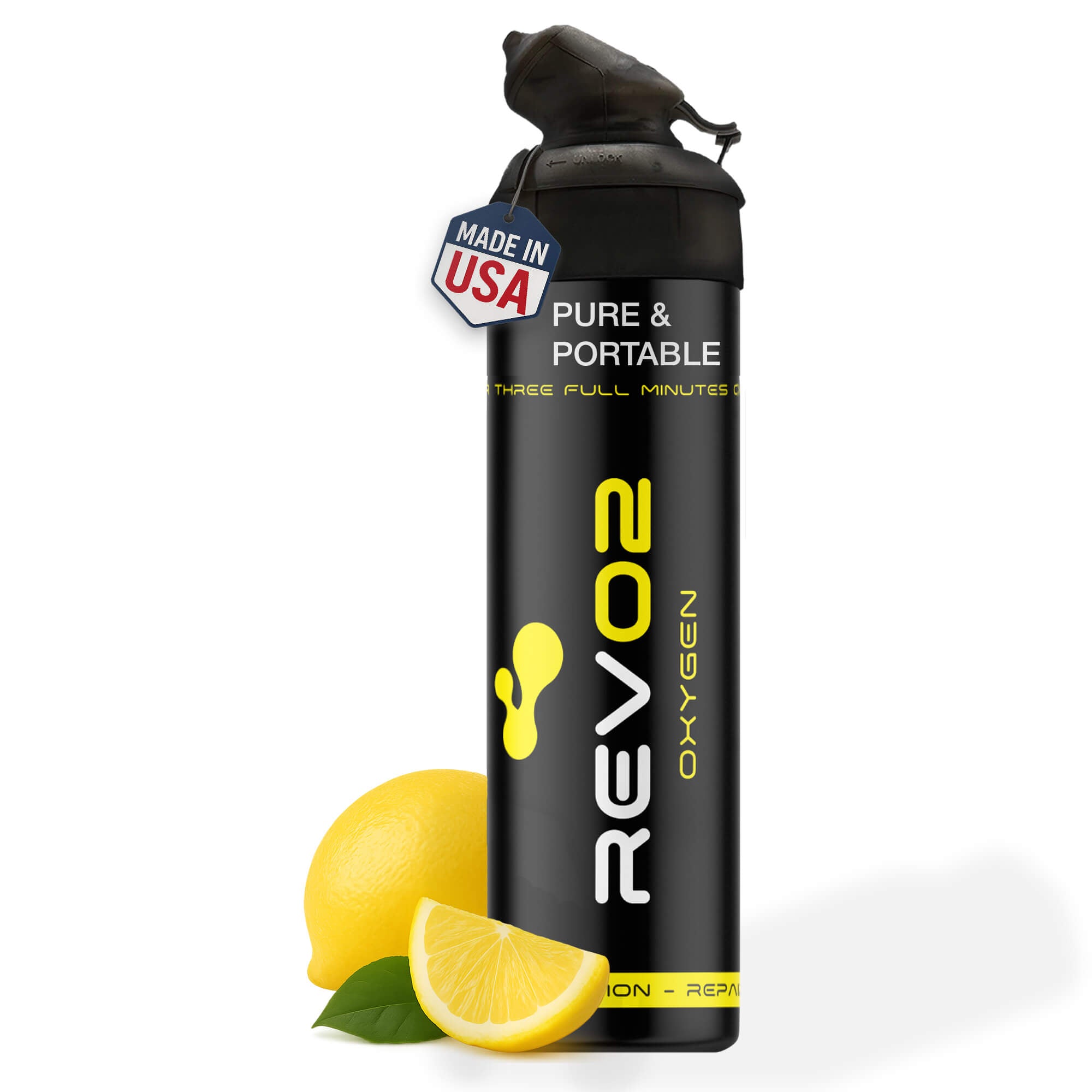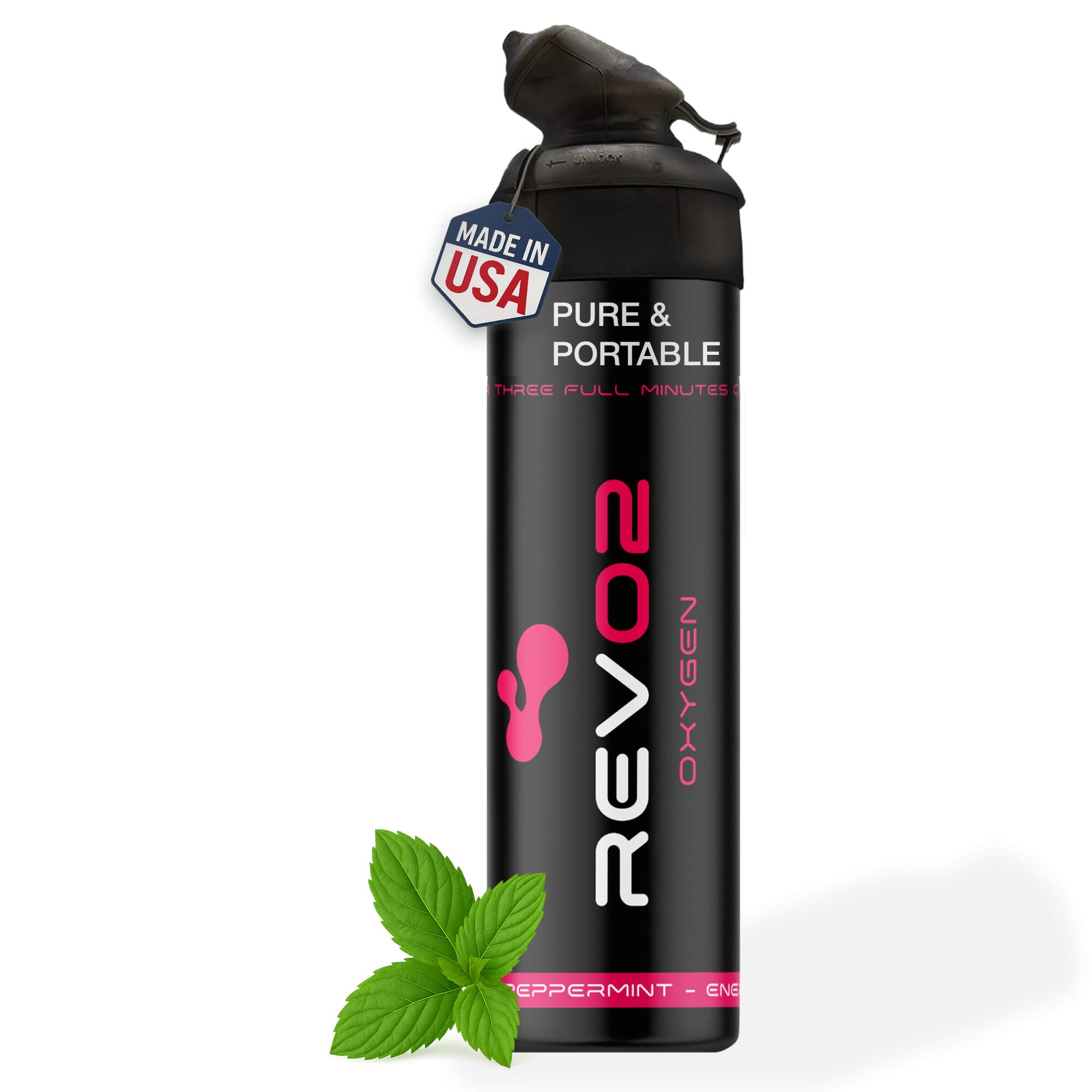

A pocket canned-oxygen can typically delivers around 60 one-second doses, a handful of deep breaths that provide only a brief boost. Manufacturers commonly claim a shelf life of 3 to 5 years for a sealed, unused can. The physiological effect of any single dose fades within minutes, and canned oxygen is never a substitute for prescription oxygen therapy.
TL;DR:
- A typical 3-liter pocket can provides around 60 one-second doses, which can be used up in just a few minutes of continuous breathing.
- Most sealed cans last 3 to 5 years in storage if kept away from heat and puncture risks, but their oxygen supply lasts only minutes during actual use.
- Proper technique, environment, and can design significantly affect how many doses you get and waste less oxygen during use.
- Short-term puffs from canned oxygen do not materially increase blood oxygen saturation and are mainly used for immediate comfort, not medical treatment.
- Canned oxygen is generally allowed on planes in small sizes, but relying on it for long or medical oxygen needs is ineffective and unsafe.
Table of Contents
- How Long Does Canned Oxygen Last Per Can Size?
- How Long Does a Sealed Can Stay Pressurized in Storage?
- What Changes How Long Canned Oxygen Actually Lasts?
- Can Oxygen From a Can Actually Raise Your Blood Oxygen?
- Can You Bring Canned Oxygen on a Plane?
- How Do You Get the Most Out of One Can?
- What Do Experts and Product Specs Say About Effect Duration?
- What Actually Matters When You’re Deciding If Canned Oxygen Is Worth It
- Get a Canned Oxygen That’s Built to Waste Less of Every Dose
- Sources
How Long Does Canned Oxygen Last Per Can Size?
Manufacturers measure capacity in liters, but the number that actually matters to you is the “dose,” a one-second inhalation through the mouthpiece. That unit shows up on nearly every canned-oxygen label because it translates raw volume into something you can picture: how many times you’ll actually use the can before it’s empty.
Over-the-counter oxygen canisters generally hold 3 to 10 liters, and that range maps roughly to three common sizes you’ll see on shelves:
- Pocket cans (around 3 liters): roughly 60 one-second doses, enough for a handful of uses spread across a day.
- Medium cans (around 5 liters): roughly 100 doses, the most common size for daily energy or altitude support.
- Large cans (around 10 liters): roughly 200 doses, and even at that volume, continuous use only adds up to a little over three minutes of actual oxygen flow.
Here’s the math that surprises most first-time buyers: a 10-liter can sounds massive, but it does not equal ten minutes, or even five minutes, of elevated oxygen exposure for your body. A resting adult breathes 12 to 20 times per minute, so even a large can, used continuously rather than in short doses, empties in a few minutes flat. The liter count describes the can’s storage volume, not your personal supply of extra breathing time.
How Long Does a Sealed Can Stay Pressurized in Storage?
Shelf life and usage time are two different clocks. A can’s usable window (the doses discussed above) plays out in minutes. Its shelf life, how long it holds pressure and purity before you ever open it, runs for years.
Most manufacturers claim a 3 to 5 year shelf life for a sealed, unopened can stored at normal room temperature. That claim assumes the can is never punctured, never exposed to extreme heat, and stored upright away from direct sunlight.
A few storage habits protect that shelf life:
- Keep cans away from radiators, car dashboards, and direct sun; heat raises internal pressure and can degrade the seal.
- Never puncture, incinerate, or store near open flame. Canned oxygen is pressurized and combustible-adjacent by nature.
- Store at moderate room temperature rather than in a garage or trunk that swings between freezing and hot.
You’ll know a can is losing pressure when the hiss softens, the flow feels weak against your palm, or the mouthpiece no longer delivers a crisp burst. Weight is a poor indicator since oxygen itself weighs very little.
Pro Tip: Shake a can gently before storing it long-term and note the date of first use on the bottom with a marker, most purity loss happens gradually, so tracking usage helps you retire a can before it underperforms rather than after.
What Changes How Long Canned Oxygen Actually Lasts?
The liter rating on the label is a fixed number. How long that oxygen actually serves you depends on three variables you control more than you might think.
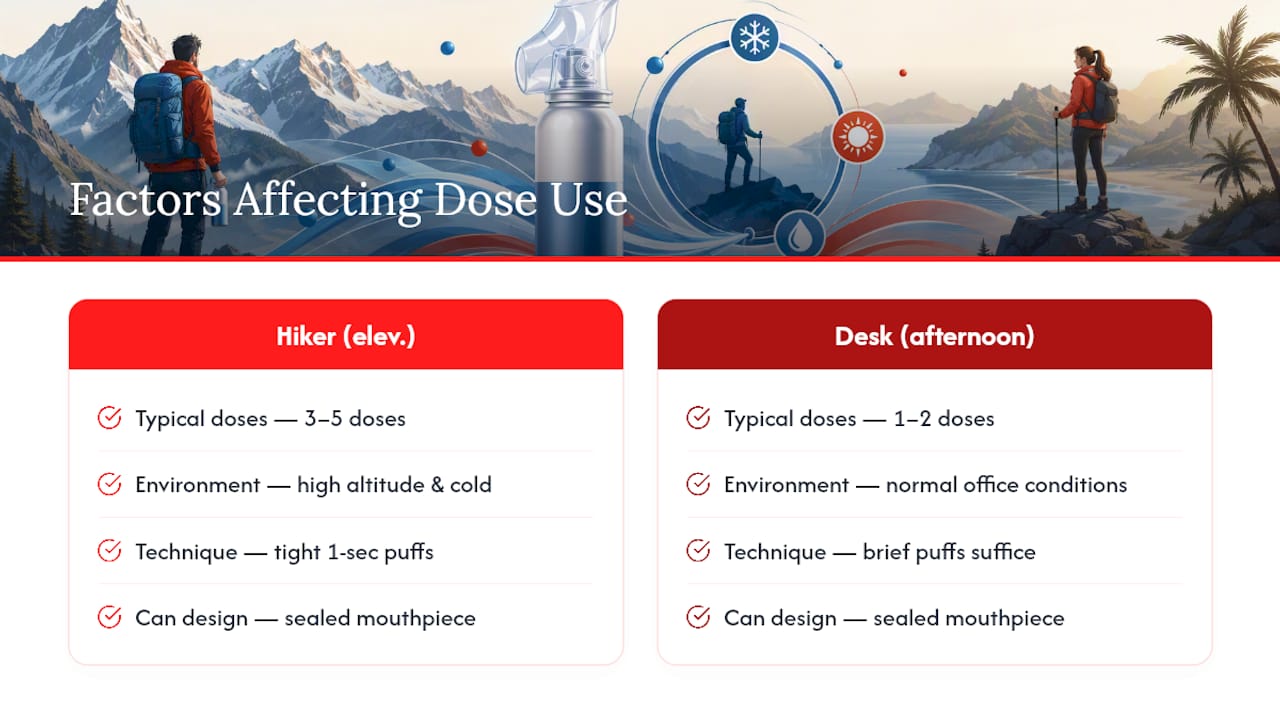
Technique matters more than can size. A clean one-second puff through a sealed mouthpiece delivers close to the labeled dose. A long, dragged-out inhalation with a loose seal wastes oxygen to the surrounding air, which is exactly why REV/O2 built its zero-leak mouthpiece design around a tight seal rather than an open nozzle.
Environment changes your baseline need. At altitude, in cold temperatures, or during intense activity, your body burns through the perceived benefit of a dose faster because your resting oxygen demand is already higher.
Can design determines waste. A simple nozzle can lose oxygen between puffs; a sealed mouthpiece holds pressure until you inhale.
Real-world scenarios look like this: a hiker pausing at elevation might use 3 to 5 doses to steady their breathing, while someone fighting afternoon fatigue at a desk might need just 1 or 2. Neither scenario burns through a full can in one sitting, which is part of why doses per can, not total liters, is the number worth tracking.
Can Oxygen From a Can Actually Raise Your Blood Oxygen?
This is where marketing claims and clinical reality part ways. Medical experts are fairly consistent on this point, and it’s worth stating plainly before you spend money expecting a therapeutic effect.
Brief puffs from a can are unlikely to materially increase blood oxygen saturation. Continuous oxygen delivery sustained over several minutes is generally what’s required to move SpO2 numbers, and any subjective lift from a quick dose may come from relaxation or deliberate deep breathing rather than the oxygen itself.
Field testing backs this up. One outdoor gear reporter who hiked with canned oxygen found that a typical can offered only a handful of deep breaths, with any perceived benefit tracking closer to placebo than measurable physiological change.
That doesn’t make canned oxygen useless, it makes it a short-term comfort tool, not a treatment. Watch for symptoms that need real medical attention rather than a can:
- Severe or worsening shortness of breath at rest
- Chest pain or pressure
- Confusion, bluish lips, or fingertips
Canned oxygen should never replace prescribed oxygen therapy for COPD, heart failure, or diagnosed hypoxemia. If you’re managing a chronic condition, a pulse oximeter, hydration, rest, and your prescribed device remain the actual tools for the job, alongside guidance from a clinician on any therapy with contraindications, similar to how PEMF therapy carries its own supervision guidelines.
Can You Bring Canned Oxygen on a Plane?
Compressed gas containers fall under specific screening rules, and canned oxygen is no exception. Check TSA’s guidance on compressed gas items before you pack, since restrictions can depend on can size and pressure rating.
A few practical notes:
- Confirm both TSA rules and your specific airline’s policy, airlines sometimes add their own limits beyond federal screening rules.
- Small cans are more commonly accepted in carry-on bags than large ones; when in doubt, call the airline ahead of your trip.
- Once a can is empty or nearing end of shelf life, dispose of it per the manufacturer’s instructions rather than tossing it in general recycling, since residual pressure can be a hazard in compactors.
How Do You Get the Most Out of One Can?
Getting full value from a can comes down to a repeatable routine, not guesswork.
- Seal your lips fully around the mouthpiece before inhaling, a loose seal wastes oxygen with every dose.
- Inhale slowly and deeply rather than sharply, this pulls more of the dose into your lungs instead of your throat.
- Wait a few seconds between doses rather than stacking them rapidly.
- Store the can upright at room temperature between uses to protect the seal and pressure.
- Use it for short-term fatigue, a quick pre-exercise boost, or brief altitude discomfort, not as a stand-in for medical treatment.
Pro Tip: Before your first use each day, check that the mouthpiece clicks or seats fully, a partial seal is the single biggest reason people report a can “running out” faster than the label suggests.
What Do Experts and Product Specs Say About Effect Duration?
Clinical commentary and product testing agree on the core mechanism: your body needs sustained oxygen flow to shift blood oxygen levels, and a canned burst simply doesn’t run long enough to do that. That’s not a knock on the category, it’s a reason to set expectations correctly before you buy.
REV/O2 cans deliver 98% pure oxygen through a zero-leak mouthpiece built with athlete input specifically to reduce the waste that shortens a can’s usable life. For the technique details covered above, the full usage guide walks through mouthpiece sealing and dosing step by step.
What Actually Matters When You’re Deciding If Canned Oxygen Is Worth It
The research here supports a fairly blunt judgment: canned oxygen is a short-term comfort tool with a real, if modest, physiological role, and most of the confusion around it comes from marketing copy that blurs “liters in the can” with “minutes of benefit to your body.” Those are not the same number, and treating them as interchangeable is where most buyers get disappointed.
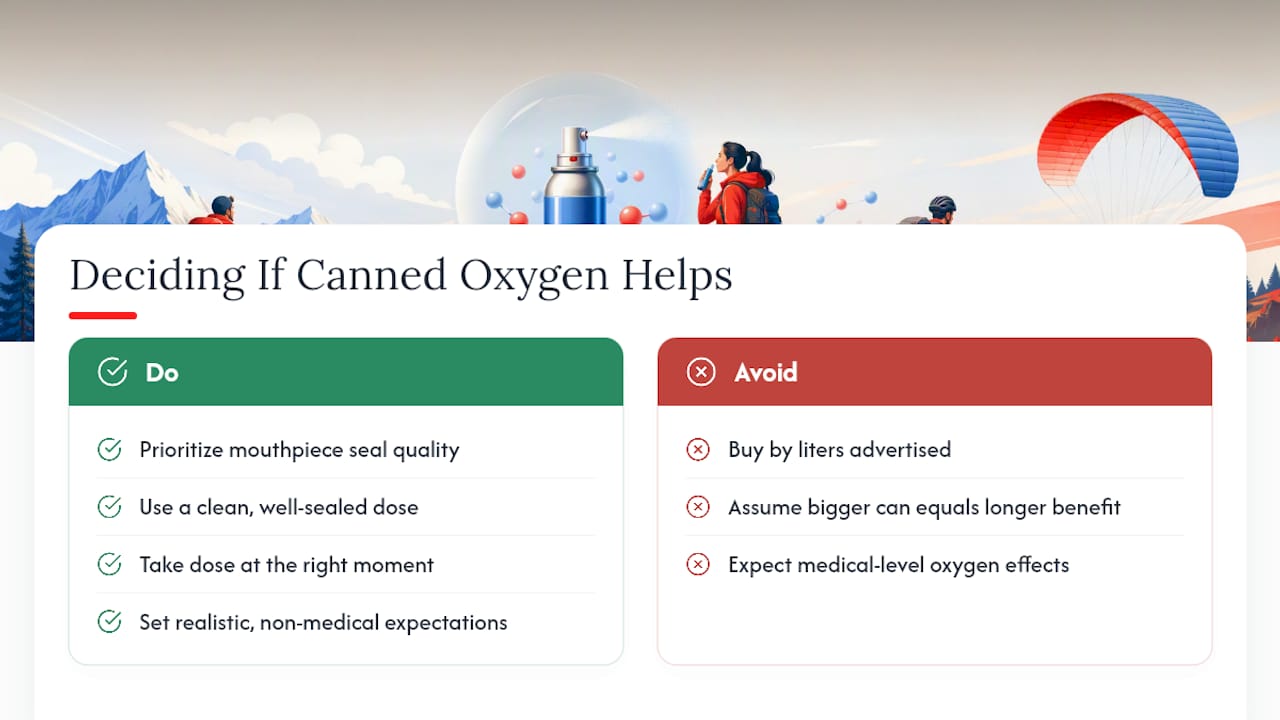
Conventional advice tends to either oversell canned oxygen as a performance hack or dismiss it entirely as placebo. Both miss the point. The honest read is that a clean, well-sealed dose taken at the right moment, before a strenuous climb, during an afternoon energy dip, can genuinely help you breathe more deliberately and feel steadier, even if your SpO2 barely moves. That’s a real benefit. It’s just not a medical one.
If you’re buying based on doses per can rather than liters, and on mouthpiece seal quality rather than marketing language, you’ll get a far more accurate sense of what a can will actually do for you. Prioritize technique and realistic expectations over chasing a bigger can size.
— Paul
Get a Canned Oxygen That’s Built to Waste Less of Every Dose
Most canned oxygen loses value through leaky nozzles that let a chunk of every dose escape before it reaches your lungs. REV/O2 was built around a zero-leak mouthpiece specifically to close that gap, so more of each one-second dose actually reaches you instead of the air around you.
Every REV/O2 can delivers 98% pure oxygen, refined with input from athletes who needed a reliable boost during training, recovery, and travel at altitude, not a gimmick. The lineup spans flavor blends like peppermint, lemon, and eucalyptus, so a quick dose doesn’t feel purely clinical. Browse the full canned oxygen collection to compare sizes, or start with the peppermint multi-pack if you want a size built for regular use rather than occasional emergencies. If you’re new to the mouthpiece technique, the safety and usage guide walks through sealing and dosing before your first can arrives. As always, if you’re managing a diagnosed respiratory condition, talk to a clinician before using any over-the-counter oxygen product.
This article is general information, not a substitute for advice from a qualified doctor. Consult a qualified healthcare professional about your own circumstances before acting on anything here.
Sources
- Does Oxygen in a Can Deliver on Its Altitude and Energy Claims?
- Over-the-Counter Oxygen vs. Prescription Oxygen: What’s Safe and What Works
- Is Canned Oxygen Practical or Placebo? I Hiked With It to Find Out.
- TSA: What Can I Bring?