
Brief supplemental oxygen helps most when it’s used strategically during recovery, not gulped down before a warm-up. Research points to the clearest gains in repeated-sprint sports, constrained-ventilation activities, and athletes prone to exercise-induced dips in blood oxygen. Single, continuous endurance efforts see smaller, less consistent benefits. Use short doses at the start of recovery or right after maximal effort, and check with a clinician first if you have any heart or lung condition.
TL;DR:
- Supplemental oxygen provides the most benefit when used briefly during recovery or immediately after high-intensity efforts, rather than before or during long endurance activities.
- Using 98% pure oxygen for about five seconds at recovery onset can improve subsequent sprint times and reduce perceived fatigue, especially in repeat-effort sports.
- Oxygen’s advantages are less evident in long-duration endurance sessions or in untrained individuals, with most benefits evident under controlled, short-term protocols.
- Recreational canned oxygen is safe when used as directed and in moderation, but those with heart or lung conditions should consult a healthcare professional first.
- Testing your response with a simple A/B comparison during intervals can help determine if supplemental oxygen improves your performance.
Table of Contents
- What Is Pre-Workout Oxygen and How Does It Work?
- What Does the Research Say About Oxygen and Exercise Performance?
- How Do You Use Supplemental Oxygen Before or During a Workout?
- Is Supplemental Oxygen Safe for Athletes to Use?
- When Would an Athlete Actually Try This?
- Where REV/O2 Fits Into a Recovery-Focused Routine
- Sources
- FAQ
What Is Pre-Workout Oxygen and How Does It Work?
Portable canned oxygen is a recreational product, not the medical-grade oxygen delivered through a hospital regulator or a home concentrator.
The physiology behind it is straightforward. Breathing air with a higher fraction of inspired oxygen, known as FiO2, briefly raises the amount of oxygen dissolved in your blood plasma. That temporary boost can speed up phosphocreatine resynthesis, the process your muscles rely on to refuel between hard efforts, and it may lower how hard an interval feels afterward.
What actually separates a well-designed can from a gimmick comes down to a few details:
- Purity percentage printed clearly on the label, not buried in fine print
- A zero-leak mouthpiece or sealed valve so you’re not wasting oxygen on the exhale
- Straightforward usage instructions, including how long to inhale and how often
- Visible safety labeling, since these are pressurized, oxygen-enriched products
Timing changes what you get from a device like this. Oxygen taken during recovery between sprints has a different physiological job than oxygen taken while you’re mid-effort and already breathing at capacity. The next section breaks down why that distinction matters more than most product marketing lets on.
What Does the Research Say About Oxygen and Exercise Performance?
The strongest evidence for pre-workout oxygen doesn’t actually support pre-loading before you start. It supports using it in short, targeted doses during recovery.
A meta-analysis on hyperoxia and exercise performance found a large effect on time-to-exhaustion tasks and smaller, but still meaningful, effects on time-trial performance. An FiO2 around 0.30, well below the 95% to 98% purity most canned products claim, was often enough to produce measurable benefit. Higher oxygen concentrations tended to produce larger effects, which is part of why portable products lean toward high purity rather than diluted blends.
Meta-analysis finding: acute hyperoxia produces a large effect on time-to-exhaustion and small-to-moderate effects on time-trial performance, with benefits scaling alongside FiO2.
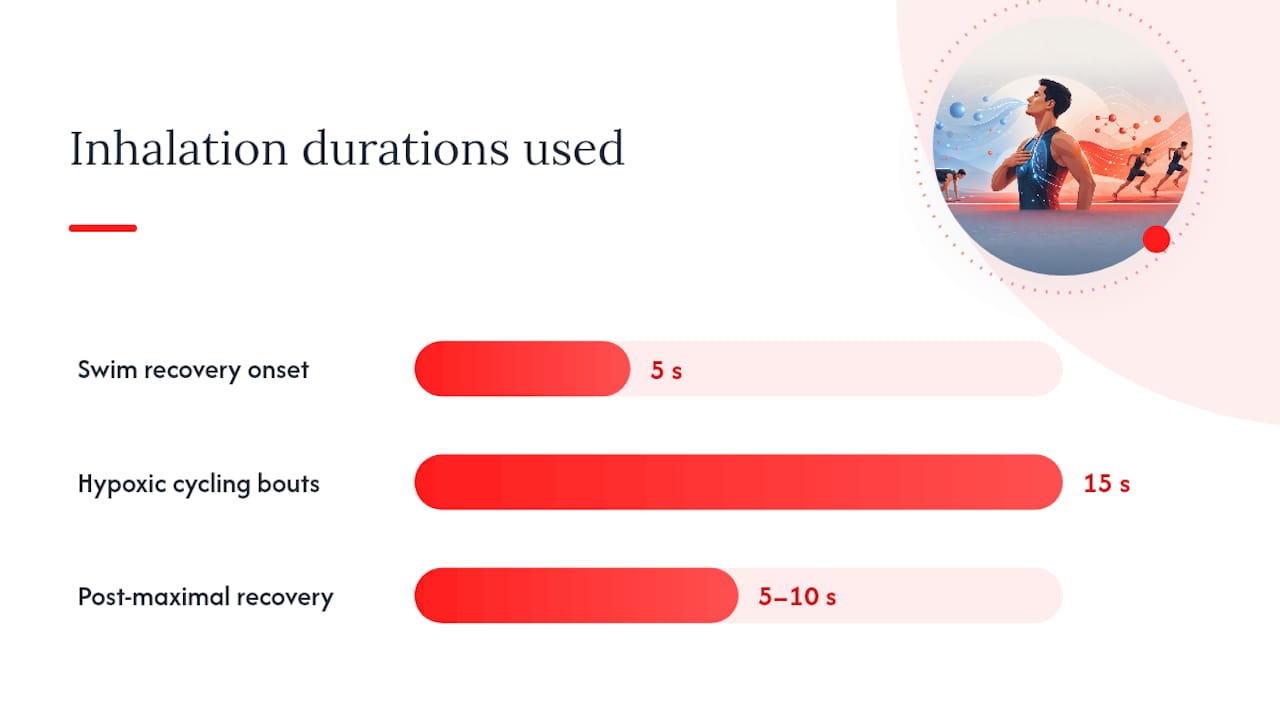
Recovery-focused dosing has the most direct trial support. In a randomized crossover study of trained swimmers, a five-second inhalation of 98% oxygen at the start of recovery improved subsequent 50-yard sprint times by a notable amount and reduced how exhausted athletes felt afterward. That’s not a marginal placebo effect. It’s a repeatable protocol tested under controlled conditions.
Intermittent dosing during the work interval itself also shows promise, particularly for athletes training or competing at altitude. A study using 15-second hyperoxic bouts during simulated hypoxic cycling increased mean power output during a five-minute time trial, raised arterial oxygen saturation, and lowered both blood lactate and perceived exertion. Separately, hyperoxia administered during high-intensity intermittent cycling extended time to exhaustion while keeping SpO2 levels higher than normoxic conditions.
Where the evidence gets shakier is long-term adaptation. A six-week hyperoxic HIIT protocol in trained cyclists produced only small, statistically inconsistent gains, with no reliable change in mitochondrial markers. When you read a study or a product claim, check for a few specifics before trusting the conclusion:
- The FiO2 used, since 30% oxygen and 98% oxygen aren’t producing the same effect
- Whether the trial simulated hypoxic (altitude-like) conditions or tested at sea level
- The training status of participants, since trained athletes and untrained volunteers respond differently
- The exact dose and timing, because five seconds at recovery onset is a different intervention than continuous breathing during exercise
How Do You Use Supplemental Oxygen Before or During a Workout?
Supplemental oxygen earns its keep in specific situations, not as a blanket pre-workout ritual. It tends to matter most in these settings:
- Repeated-sprint intervals, where recovery quality between efforts determines how well you hold pace on the next rep.
- Short-rest, high-intensity sessions, where perceived exertion climbs fast and anything that blunts it has a compounding effect.
- Constrained-ventilation sports, like swimming, where breath timing is limited by the activity itself.
- Immediately after a maximal effort, when your body is actively working to restore phosphocreatine stores.
A few protocols drawn from actual trials give you a starting point. The swim study used a five-second inhalation of 98% oxygen right at the onset of recovery, timed to catch the window when your body is beginning to resynthesize energy stores. The hypoxic cycling trial used repeated 15-second bouts spaced through the work interval itself, useful mainly if you’re training or racing at altitude. For general post-effort recovery, a brief five to 10-second inhalation immediately after a maximal set mirrors what showed benefit in controlled research.
The technique matters as much as the timing. Sit upright, take a slow, controlled inhale through the mouthpiece, and resist the urge to hyperventilate. Deep, panicked breathing defeats the purpose. Count your triggers instead of chasing a continuous flow, since the trials that showed benefit used short, discrete bouts rather than sustained breathing.
Pro Tip: Log your interval times and rate of perceived exertion on days you use oxygen versus days you don’t. Personal response varies enough that your own numbers matter more than any published average.
Keep your expectations calibrated. The gains shown in research are real but modest, mostly showing up in repeated-effort scenarios rather than transforming a single long endurance session.
Is Supplemental Oxygen Safe for Athletes to Use?
Canned oxygen is pressurized and oxygen-enriched, which means basic fire safety applies. Keep cans away from open flame, sparks, or heat sources, and follow the storage instructions printed on the label. Oxygen itself doesn’t burn, but it accelerates combustion dramatically if something nearby catches.
Oxygen toxicity from a few seconds of recreational use is unlikely. The risk profile changes with prolonged exposure to high FiO2 without medical supervision, which is why self-prescribing continuous or high-volume medical-grade oxygen is not something to attempt outside a clinical setting.
A few groups should talk to a doctor before adding this to a training routine:
- Anyone with COPD or another chronic respiratory condition
- Anyone with an uncontrolled cardiac condition
- Anyone currently on prescription oxygen therapy
Set your expectations honestly. This isn’t a shortcut to a faster marathon or a bigger endurance ceiling. The benefit is situational, strongest in repeat-effort and recovery contexts, and it varies from one athlete to the next.
When Would an Athlete Actually Try This?
I’d recommend a simple A/B test before drawing any conclusions about your own training. Run the same interval session twice, once with brief oxygen at recovery onset and once without, then compare your times and perceived exertion across both.
Pair it with the recovery basics that actually move the needle: hydration, active recovery, real sleep. Oxygen supplements those habits; it doesn’t replace them. And if you have any cardiac or respiratory history, get medical clearance before you experiment.
— Paul
Where REV/O2 Fits Into a Recovery-Focused Routine
REV/O2 was built around the exact use case the research points to: short, targeted oxygen boluses rather than continuous breathing. Each can delivers 98% pure oxygen through a zero-leak mouthpiece, so none of it escapes between your lips and your lungs, in flavor options including peppermint for energy and endurance, lemon for recovery and immunity, and eucalyptus for focus and relaxation.
If you’re testing the recovery-onset protocol described above, the Peppermint Oxygen line is built for exactly that moment between sprints or after a maximal set. Travelers and altitude visitors dealing with thinner air, or anyone managing everyday fatigue, tend to reach for the same portable format. Before your first can, walk through the safety and usage guide so you know the right inhale technique and storage precautions. When you’re ready to build a recovery routine around it, the full REV/O2 lineup is a straightforward place to start.
This article is general information, not a substitute for advice from a qualified doctor. Consult a qualified healthcare professional about your own circumstances before acting on anything here.
Sources
- Recovery‑Targeted Supplemental Oxygen Enhances Performance and Attenuates Perceived Fatigue During Subsequent High‑Intensity Swimming
- Fifteen‑second bouts of hyperoxia improve 5‑minute time‑trial performance in acute hypoxic conditions
- The effects of hyperoxia on sea‑level exercise performance, training, and recovery: A meta‑Analysis
FAQ
Is Taking Canned Oxygen Good for You?
For healthy adults, brief recreational use appears safe based on the trial protocols reviewed here, which used short doses of high-purity oxygen rather than continuous exposure. Anyone with a cardiac or respiratory condition should check with a doctor first, since medical oxygen and recreational oxygen serve different purposes.
Is It Beneficial to Take Oxygen While Working Out?
It depends heavily on timing and activity type. Intermittent bouts during hypoxic cycling intervals raised power output and arterial saturation in controlled research, but breathing oxygen during a single steady endurance effort shows smaller, less reliable benefits.
What Is the Best Supplement for Boosting Oxygen Levels?
There’s no single supplement proven to reliably raise blood oxygen the way brief inhaled oxygen does in trials. Portable canned oxygen, like REV/O2’s sports oxygen can, is designed specifically around the recovery-onset dosing that research has shown to help repeated-effort performance.
Is It Beneficial to Take Oxygen Before Running?
For a single continuous run, pre-loading oxygen before you start shows limited, inconsistent benefit in the research reviewed here. The clearer application is post-run or between structured intervals, where oxygen supports faster recovery and lower perceived fatigue rather than boosting the run itself.
Does Vaping Affect Oxygen Uptake During Cardio?
Yes. Research on vaping’s cardiovascular effects found measurably lower peak oxygen uptake and slower recovery in people who vape, which matters if you’re troubleshooting why your recovery times feel off despite using supplemental oxygen protocols correctly.