
Oxygen and lactic acid are linked, but not in the way most gym lore suggests. Your muscles make lactate when energy demand outruns what aerobic metabolism can supply, and oxygen is part of how that lactate is later used as fuel. Lactate does not cause the soreness you feel a day or two after a hard workout, and breathing extra oxygen is not a proven shortcut for clearing it. Below we explain what is actually happening, what the evidence says about oxygen and recovery, and where a portable can may or may not fit.
TL;DR
- Lactate is a fuel and signaling molecule your body makes during both low and high effort, not just a waste product from “running out of oxygen.”
- Delayed onset muscle soreness (DOMS) comes from muscle micro-damage and repair, and lactate returns toward baseline long before it peaks.
- Active recovery clears blood lactate faster than resting, but faster clearance has not been reliably tied to better performance.
- Hyperbaric oxygen has not shown a benefit for DOMS in systematic reviews, and handheld canned oxygen is a small, brief, subjective boost, not a medical treatment.
- If you want to try canned oxygen after a workout or at altitude, treat it as a comfort tool alongside sleep, food, fluids and gradual training.
Table of Contents
- What lactic acid and lactate actually are
- How oxygen and lactate are connected
- Normal lactate versus lactic acidosis
- Does lactate cause muscle soreness?
- What the research says about speeding up lactate clearance
- What about breathing extra oxygen?
- Where portable canned oxygen can fit
- Our perspective
- Choosing a can for post-workout use
- Recovery habits that carry more weight
- FAQ
- Sources
What lactic acid and lactate actually are
The two words get used as if they were the same. Chemically they are close relatives: lactic acid is the acid form, and lactate is what remains after it releases a hydrogen ion, which is the form that predominates at normal body pH. When physiologists measure “lactic acid” in blood, they are measuring lactate.
The older story went like this: when you don’t get enough oxygen, your muscles produce lactic acid, the acid builds up, and that causes fatigue and soreness. A 2023 review in the journal literature on lactate describes that picture as an oversimplification. Lactate is produced under both anaerobic and aerobic conditions, and it acts as a link between glycolysis (breaking down glucose) and aerobic pathways, a relationship known as the lactate shuttle. Another review of lactate metabolism in health and disease notes that lactate has long been wrongly assumed to be a harmful waste product of low oxygen conditions.
So the reassuring version is this: the burn you feel when you push hard is a normal, trainable response. Lactate is part of how your body keeps making energy when demand is high.
How oxygen and lactate are connected
Oxygen matters because it is the final acceptor in aerobic energy production inside your mitochondria. When you sprint or climb a steep grade, your muscles ask for energy faster than aerobic metabolism can deliver it, so they lean more on anaerobic glycolysis, and lactate production rises. That is the part of the old story that holds up.
What changes in the modern view is the interpretation:
- Lactate rising does not mean your muscles have run out of oxygen. It is produced even when oxygen is available.
- Lactate is reused. Muscle, heart and other tissues take it up and burn it for energy, or the liver converts it back into glucose.
- The “oxygen debt” idea is a simplification. You keep breathing hard after exercise because your body is restoring energy stores, clearing byproducts, and cooling down, not simply paying back a single debt by oxidizing lactic acid.
This is why classroom flashcards about anaerobic respiration and oxygen debt feel tidy but don’t translate directly into advice about breathing more oxygen.
Normal lactate versus lactic acidosis
There is one place where the words “oxygen” and “lactic acid” belong together in a serious way: medicine. Lactic acidosis is a clinical condition, not a hard workout. In clinical settings it is typically defined as a blood pH below 7.35 with lactate above 5.0 mmol/L, and Type A lactic acidosis is associated with shock or tissue hypoxia. Normal resting lactate in healthy people is around 1.0 mmol/L, according to the same lactate review.
The same pH and lactate thresholds appear in a StatPearls chapter on metformin-associated lactic acidosis, a rare complication in people taking that medication. Hospitals also track lactate in critically ill patients, though a review of lactate monitoring points out that high lactate is frequently used to diagnose inadequate tissue oxygenation, yet other processes unrelated to oxygen delivery can raise it too.
If you are searching because of persistent weakness, rapid breathing, vomiting, confusion or severe muscle pain without a clear cause, that is not a recovery question. It is a reason to contact your doctor or urgent care, and canned oxygen is not the answer. Anyone who takes metformin or has kidney, liver or heart disease should ask their own clinician before using any oxygen product.

Does lactate cause muscle soreness?
No, and this is probably the most useful correction in the whole topic. The National Academy of Sports Medicine explains that lactate does not cause the delayed soreness people feel one to two days after training. DOMS comes from micro-damage in the muscle and the repair process that follows, and lactate clears from the blood within roughly an hour of exercise, long before soreness peaks.
That timing is the giveaway. If you feel fine after a workout and then wake up stiff the next morning, lactate was already back near baseline hours earlier. Any product or habit marketed as flushing lactic acid to prevent next-day soreness is aimed at the wrong target.

The burn during the set is different. That is acute, tied to hydrogen ion and metabolite accumulation while you work, and it fades within minutes of stopping.
What the research says about speeding up lactate clearance
The best-studied way to clear blood lactate faster is not breathing something special. It is moving gently.
- In a study of recovery interventions after maximal exercise in trained cyclists, researchers compared different recovery approaches for lactate removal and subsequent performance.
- A study of elite rowers examined which active recovery intensities produced the greatest rate of lactate removal after a maximal test.
- A trial in cyclists compared active and passive recovery between two Wingate tests, measuring power output, blood lactate and oxygen consumption.
The overall pattern in the literature is that low-to-moderate intensity activity after hard effort clears blood lactate faster than sitting still. The link between that faster clearance and better performance in the next effort is less certain and depends on context. A review of the evidence on active recovery cautions that the support for improved performance or reduced soreness is weak and variable, and that the psychological benefit athletes report should not be mistaken for a large physiological one.
A practical cool-down
- Finish your hard effort and keep moving at an easy pace, such as a slow jog, easy spin or walk, for 5 to 10 minutes.
- Breathe through your nose if you can, and let your breathing rate settle gradually.
- Drink water and eat a meal with carbohydrate and protein when you can.
- Plan the next hard session with enough sleep and spacing in between.
None of that is exotic, and none of it is a guarantee. It is simply what the evidence supports best.
What about breathing extra oxygen?
The honest answer has three parts.
Hyperbaric oxygen is not a DOMS fix. Hyperbaric oxygen therapy (HBOT) means breathing high-concentration oxygen inside a pressurized chamber. A 2026 systematic review of HBOT in musculoskeletal conditions reports that for delayed onset muscle soreness, studies have consistently found no significant therapeutic benefit, and some even suggest more pain in the interim compared with controls. A separate meta-analysis on exercise-induced muscle injury and soreness covers the same question. If you are curious about other non-drug recovery tools with a limited but real evidence base, this overview of compression therapy and its medical uses is a good place to compare claims.
Oxygen during recovery between efforts is an active research area. A recent PubMed-listed study on recovery-targeted supplemental oxygen in swimmers reports enhanced performance and lower perceived fatigue during subsequent high-intensity swimming. That is interesting for sports where repeated near-maximal efforts happen with short breaks. It is one study in one sport, so read its protocol before assuming a handheld product reproduces the same conditions.
Altitude is a different problem. At elevation, the challenge is reduced partial pressure of oxygen, not a simple shortage of oxygen percentage. The CDC Yellow Book on high-altitude travel says gradual ascent and acclimatization are the most effective prevention, and that supplemental oxygen is used clinically at set flow rates by healthcare professionals. Handheld cans hold small volumes, often 5 liters or less, so they may give brief, subjective relief but should never be your primary plan for altitude illness. If you develop a worsening headache, confusion, trouble walking straight or shortness of breath at rest, descend and seek medical care.
Where portable canned oxygen can fit
After all those caveats, is there a reasonable role for a can? For healthy adults who want a short, pleasant breathing break, yes, as long as expectations are realistic.
| Situation | What a can may offer | What it won’t do |
|---|---|---|
| After a hard workout | A few deep, calm breaths that many people find refreshing | Prevent or cure DOMS |
| Between intervals or at the sideline | A brief, subjective pick-me-up | Replace an easy cool-down or rest |
| Hiking or travel at elevation | Short comfort while you acclimatize | Substitute for gradual ascent or descent when symptoms worsen |
| Stressful, tiring day | A structured pause to slow your breathing | Treat a medical condition |
The slow, controlled breathing that comes with using a can may be a real part of the experience. If you want to try it, here is a simple prompt:
- Sit or stand tall and exhale fully.
- Take a slow inhale through the mouthpiece for about four seconds.
- Hold briefly, then exhale for six seconds through your nose.
- Repeat for several rounds, stopping if you feel lightheaded.
If you want more on altitude specifically, we cover it in our guides on acclimatization versus canned oxygen, how thin air changes what you breathe and recovery in the first days at altitude. For the broader picture of training and rest, see our performance recovery science primer.
Our perspective
We make canned oxygen, so you might expect us to tell you it clears lactic acid. We won’t, because the research doesn’t support that claim, and we’d rather you trust us on what we can say.
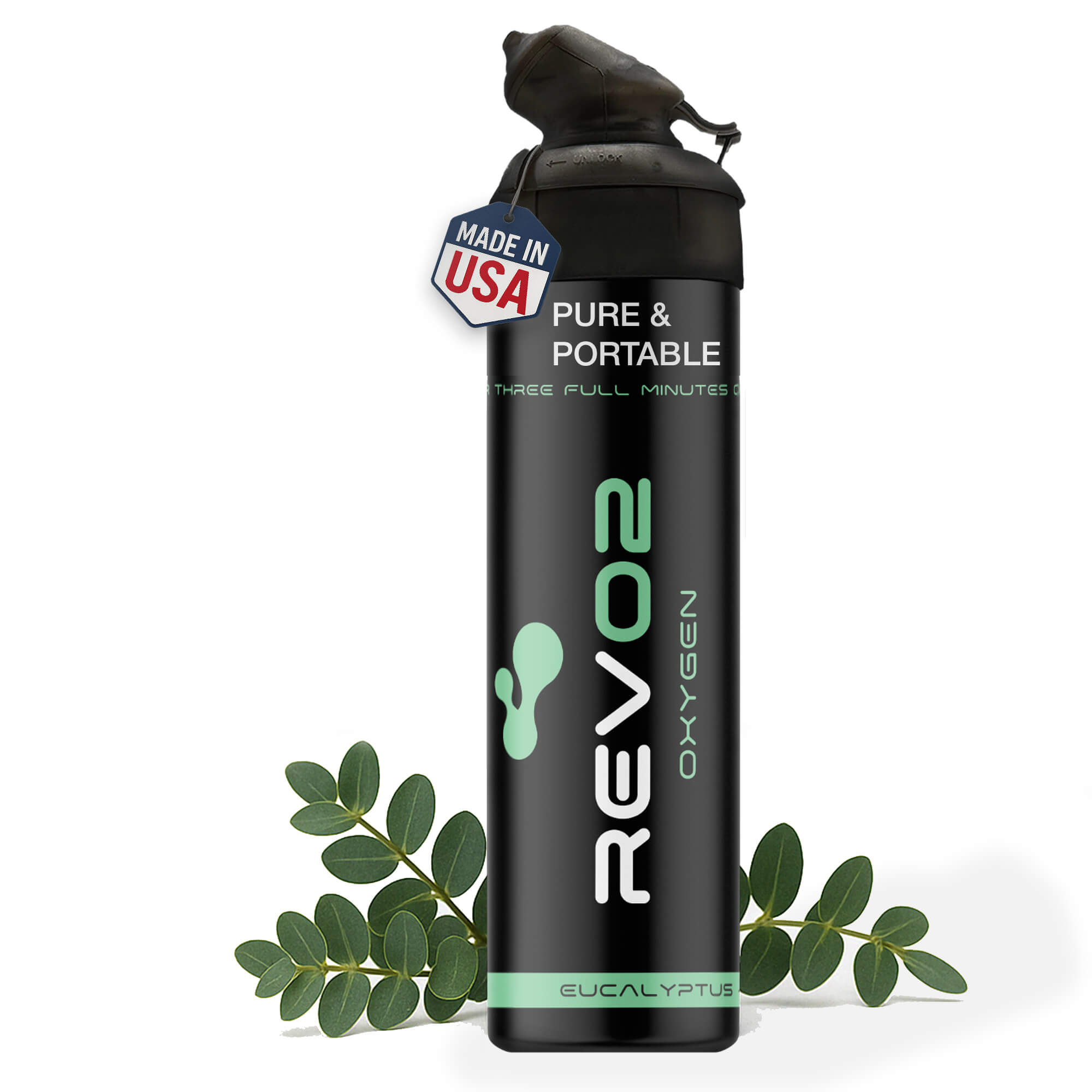
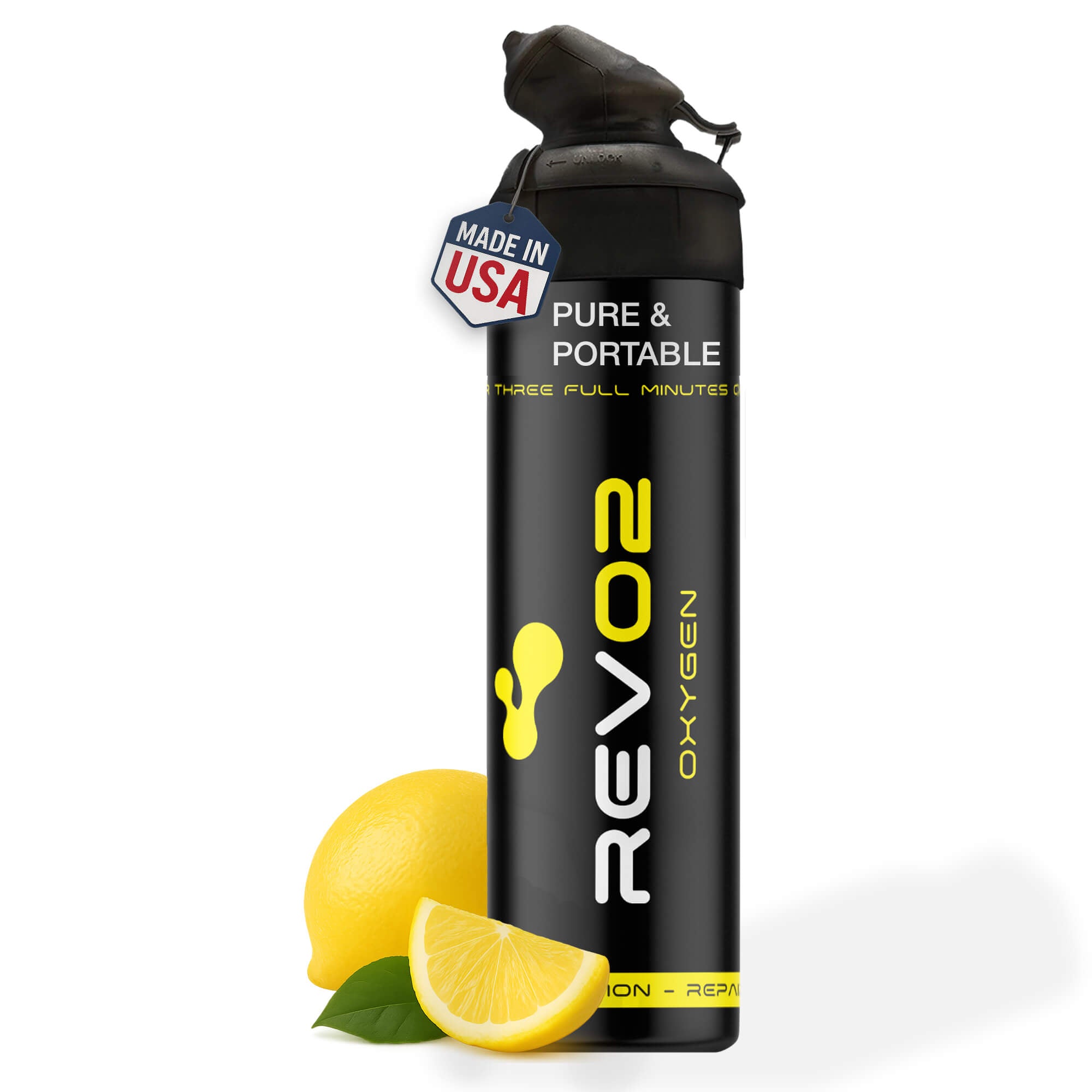
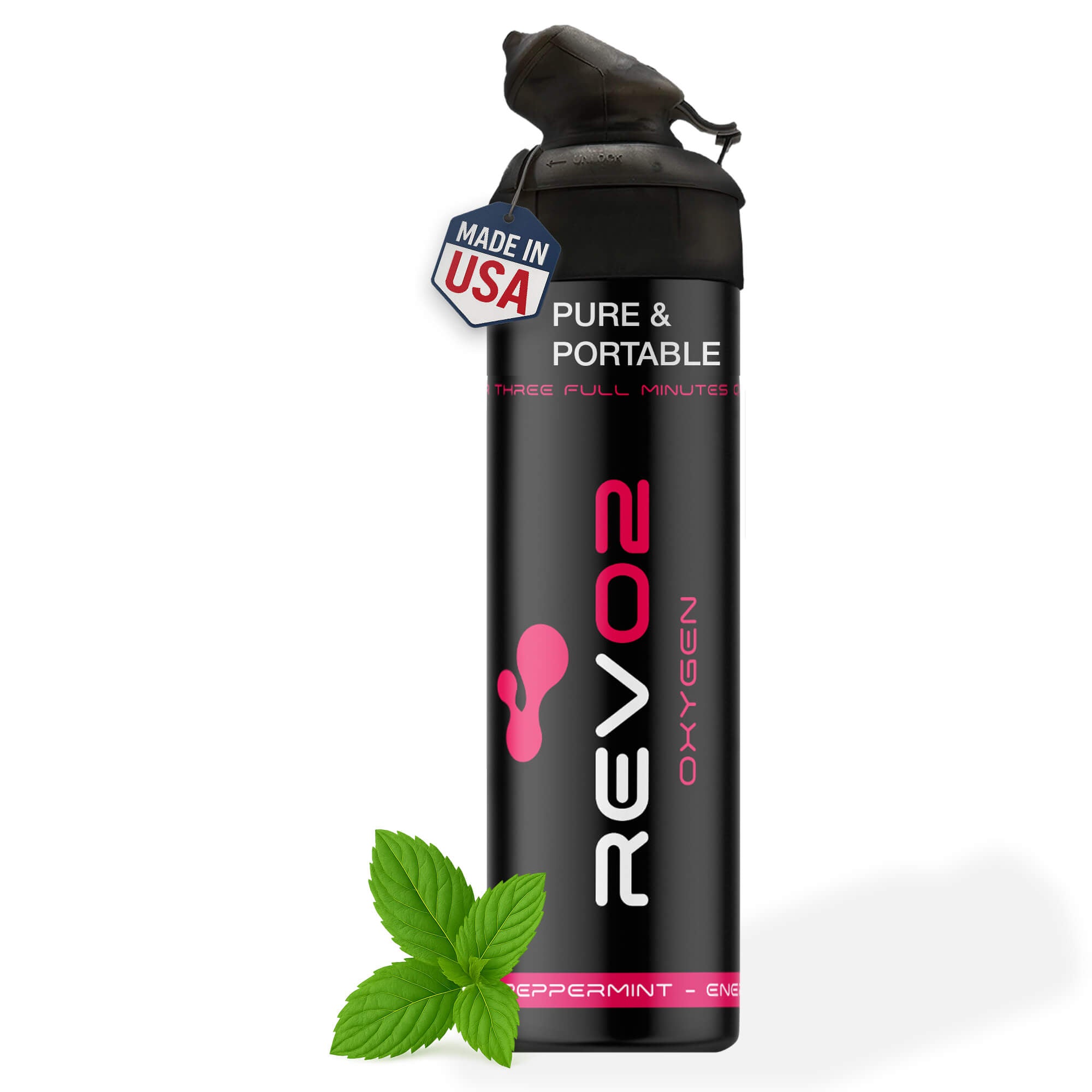
What we can say is this. REV/O2 is 98% pure oxygen in a portable can, with a zero-leak mouthpiece and trigger-lock cap designed so less of each can is wasted. It comes in peppermint, lemon and eucalyptus blends with essential oil infusions. It was designed with input from athletes and scientists, and people who use it tell us they notice better energy, recovery and mental clarity. Those are user reports and a design philosophy, not clinical proof, and we describe them that way.
We see our cans as a convenient breathing ritual for after a workout, a long travel day or a stressful afternoon. They are not a replacement for acclimatization, a cool-down, sleep or medical care. If you have a lung or heart condition, or you need oxygen prescribed, talk with your clinician first. Medical oxygen and recreational oxygen are different products for different people.
— Paul
Choosing a can for post-workout use
If you decide to try one, our range is built around how people tend to use it:
- Peppermint (Energy & Endurance): a brisk option many people reach for before or between efforts. The 10L peppermint can is the larger format.
- Lemon (Recovery & Immunity): the blend we position for after training. Browse lemon oxygen cans.
- Eucalyptus (Focus & Relaxation): a calmer blend for winding down or settling a busy mind.
Athletes can start with our sports oxygen can, or look at the full canned oxygen collection to compare blends and bundles. Before your first use, read our guide to using canned oxygen safely and effectively.
Recovery habits that carry more weight
If your real goal is feeling better the day after training, these habits have far more support than any single product:
- Progress load gradually. DOMS is most pronounced when you do something new or much harder than usual.
- Keep easy movement in your week. Gentle activity helps you feel looser even if its performance effect is modest.
- Sleep consistently. Muscle repair depends on it.
- Eat enough protein and carbohydrate around training.
- Hydrate, especially at elevation, where dry air increases fluid loss.
- Plan altitude trips with time to adjust. Our guides on Denver’s 5,280 feet and ski trips give concrete examples.
FAQ
Does oxygen help clear lactic acid from muscles?
No study we found shows that breathing canned oxygen clears lactate faster in everyday use. The approach with the best evidence for faster blood lactate clearance is low-to-moderate active recovery. Even then, faster clearance has not been reliably linked to better next-day performance.
Can oxygen help with muscle soreness?
The evidence says not for DOMS. Systematic reviews of hyperbaric oxygen, a far more intense form than a handheld can, found no significant benefit for delayed onset muscle soreness. A can may feel refreshing, but you should not expect it to reduce soreness.
Is lactic acid the same as lactate?
They are closely related. Lactic acid is the acid form, and lactate is the form that predominates at normal body pH, which is what blood tests measure. Lactate is also a fuel your body reuses, not merely waste.
When is high lactate a medical emergency?
Lactic acidosis is generally defined clinically as blood pH below 7.35 with lactate above 5.0 mmol/L, and it is linked to conditions such as shock or medication complications. If you have severe weakness, fast breathing, vomiting or confusion, seek urgent medical care rather than trying a recovery product.
Sources
- Lactate: The Fallacy of Oversimplification
- Lactate metabolism in human health and disease
- Metformin-Associated Lactic Acidosis (MALA), StatPearls
- Clinical use of lactate monitoring in critically ill patients
- NASM: Lactic acid and lactate
- Effect of recovery interventions on lactate removal and subsequent performance
- The rate of lactate removal after maximal exercise: effect of active recovery intensity
- Moderate intensity active recovery improves performance in a second Wingate test
- Review on active recovery evidence
- Hyperbaric oxygen therapy in musculoskeletal pathologies: systematic review
- Hyperbaric oxygen therapy and exercise-induced muscle injury: meta-analysis
- Recovery-targeted supplemental oxygen in swimming
- CDC Yellow Book: High-Altitude Travel and Altitude Illness