
VO2 max is the highest rate at which your body can take in, carry and use oxygen during hard exercise. It is not the oxygen level on your fingertip monitor, and it is not the amount of oxygen in the air you breathe. It is a measure of how well your lungs, heart, blood and muscles work together as a system, and it moves mainly with training, age and genetics. Below, we explain how oxygen and VO2 max relate, how the number is measured, what actually limits it, and where portable oxygen fits in a training or recovery routine.
TL;DR
- VO2 max measures how much oxygen your body consumes during exercise, because muscle cells need oxygen to make ATP, the fuel for contraction.
- In healthy people, including elite athletes, oxygen delivery (mainly cardiac output) is the main limiter, not how much oxygen is in the air you inhale.
- VO2 max is different from blood oxygen saturation (SpO2). You can have a normal SpO2 and a very different VO2 max.
- Training is what builds VO2 max. Supplemental oxygen is better thought of as support around a session, such as breathing comfort before a hard effort or a calmer recovery afterward.
- Lab testing with a mask is the accurate way to measure it. Home estimates are useful for tracking trends.
Table of Contents
- What VO2 max actually measures
- How oxygen travels from air to muscle
- What limits VO2 max in healthy people
- VO2 max is not your blood oxygen level
- How VO2 max is measured
- Does supplemental oxygen change VO2 max?
- Altitude, stress and travel: where oxygen availability matters most
- What actually raises VO2 max, and what about after 50?
- Our perspective
- Choosing a REV/O2 blend for your routine
- A simple way to track your own fitness
- FAQ
- Sources
What VO2 max actually measures
The name is shorthand. The “V” stands for volume, the “O2” for oxygen, and “max” for the ceiling you reach when exercise intensity is as high as you can sustain. It is usually written in milliliters of oxygen per kilogram of body weight per minute.
Why does oxygen matter so much? According to Harvard Health, VO2 max reflects the body’s capacity to transport and use oxygen to produce adenosine triphosphate (ATP), the main energy source your muscles rely on for aerobic exercise. More oxygen used per minute means more ATP available, which means you can hold a harder pace for longer.
That is why VO2 max is so widely used as a marker of cardiorespiratory fitness. It does not describe how fast you are on a given day. It describes the size of your aerobic engine.
How oxygen travels from air to muscle
Physiologists describe the route as an oxygen cascade: air into the lungs, across into the blood, through the circulation, and finally into working muscle cells. Each step can in principle limit how much oxygen you consume. The oxygen cascade is commonly summarized with the Fick equation: oxygen consumption equals cardiac output multiplied by the arteriovenous oxygen difference.
Put in plain words:
- Cardiac output is how much blood your heart pumps per minute. It depends on heart rate and how much blood each beat ejects.
- Arteriovenous oxygen difference is how much oxygen your muscles pull out of that blood. Blood leaves the lungs rich in oxygen and returns to them with less, and the gap is what your tissues used.
The same review notes that arterial oxygen content is essentially hemoglobin concentration multiplied by arterial saturation. So the amount of oxygen your blood carries depends on how much hemoglobin you have and how fully it is loaded, not on saturation alone.
A second analysis of central cardiovascular limits to aerobic capacity makes the same point: VO2 max is bounded both by oxygen delivery, meaning cardiac output and blood flow, and by oxygen extraction in the tissues. It also notes that how blood flow is shared between working leg muscles and the muscles that power breathing can affect performance.
What limits VO2 max in healthy people
A review on VO2 max testing concludes that in healthy people, including elite athletes, the main limiting factor is oxygen delivery. In practice that means the heart’s pumping capacity and the blood’s ability to carry oxygen matter more than how hard your lungs work in a normal, healthy state.
This explains a few things you may have noticed:
- Two people of the same age can have very different VO2 max values, mostly due to heart size, blood volume and genetics.
- Endurance training raises VO2 max largely by improving the delivery side of the equation, and it also improves how well muscles use oxygen.
- Improvement does not always show up in the number. The same review says experts stress that a lack of VO2 max improvement after training does not mean the program failed. Gains can occur in mitochondrial capacity or cardiac output without changing the single lumped VO2 max figure, and they may still show in your times and how you feel at a given pace.
If you want a deeper look at how oxygen behaves in the blood while you work, our guide to oxygen saturation during exercise covers it step by step.
VO2 max is not your blood oxygen level
This is the most common mix-up, and it is one of the questions readers ask most. They are related but not the same thing.
| VO2 max | Blood oxygen saturation (SpO2) | |
|---|---|---|
| What it tells you | The most oxygen your body can consume per minute during peak exercise | The percentage of hemoglobin in your blood carrying oxygen |
| How it is measured | Mask-based gas analysis during a graded exercise test | A pulse oximeter on a finger or ear, or an arterial blood sample |
| Typical use | Gauging aerobic fitness and tracking training | Spot-checking breathing and oxygen status |
| Moves with training? | Yes, over weeks and months | Not meaningfully in healthy people |
The research helps explain why. During exercise, most of the increase in oxygen extraction comes from lower oxygen content in the venous blood returning from working muscles, so, as one hemodynamic review puts it, a person can have normal arterial saturation while oxygen consumption changes substantially.
A caution on wearables and finger clips: a Cleveland Clinic study of 751 patients undergoing exercise testing found that pulse oximetry commonly overestimated arterial saturation, by 3.8 percentage points at rest and 2.6 at peak exercise. A pulse oximeter is a handy surrogate, not a precise measurement, and it cannot tell you your VO2 max.
How VO2 max is measured
The accurate method is a lab test. As Harvard Health describes it, you wear a mask that records the oxygen you breathe in and the carbon dioxide you breathe out while you exercise on a treadmill, stationary bike or similar equipment. Intensity ramps up until you reach full capacity.
Good testing takes care. The review on testing standards notes that accurate results need standardized protocols, such as a verification phase, and high-quality data averaging to correctly identify a physiological plateau. That is why a lab number is more trustworthy than a watch estimate.
Tips for a more reliable test
- Keep the conditions the same each time: time of day, food, caffeine, sleep and recent training load.
- Warm up the way you normally would. A short activation routine, such as the vibration plate warm-up protocol, is one way some people prepare their legs before a hard session.
- Ask the lab which protocol and equipment they use, and use the same ones for retests so results are comparable.
- Treat one result as a snapshot. Compare trends across months, not days.
Can you test VO2 max at home?
You can estimate it, not measure it. Harvard Health notes that online tools, such as one based on a one-mile walk test, can produce an estimate. Smartwatches and field tests give figures that are useful for watching direction over time. For a clinical decision or a precise training benchmark, use a lab.
Does supplemental oxygen change VO2 max?
Here is where we want to be precise, because the answer has layers.
VO2 max is a trait of your body’s oxygen transport and use. It is built by training, over weeks, through adaptations in the heart, blood vessels and muscle. Breathing a short burst of oxygen does not substitute for that process, and we do not suggest it does. Our own articles on oxygen before cardio and oxygen after running take the same line: the value is in how a session or recovery period feels, not in a permanent change to the number.
What does the clinical research say? In people with chronic obstructive pulmonary disease (COPD), an American Thoracic Society and European Respiratory Society statement reports that supplemental oxygen during exercise, even in patients who are not hypoxemic, allows higher-intensity training and can reduce respiratory rate and dynamic hyperinflation. An Annals of the American Thoracic Society review similarly describes laboratory findings of better exercise tolerance and less breathlessness in COPD, mainly because patients can train harder.
Those findings are about patients with lung disease, and medical oxygen is prescribed and supervised by a physician. They do show the underlying principle, though: when breathing effort is a bottleneck, easing it can let a person work at a higher intensity. Our guide on COPD oxygen level management explains the medical side, and anyone with a lung or heart condition should speak with their doctor before using any oxygen product.
For healthy people, we think of portable oxygen as a comfort and recovery tool used around training: a few breaths before an effort, or after, when breathing feels heavy. If you want to see where athletes tend to notice it most, read about oxygen with pre-workout.

Altitude, stress and travel: where oxygen availability matters most
Outside the lab, there are situations where the air itself has less oxygen to offer, and the conditions your body works under change.
- High altitude. Air pressure falls as you climb, so each breath delivers less oxygen. Hikers, climbers and flyers often feel breathless sooner. Our piece on supplemental oxygen at altitude walks through how people use it on trails and in transit.
- Stressful days. When you are tense, breathing tends to turn shallow and quick, which can leave you feeling tired and unfocused. A slow, deliberate inhale from a can can serve as a cue to settle your breathing.
- Travel. After long flights, tired travelers often look for something to help them feel more alert.
In each case, the goal is comfort and a steadier feeling, not a clinical result. For the limits of what a small can can do, our portable oxygen myths article is a good read before you buy anything.
What actually raises VO2 max, and what about after 50?
The evidence for training is long-standing. Endurance work that challenges your heart, such as intervals and steady aerobic sessions, drives the cardiovascular adaptations that matter most, because delivery is the main limiter. A few practical principles:
- Mix hard and easy. Short high-intensity intervals and longer steady sessions both have a place.
- Be consistent. Adaptations build over weeks and months.
- Track more than one number. Because gains can appear in mitochondrial capacity or cardiac output without moving the single VO2 max figure, pay attention to pace, heart rate at a set effort, and recovery.
- Start where you are. If you are over 50 or returning after a break, start gradually and check in with your doctor before beginning vigorous exercise, especially with a heart condition, high blood pressure or other health concerns.
Is nasal breathing a shortcut? Not for maximal effort. In one laboratory comparison, nose-only breathing reduced maximal oxygen consumption compared with mouth-only and mouth-plus-nose breathing. A meta-analysis of external nasal dilator strips in 168 healthy participants also found no statistically significant VO2 max improvement (mean difference 0.86, 95% CI −0.43 to 2.15). Nasal breathing can be a good habit for easy sessions, but at maximal effort most people open their mouths for a reason.
Our perspective
We built REV/O2 around a simple observation: athletes and everyday people notice breathing long before they think about physiology. When a hard interval, a steep trail or a stressful afternoon makes each breath feel like work, a few deep inhales of 98% pure oxygen can feel clean and reassuring.
We are clear about what VO2 max is. It is built by training, and no can replaces the miles. What we design for is the moments around training and daily life: before a session, between efforts, after a run, at elevation, or when a long day leaves you drained. That is why our cans use a zero-leak mouthpiece and a trigger-lock cap, so the oxygen goes into your lungs instead of the room, and why each blend carries an essential oil that makes the ritual pleasant.
Our approach is informed by athlete input and scientific design, and we encourage you to pair it with good training, sleep and hydration. If you are curious, start with one blend, notice how you feel, and keep a simple log.
Paul
Choosing a REV/O2 blend for your routine
We offer portable canned oxygen with 98% pure oxygen and a zero-leak mouthpiece, in three blends:
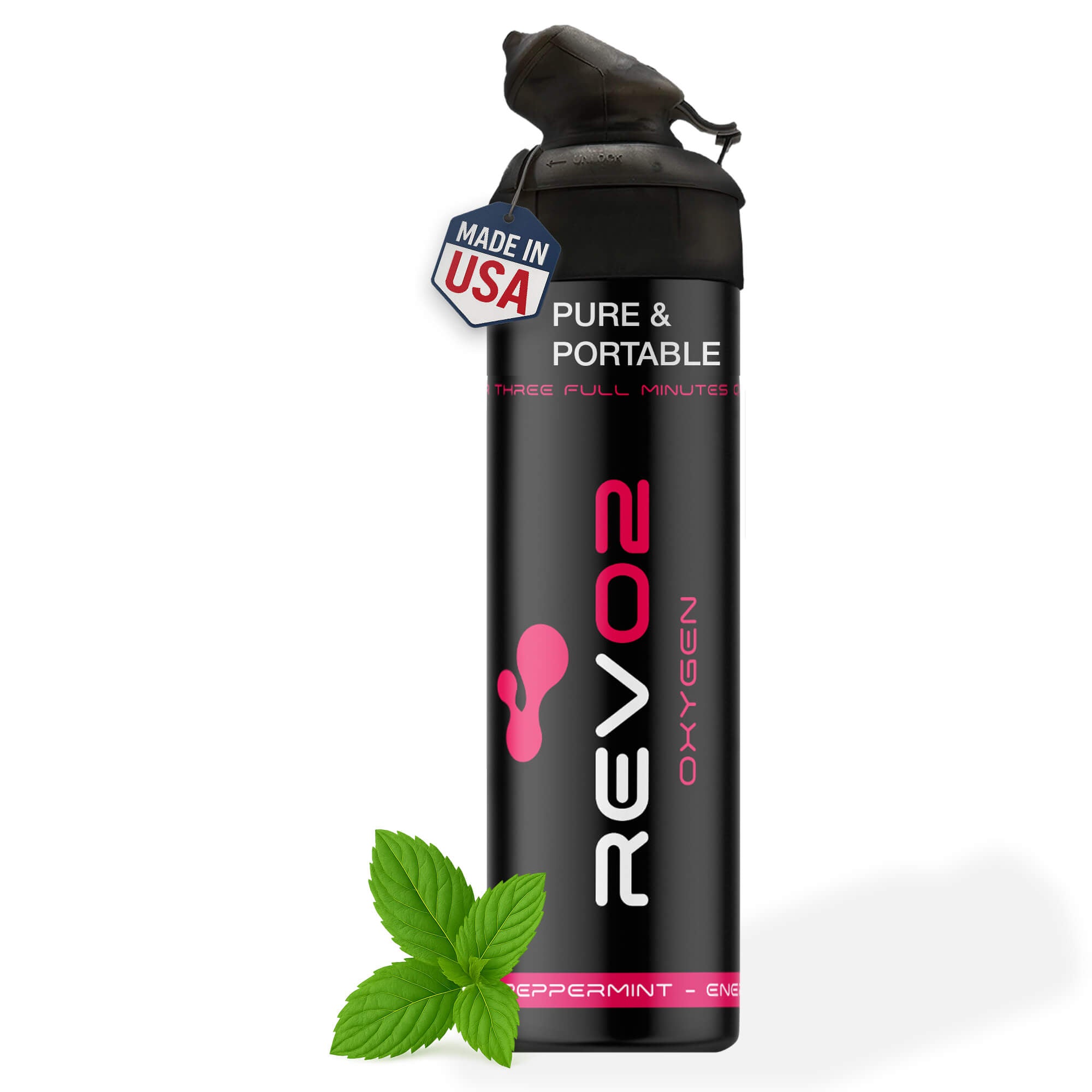
- Peppermint Oxygen, Energy & Endurance: for pre-workout moments and midday lulls.
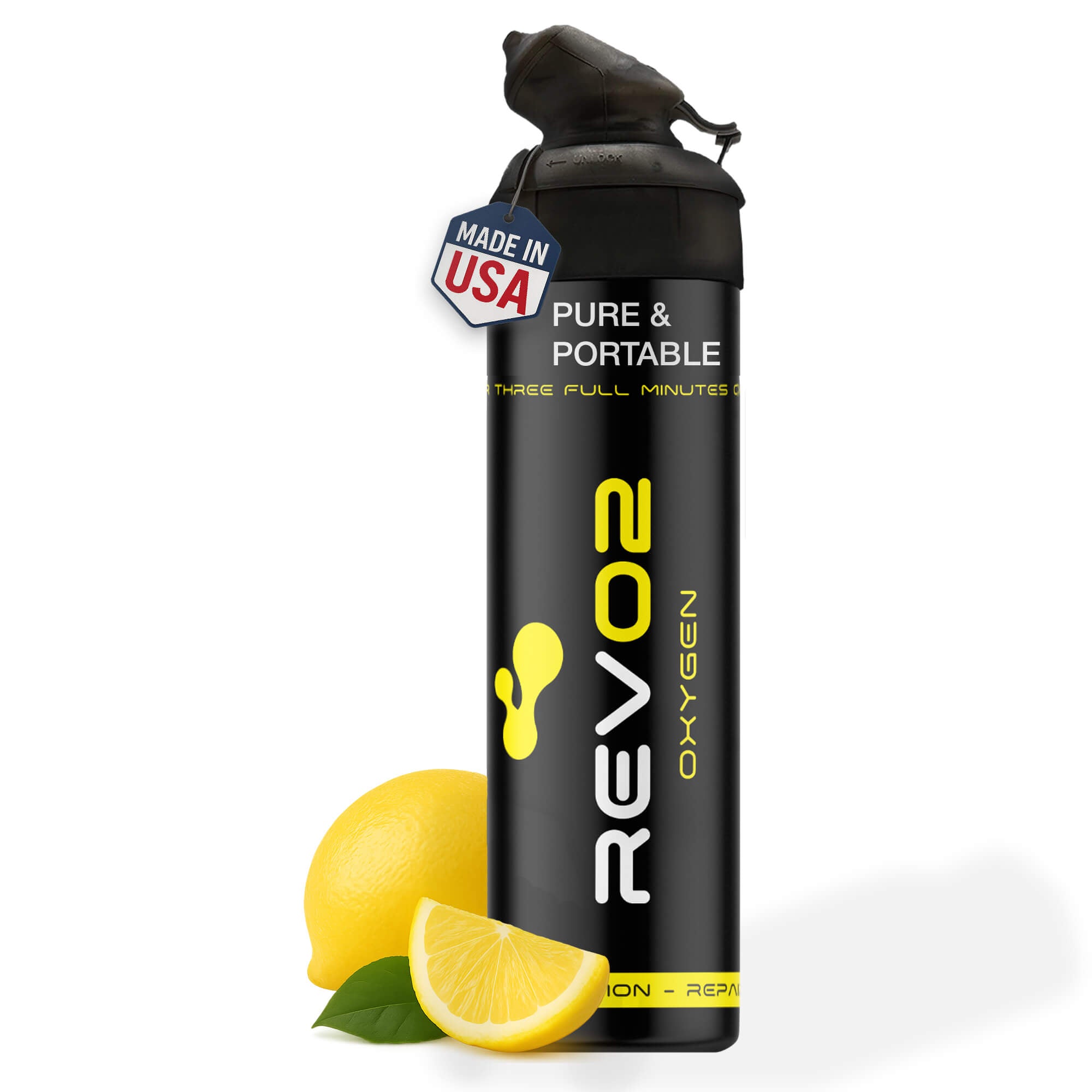
- Lemon Oxygen, Recovery & Immunity: for after training and recovery routines.
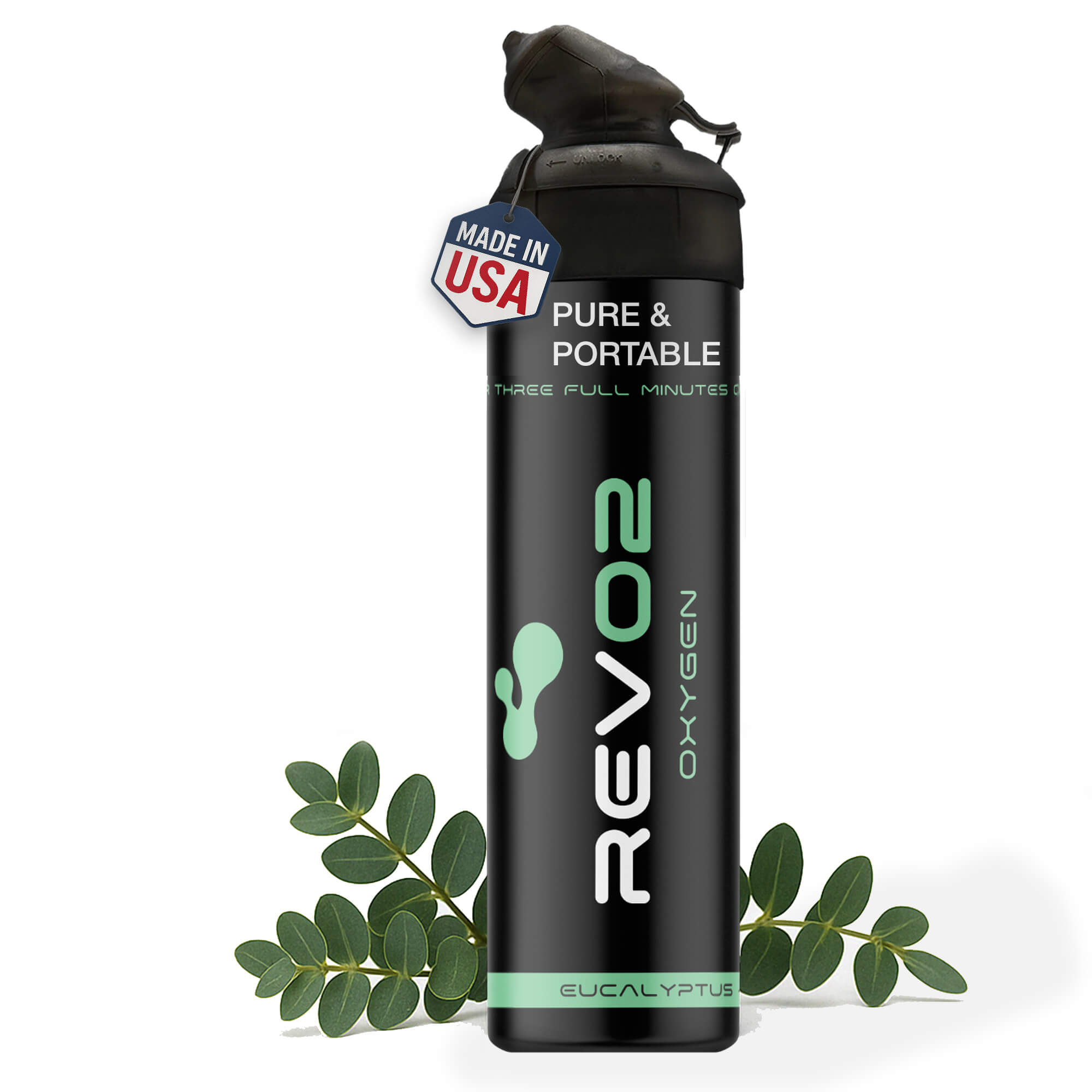
- Eucalyptus Oxygen, Focus & Relaxation: for settling in before focused work or winding down.
Athletes can start with our sports oxygen can, and anyone new to canned oxygen can read how to use canned oxygen safely first. You can compare everything on our canned oxygen collection.
REV/O2 is a recreational product, not a medical device. It is not intended to diagnose, treat or replace prescribed oxygen. If you have been prescribed oxygen, or have a heart or lung condition, follow your doctor’s guidance.
A simple way to track your own fitness
If you want to see whether your training is working, build a small routine rather than chasing a single number.
- Get a baseline. Book a lab test if you can, or note a repeatable field test such as a timed one-mile walk or a set-distance run.
- Repeat every 8 to 12 weeks under the same conditions.
- Log how sessions feel. Note breathing comfort, heart rate at a steady pace and how quickly you recover.
- Add your tools thoughtfully. If you use portable oxygen, note when you use it and how you feel, so you can judge for yourself whether it helps.
A short guided breathing prompt
Try this before a workout or when stress climbs. Sit or stand tall. Breathe in through your nose for four counts, hold for one, and breathe out slowly through your mouth for six. Repeat five to eight rounds. If you use a can, take your inhales from the mouthpiece following the directions on the pack. If you feel dizzy, stop and breathe normally.
FAQ
Is VO2 max the same as blood oxygen level?
No. VO2 max is the most oxygen your body can use per minute during intense exercise, while blood oxygen saturation is the percentage of hemoglobin carrying oxygen at that moment. A healthy person can have a normal saturation reading and still have a high or low VO2 max. A pulse oximeter also only estimates arterial saturation, so it cannot show VO2 max.
Can I test my VO2 max at home?
You can estimate it with a walking or running field test, an online calculator or a smartwatch. These are useful for tracking trends. The accurate method is a mask-based test in an exercise lab, where oxygen intake and carbon dioxide output are recorded while intensity ramps to your maximum.
Does nasal breathing increase VO2 max?
Research does not support that. One study found nose-only breathing reduced maximal oxygen consumption compared with mouth breathing, and a meta-analysis of nasal dilator strips found no significant gain. Nasal breathing is still a useful habit for easy aerobic work.
Can you increase VO2 max after 50?
Training is the lever at any age, and consistent aerobic work is the usual approach. Start gradually, and talk to your doctor first if you have heart disease, high blood pressure or have been inactive. Track pace, heart rate and recovery as well as the VO2 max number.
Will canned oxygen raise my VO2 max?
VO2 max is built through training. We design our cans to support breathing comfort around workouts, at altitude and during stressful days, not to replace training. Anyone with a medical condition should ask their doctor before using supplemental oxygen.
Sources
- VO2 max: What is it and how can you improve it? (Harvard Health)
- The Oxygen Cascade During Exercise in Health and Disease
- Central cardiovascular system limits to aerobic capacity
- Progress Update and Challenges on VO2max Testing
- Performance and Interpretation of Invasive Hemodynamic Exercise Testing
- Pulse Oximetry and Arterial Oxygen Saturation during Exercise
- ATS/ERS Statement on Pulmonary Rehabilitation, 2013
- Exercise Testing, Supplemental Oxygen, and Hypoxia (Annals of the ATS)
- Comparison of maximal oxygen consumption with oral and nasal breathing
- Does the external nasal dilator strip help in sports?
- Vibration Plate Before Workout: A Quick Activation Protocol