
Portable oxygen is defined as a supplemental oxygen delivery system that travelers use to maintain healthy oxygen saturation during flights, high-altitude destinations, and long-haul journeys. Portable oxygen concentrators (POCs) are the standard medical term for prescription devices that filter ambient air and deliver 90–95% concentrated oxygen directly to the user, stabilizing oxygen levels in under five minutes. For travelers dealing with fatigue, breathlessness, or altitude-related symptoms, that speed matters. Understanding how portable oxygen helps travelers is the first step toward planning a trip that does not compromise your health or your freedom.
How do portable oxygen concentrators work for travel?
POCs pull nitrogen out of ambient air and concentrate the remaining oxygen for delivery through a nasal cannula or mouthpiece. The result is a steady supply of medical-grade oxygen without the bulk of a compressed tank. That distinction matters for travelers because compressed or liquid oxygen tanks are prohibited on commercial aircraft under FAA regulations.
Two delivery modes exist: pulse-dose and continuous flow. Pulse-dose POCs are lighter and more battery-efficient, making them the preferred choice for travel. Continuous flow models deliver oxygen at a constant rate regardless of breathing rhythm, which some prescriptions require. Your physician’s prescription dictates which mode you need, so never choose a device based on convenience alone.
Battery life is the most practical concern for travelers. Most portable units run two to four hours per battery on a single charge, which means long-haul flights require careful planning. Device weight typically ranges from three to ten pounds, and many models produce less than 45 decibels of sound, roughly the noise level of a quiet library.
- Pulse-dose mode: Delivers oxygen only when the device detects an inhale, conserving battery power significantly
- Continuous flow mode: Provides a constant stream, required for some medical conditions and sleep use
- Battery options: Most POCs accept both rechargeable lithium batteries and AC or DC power adapters
- Weight range: Lighter travel models weigh under five pounds, fitting easily in a shoulder bag
- Noise level: Quality units operate quietly enough for use in airplane cabins without disturbing other passengers
Pro Tip: Before your trip, run your POC on battery power at home for a full session to confirm actual battery life under real conditions. Manufacturer estimates often reflect ideal settings, not your prescribed flow rate.
What are the airline rules for traveling with portable oxygen?
The FAA prohibits personal compressed or liquid oxygen on commercial flights. The only permitted option is an FAA-approved portable oxygen concentrator. This rule applies to all U.S. commercial carriers and most international airlines operating under similar aviation safety frameworks.
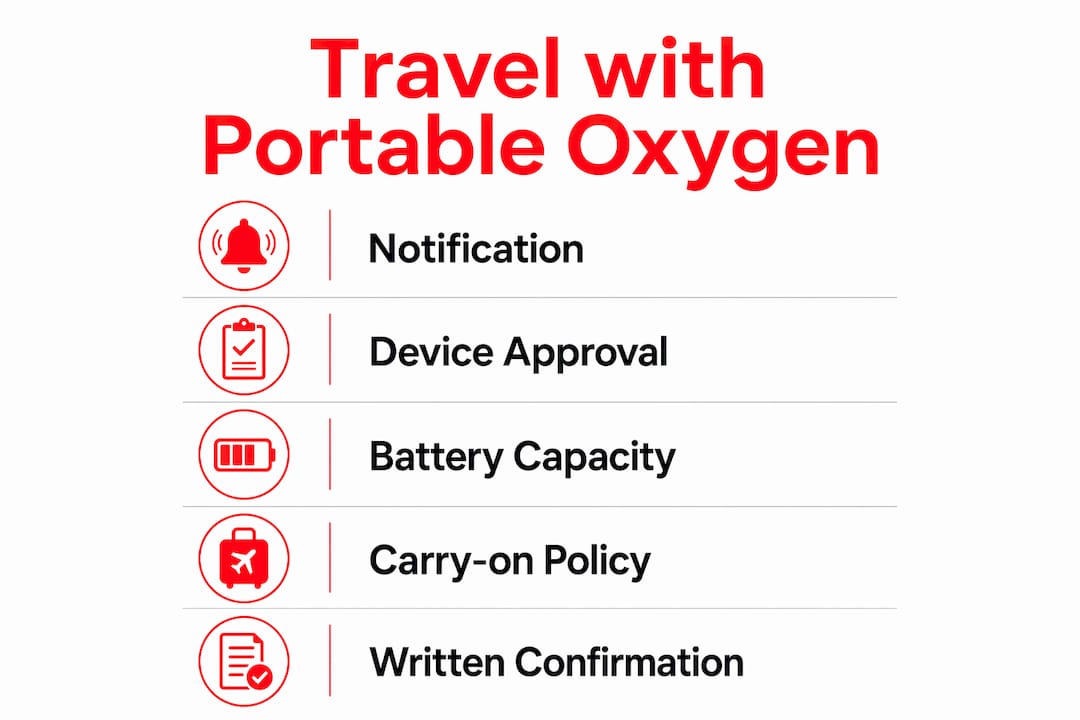
FAA-approved POCs carry a red compliance label on the device itself. Airlines may deny boarding if this label is missing, even when a physician’s letter is present. Verifying your device’s FAA compliance label before you pack is non-negotiable.
Required documentation typically includes:
- A physician’s statement specifying your diagnosis, prescribed flow rate, and confirmation that you can travel safely
- The flow rate adjusted for cabin pressure, since cabin altitude typically sits between 6,000 and 8,000 feet
- Proof of device FAA approval, either the label on the unit or manufacturer documentation
- Airline-specific medical forms, which vary by carrier
Notification timelines matter. Most airlines require 48 hours advance notice for POC users. Some international carriers require 72 hours. Call each airline directly rather than relying on a travel agent to handle this step.
For connecting flights, notify each airline separately. Policies and notifications are not shared between carriers, and a missed notification on a connecting leg can result in boarding denial.
| Requirement | Details |
|---|---|
| Device type | FAA-approved POC only; no compressed or liquid oxygen |
| Compliance label | Red FAA label must be physically present on the device |
| Physician’s letter | Must include diagnosis, flow rate, and fitness to fly |
| Advance notice | 48–72 hours depending on the airline |
| Battery capacity | Must cover 150% of total travel time including layovers |
| Carry-on status | POCs count as assistive devices and do not count against baggage limits |
POCs are classified as assistive devices under FAA rules. Airlines cannot charge fees for the device or its accessories, and it does not count against your carry-on allowance. That protection gives travelers one less logistical barrier to manage.
Pro Tip: Request written confirmation of your POC approval from the airline after you notify them. A confirmation email or reference number protects you if a gate agent is unfamiliar with the policy.
What practical benefits does portable oxygen offer beyond compliance?
Portable oxygen therapy reduces breathlessness and anxiety, enabling travelers to participate in activities they might otherwise avoid. That benefit is both physical and psychological. Travelers who manage their oxygen saturation proactively report less fatigue on long flights and faster recovery after arrival.
Altitude is a specific challenge. At elevations above 8,000 feet, atmospheric oxygen concentration drops enough to cause symptoms in healthy travelers, not just those with respiratory conditions. Supplemental oxygen at altitude supports physical adaptation and reduces the risk of altitude sickness, which can derail a trip within the first 24 hours.
- Fatigue reduction: Maintaining adequate oxygen saturation on long flights prevents the deep exhaustion many travelers feel after arrival
- Mental clarity: Hypoxemia, even mild, impairs concentration and mood; supplemental oxygen keeps cognitive function sharp during transit
- Altitude acclimatization: Using a POC or supplemental oxygen at high-altitude destinations helps the body adjust more comfortably
- Anxiety management: Knowing you have reliable oxygen access reduces the stress cycle that worsens breathlessness
- Activity access: Travelers report being able to walk longer distances, join excursions, and engage socially when their oxygen needs are met
“The psychological benefit of reduced anxiety from portable oxygen is often as significant as the physical benefit in enabling travel and activity.” — Cleveland Clinic oxygen therapy guidance
Travel mode also shapes how you use portable oxygen. Cruise lines readily accommodate POC users, with accessible cabins and power outlets available throughout the ship. Train travel is generally the most flexible option, with fewer battery constraints and no FAA documentation requirements. Road trips allow for car adapter use, which keeps the device powered without draining batteries. Air travel is the most regulated mode but remains fully accessible with proper preparation.
How should travelers prepare to use portable oxygen on a trip?
Preparation for traveling with oxygen therapy starts at least two weeks before departure. That timeline gives you enough room to gather documentation, test equipment, and contact airlines without rushing.
- Confirm your prescription and device. Verify that your POC is FAA-approved and that your physician’s letter reflects your current flow rate and travel dates.
- Calculate battery needs. Apply the 150% battery rule: if your total travel time including layovers is ten hours, carry batteries covering fifteen hours of use.
- Tape spare battery terminals. Exposed terminals on spare batteries can short-circuit during transport. Tape each terminal before packing. This step is commonly overlooked and carries real safety risk.
- Pack power adapters for every scenario. Bring a wall adapter, a car adapter, and any international voltage adapters needed for your destination. Research the electrical standards of your destination country in advance.
- Notify each airline separately. Contact every carrier on your itinerary individually and document the confirmation.
- Practice at home. Use your device daily for one to two weeks before travel to build comfort and catch any mechanical issues early.
- Plan a backup. Identify oxygen supply providers at your destination in case of device failure. Some travelers carry a small supply of supplemental canned oxygen for short-term support between device uses.
Pro Tip: Pack your physician’s letter, device documentation, and airline confirmations in a single waterproof folder that stays in your carry-on at all times. Never check this folder with your luggage.
International travel adds one more layer. Electrical standards vary widely, and a device that runs on 110V may need a converter in countries using 220V systems. Confirm compatibility with your device manufacturer before you leave.

Key takeaways
Portable oxygen concentrators give travelers a safe, regulated way to maintain oxygen saturation, reduce fatigue, and acclimate to altitude changes across every mode of travel.
| Point | Details |
|---|---|
| Device type matters | Pulse-dose POCs are lighter and more battery-efficient, making them the standard choice for travel. |
| FAA rules are strict | Only FAA-approved POCs with a red compliance label are permitted on commercial flights. |
| Documentation is required | Carry a physician’s letter with flow rates, device approval proof, and airline confirmations in your carry-on. |
| Battery planning is critical | Pack batteries covering 150% of total travel time, including all layovers and potential delays. |
| Benefits go beyond breathing | Supplemental oxygen reduces fatigue, sharpens mental clarity, and lowers anxiety during transit and at altitude. |
Why I think most travelers underestimate what portable oxygen actually does
Most articles frame portable oxygen as a medical necessity for people with chronic respiratory conditions. That framing is accurate but incomplete. What I have observed, both in research and in conversations with frequent travelers, is that supplemental oxygen addresses something most travelers never name directly: the slow, grinding fatigue that accumulates over a long-haul flight.
Cabin pressure on commercial aircraft sits at the equivalent of 6,000 to 8,000 feet of altitude. That means every passenger on a transatlantic flight is spending eight or more hours in a mildly hypoxic environment. For travelers with respiratory conditions, that is a clinical concern. For everyone else, it is the reason you step off a long flight feeling foggy and depleted even after sleeping.
The mental hurdle around portable oxygen is real. Many travelers resist it because they associate it with illness or limitation. The more useful frame is this: a POC is a tool that expands what you can do, not a signal of what you cannot. Travelers who adopt that mindset tends to plan more ambitiously, engage more fully with their destinations, and recover faster after arrival.
Preparation is where most people fall short. They secure the device and the documentation but skip the practice. Using your POC at home for two weeks before a trip is not just about comfort. It is about knowing exactly how your device behaves under your specific settings, so nothing surprises you at 35,000 feet.
The altitude and oxygen relationship is worth understanding before you book a high-elevation destination. Knowing what to expect lets you prepare rather than react.
— Paul
Revo2 portable oxygen for travelers who want to breathe better
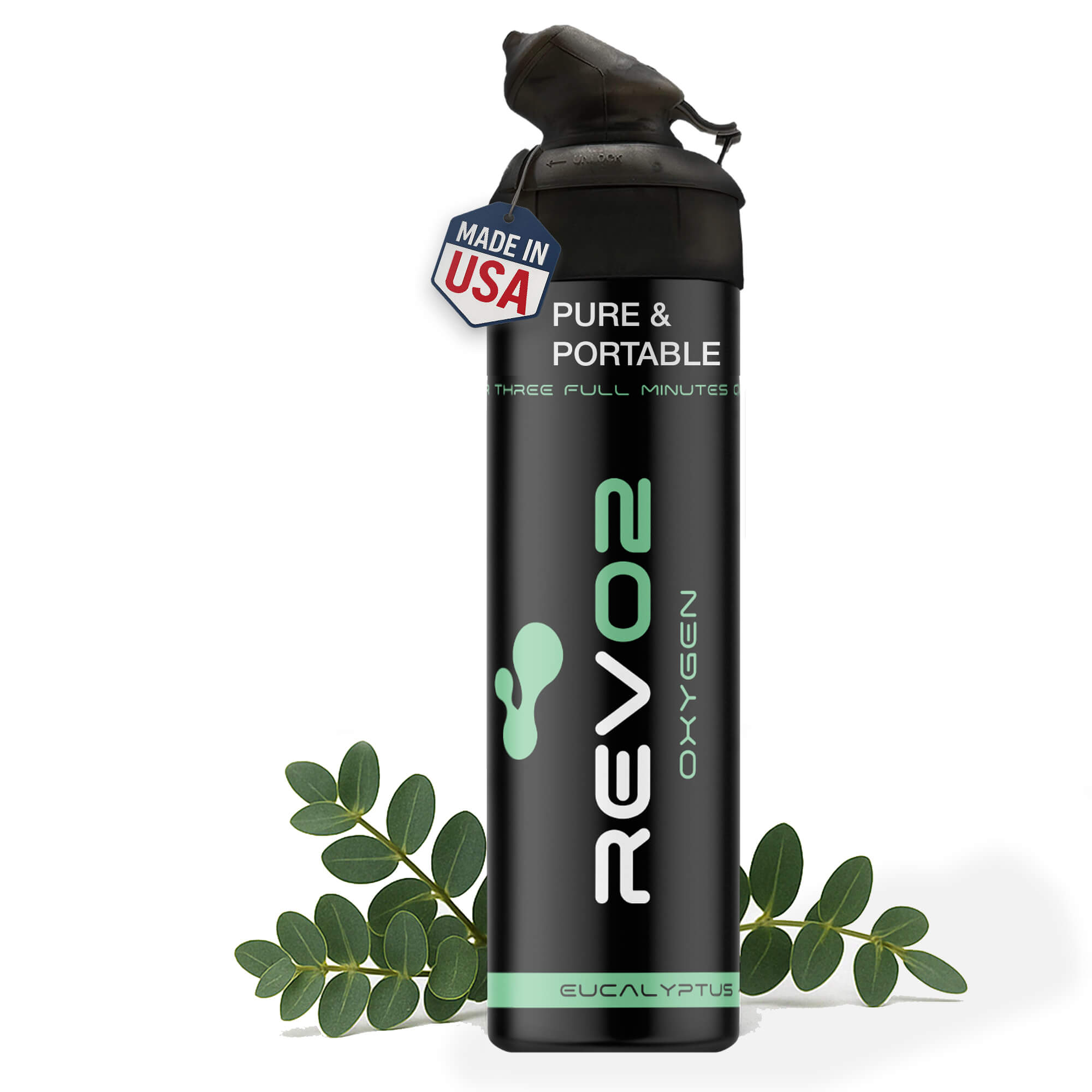
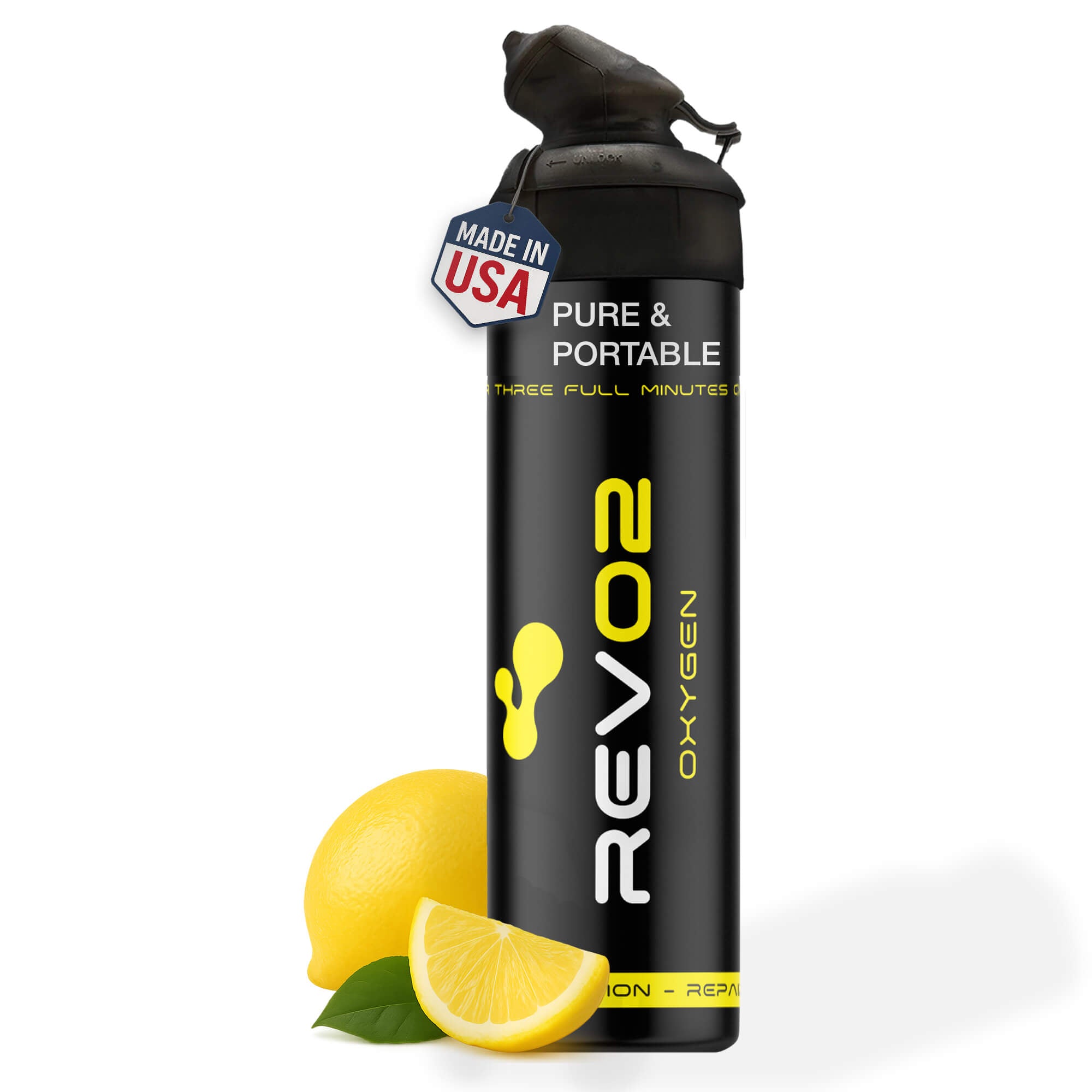
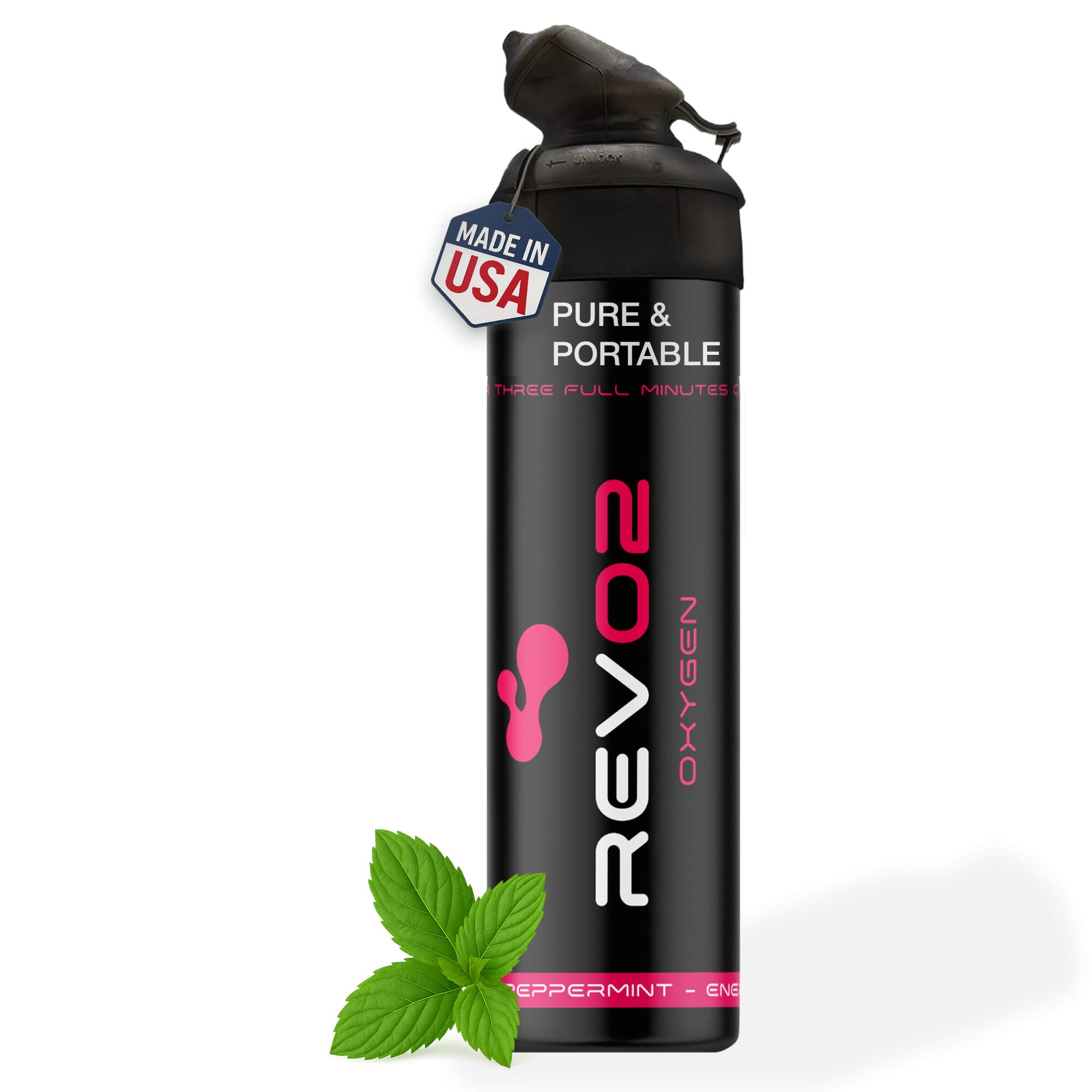
Travelers who want supplemental oxygen support without the complexity of a full POC prescription have a practical option. Revo2 delivers 98% pure canned oxygen through a zero-leak mouthpiece, with no mask required and no setup time. It is designed for anyone who needs a fast, clean oxygen boost during transit, at altitude, or after a long travel day.
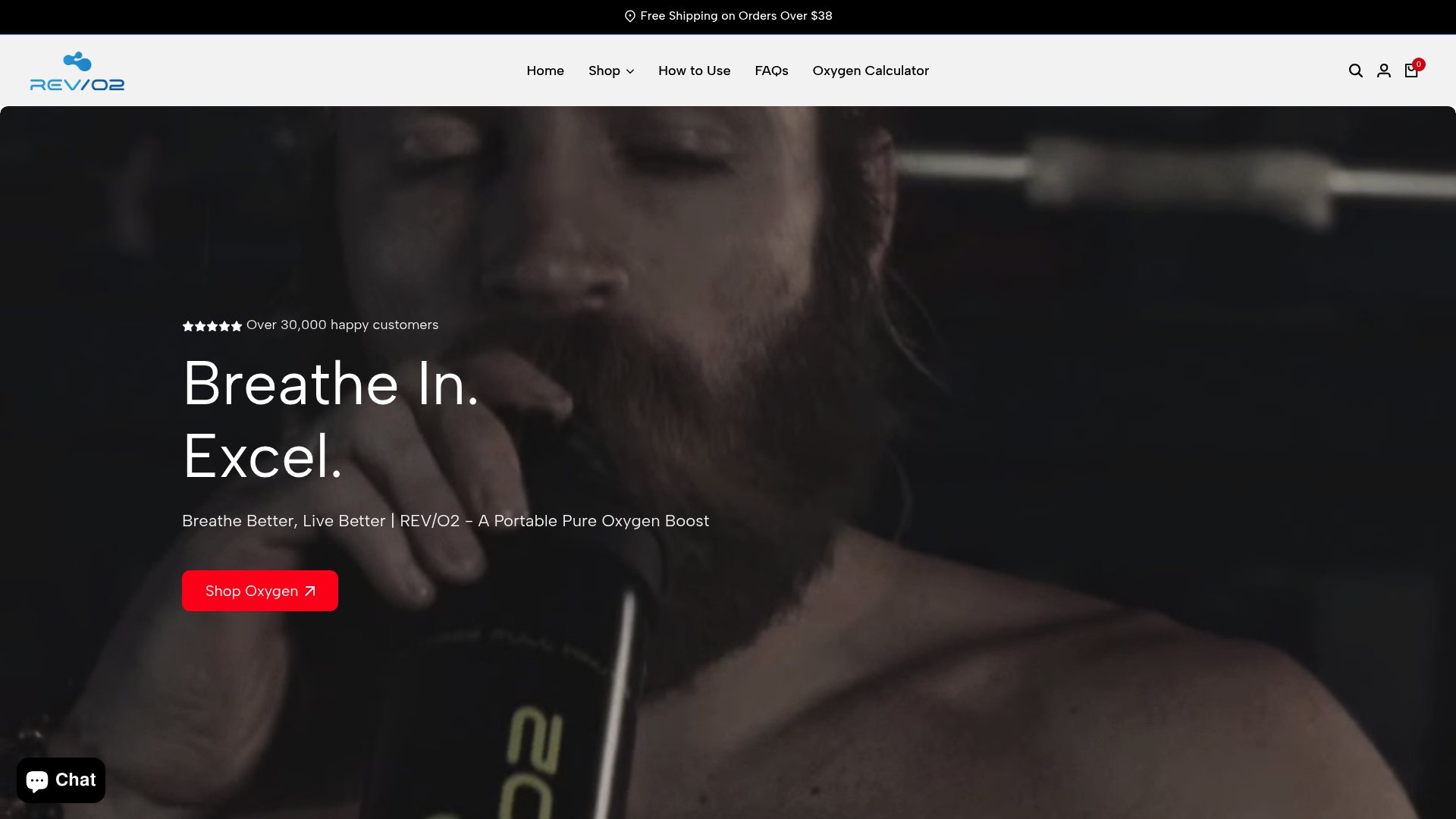
Revo2 canned oxygen is not a substitute for prescribed medical oxygen therapy. It is a travel-ready supplement for fatigue, altitude adjustment, and mental clarity on the go. The Revo2 canned oxygen collection includes single cans and multi-packs sized for carry-on travel. For travelers who want variety, the Essentials Bundle offers a three-pack of pure oxygen infusions at a practical price. Read the safe use guide before your first use to get the most from each can.
FAQ
What is a portable oxygen concentrator?
A portable oxygen concentrator is a medical device that filters ambient air and delivers 90–95% concentrated oxygen to the user through a nasal cannula or mouthpiece. It is the only type of supplemental oxygen device permitted on commercial flights under FAA rules.
Can I bring portable oxygen on a plane?
Yes, but only FAA-approved portable oxygen concentrators are permitted. Personal compressed or liquid oxygen tanks are prohibited on all U.S. commercial flights. You must notify the airline at least 48 hours in advance and carry a physician’s letter with your prescribed flow rate.
Does a POC count as a carry-on bag?
No. Under FAA classification, POCs are assistive devices and do not count against your carry-on baggage allowance. Airlines also cannot charge fees for the device or its accessories.
How much battery do I need for air travel with a POC?
Carry batteries covering 150% of your total travel time, including all layovers and potential delays. For a ten-hour journey, that means fifteen hours of battery capacity across your primary and spare batteries.
Can canned oxygen like Revo2 help with altitude and travel fatigue?
Canned oxygen products like Revo2 provide a fast supplemental oxygen boost that can ease mild altitude symptoms and reduce travel fatigue. They are not a replacement for prescribed oxygen therapy but serve as a practical, carry-on-friendly option for travelers seeking quick respiratory support.